
The Herald can today reveal New Zealand’s top schools for Cambridge, and which produced the highest‑achieving students.
This year’s 143 Outstanding Cambridge Learner Awards were earned by 122 Kiwi students for their 2025 results, matching the record set in 2024.
Tremain, 17, who is Huanui’s 2026 head girl, credits the college’s culture for her results.
“It’s a smaller school – people are really connected, so we’re able to have mentors and older students to get advice from, get feedback from.
“We have a really strong value system. One of them is personal excellence, and another is grit and resilience.”
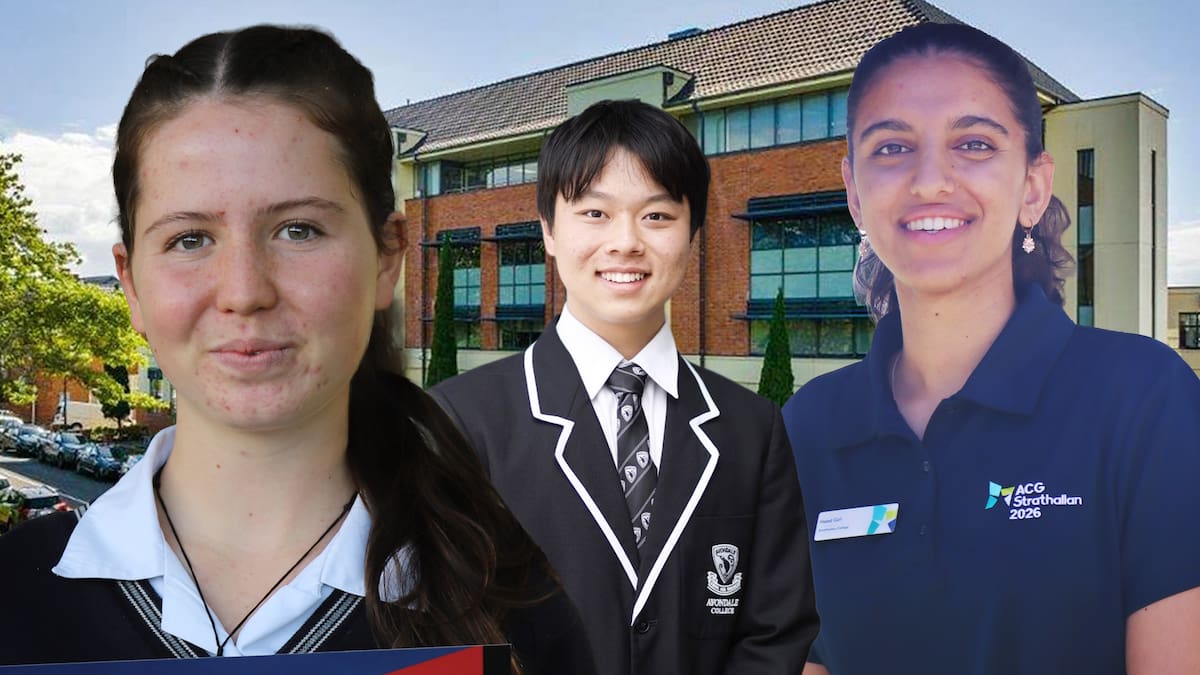
Huanui College head girl Olivia Tremain, 17, earned a Top in the World award for Cambridge International AS-Level Marine Science. She is pictured holding a certificate for a Te Ara a Kupe Beaton scholarship won last year.
Having completed both marine exams, Tremain is continuing with more science papers in Year 13 and plans to study a Bachelor of Science with a double major. She has a particular interest in elasmobranchology – the study of sharks and stingrays.
She was unsure what her exact career would be, as long as it involved caring about the environment and community.
“Personally, for me, it’s connection. I really value that and finding some sort of career where I can genuinely help other people in the space around me.”
Huanui College, founded by philanthropist Evan Hamlet, is funded through a charitable trust with a roll drawn from across the region.
With only around 150 students in Years 11 to 13, it’s tiny compared with larger urban schools, yet it still ranked fourth in the country for Cambridge results, earning 12 top awards.
Principal Philip Coombes said that in previous years they might have had one or two – perhaps four – High Achievement awards, but last year “they had a particularly talented bunch of students who had an attitude of achieving excellence”.
“Working hard is seen as cool, and the students expect to do well.”
The University of Cambridge curriculum is viewed as an alternative to New Zealand’s home‑grown NCEA. It is seen as a more traditional learning structure, using external exams rather than incorporating internal assessments for marking achievement.
The system is used in more than 160 countries, meaning the results have strong international recognition.
Its popularity is growing, with the number of schools offering Cambridge programmes rising from the 40s to 56, of which 21 were private, Cambridge’s New Zealand manager, Chris Wiggin, told the Herald.
“In the last three years, a number of schools have come on board – I’m assuming because they wanted something that NCEA wasn’t providing for some of their students.”
Chris Wiggin is Cambridge’s senior country manager for New Zealand, Australia and the Pacific Islands.
How schools incorporate Cambridge varies. An independent school such as Huanui College offers only Cambridge papers, apart from NCEA te reo.
State‑funded schools must offer NCEA, but many also offer Cambridge as an option for more academically minded students, Wiggin said.
“They’re testing it out to see how it goes – whether it works for their students, whether they can get success.”
While there is a wide variety of subjects on offer – close to 70, including psychology, marine science and physical education – it is traditional subjects such as mathematics, the sciences and English that continue to be the most popular, he said.
Naesha Cherian, from ACG Strathallan, literally jumped for joy learning she scored a Top in the World award in AS-Level Design and Technology.
“I was across from the person I got an equal with, my friend Travis [Tong], and we looked at each other, and we were just both so happy,” she said.
“When I came to school in Year 7, I remember seeing these Year 13s getting these high awards and I thought, that is far away, I don’t have to think about that.
“And now I’m here, and it is something I achieved.
“It’s just like a bit of a reflective moment for me – I’m making that little Year 7 proud without her even knowing she was capable of it.”
ACG Strathallan student Naesha Cherian, 17, was awarded Top in the World in AS-Level Design and Technology. Photo / Supplied
Cherian was effusive in crediting her committed design teacher, Michelle Le Vesconte, “because she is the most supportive, dedicated, passionate teacher I’ve met”.
After finishing school this year, she plans to attend university in New Zealand or Australia, but is unsure of her final destination.
“I just know, for me, I’ll feel fulfilled when whatever I do involves innovating, creating something that can have a positive effect on people.”
IGCSE (International General Certificate of Secondary Education) exams are the first stage of the Cambridge system and are typically completed by Year 11 students after two years of study.
Avondale College’s Oscar (Qi Han) Cao, 16, was among the top young scholars globally for his IGCSE results after achieving Top in the World for Biology and Top in New Zealand for both Chemistry and Physics. His biology and chemistry marks were 99%, and in physics he attained 98%.
Avondale’s Oscar (Qi Han) Cao, 16, earned Top in the World for Biology and Top in New Zealand for both Chemistry and Physics in Cambridge IGCSE.
Cao had been hoping for an award, but receiving three was unexpected.
“It’s really hard to wrap my head around that achievement still. Biology is one of the most competitive subjects in Cambridge, and to think about being top among all those peers is really just surprising.”
He plans to complete his A‑Level science and mathematics papers and, hopefully, study in Britain or Australia.
The desire to head overseas is driven by the opportunities and connections international institutions offer, especially in chemical engineering – his intended field of expertise.
“It will really benefit me and help my research and build my passion for science.”