
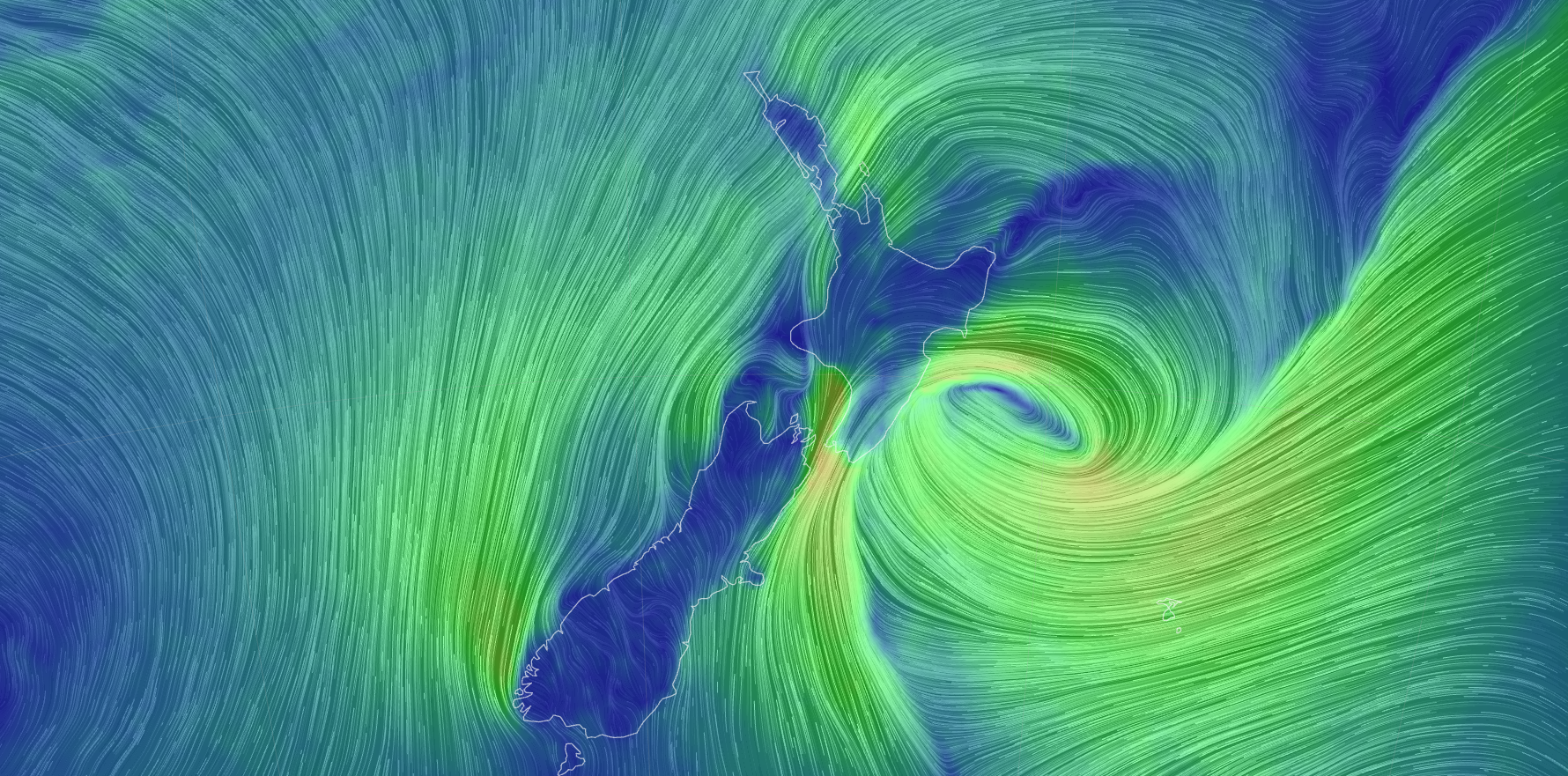
Analysis: Yearly occurrences of “once-in-a-century” storms, monthly devastating floods, hundreds of millions of dollars of annual damages and a doubling of the frequency of extreme weather-related states of emergency in a decade are the impacts of climate change revealing themselves.
Over the past month, following the deadly storms in Northland and slips in the Bay of Plenty and now the steady march of extreme rainfall down the length of New Zealand, politicians have begun to talk about climate adaptation.
The topic almost immediately raises big, politically controversial and morally tortuous questions: How should the Government help affected homeowners and businesses? When should communities rebuild and when should they be moved wholesale? What responsibility do individuals have, in the 21st century, to avoid exacerbating their own exposure to climate risks?
Most important of all, however, is the question of what world are we adapting to? What future is New Zealand preparing for?
For two reasons, the exact answers here are unknowable.
First, while climate science is carried out by tens of thousands of brilliant experts around the world, it cannot predict the future with 100 percent precision. Still, it is more than accurate enough to present reliable projections of what the coming decades and even centuries hold for New Zealand.
The second complication is that the climate is still changing. We are still emitting vast amounts of greenhouse gases – more in 2025 than any prior year – and the world is warming at an accelerating rate. The longer we take to turn off the carbon tap, the worse those future projections will grow.
Uncertainty alone, however, is a poor reason not to act. New Zealand has spent decades making relatively little progress on climate adaptation. Recovery from extreme weather events and proposals for managed retreat have been implemented on an ad hoc basis, with no guiding framework – and efforts by politicians to agree a cross-partisan solution have generally resulted in high-level documents lacking specificity, further kicking the can down the road.
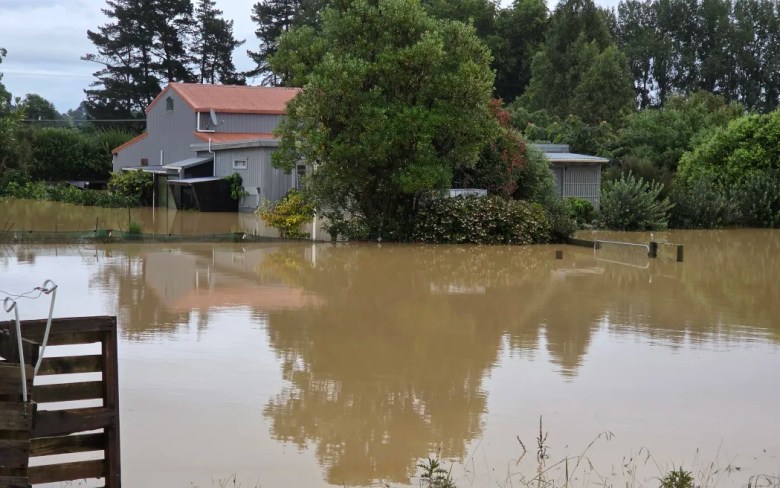 Ōtorohanga last week. Photo: Colin Payne
Since 2020, politicians have proposed a Climate Adaptation Act, then delayed and ultimately scrapped it; published a National Adaptation Plan; been criticised by the independent Climate Change Commission for slow progress in implementing the National Adaptation Plan; significantly revised the National Adaptation Plan; commissioned two independent expert reviews of managed retreat and adaptation (which arrived at somewhat contradictory conclusions); created and then scrapped a $6 billion resilience fund; and held a select committee inquiry into the issue.
The latest sign of faux-progress was the Government’s release last year of a National Adaptation Framework – a document it campaigned on creating, which took nearly two years to write and is meant to be the guiding star for adaptation policy going forwards. The framework is four pages long, including the cover page and a page with a forward from Climate Minister Simon Watts.
It would be funny if it weren’t so depressing. Because while politicians are dragging their feet, hoping someone else will be in charge by the time New Zealand runs out of time and has to start making difficult decisions, climate change is already here.
Over the past five years, New Zealand has averaged more than $1 billion in costs from non-earthquake natural disasters – four times the average from 2016 to 2020. Even excluding both Cyclone Gabrielle and the Auckland Anniversary floods, the past decade has seen natural hazard costs of $230 million a year, more than double the average over the decade before that.
In 2015, just four states of emergency were declared to deal with flooding, extreme rainfall and other weather-related hazards. Last year that figure was eight. And since the start of 2026, we’ve already exceeded that tally.
Not only are we unprepared for the climate change that’s already here, we are in many cases increasing our exposure to these climate risks. Our infrastructure is degrading without appropriate maintenance (the Infrastructure Commission on Tuesday said 60 percent of infrastructure spend over the next 30 years should go to maintenance and renewal of existing assets, compared to 30 percent over the past decade).
And we are actively building more expensive assets, including critical infrastructure, in places we know are already exposured to natural hazard risks. Intensive land use in braided riverplains tripled between 1990 and 2020.
In 2019, the Court of Appeal determined the winding floodplains of braided rivers like the Waimakariri were not riverbeds, meaning there were no barriers to building in them. Two years later, the river flooded, causing $20 million in losses. In 2023, the previous government passed reforms to the Resource Management Act which properly defined a riverbed, but they were repealed under urgency after the election.
All of this just exposes how utterly ill-equipped we are for today’s hazards. Between now and 2060, properties worth an estimated $1 to $8 billion are expected to be damaged in at least one flood event due merely to present inundation risk. When you factor climate change into the equation, it rises to $1.8 to $12.9 billion.
In the short term, we can expect more floods, more extreme heat and more fires. By 2040, New Zealand will see twice as many days above 25C. By the end of the century, that number could triple, according to the 2020 National Climate Change Risk Assessment (an updated version is due later this year).
One-in-10 year extreme rainfall will become more frequent, according to that assessment – something like one-in-seven by the end of the century. Sea levels will rise as well, by 55 centimetres in a medium-emissions scenario and 89 centimetres in a high-emissions scenario. Every 10 centimetres of sea-level rise increases peak storm surge by one metre, so relatively little is required to swamp existing coastal flood defences.
Although most of the risk assessment’s calculations were performed for a scenario of unrealistically high greenhouse gas emissions, we’ve also learned since 2020 that climate change is accelerating faster than we expected.
Last year, esteemed climate scientist James Hansen – whose 1988 testimony on global warming before the US Senate truly alerted the global community to the seriousness of the issue – authored a paper arguing the climate system may be more sensitive to greenhouse gases than scientists have traditionally suspected. Last week, he followed it up by pointing to the possible development this year of the El Niño weather pattern, which could super-charge climate change by boosting temperatures and fostering extreme weather.
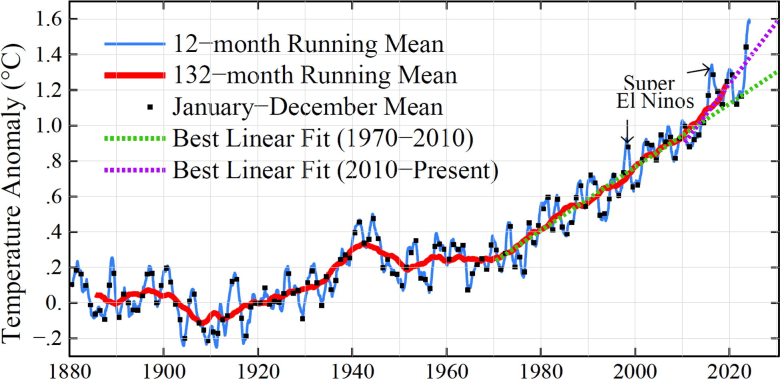 Global surface temperature (relative to 1880-1920 base period). The rate of warming is accelerating. Source: Hansen
So while the world has, remarkably in the 10 years since the Paris Agreement was signed, managed to significantly bend the curve on future emissions projections, the climate impacts we might expect don’t look so different because we may have been overly optimistically forecasting the Earth system’s resilience to our mass burning of fossil fuels.
This is a confronting situation. And yet, if we are to shield our communities, our infrastructure and our economy from the worst excesses of climate change, it is a situation we must confront.
Nor is the timescale of this century the only one that matters. Even if we manage to get a handle on global emissions and bring them to net zero in the second half of the 21st century, the warming to that point will likely trigger tipping points in the climate system which will be irreversible on human timescales.
There is mounting evidence that 2C or even 1.5C of warming above preindustrial levels could be sufficient to cause the collapse of ice sheets on Antarctica and Greenland, raising sea levels by two to six metres by 2300. On Wednesday, a team of NZ-led scientists announced they had drilled a 228-metre sediment core from beneath the West Antarctic Ice Sheet, which they hope will show how the ice cap has responded to past episodes of warming.
One hint is the Eemian period, around 120,000 years ago, when temperatures were around 1C above preindustrial levels. Sea levels were similar to modern levels until the late Eemian, when they rose several metres within a century as the West Antarctic Ice Sheet collapsed.
The Intergovernmental Panel on Climate Change (IPCC) noted in 2021 that ice sheets melt far more quickly than they re-freeze: “If human-induced changes to the Greenland and Antarctic ice sheets continue for the rest of this century, it will take thousands of years to reverse that melting, even if global air temperatures decrease within this or the next century. In this sense, these changes are therefore irreversible, since the ice sheets would take much longer to regrow than the decades or centuries for which modern society is able to plan.”
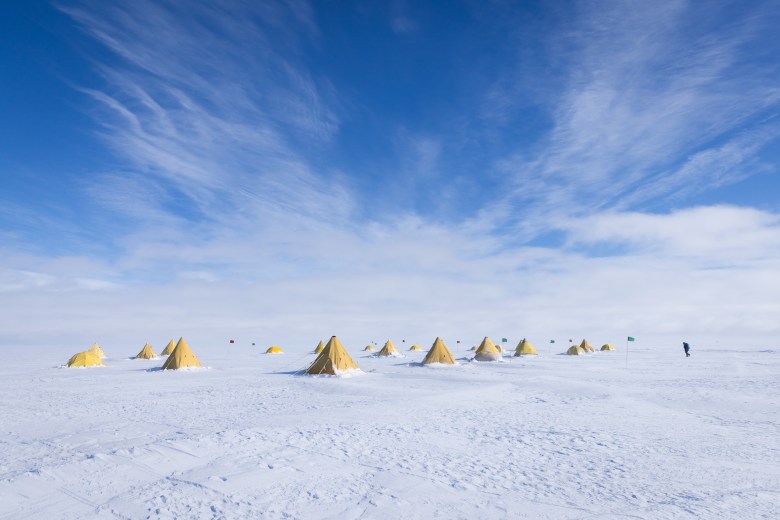 Scientists lived in tents on the open ice for weeks as they drilled almost a kilometre into the ground. Photo: Ana Tovey
Politicians can’t be expected to show up to Parliament tomorrow with a plan for how to deal with sea-level rise three centuries from now. But as they take on the short- to medium-term threats with renewed vigour, they should keep an eye to the horizon as well. The last thing we need is to find ourselves in a repeat of the present situation, staring down the barrel of disastrous climate impacts we have known were coming for decades but have done too little to prepare for.
Finally, there is an increasing tendency to say the scale of these threats is so large that all of our climate resource should be dedicated to resilience and adaptation. This call is particularly strong from those who, before this decade, spent years downplaying the seriousness (or even reality) of climate change.
However, as the IPCC has noted, there are “hard limits” to adaptation. Some coming climate impacts will be so significant that we will be powerless to stop them. No floodwall can keep the Kāpiti Coast dry when three metres of sea-level rise come knocking.
Our best bet to reduce the likelihood of running into these hard limits is not to pour money into ever greater concrete barriers, but tackle the fundamental cause of climate change: The burning of fossil fuels.
If we are worried about drowning in the bathtub, we should learn to swim – but we must also turn off the tap.