
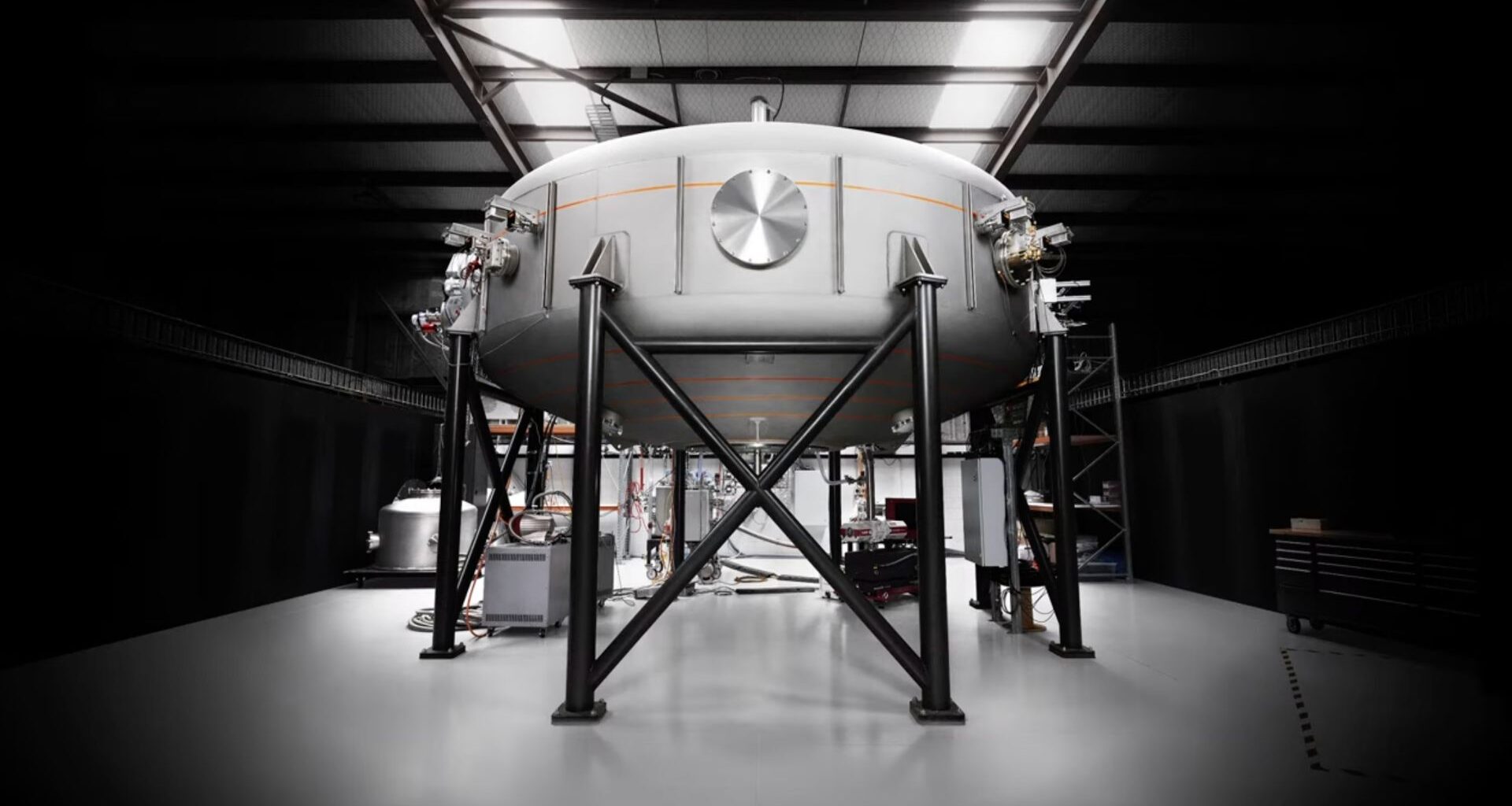
A 0.5-tonne superconducting magnet recently hovered silently inside a 5-meter-wide vacuum chamber, which marked a major milestone for New Zealand-based nuclear fusion startup OpenStar Technologies.
The team successfully confined plasma heated to over 1,000,000 degrees Celsius, utilizing a $10,000,000 prototype dubbed “Junior” to prove their unique reactor architecture.
“The levitated dipole configuration offers distinct advantages in plasma stability and confinement that we believe position it as a viable route to commercial fusion energy,” said the company.
By demonstrating that a heavy magnet can be controlled and levitated while simultaneously confining superheated gas, the engineering team has addressed a primary requirement of this specific reactor architecture.
The magnetic field produced by the suspended hardware is designed to hold the plasma in place. It is a necessary condition for sustained nuclear fusion.
While the current prototype does not yet generate more energy than it consumes, the stability of the magnet under these conditions is a prerequisite for future iterations of the technology.
Technical advantages of the levitated dipole design
This specific reactor configuration differs from the tokamak designs used in many international fusion projects. In a tokamak, large external coils are used to manage the plasma, whereas the levitated dipole approach places a single superconducting magnet inside the plasma cloud.
This internal placement is intended to mimic the magnetic structures found around planets like Jupiter. The researchers aim to eliminate a source of heat loss and plasma instability by removing the mechanical supports that previously held the magnet in place.
Physical structures typically act as a conduit for energy to escape the reaction, so achieving full levitation is a step toward maintaining the high temperatures required for fusion.
This test confirms the magnet’s ability to produce the field strength required for plasma confinement in a controlled environment.
Earlier tests conducted by the company utilized mechanical arms to support the internal components, but the integration of a functional levitation system marks a progression in the technical roadmap.
The company has provided data to support the scaling of this system into larger and more powerful devices.
Strategic roadmap for commercial fusion energy
“This represents a significant advancement from our first supported plasmas achieved in October 2024,” highlighted the company.
The long-term objective of this research is to replicate the process of nuclear fusion to provide a source of carbon-free energy.
“Fusion energy remains one of humanity’s most ambitious and capital-intensive challenges,” added the startup.
If the levitated dipole architecture can be scaled effectively, it may lead to the development of fusion systems that are more compact than conventional designs. Smaller systems could potentially reduce the costs associated with building and maintaining fusion reactors.
“Integrating a functional levitation system fulfils the core requirements of the levitated dipole concept and validates the technical pathway for scaling to future machines, including commercial-scale plants,” concluded OpenStar Technologies.
While scientific and engineering challenges remain before any such system could be deployed for commercial power generation, the recent demonstration serves as a proof of concept for integrating magnetics, automated levitation, and plasma confinement.