
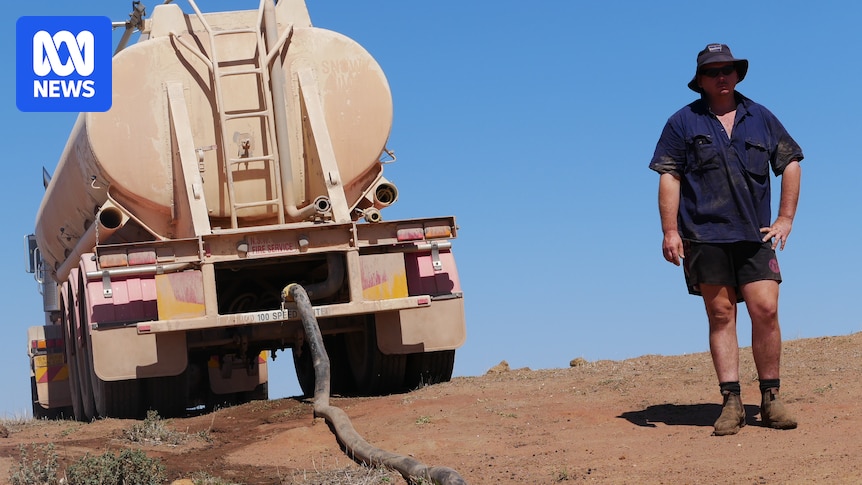
A scorching summer across New South Wales has left farmers like Ryan Staniforth with empty dams and thirsty livestock.
While those in suburban areas beat the heat with air conditioning or a dip in the pool or beach to cool down, Mr Staniforth has sweltered in his paddocks carting in water for his sheep.
“You just don’t have much other choice; either keep the sheep alive or sell them,” he said.
It has been two years since there was enough rain to run water into the dams on his properties near Talimba, north-east of Griffith.
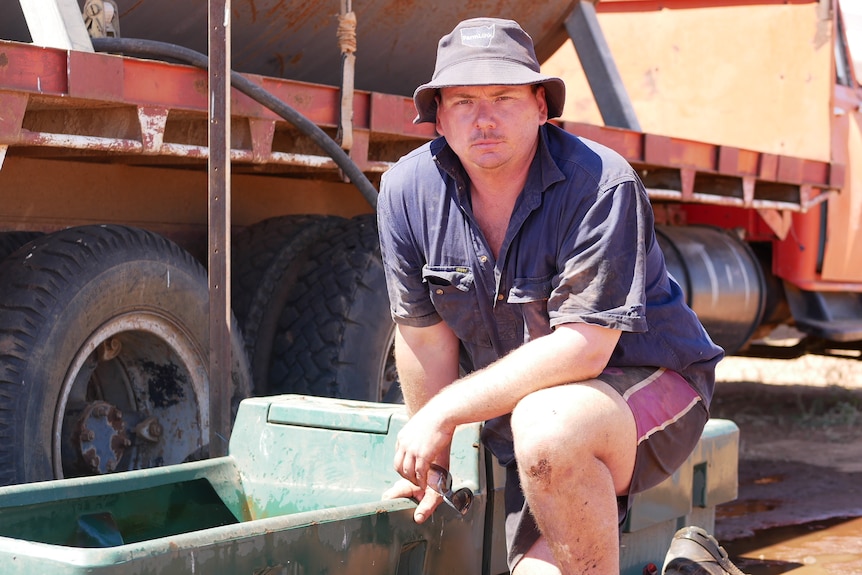
Ryan Staniforth would lose decades of careful breeding if he sold off his stock. (ABC News: Emily Doak)
Mr Staniforth’s 2,500 merino ewes have been carefully bred over decades to make them productive woolgrowers.
“My father put a lot of years into getting the bloodlines to where they are now,” he said.
“You can’t just sell them out when it gets a bit tough … so yeah, just persevere and try and keep going.”
Growing drought impact
Nearly half of New South Wales is now drought-affected, including the Far-West, Riverina, Upper Murray, Central Tablelands and parts of the Hunter Valley.
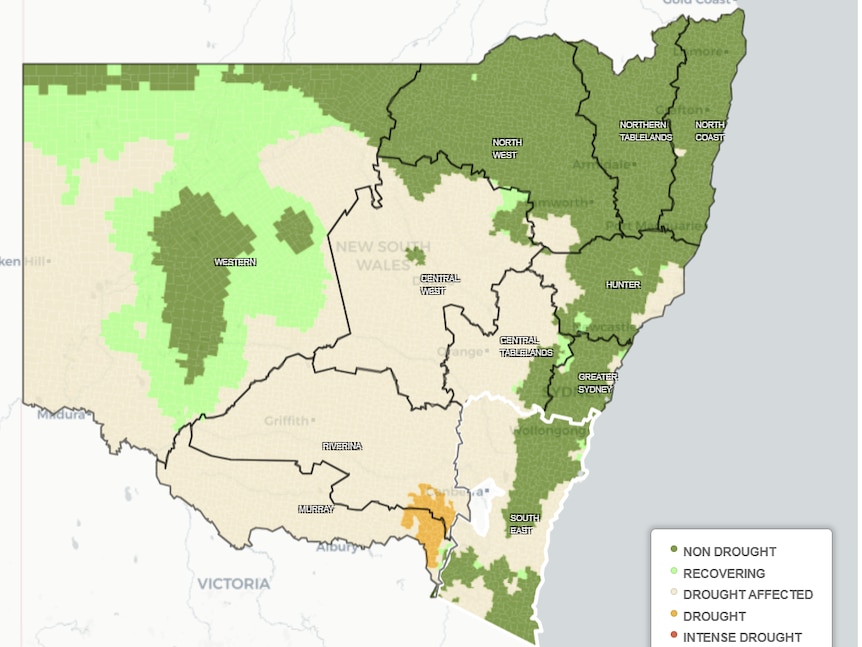
Almost half of NSW is now drought-affected. (Supplied)
NSW Drought Coordinator Ray Willis said many farmers had been proactively managing dry conditions for months, or in some regions, up to two years.
“They’ve been through it before and have done as much as they can,” he said.
“But if it goes on much longer it’s going to start to impact towns, communities and the city folk as well.”
Mr Willis said in the far west of the state, livestock were competing with emus, kangaroos and goats for limited feed resources.
“Landholders are certainly starting to reduce stock numbers, getting down to breeding stock in some cases, and in other cases either destocking fully or getting agistment,” he said.
“Mental health has been a big theme wherever I travel as well.”
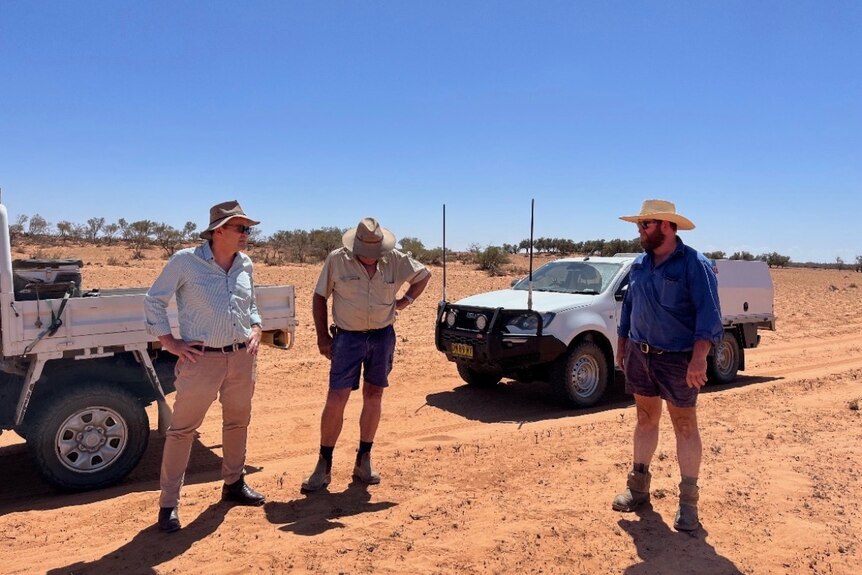
Ray Willis (left) heard about the seasonal challenges on a recent visit to Wentworth, in far-western NSW. (Supplied: NSW DPIRD)
The New South Wales government has expanded its drought support measures following consultation with farmers, local mayors and MPs.
The cap on loans for drought resilience projects has been increased from $250,000 to $500,000.
It also announced new loans of up to $100,000, which will require less paperwork and will provide farmers with up-front payments to boost their cash flow.
Managing feed
At Tabletop, north of Albury, Andrew Kettlewell manages a herd of 500 Angus cows, plus calves and weaners.
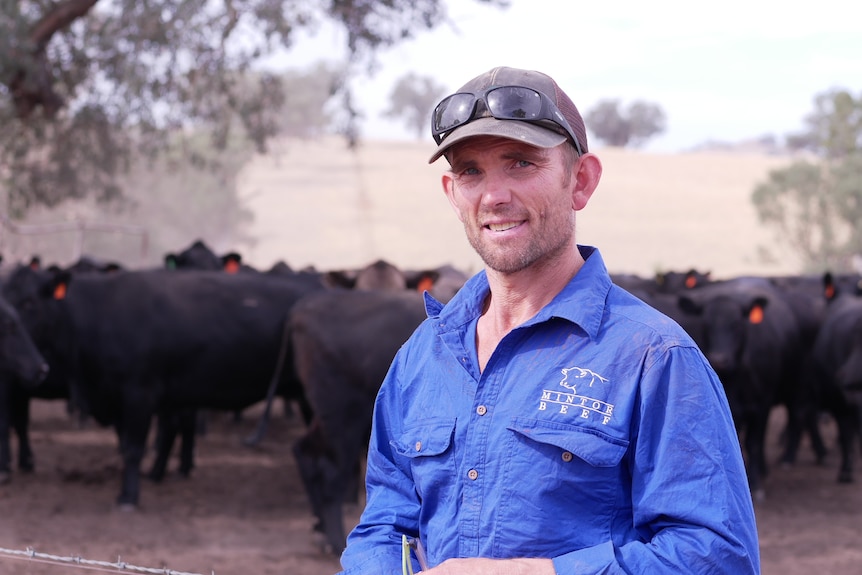
Andrew Kettlewell says a dry spring has led to a lack of pasture growth. (ABC News: Emily Doak)
He has been feeding them hay and grain in small paddocks, or containment pens, designed to maintain ground cover on the rest of the farm to prevent erosion.
“We’re in this controlled environment, we can put exactly what the cows require[into the feed ration],” Mr Kettlewell said.
“When it finally does rain, we haven’t destroyed the farm and created a lot of wash off … we can let them out and [onto] those pastures.”
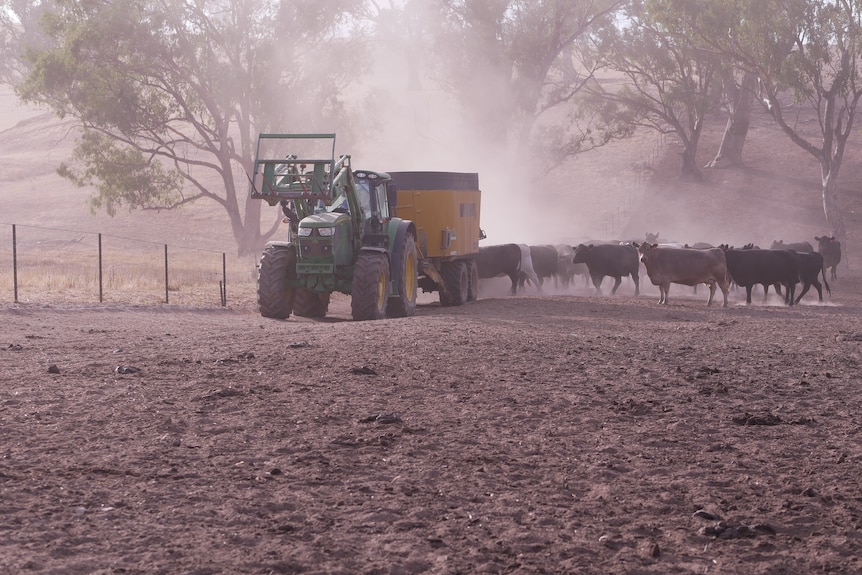
Livestock producers have been feeding cattle in southern NSW for months. (ABC News: Emily Doak)
Two years of drought are making it tough for Tumut Plains dairy farmer Kevin Malone.
“Growing grass to feed our cows has been an incredible struggle this year with lack of rainfall, extreme heat and very limited irrigation allocation,” he said.
“Cows are really feeling it and [milk] production has dropped by probably close to 20 per cent.”
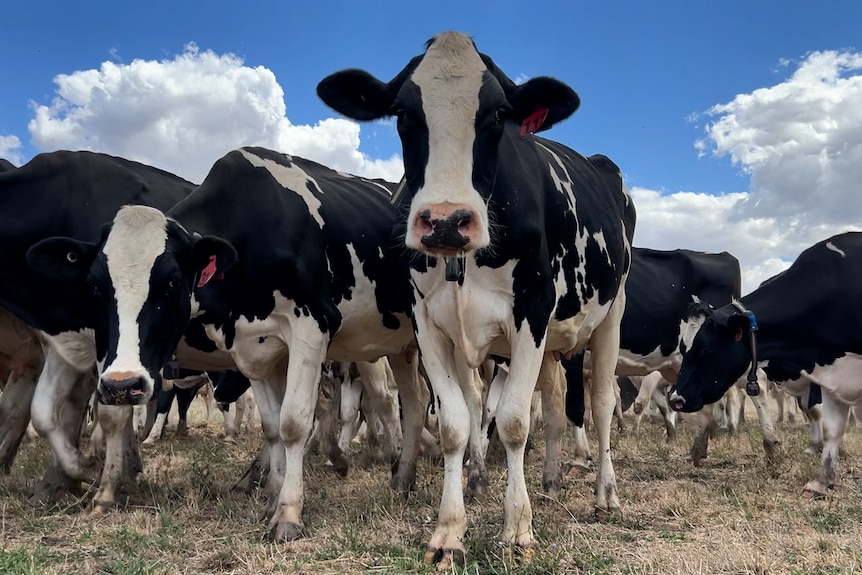
Milk production at Kevin Malone’s dairy is down by 20 per cent. (ABC News: Emily Doak)
He is closely managing a water budget to get the most out of pastures and providing extra silage and grain for the cows.
“Just to try and keep those cows turning over, maintain their body condition so that when times do come better, they can really start to move.”
Saleyards in the Hunter Valley are seeing some of the biggest numbers in years as cattle farmers opt to cash in on decent prices, rather than fork out money for feed.
Less water for irrigation
Water NSW spokesperson Tony Webber said despite the prolonged dry spell the water supply situation across the state was “favourable”.
Large water storages in the coastal valleys are above 90 per cent, and most are more than 60 per cent full in the north-west and central-west of the state.
But in the southern inland the lack of rain has reduced inflows into the major storages: Burrinjuck Dam is at 37 per cent, Hume Dam is at 25 per cent and Blowering Dam is at its lowest level in almost 20 years at just 21 per cent.
Mr Webber said the situation should be considered in context.
“These are very large water bodies, and they will provide supply for quite some time,” Mr Webber said.
The low levels of water in southern storages has reduced the amount of water available for irrigation in the Murray and Murrumbidgee valleys, limiting summer crop production.
Chair of Cotton Australia Elizabeth Stott said production in the southern valleys was expected to be half of last year’s bumper crop.
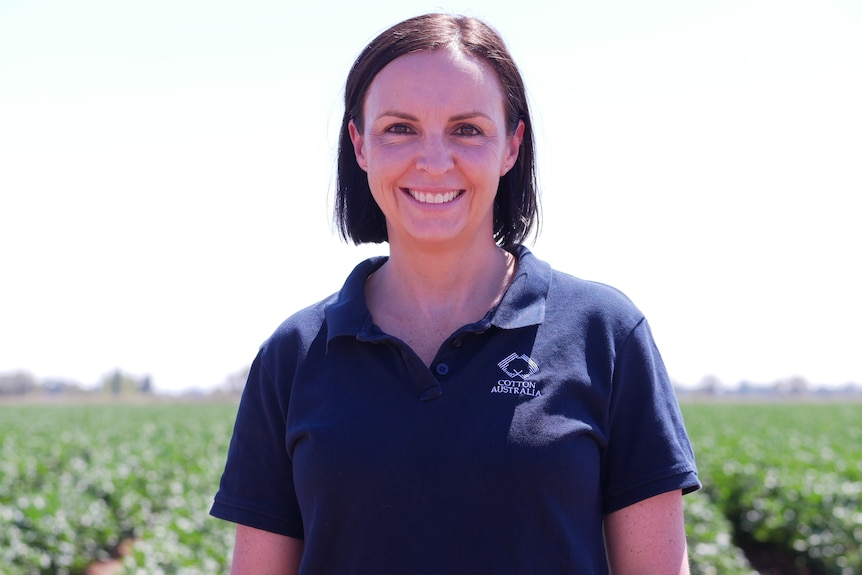
Elizabeth Stott has cut production on her farm by 40 per cent because of low water allocations. (ABC News: Emily Doak)
“That will have an impact on local businesses, the cotton gins [processors], the resellers, the companies where we buy our seed, buy our chemical, they’ll have a leaner year, unfortunately,” she said.
Ms Stott said the high prices on the temporary water market were also driving decisions.
“At $450 a megalitre there’s nothing that you can grow in an annual cropping sense that gives you the return that you would if you sold that water to people who have permanent plantings.”
In the north-west of the state, Moree agronomist Kate Lumber said after back-to-back good seasons, dryland crops were feeling the pinch.
“We’ve had some extreme heat and heatwave conditions throughout January and quite low in-crop rainfall,” she said.
“The gross margin is pretty tight … some of those crops will be tinkering on that edge,” she said.
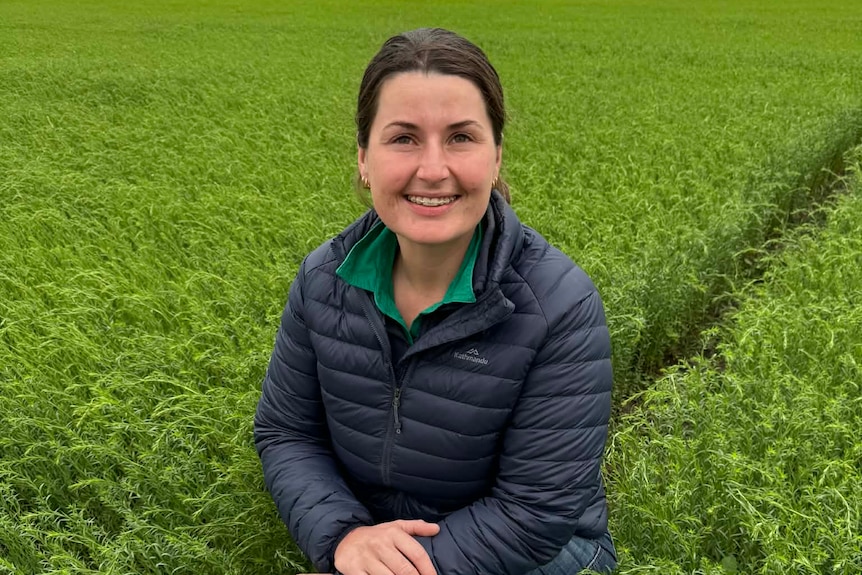
Kate Lumber says summer has been tough, after a number of back-to-back good seasons in the district. (Supplied: Kate Lumber)
The Bureau of Meteorology is forecasting a drier autumn across most of regional NSW.
“We’ve roughly got a 60 to 80 per cent chance of seeing drier-than-median conditions,” said senior climatologist Hugh McDowell.
“So we’re likely to see less rainfall than we would normally see at this time of year.”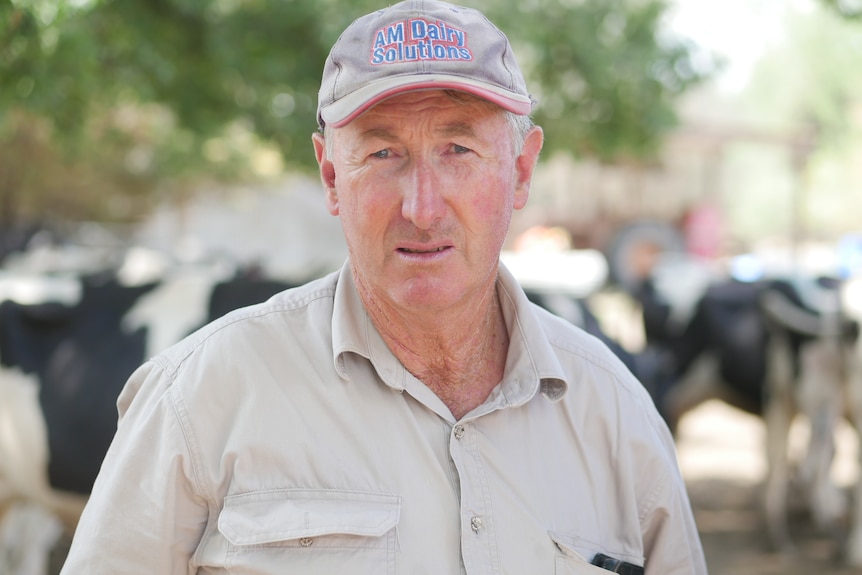
Kevin Malone says it has been tough to grow pasture for his cows. (ABC News: Emily Doak)
While hoping for rain, Mr Malone is focused on what he can do to manage the difficult conditions.
“It’s another challenge so don’t let it get on top of you, just try and work out the best way to overcome it,” he said.