
‘No foregone conclusion’
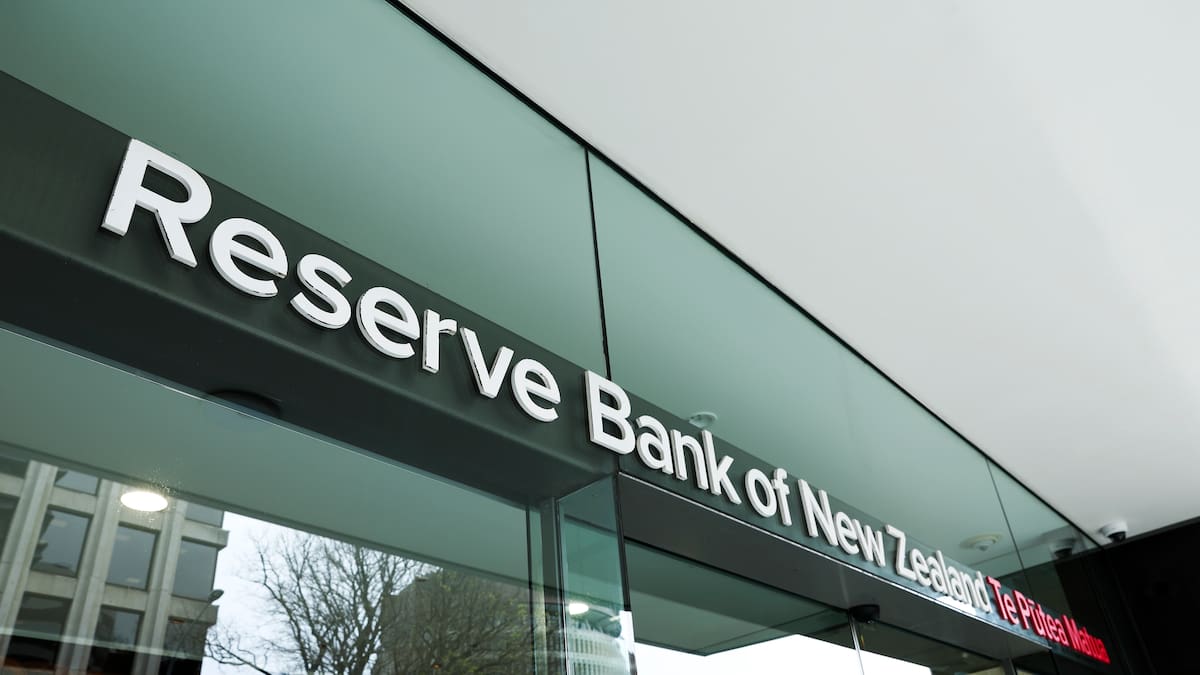
“The bank acknowledged positive signs in the economy and the slightly higher inflation, but indicated it was willing to wait and see how things play out and not jump the gun.
“The market liked that – there was an expectation that rate hikes were coming in September and before the end of the year. The next OCR move will be going up, but there’s no foregone conclusion when this will happen,” Lister said.
The RBNZ said economic growth is broadening across sectors of the economy, including manufacturing, construction and some retail, and is expected to increase this year.
The bank was confident that inflation (currently 3.1%) would return to the 1-3% target band by the end of March and would fall to the 2% midpoint over the next 12 months, driven by spare capacity in the economy and modest wage growth.
The NZ dollar fell 0.8% to US59.9c against the American greenback after the RBNZ statement.
Local stocks
Spark and Fletcher Building, both recovering stocks, provided expected half-year results.
Spark was down 1c to $2.13 after reporting a 1.2% drop in revenue to $1.89 billion and 82.9% rise in net profit to $64m for the six months ending December.
Operating earnings (ebitdai) increased 10.3% to $448m, and Spark is paying an interim dividend of 8c a share on April 10.
The telco confirmed its full-year ebitdai guidance of 1.01b-$1.07b, and free cash flow of $290m-$330m. It also made $51m worth of cost savings.
Spark said mobile service revenue grew 1.6% to $499m, broadband stabilised at $303m and cloud revenue increased 1.7% to $120m.
“In the coming six months, we plan to add over 100 additional cell site builds and upgrades, revamp our international roaming experience and launch satellite-to-mobile text and data services,” Spark said.
Fletcher Building was up 1c to $3.51 after reporting a steady half-year result, with revenue of $2.86b, up 0.5%, and net profit of $45m – a big turnaround from the $88m loss in the last six months of the 2025 financial year. Operating earnings (ebit) were $145m.
Fletcher said the first half was another demanding period for the building industry, with subdued markets across New Zealand and Australia. Conditions differed between a particularly weak first quarter and a more stable second quarter.
Residential and civil demand in New Zealand is likely to remain relatively subdued through the 2026 financial year, with a more meaningful recovery not anticipated until calendar year 2027.
Fisher & Paykel Healthcare and Ebos Group drove the rebound, rising $1.12 or 3.14% to $36.80, and 96c or 4.04% to $24.70, respectively.
Infratil was up 28c or 2.61% to $11.02; Contact Energy gained 15c to $9.19; a2 Milk added 36c or 3.22% to $11.55; and Auckland International Airport increased 16c or 1.9% to $8.57.
Gentrack rose 40c or 5.69% to $7.43; Property for Industry increased 7c or 3.18% to $2.27; Chorus was up 15c to $9.26; and Bremworth collected 2.5c or 3.76% to 69c.
Tower was up 1c to $1.83 after telling shareholders at the annual meeting that gross written premium increased 2% to $204m for the first four months of the 2026 financial year compared with the previous corresponding period.
Tower’s New Zealand policy numbers increased 5%, driven by growth in house and contents policies, and total customer numbers rose 12,000 year‑on‑year to 323,000 at the end of January.
Tower’s chairman, Michael Stiassny, has retired and been replaced by Naomi Ballantyne, who founded Partners Life in 2010, and sold it in 2022.
Sky TV was up 4c to $3.22, after earlier telling the market it will not be renewing its agreement with Warner Bros Discovery for the HBO Max content when the current agreement ends mid-June. Warner Bros is preparing to launch its direct-to-consumer service in New Zealand.
Stay ahead with the latest market moves, corporate updates, and economic insights by subscribing to our Business newsletter – your essential weekly round-up of all the business news you need.