
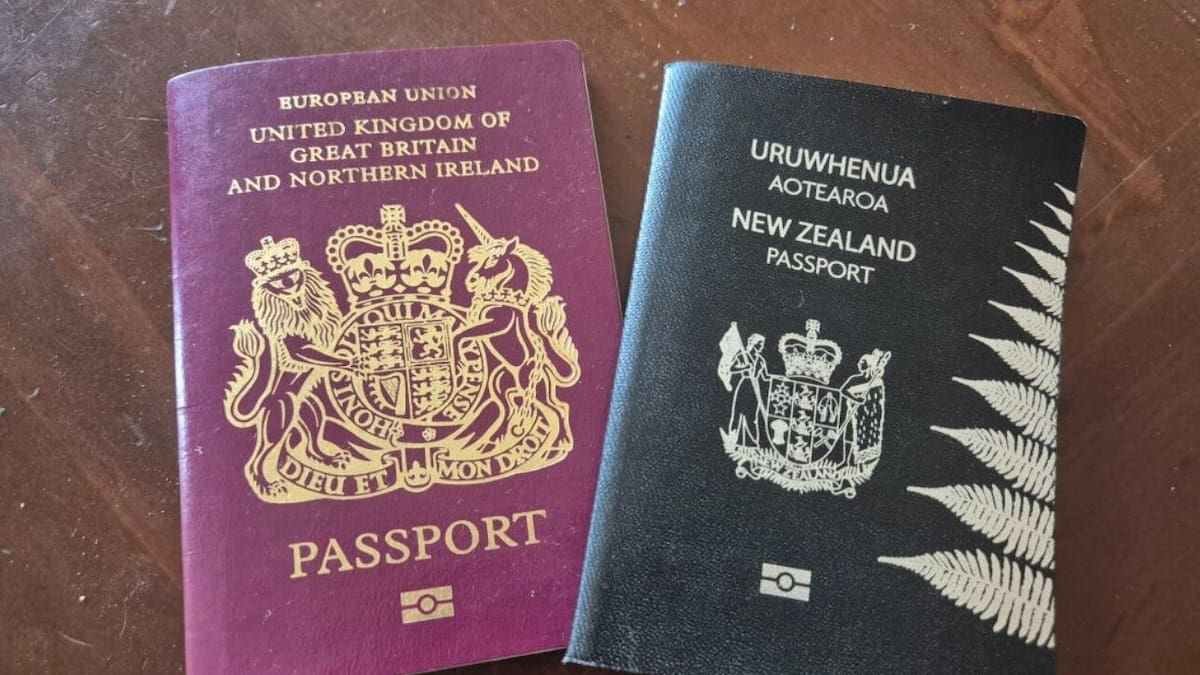
RNZ asked the British High Commission in Wellington if it had sent out a media release about any of the changes. It pointed to a January 2025 media release that dealt only with the issue of introducing ETAs (Electronic Travel Authorisations) and not the new requirement for British passport holders, or certificates of entitlement.
It has been asked for further comment on the issue of digital certificates of entitlement.
Travel agents are warning travellers about next week’s border changes in the UK. Photo / Jasmine Fair, RNZ
To questions about whether staff will be at airports to assist its citizens when the new passport requirement comes in next Wednesday, it said consular assistance was provided for all citizens abroad who needed it.
Many British migrants had asked why the passport requirement was introduced, after the UK government said it was to make borders more secure. When asked for more information, the High Commission told RNZ it had already provided that reasoning.
Counting aliens
UK law professor Elspeth Guild, who specialises in border controls, said the rationale behind the changes could be led by a drive for better statistics.
“A number of countries insist that where their nationals are entering their ‘home’ country they must use their ‘home’ passport. This requirement seems to have a basis in the entitlement of countries to know whether their citizens are at home or not.
“The new insistence on the use of the home passport when entering a state, I think, is linked to the entry-exit databases where a lot of modifications were required to deal with dual nationals, and now states want to know. There is a justification in that citizens arriving home cannot be subject to immigration rules (at least in the UK), but if the authorities do not know that the person is a citizen they will be classified as an alien, and then when they fail to leave at the end of their permitted stay they mess up the statistics on how many ‘illegal’ immigrants are floating around.”
She said while revenue generation was also a possible reason for the new policy, several countries that permit dual nationality had tightened up their processes.
For travellers embarking on a trip to the UK next week who had British parents but no visible link to the UK, she had some words of comfort.
“Unless the place of birth stated on the passport indicates that the person may have birthright citizenship somewhere else, it is virtually impossible without a detailed investigation to know whether someone is a dual national. This is particularly so where citizenship was acquired through ancestry rather than place of birth.”
-RNZ