
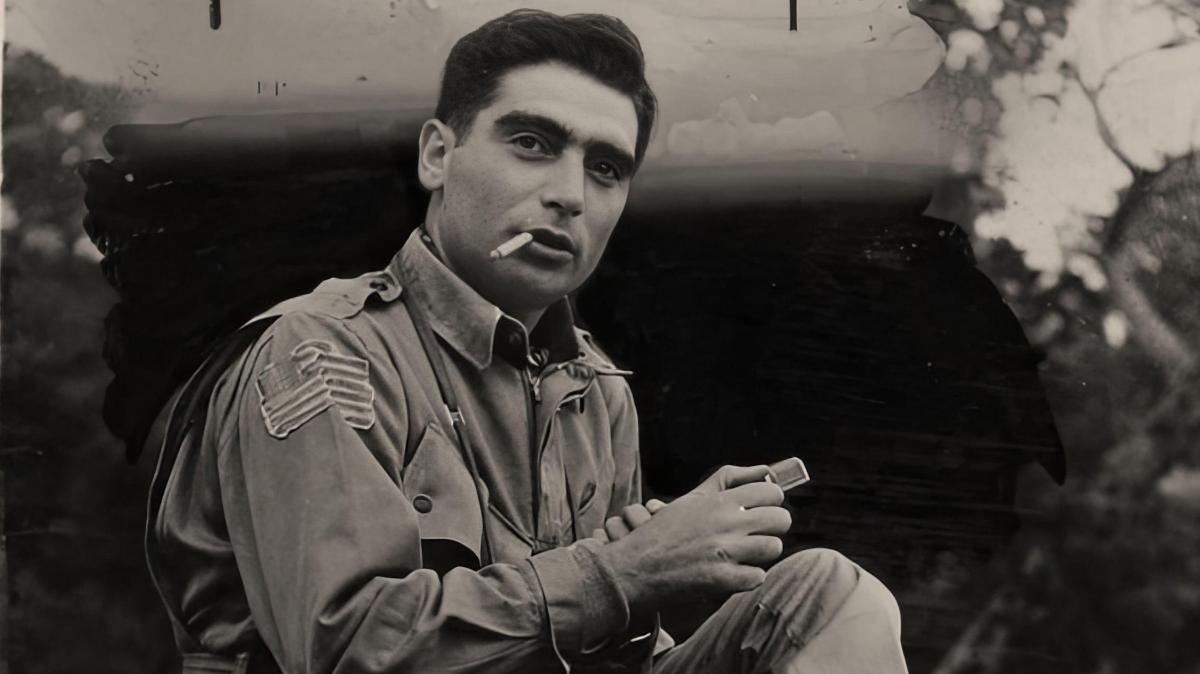
Robert Capa crafted his own legend as a hard-living war photographer, fond of late-night poker games, the company of glamorous women and drinking bouts with Ernest Hemingway, the equally fast-living American author. Capa’s devil-may-care, bon vivant image belied his origins, however.
Born Endre Friedmann, he was the son of a Jewish tailor in Budapest. He changed his name while living in Paris to try to make himself more marketable as a photojournalist.
A Capa exhibition that opened at Paris’s Liberation Museum on Wednesday explores the life story of the pioneer of war photography, who set the tone for generations of frontline photojournalists.
“He invented both a personality and a style of photography,” said Sylvie Zaidman, director of the museum, whose permanent exhibitions are devoted to the Nazi occupation of France, the French Resistance and the liberation of Paris in 1944.
The exhibition covers Capa’s youth in Hungary and exile to Berlin and Paris; the Spanish Civil War in which he made his name; the Second World War and his seminal photographs of D-Day; and the post-war years, when his torrid two-year affair with Ingrid Bergman, the Hollywood star, inspired Alfred Hitchcock’s film Rear Window.
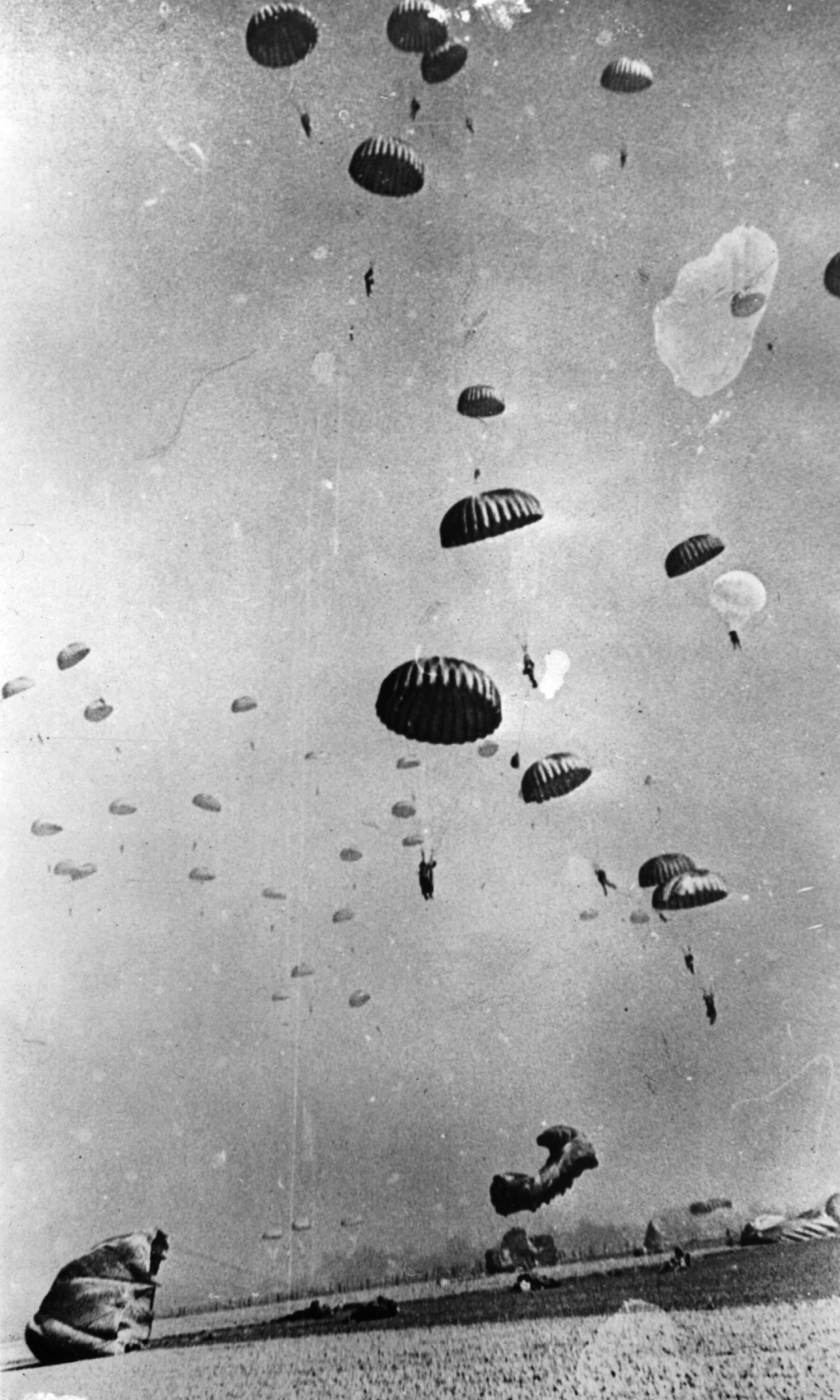
Paratroopers of the 17th US Airborne Division descending near Wesel in Germany during an Allied operation to secure the Rhine crossing
ROBERT CAPA/KEYSTONE/GETTY IMAGES
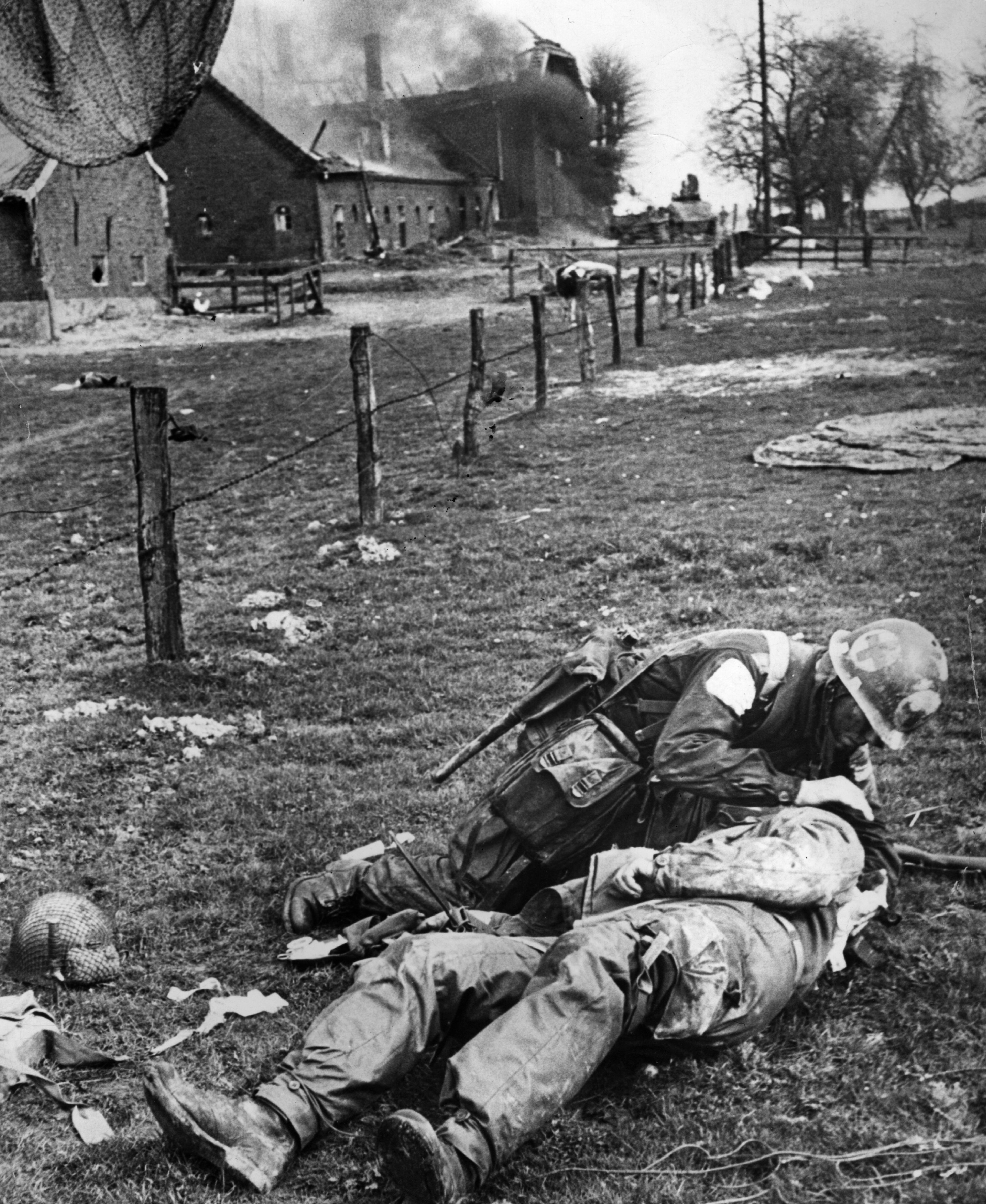
A medic attends to an injured GI in Germany during the Allied assault across the Rhine
ROBERT CAPA/GETTY IMAGES
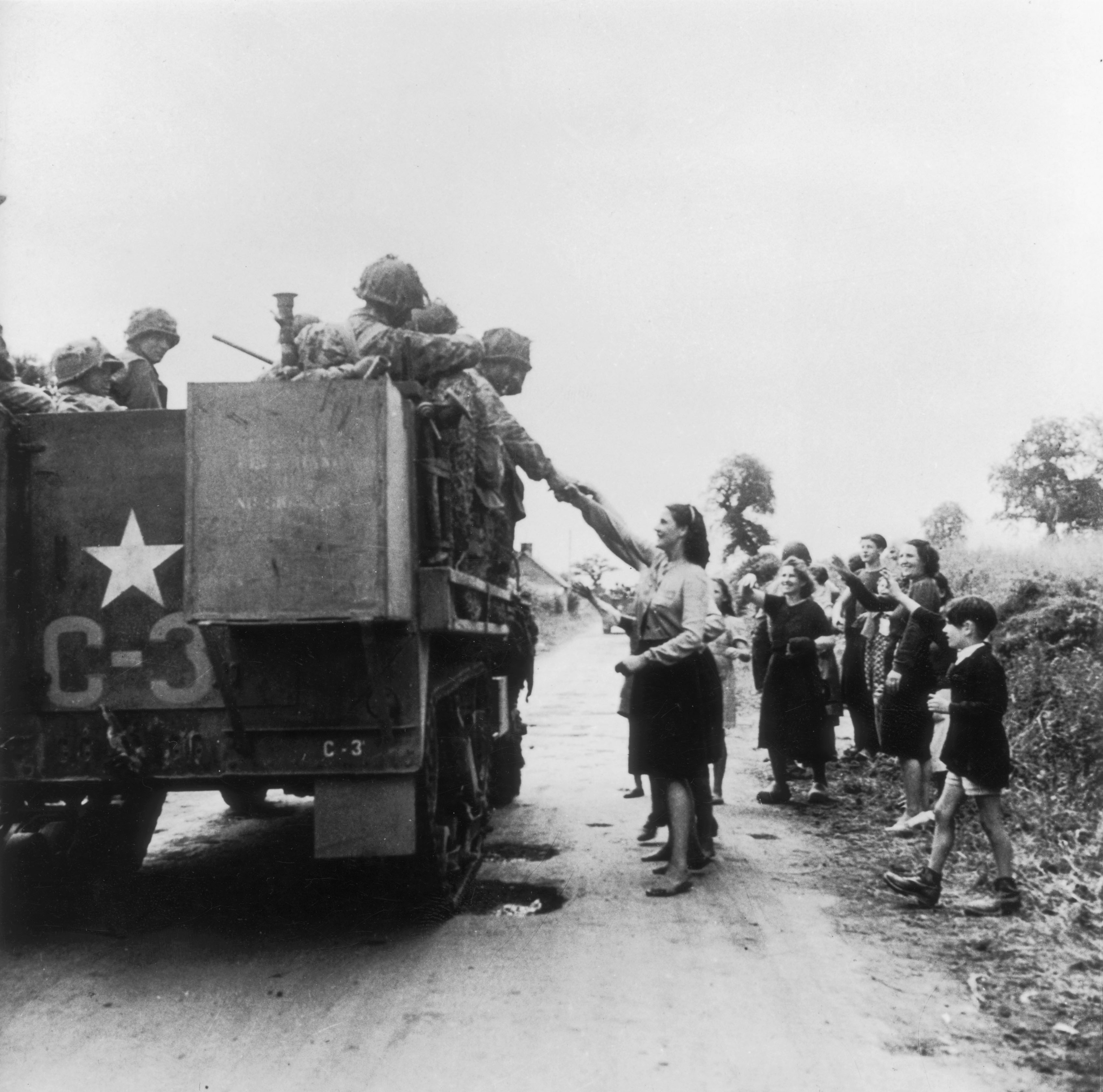
American troops advancing through France in 1944 are greeted by civilians near the village of Notre-Dame-de-Cenily
ROBERT CAPA/KEYSTONE/HULTON ARCHIVE/GETTY IMAGES
Capa fled Budapest in 1931, at the age of 18. Under the stridently nationalist regime of Admiral Milos Horthy, pre-war Hungary became an increasingly hostile place for Jews, and Capa, a hot-blooded rebel who opposed the rise of fascism, soon fell foul of the authorities. Beaten and jailed for taking part in a demonstration, he was forced to promise to leave the country to secure his release.
He went to Berlin to study journalism and political science, supporting himself by working for the Dephot photo agency.
After the Nazis came to power, however, Jews were banned from universities, and he fled once again, this time to Paris. He became a freelance photographer and took the name Robert Capa.
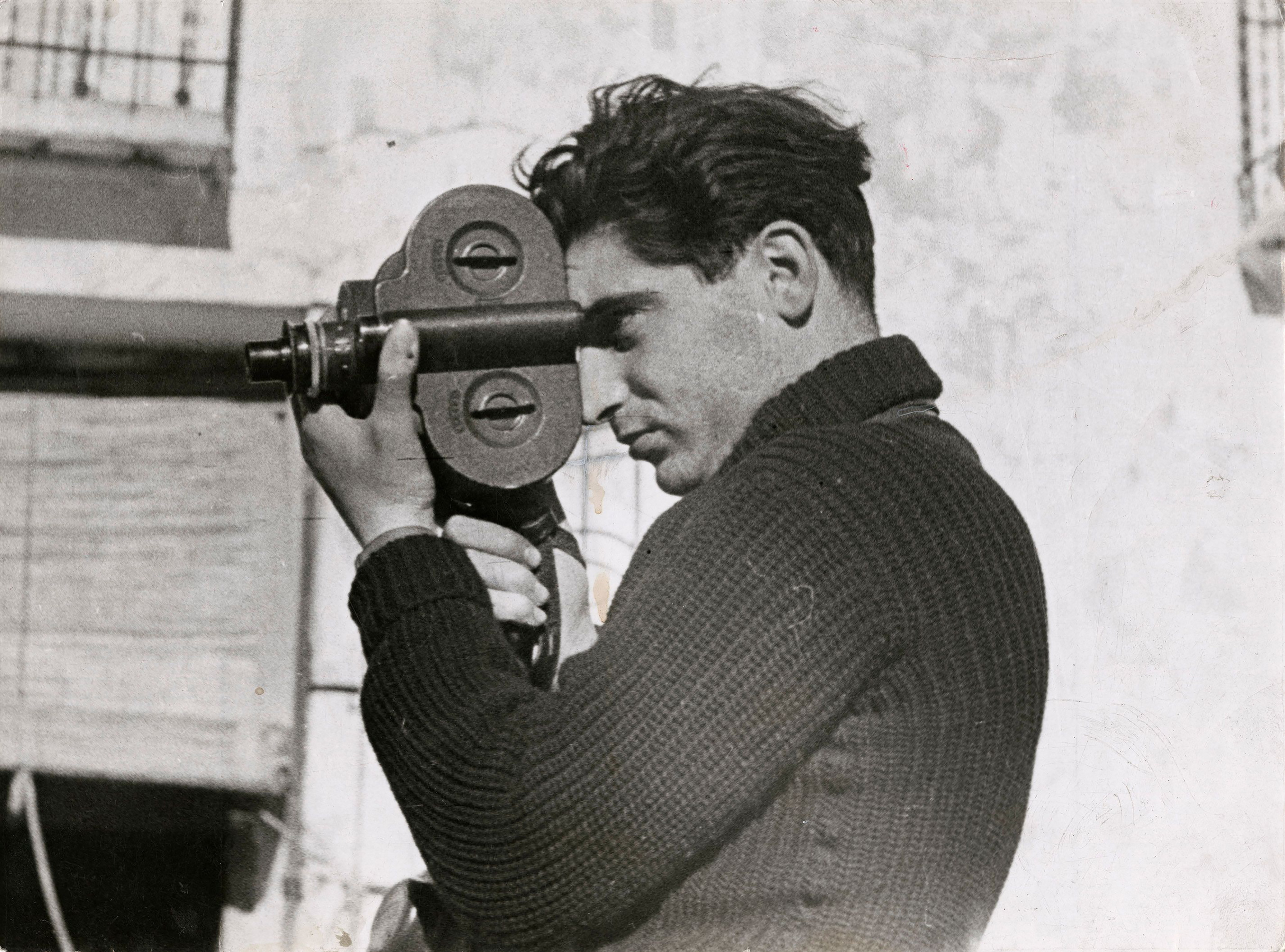
Capa in 1937
FINE ART IMAGES/HERITAGE IMAGES/GETTY IMAGES
“According to some accounts, it was his partner, Gerta Pohorylle, who chose the name Capa,” Zaidman said.
Pohorylle, whom he met in Paris, was a German Jew and also a photographer. She, too, had fled the Nazis and changed her name to Gerda Taro.

Gerda Taro, left, with Capa in a Paris café in 1936
FRED STEIN ARCHIVE/GETTY IMAGES
They were acclaimed for their frontline coverage of the Spanish Civil War from 1936. The war made Capa’s name, but Taro was fatally injured in July 1937. She died in a Madrid hospital at the age of 26, with Capa at her bedside.
While covering the Spanish Civil War, Capa met a fellow journalist: Ernest Hemingway. They established a close camaraderie, and Capa shot a series of images of Hemingway in 1937, showing him talking to soldiers on the front line and helping a Republican fighter unjam his rifle.
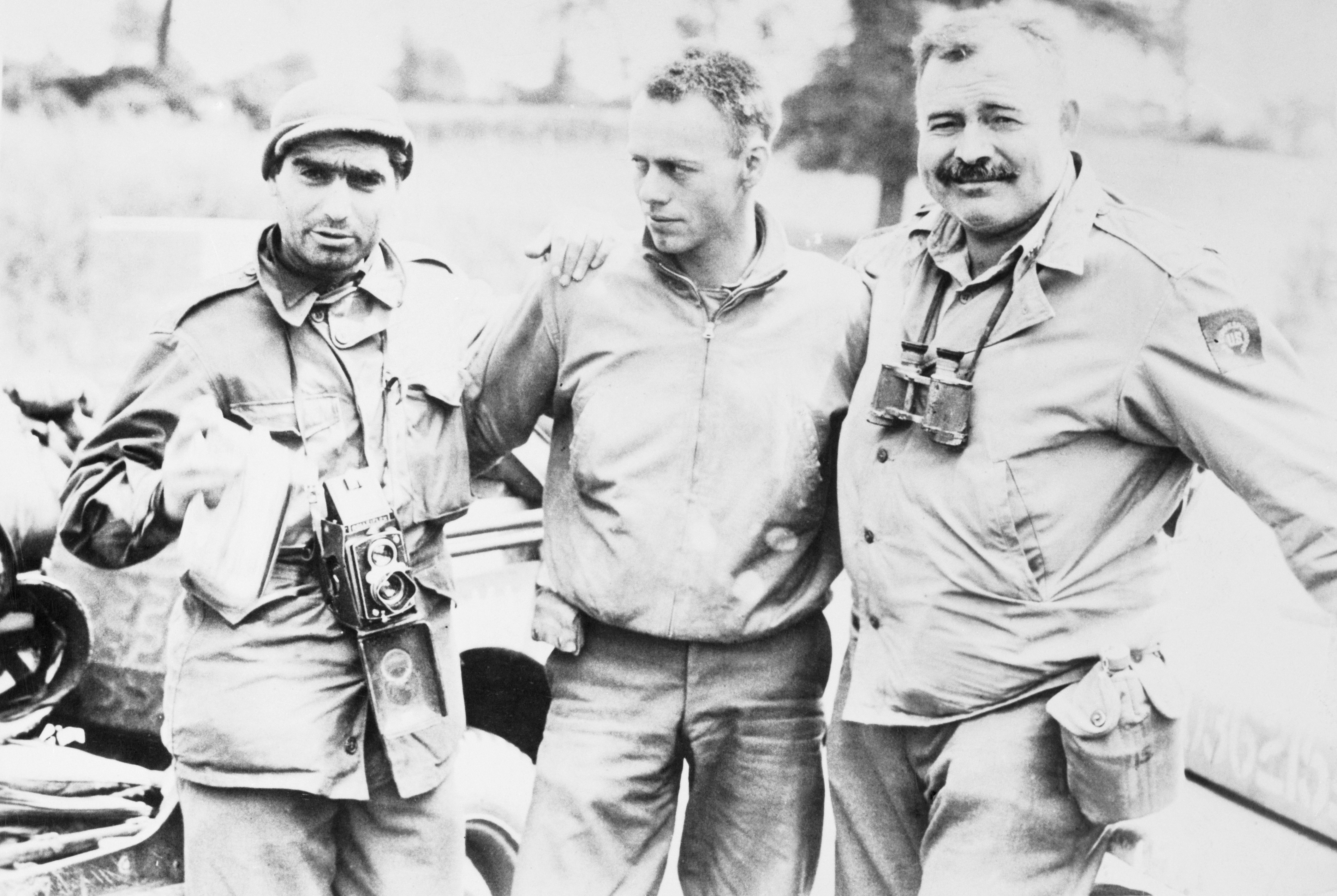
Capa, left, with Ernest Hemingway, right, and an unidentified soldier
BETTMANN
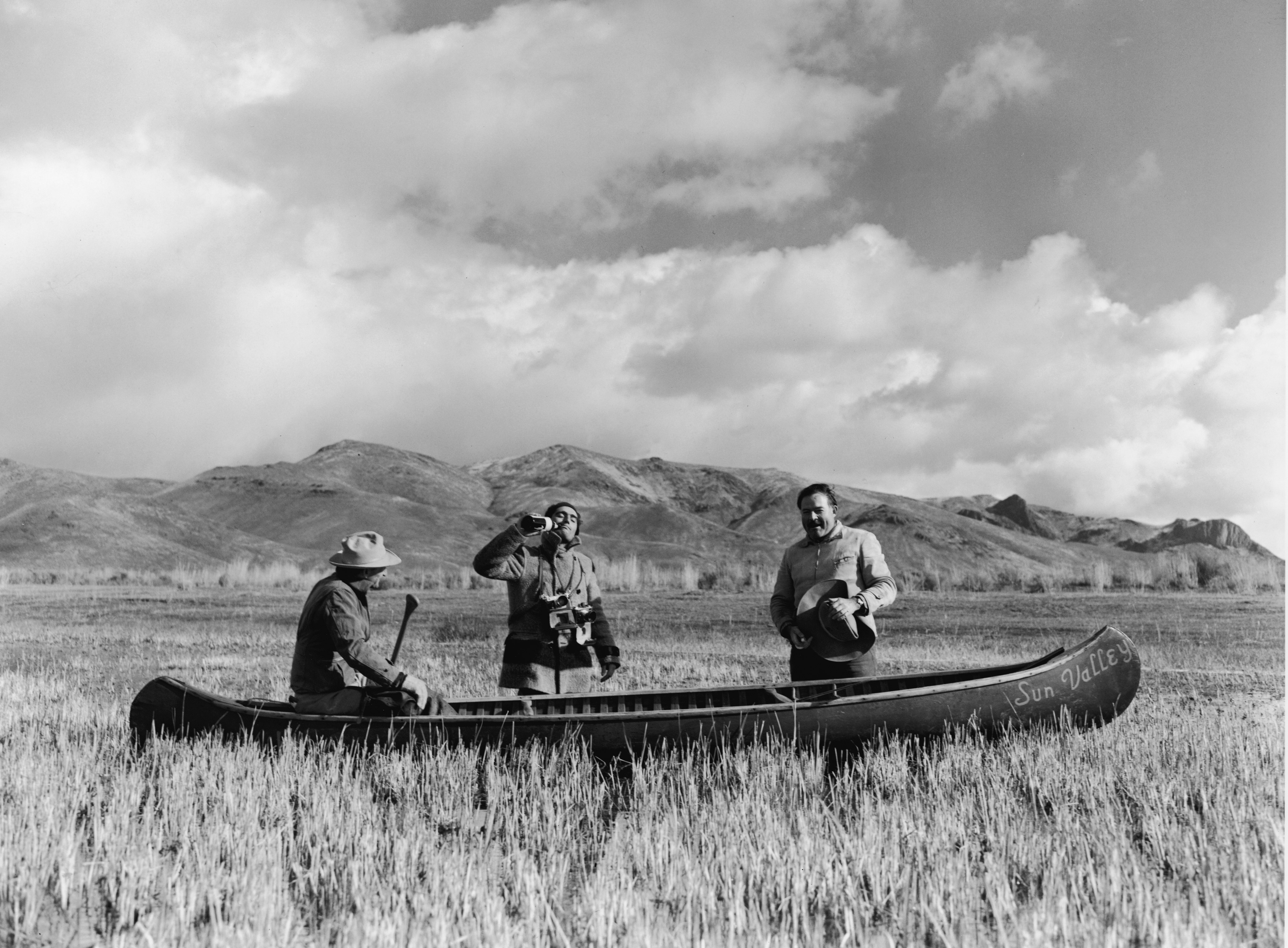
Capa and Hemingway on a duck hunt in Sun Valley, Idaho, in 1940
LLOYD ARNOLD/GETTY IMAGES
Capa returned to Paris in September 1939, when the Second World War broke out. But as a stateless Jew faced with France’s tightening laws on “undesirable foreigners”, staying in Paris would have been dangerous. Capa shut his studio at 37 rue Froidevaux, went to Le Havre and boarded a ship for America.
• The 11 best Second World War books — chosen by Dominic Sandbrook
New York became his base during most of the war, but he often travelled back to Europe on assignments for Life and other magazines.
Some of his best-known photographs were of the Allied landings in Normandy on D-Day, June 6, 1944. His slightly blurred picture of a GI struggling through the surf at Omaha Beach under relentless German machine-gun fire is a defining image of the landings.
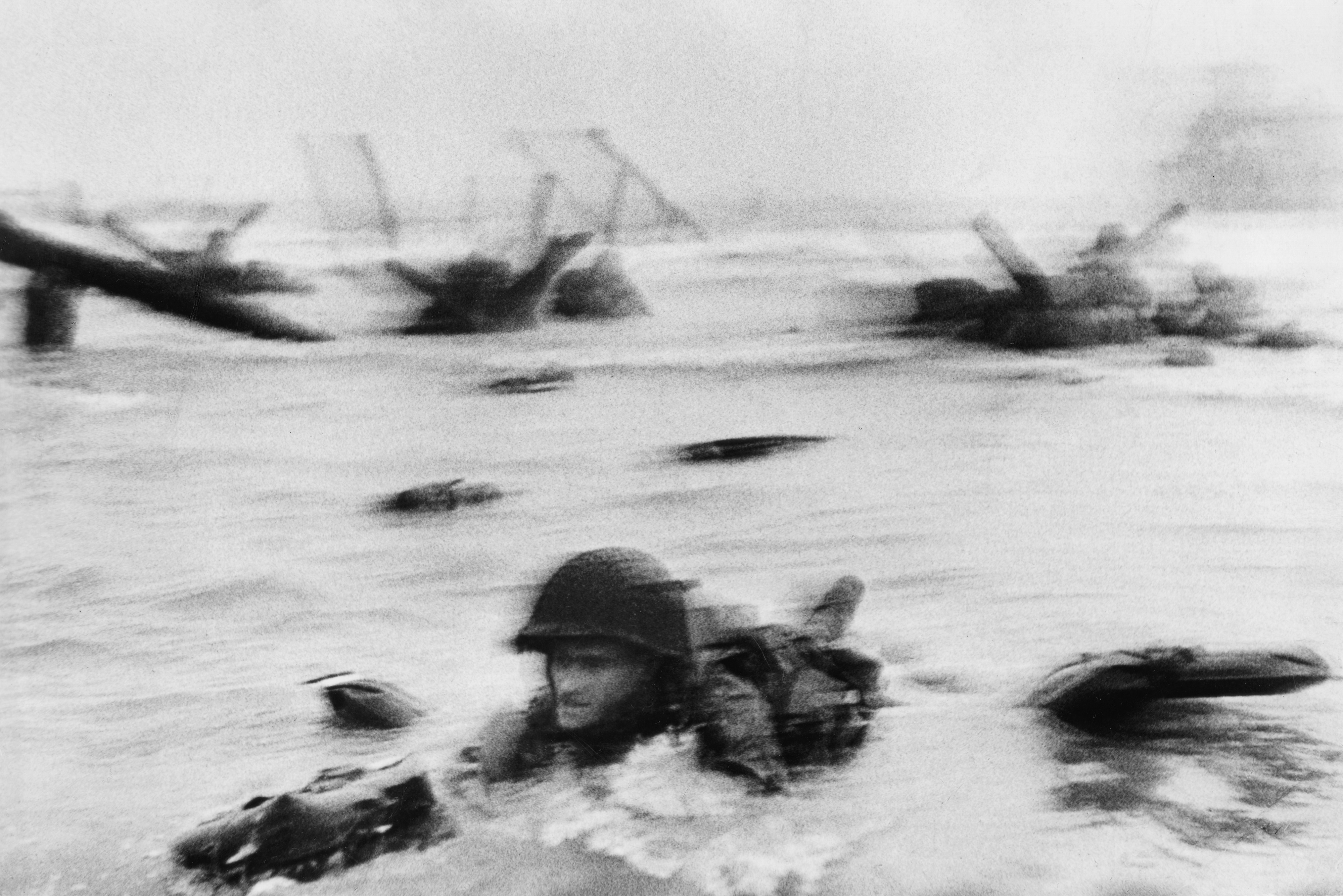
US troops’ first assault on Omaha Beach during the D-Day landings
SHOP.MAGNUMPHOTOS.COM
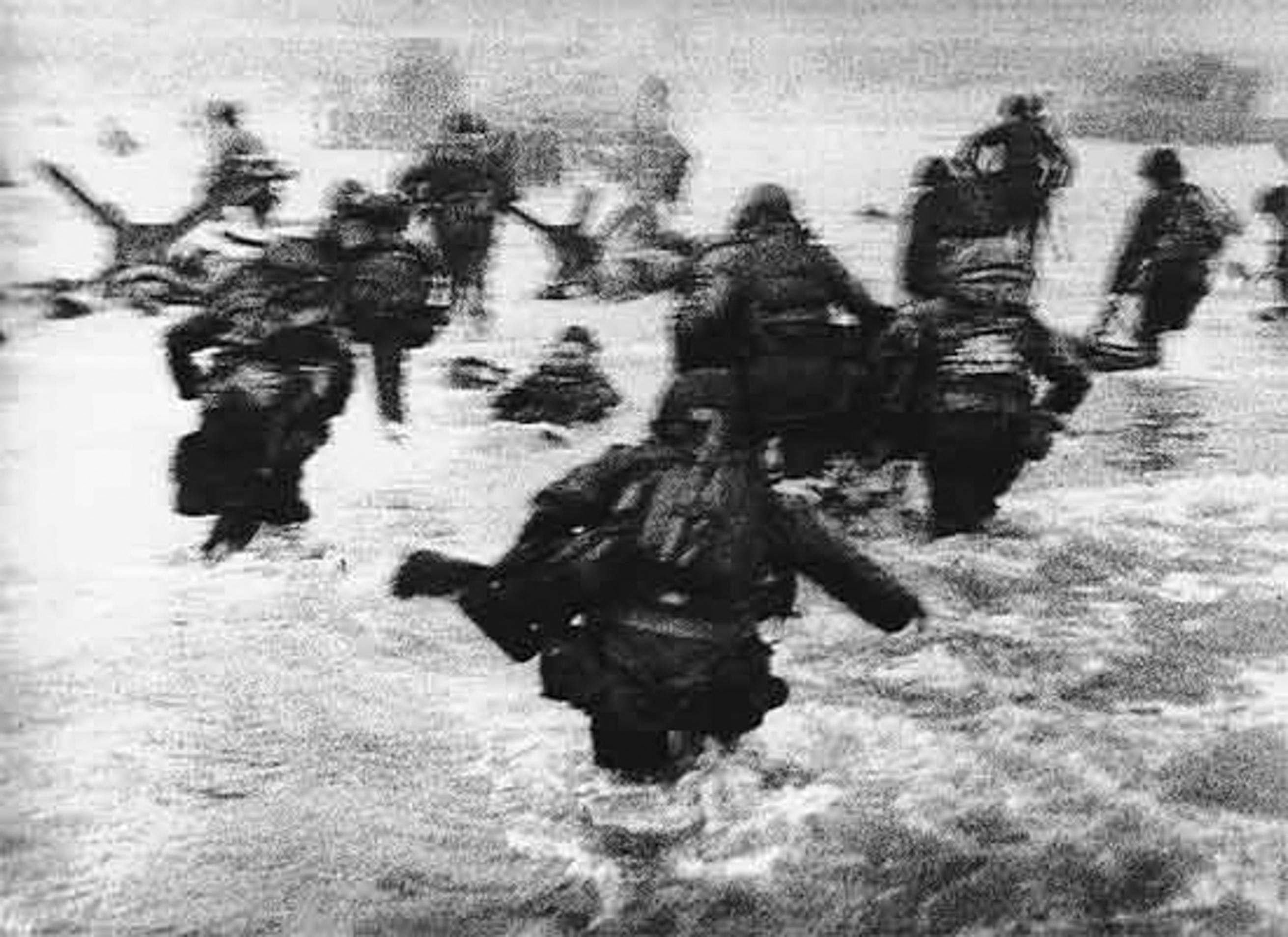
“Given their huge impact, it is a little surprising that only ten of Capa’s D-Day photographs have survived,” Zaidman said. “He must have taken many more.”
• Seen for the first time, the D-Day pictures blocked by censors
Another famous Capa image from 1944 shows a Frenchwoman whose head was shaved for allegedly collaborating with the Germans.
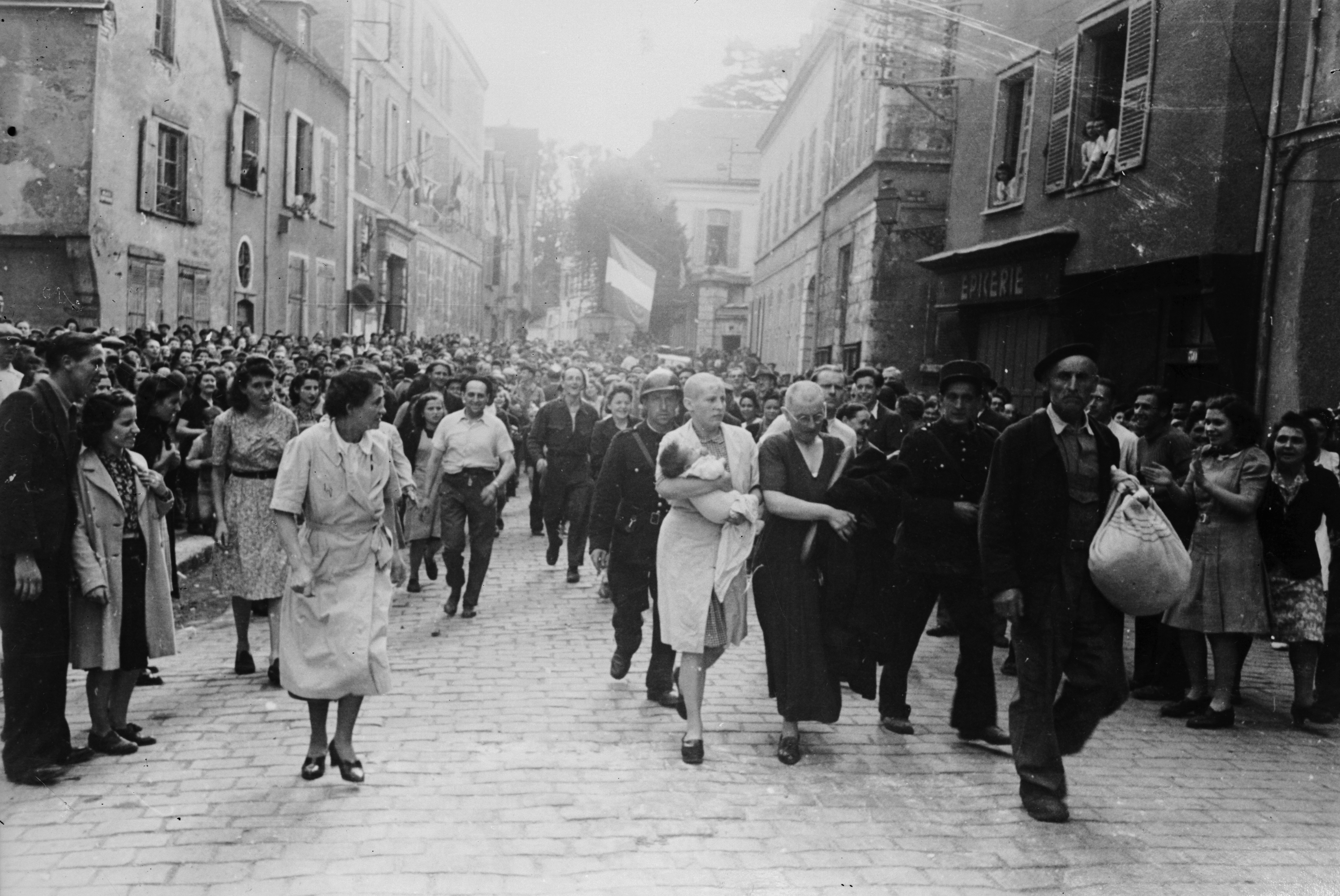
The shaved woman of Chartres
ROBERT CAPA/GETTY IMAGES
Footage on display at the exhibition shows Capa at work in newly liberated Paris, where he photographed General Charles de Gaulle, French civilians and soldiers. It was during that time that he regularly drank with Hemingway at the Hôtel Scribe and often attended the same parties.
“What’s important in this exhibition is the historical context, showing Capa as a man of his time, and his time was one of war against fascism,” Zaidman said.
After the war, he founded the Magnum agency with his friend Henri Cartier-Bresson and other photographers, and he travelled to the Soviet Union with John Steinbeck, the American author.
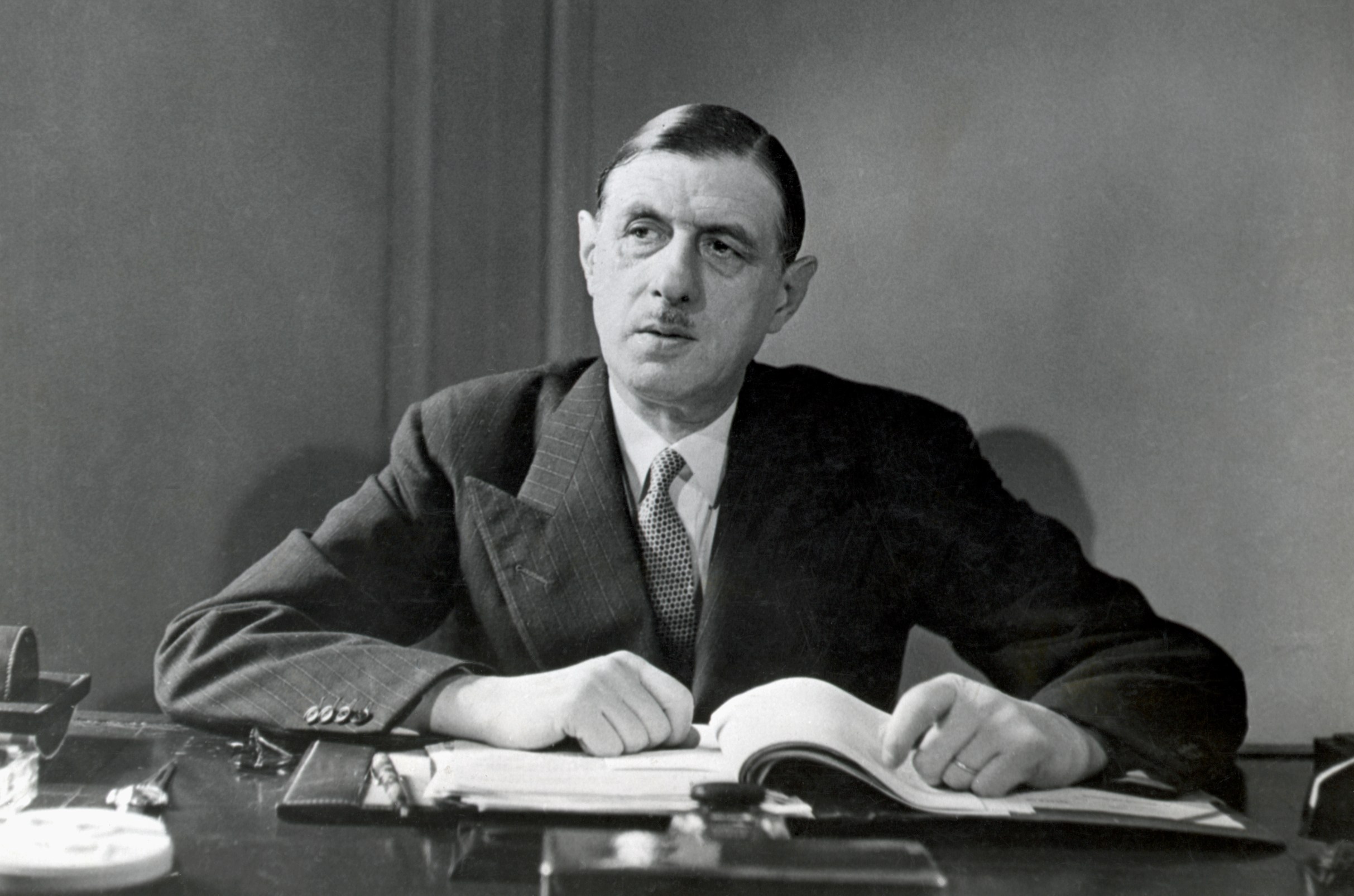
The French Second World War leader Charles de Gaulle
In 1945, he met Ingrid Bergman at the Ritz in Paris — a favourite haunt of Hemingway’s — when the star was touring to entertain American troops. He invited her to dinner, and they began a passionate but stormy relationship.
Capa followed her back to Hollywood, photographed her on set and even had a small part in the film Temptation.
During their affair, Bergman was in a stale marriage with Petter Lindstrom, a Swedish-American neurosurgeon.
She was working with Alfred Hitchcock on the 1945 film Spellbound and, the next year, on Notorious. Bergman was reported to have confided in the director, telling him she was torn between married respectability and the restless war photographer.
Hitchcock’s 1954 film Rear Window, whose hero is a risk-addicted photojournalist entangled with a New York socialite who works in fashion, is widely believed to have been loosely inspired by Capa’s relationship with Bergman.
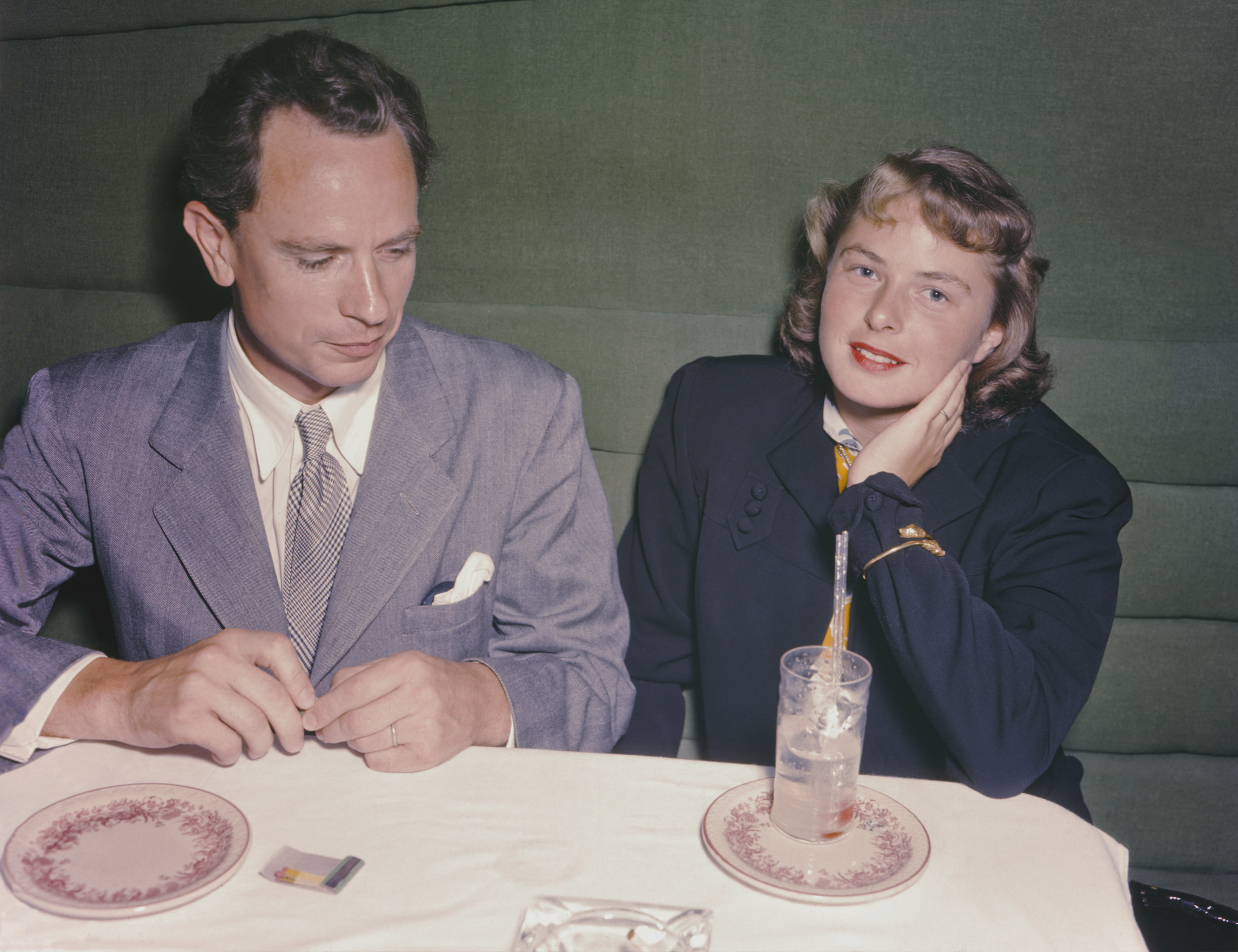
The Swedish actress Ingrid Bergman with her husband, Petter Lindstrom, a neurosurgeon
ARCHIVE PHOTOS/GETTY IMAGES
Bergman considered divorcing Lindstrom to marry Capa, but according to her account, the photographer told her he was “not the marrying kind”. He was not prepared to give up the freedom to go to war zones at a moment’s notice.
Capa died in 1954, aged 40, in what is now Vietnam after stepping on a land mine while covering the independence war against French colonial rule.
“He lived life at full speed,” Zaidman said. “He was witty, generous and didn’t take himself too seriously, but despite his carousing and his many affairs, he was totally committed. Robert Capa never betrayed the ideals of Endre Friedmann.”