
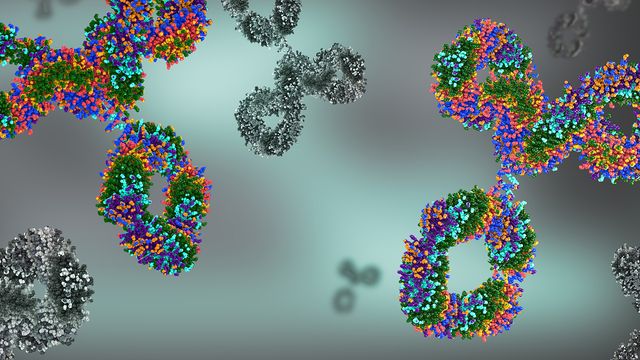
Proteomics—the large-scale study of the entire set of proteins produced by a biological system—has evolved over several decades. Its development was shaped by advances in separation technologies, mass spectrometry, and bioinformatics. Today, proteomics applications are vast, from the discovery of protein biomarkers for disease diagnosis to the identification of drug targets. This article takes a deep dive into the history of proteomics from the conception of the term “proteome” up to modern-day advances in bioinformatics and single-cell protein analysis.
On the history of proteomics
Proteomics began with the development of 2D gel electrophoresis in the 1970s. The technique enabled the large-scale separation and analysis of proteins by isoelectric point (the pH at which the protein’s net charge is zero) and mass.
Some of the earliest examples of proteomics studies utilized 2D gel electrophoresis, for example, to separate externally exposed plasma membrane proteins of mammalian cells and to map protein profiles across mouse tissues and fruit flies.1, 2
Defining proteomics
Despite proteomics studies being published back in the 1970s, it wasn’t until the 1990s that the term “proteome” was first coined. Marc Wilkins, at the time a doctoral student, first introduced the word at a 2D electrophoresis symposium in Sienna, Italy, in 1994.
The following year, the term proteome first appeared in print in a journal article published in Electrophoresis.3 A second article, coauthored by Wilkins and published in the journal Biotechnology and Genetic Engineering Reviews, went on to further define the term as: “…the entire PROTein complement expressed by a genOME, or by a cell or tissue type.”4
Nearly a decade later, Neil Kelleher and Lloyd Smith proposed the term “proteoform” to describe all the molecular forms of a protein product produced from a single gene.5
The evolution of proteomics technology
The field of proteomics evolved during the 1990s, and by the turn of the millennium, protein analysis relied less on 2D gel electrophoresis and instead on mass spectrometry (MS). Advances in both MS ionization methods and analyzers fueled interest in MS-based protein analysis.
One key technological innovation was electrospray ionization (ESI). ESI was developed in the late 1980s by John B. Fenn, who later shared one half of the 2002 Nobel Prize in Chemistry for his work.6 ESI is a soft ionization technique that uses electrical energy to enable the transfer of ions from solution into the gaseous phase, allowing the study of large molecules like proteins by MS.
Another key development in MS was the introduction of matrix-assisted laser desorption/ionization (MALDI). This soft ionization technique involves combining the analyte of interest with an energy-absorbing matrix to facilitate ionization via desorption. Franz Hillenkamp and Michael Karas developed the technique in the 1980s, embedding analytes in UV-absorbing matrices such as tryptophan. Later, Koichi Tanaka shared one half of the 2002 Nobel Prize in Chemistry for his work. He used glycerol and finely divided metal powder as the matrix, enabling MS analysis of biological macromolecules.
Researchers first applied MALDI imaging to biological tissue samples in 1997, using it to map a small protein on the membrane of human mucosa cells.7
Mass spectrometry’s history
J.J. Thomson is commonly referred to as the “father of mass spectrometry” and was awarded the 1906 Nobel Prize in Physics for his discovery of electrons. Francis Aston built on the work of Thompson and was awarded the 1922 Nobel Prize in Chemistry for his discovery of isotopes in many non-radioactive elements by means of a mass spectrograph.
Further advances in separation and mass spectrometry technology led to the creation of shotgun proteomic techniques, a term first coined in 1998.8 In shotgun proteomics—also referred to as bottom-up proteomics—the proteins are first digested into a complex mixture of peptides. Following fractionation, the digested peptide mixture is subjected to MS, typically in an LC-MS/MS configuration. Existing databases are used to identify which proteins are present in the sample from the resulting peptide sequences.
Bottom-up proteomics approaches are still utilized today for proteome profiling, protein quantification, protein modification, and protein‒protein interaction studies. More recently, bottom-up proteomics approaches that employ larger peptide fragments have been developed for a “middle-down” approach.9
In the early 2010s, approaches towards generating bottom-up proteomic data shifted from data-dependent acquisition (DDA) to data-independent acquisition (DIA). The DDA method selects peptides generated during the first cycle of MS for fragmentation during the second cycle. In DIA, all precursor ions observed in cycle one of tandem MS are fragmented in cycle two. DIA workflows benefited from improvements in MS instrumentation and computational algorithms, further improving data quality and sample throughput.10
Launch of the Human Proteome Project
Proteomics has been closely linked to genomics since its inception as a field of study. In October 1990, the Human Genome Project was launched, led by an international group of researchers looking to sequence the entire human genome. The Human Genome Project reached a key milestone in April 2003, having sequenced approximately 92% of the total human genome. A set of six papers in the April 1, 2022, issue of Science described the final, complete human genome sequence.11
Inspired by the Human Genome Project, the Human Proteome Organization (HUPO) was established in February 2001. The organization’s mission was to mobilize proteomics research and development, attract young scientists to this exciting new field, and stimulate and coordinate scientific initiatives.
Following the success of the Human Genome Project, HUPO launched the Human Proteome Project in 2010. The goal of the project is to generate a map of the protein-based molecular architecture of the human body, acting as a resource for elucidating biological and molecular function.12
A 2025 report on the progress of the Human Proteome Project stated that approximately 93.6% of the human proteome has now been officially detected with high confidence.13 Proteomics databases supported by HUPO initiatives, such as neXtProt, serve as vital bioinformatics tools for researchers studying protein localization and expression in human tissues and cells. Figure 1 presents key dates in the proteomic timeline, up to the latest report on the Human Proteome Project.
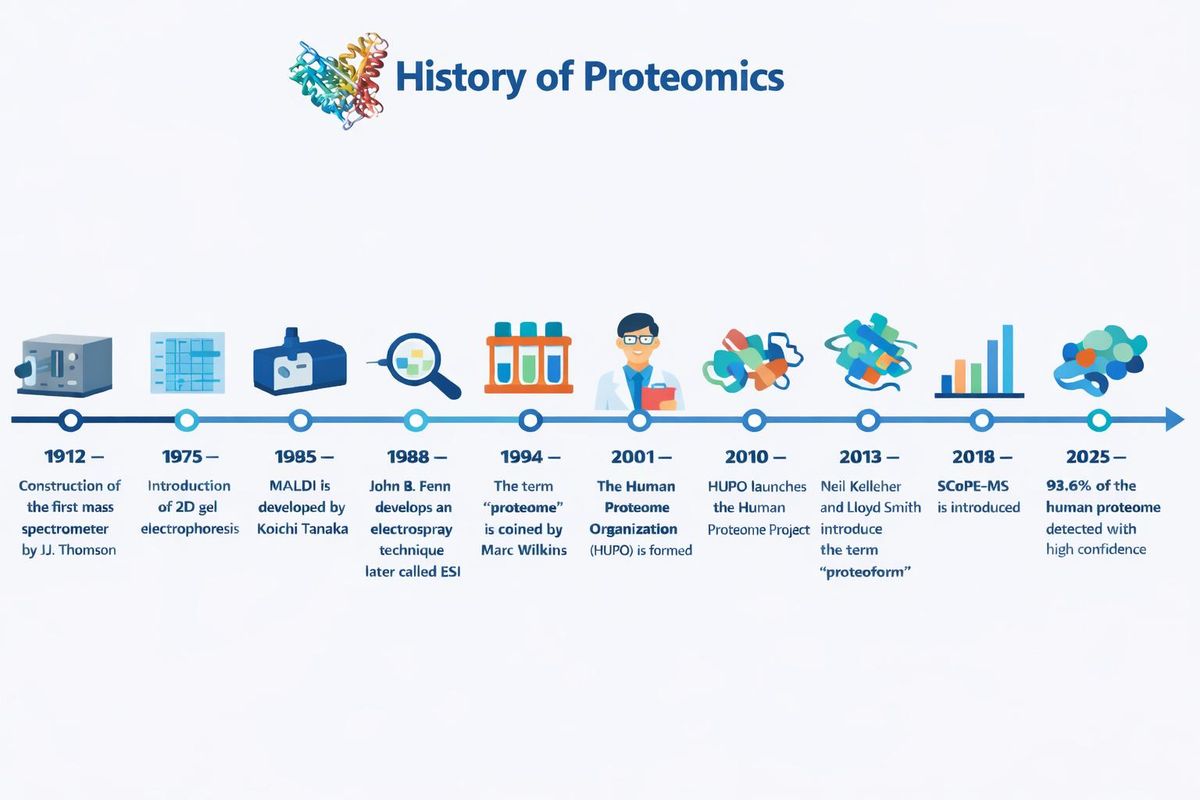
Figure 1: Key dates within the history of proteomics. Credit: AI-generated image created using Microsoft Copilot (2026).
Bioinformatics advances and the future of proteomics
Looking to the future, AI has emerged as a powerful tool that could help overcome common challenges that exist in modern proteomics workflows. Some AI-powered techniques that have found use in proteomics include:
Data-independent acquisition neural networks (DIA-NN): DIA-NN uses deep neural networks to handle the large volumes of data generated by DIA workflows, simplifying peptide identification and quantification.14AlphaFold: An AI program developed by Google’s DeepMind that is designed to predict protein structures based on training data from the Protein Data Bank.15Deep Proteomic Marker (DeeProM): A deep-learning tool that integrates proteomics data with drug response and CRISPR-Cas9 gene essentiality screens to identify protein biomarkers linked to cancer vulnerabilities.16
While AI holds great promise for proteomics, progress has been limited due to a lack of well-annotated, high-quality, and standardized datasets. Uniform standardization efforts and collaborative frameworks for data sharing are still needed and will likely drive future advances.
High-throughput proteomics and single-cell analysis
Recent developments in high-throughput proteomics (HTP) techniques, enabled by improvements in MS sensitivity, sample preparation, data interrogation, and analysis, are also pushing the boundaries of the number and speed at which proteins can be analyzed.
Single-cell analysis—one of the most rapidly growing areas of modern proteomics—has benefited greatly from the introduction of HTP approaches. In 2018, researchers from Northeastern University revealed “Single Cell ProtEomics by Mass Spectrometry” or SCoPE-MS, expanding the possibilities for MS-based single cell analysis.17 in SCoPE-MS, mass tags are added to peptides from isolated cells and a carrier protein. The tags fragment upon MS analysis, releasing reporter ions that enable peptide quantification, revealing which cell the peptide originates from.
New levels of depth and coverage are now being achieved with MS-based single-cell proteomics using methods such as SCoPE-MS developed in laboratories across the globe. However, the throughput of MS-based single-cell proteomics remains lower than that of single-cell RNA sequencing methods.
Another growing area of interest in proteomics is non-MS-based single-molecule protein sequencing, capable of measuring individual peptide copies. These approaches have the potential to enable the analysis of ultra-trace–level proteins, complementing existing MS-based single-cell proteomics approaches.18
The history of proteomics tells a story of innovation, integration, and expansion. From early protein separation techniques in the 1970s to a high-throughput, multi-branch discipline by the 2020s. Proteomics has expanded rapidly in the last decade; according to the PubMed database, the number of published proteomics articles increased from 463 in 2000 to 15,433 in 2022.19 The evolution of proteomics has been and continues to be driven by technological innovations in MS, integration with bioinformatics, and expansion into specialized subfields.
References (Click to expand)
Imada M, Hsieh P, Sueoka N. Separation of mammalian cell surface proteins by a two-dimensional gel electrophoresis system. Biochim Biophys Acta Biomembr. 1978;507(3):459-469. doi: 10.1016/0005-2736(78)90355-3Lee CY, Charles D, Bronson D, Griffin M, Bennett L. Analyses of mouse and Drosophila proteins by two-dimensional gel electrophoresis. Mol Gen Genet. 1979;176(3):303-311. doi: 10.1007/BF00333092Wasinger VC, Cordwell SJ, Cerpa-Poljak A, et al. Progress with gene-product mapping of the Mollicutes: Mycoplasma genitalium. Electrophoresis. 1995;16(1):1090-1094. doi: 10.1002/elps.11501601185Wilkins MR, Sanchez JC, Gooley AA, et al. Progress with proteome projects: why all proteins expressed by a genome should be identified and how to do it. Biotechnol Genet Eng Rev. 1996;13(1):19-50. doi: 10.1080/02648725.1996.10647923Smith LM, Kelleher NL, Linial M, et al. Proteoform: a single term describing protein complexity. Nat Methods. 2013;10(3):186-187. doi: 10.1038/nmeth.2369Pivetta T, Lusci G, Carucci C, Parsons DF, Salis A, Monduzzi M. Specific electrolyte effects on hemoglobin in denaturing medium investigated through electro spray ionization mass spectrometry. J Inorg Biochem. 2022;234:111872. doi: 10.1016/j.jinorgbio.2022.111872Caprioli RM, Farmer TB, Gile J. Molecular imaging of biological samples: localization of peptides and proteins using MALDI-TOF MS. Anal Chem. 1997;69(23):4751-4760. doi: 10.1021/ac970888iYates JRI. The Revolution and evolution of shotgun proteomics for large-scale proteome analysis. J Am Chem Soc. 2013;135(5):1629-1640. doi: 10.1021/ja3094313Sidoli S, Garcia BA. Middle-down proteomics: a still unexploited resource for chromatin biology. Expert Rev Proteomics. 2017;14(7):617-626. doi: 10.1080/14789450.2017.1345632Hunter CL, Bons J, Schilling B. Perspectives and opinions from scientific leaders on the evolution of data-independent acquisition for quantitative proteomics and novel biological applications. Aust J Chem. 2023;76(8):379-398. doi: 10.1071/CH23039Nurk S, Koren S, Rhie A, et al. The complete sequence of a human genome. Science. 2022;376(6588):44-53. doi: 10.1126/science.abj6987HUPO – The Human Proteome Organization. A gene-centric human proteome project. Mol Cell Proteomics. 2010;9(2):427-429. doi: 10.1074/mcp.H900001-MCP200Deutsch EW, Lindskog C, Budnik B, et al. The 2025 report on the human proteome from the HUPO Human Proteome Project. J Proteome Res. 2026;25(2):539-555. doi: 10.1021/acs.jproteome.5c00759Demichev V, Messner CB, Vernardis SI, Lilley KS, Ralser M. DIA-NN: neural networks and interference correction enable deep proteome coverage in high throughput. Nat Methods. 2020;17(1):41-44. doi: 10.1038/s41592-019-0638-xRen F, Ding X, Zheng M, et al. AlphaFold accelerates artificial intelligence powered drug discovery: efficient discovery of a novel CDK20 small molecule inhibitor. Chem Sci. 2023;14(6):1443-1452. doi: 10.1039/D2SC05709CGonçalves E, Poulos RC, Cai Z, et al. Pan-cancer proteomic map of 949 human cell lines. Cancer Cell. 2022;40(8):835-849.e8. doi: 10.1016/j.ccell.2022.06.010Budnik B, Levy E, Harmange G, Slavov N. SCoPE-MS: mass spectrometry of single mammalian cells quantifies proteome heterogeneity during cell differentiation. Genome Biol. 2018;19(1):161. doi: 10.1186/s13059-018-1547-5Floyd BM, Marcotte EM. Protein sequencing, one molecule at a time. Annu Rev Biophys. 2022;51: 181-200. doi: 10.1146/annurev-biophys-102121-103615Adamowicz K, Arend L, Maier A, et al. Proteomic meta-study harmonization, mechanotyping and drug repurposing candidate prediction with ProHarMeD. npj Syst Biol Appl. 2023;9(1):49. doi: 10.1038/s41540-023-00311-7