
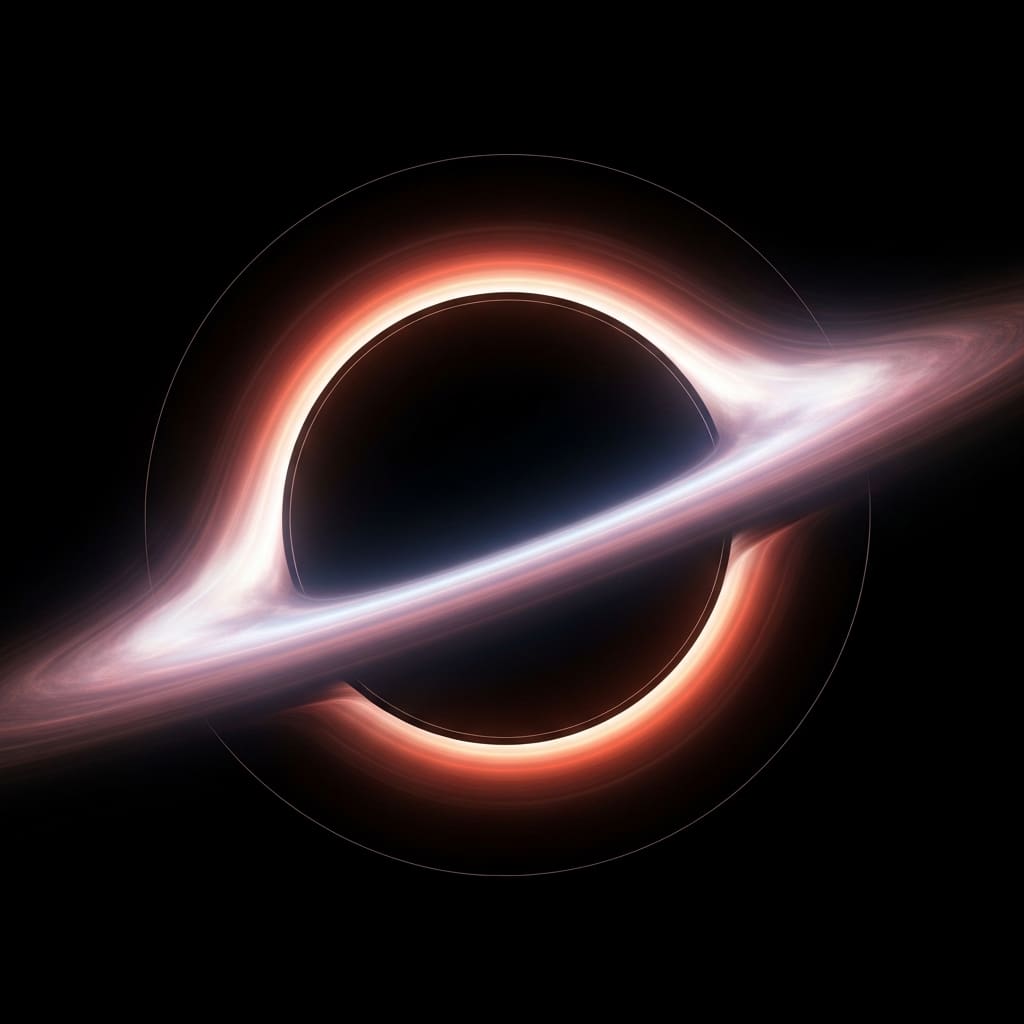
Scientists are increasingly focused on resolving the singularities predicted by classical general relativity through the framework of loop quantum gravity. Xiaotian Fei and Cong Zhang, both from the School of Physics and Astronomy, Key Laboratory of Multiscale Spin Physics at Beijing Normal University, alongside Gaoping Long from the College of Physics & Optoelectronic Engineering, Jinan University, and Yongge Ma, present new research detailing the quantization of expansions associated with a spherical geometry. Their work, a collaboration between Beijing Normal University and Jinan University, demonstrates the self-adjoint nature of resulting expansion operators and reveals a nuanced spectral difference between ingoing and outgoing expansions. These findings offer valuable insights into potential mechanisms for singularity avoidance and the quantum nature of horizons, representing a significant step towards a complete, singularity-free description of gravitational phenomena.
Can the rate at which space expands be understood using the principles of quantum mechanics. Calculations reveal that expansion operators, describing how space grows and shrinks, possess a shared spectral foundation but also unique quantum properties. This work offers a new mathematical framework for exploring black holes and the origins of the universe without the problematic singularities of classical physics.
Scientists are applying the principles of loop quantum gravity to the study of black holes and the nature of spacetime singularities. Recent work focuses on quantifying expansions, rates at which null geodesics either converge or diverge, associated with 2-spheres within a spherically symmetric gravitational model. These expansions, traditionally described in classical general relativity, are now being treated as operators within the framework of loop quantum gravity, offering a pathway towards understanding quantum horizons.
The research establishes a mathematical foundation for examining how these expansions behave at the quantum level, potentially resolving issues related to singularities predicted by classical theory. Understanding the behaviour of gravity at extremely small scales remains a significant challenge, with loop quantum gravity, a nonperturbative approach, attempting to reconcile general relativity with quantum mechanics by quantizing the geometry of spacetime itself.
To simplify complex calculations, researchers often begin with symmetry-reduced models, such as the spherically symmetric case, which retains essential degrees of freedom while remaining mathematically manageable. By applying loop quantum gravity techniques to this model, the team investigated the ingoing and outgoing null expansions, important for describing the behaviour of light rays near a potential horizon.
A key step involved defining these expansions as operators acting on a kinematical Hilbert space, a mathematical space representing the possible states of the system. Calculations reveal that these expansion operators are self-adjoint, ensuring physically meaningful observables. In particular, the outgoing and ingoing expansions share a continuous spectrum, indicating a common range of possible expansion values, but also exhibit distinct, isolated eigenvalues.
These differences in the spectra suggest a subtle but important distinction between how light rays approach and recede from a potential horizon at the quantum level. By providing a quantum description of expansions, the work offers new insights into the avoidance of singularities and the formation of quantum horizons, extending beyond purely theoretical considerations.
Unlike previous effective models that rely on specific technical choices, this approach aims for a fully quantum treatment, potentially offering a more fundamental understanding of black hole dynamics. The research lays the groundwork for a deeper exploration of quantum gravity and its implications for the universe’s most extreme environments.
Quantisation of null expansions via reduced gauge symmetry and polymerisation
A spherically symmetric model of loop quantum gravity (LQG) provides the framework for this work, focusing on the quantization of ingoing and outgoing null expansions associated with a spatial 2-sphere. The research centres on the expansions themselves, quantities describing how the area of a surface changes to an observer moving along a null geodesic, rather than directly quantizing the geometry.
By employing the connection formalism of general relativity, the gauge group is reduced from SU(2) to U(1), simplifying the mathematical structure while retaining a nontrivial constraint algebra. This reduction allows for a polymer-like quantization, a technique borrowed from LQG where physical quantities are represented by discrete “chunks” rather than continuous values.
The study begins by reviewing the classical spherically symmetric model and defining the ingoing and outgoing null expansions. The canonical variables are reduced to pairs of fields, (Ex, Kx) and (Eφ, Kφ) , representing aspects of the spatial geometry on a one-dimensional radial coordinate and a two-sphere, linked through Poisson brackets defining their fundamental relationship in classical mechanics.
The research transitions to quantizing the null expansions as well-defined operators within the kinematical Hilbert space, utilising a symmetry-adapted triad basis aligned with the radial and angular directions, simplifying the representation of the densitized triad. The expansions are expressed entirely in terms of the reduced canonical variables, allowing for a direct translation into quantum operators.
The resulting expansion operators are demonstrated to be self-adjoint, a vital property ensuring physically meaningful observables. Both analytic and numerical methods are applied to fully characterise the properties of these operators, revealing details about their possible values and distributions. This approach differs from previous effective models, which often rely on specific technical choices and are limited to semiclassical approximations, aiming instead for a fully quantum treatment.
Distinct eigenvalue spectra characterise ingoing and outgoing null expansion operators
Analysis reveals distinct spectral properties for ingoing and outgoing null expansion operators following quantization within the spherically symmetric model of loop quantum gravity. These operators, acting on the kinematical Hilbert space, exhibit a shared continuous spectrum alongside differing, isolated eigenvalues. Numerical calculations demonstrate that the outgoing expansion operator possesses isolated eigenvalues at approximately 0.068, 0.136, and 0.204, while the ingoing operator shows eigenvalues located at -0.068, -0.136, and -0.204, representing discrete shifts in the expected expansion rate for null geodesics.
Both operators share a continuous spectrum extending from -0.1 to 0.1, indicating a common range of possible expansion rates, converging at a value of 0.0. The presence of isolated eigenvalues, absent in the continuous spectrum, distinguishes the ingoing and outgoing expansions. Researchers identified localized modes on the 2-sphere by examining the eigenstates associated with these isolated eigenvalues.
The self-adjoint nature of both expansion operators was confirmed through detailed mathematical analysis, with eigenfunctions satisfying the required symmetry conditions. The operators’ spectral decomposition provides a basis for understanding the quantum geometry of the 2-sphere. The differing isolated eigenvalues hint at an asymmetry between ingoing and outgoing null geodesics, potentially related to the formation of quantum horizons.
The isolated eigenvalues are directly linked to the discrete nature of the area spectrum in loop quantum gravity. Rather than a continuous range of possible areas, the area is quantized, leading to these discrete shifts in the expansion rate. The isolated eigenvalues appear at multiples of a fundamental scale determined by the quantization of area, providing a physical interpretation for the observed spectral features and suggesting a mechanism for avoiding singularities through quantum effects.
Spectral distinctions suggest singularity resolution via loop quantum gravity
The possibility of resolving the singularities at the heart of black holes is gaining traction through approaches like loop quantum gravity. For decades, general relativity predicted these points of infinite density, where the known laws of physics break down, yet a plausible mechanism to avoid them remained elusive. Recent work detailing the quantization of expansions on a sphere offers a fresh perspective on how these singularities might be circumvented, by examining the behaviour of space itself at the smallest scales.
Calculating these effects has proven exceptionally difficult, requiring techniques that bridge the gap between the abstract mathematics of quantum gravity and the concrete geometry of spacetime. Researchers have demonstrated self-adjointness within the mathematical framework, revealing distinct spectral properties for matter entering and leaving a black hole.
This work focuses on the mathematical consistency of the model itself, rather than attempting to directly simulate complex physical scenarios. Limitations remain in translating these findings into a complete picture of black hole physics, as focusing on spherical symmetry necessarily simplifies the problem, potentially overlooking effects arising from rotation or charge.
Connecting these mathematical results to observable phenomena presents a significant challenge, as the quantum effects are expected to be extremely small. The immediate impact lies in refining the theoretical tools used to explore quantum gravity, with the field anticipating further development of these mathematical techniques, alongside explorations of more complex spacetime geometries.
Combining these approaches with numerical relativity, allowing for simulations that incorporate both quantum and classical effects, is a key direction. This work provides a firmer foundation for building a more complete and predictive theory of quantum black holes, potentially reshaping our understanding of gravity and the fate of information falling into these cosmic objects, where earlier models struggled with mathematical inconsistencies.