


Housing Minister Chris Bishop at the announcement about the government’s revised plans yesterday.
Photo: RNZ/Marika Khabazi
Housing Minister Chris Bishop says he’s frustrated by the resistance to the government’s push for much greater housing intensification in Auckland.
“There’s always going to be people who don’t like the idea of building new … but the reality is, cities have to grow. Otherwise, we end up in a situation like we’ve got in Auckland where house prices are out of control, and they’re not affordable for a whole generation of younger New Zealanders,” he told Morning Report.
Meanwhile, Auckland councillors are split on what to make of the government’s sudden change of heart on intensification.
Bishop announced on Thursday the number of homes Auckland Council must plan for would be reduced from 2 million to 1.6m, but only if it submitted a plan that was approved by the central government.
The need for approval from Wellington outraged Auckland Mayor Wayne Brown.
“We’re not doing this in order to go to the government and to the Cabinet and ask for their approval,” he said after the announcement.
“I mean, the Cabinet mostly don’t even live in Auckland, so that’s not going to happen.”
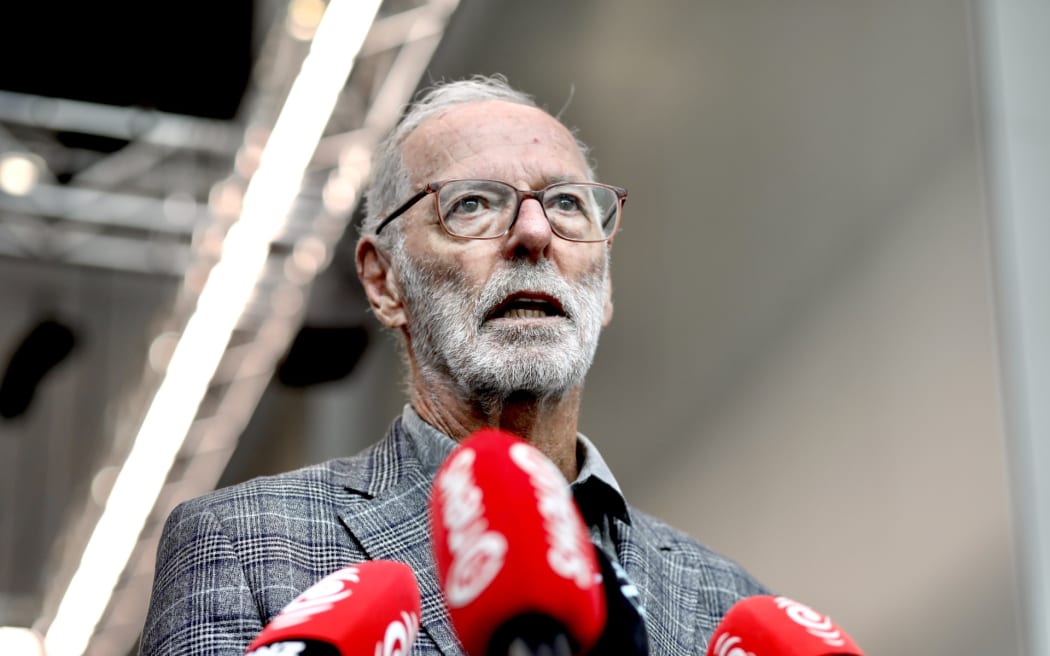
Auckland Mayor Wayne Brown.
Photo: RNZ/Marika Khabazi
North Shore ward councillor and chairperson of the Policy, Planning and Development Committee, Richard Hills, agreed with Brown that the need to seek approval from the government was “very strange”.
“That was a bit of a surprise, we knew the number was being dropped but we were surprised this week that there would be some sort of intermediate phase where we would have to take the potential changes to Cabinet to sign off before they give us the legislation,” he told RNZ.
“The mayor’s been very clear that Auckland should not be going back to Cabinet, we are responsible to the people of Auckland, not Cabinet, so I’m not sure exactly how we’ll negotiate that out.
“It is a strange precedent, it’s normally left up to the different parts of the country to work out their own plans … I’m not exactly sure what the expectation is, I mean, what happens if the Cabinet don’t exactly agree with the direction of change? Will we have to go back and forward?”

North Shore ward councillor Richard Hills.
Photo: Alexia Russell
The council also had little time to come up with the new plan, as Hills explained it had not been given an extension to its mid-2027 deadline.
“The end date for the plan being complete is still the same, so there’s going to be no extension on the other end, so whatever we do has to be quick, and it has to be quite focused on reducing some of the density in the outer areas of Auckland,” he said.
Another councillor, Albert-Eden-Puketāpapa’s Christine Fletcher, felt the government’s request was fair.
“I’m comfortable with the guardrails that the government are putting in place,” she said.
“We should have to justify where we’re looking to downzone, we should have to justify where we’re wanting the intensification, and so I’m quite comfortable with the process going forward.”
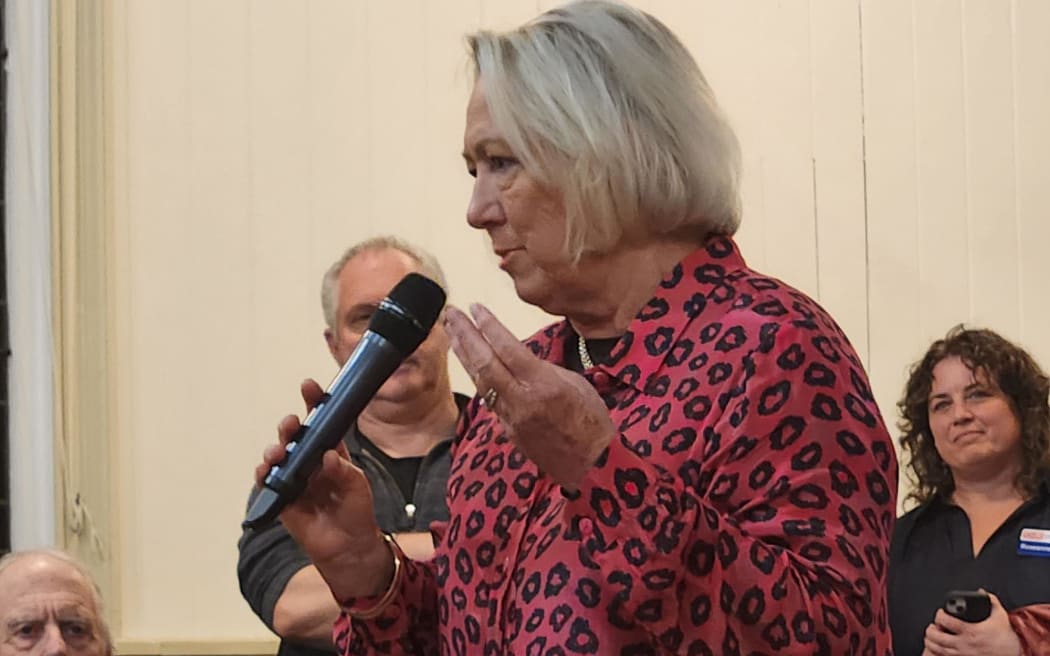
Albert-Eden-Puketāpapa councillor Christine Fletcher.
Photo: RNZ / Finn Blackwell
Bishop said the maximum number of 2 million homes was “never going to happen” and was more of a target designed to encourage more abundant development opportunities.
He was concerned that the uncertainty created by the change could be discouraging for those embarking on future housing projects.
“We’ve been listening. People say they want politicians to listen and change their minds. Well, that’s what we’ve done.”
The council would be able to centre housing intensification projects where it made the most economic sense, and where there was the most support for it, Bishop said.
“The City Rail Link, rapid transit stations, train stations generally, the city centre, metropolitan centres – that’s where the economics makes sense to build and it’s also where people want to build.
“It’s hard to argue that we shouldn’t build more dense housing around train stations,” he said.
“For me it’s a no-brainer. I accept it’s not a no-brainer for everybody else – that’s why I’ll continue to make the case for sensible density in cities done well, and to make sure that all New Zealanders can get on the housing ladder.”
Despite the changes, the timeframe for the PC120 would remain the same, Bishop said.
“It will be landed by the middle of next year. A few tweaks and a bit of legal complexity … but we’ll get it done.”
Cabinet would have another chance to review the proposal before the legislation would be introduced, he said.
“Let’s just work our way through the process, but I’m really confident that we’ll get to a position where we’re legislating to give Auckland more flexibility.”
Positive response to government change
Anne Moore, an east Auckland resident neighbouring a controversial three-storey development in Farm Cove, was pleased to hear the target for intensification had been lowered.
She said recent intensification in the suburbs had damaged National’s reputation, and wondered if Thursday’s U-turn was a reaction to that sentiment.
“I talk to people every day out here, residents are saying they’re worried ACT and Winston [Peters] are going to get their votes. It’s really been a big issue out here in east Auckland particularly, and they’ve been voicing how they feel,” she said.
“They don’t want [intensification], or they want it done in a measured way and they want it done so we’re aware of what’s going on in our suburbs. [Ministers] don’t live where these things are happening and yet they won’t listen to the people that live there.”
Moore hoped the lower target would push the council to take a more considered approach.
“That was always the hope, that if they reduced the number that would mean the focus would be on central city and transport hub development, rather than turning every suburb into a three-storied townhouse situation,” she said.
Sign up for Ngā Pitopito Kōrero, a daily newsletter curated by our editors and delivered straight to your inbox every weekday.