
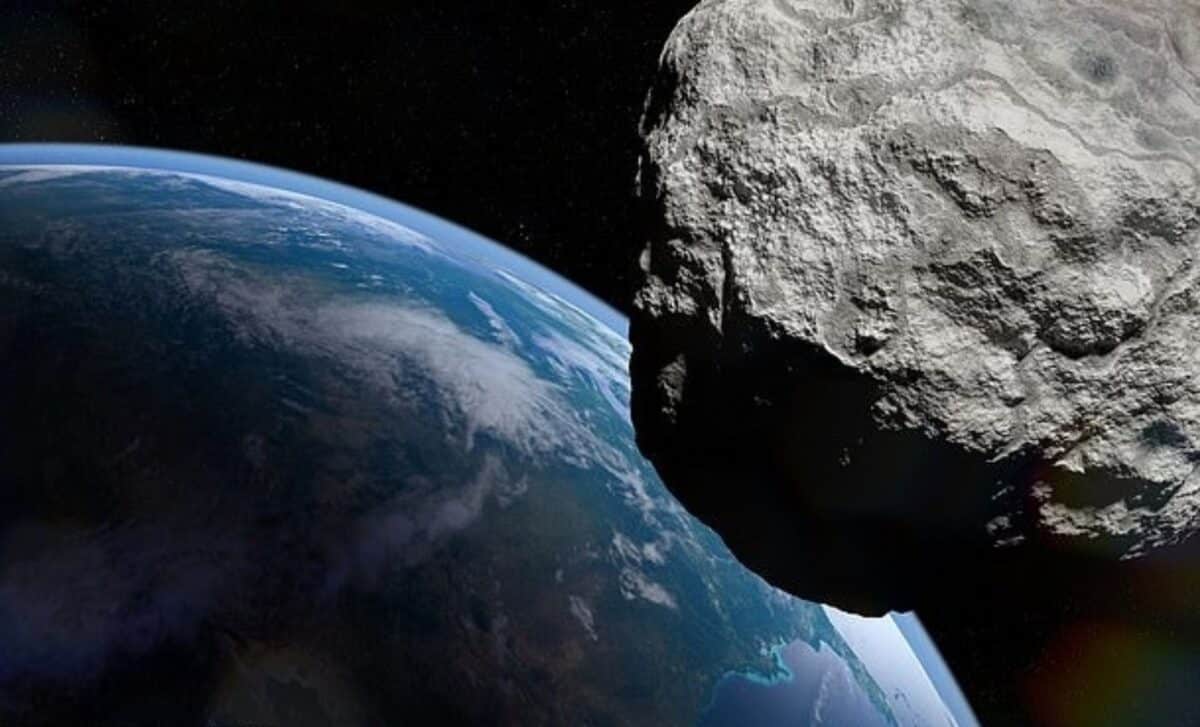
On 14 February 2026, at the American Association for the Advancement of Science annual meeting in Phoenix, Arizona, Kelly Fast presented data on a persistent gap in planetary defense capabilities. Fast, NASA’s acting planetary defense officer, detailed the discrepancy between estimated and detected populations of near Earth asteroids larger than 140 meters. The figures indicate approximately 15,000 undetected asteroids remain unlocated, a reality she described as her primary concern, telling the conference “it keeps me up at night” as Newsweek reported.
These asteroids carry sufficient energy to cause regional devastation upon impact. Their detection status does not reflect any known imminent threat. It quantifies a limitation in current surveillance infrastructure. The objects exist in the solar system. They simply have not been found.
The gap between statistical modeling and observational astronomy defines the current state of planetary defense. Researchers know the objects are there. They cannot say where.
Astronomers have catalogued approximately 10,000 near Earth asteroids exceeding 140 meters in diameter. The agency’s models, refined through decades of observation, estimate the total population at roughly 25,000. As Fast told the conference, as reported by the Daily Star, “It’s estimated there are about 25,000 of those, and we’re only about 40 percent of the way through. It takes time to find them, even with the best telescopes.”
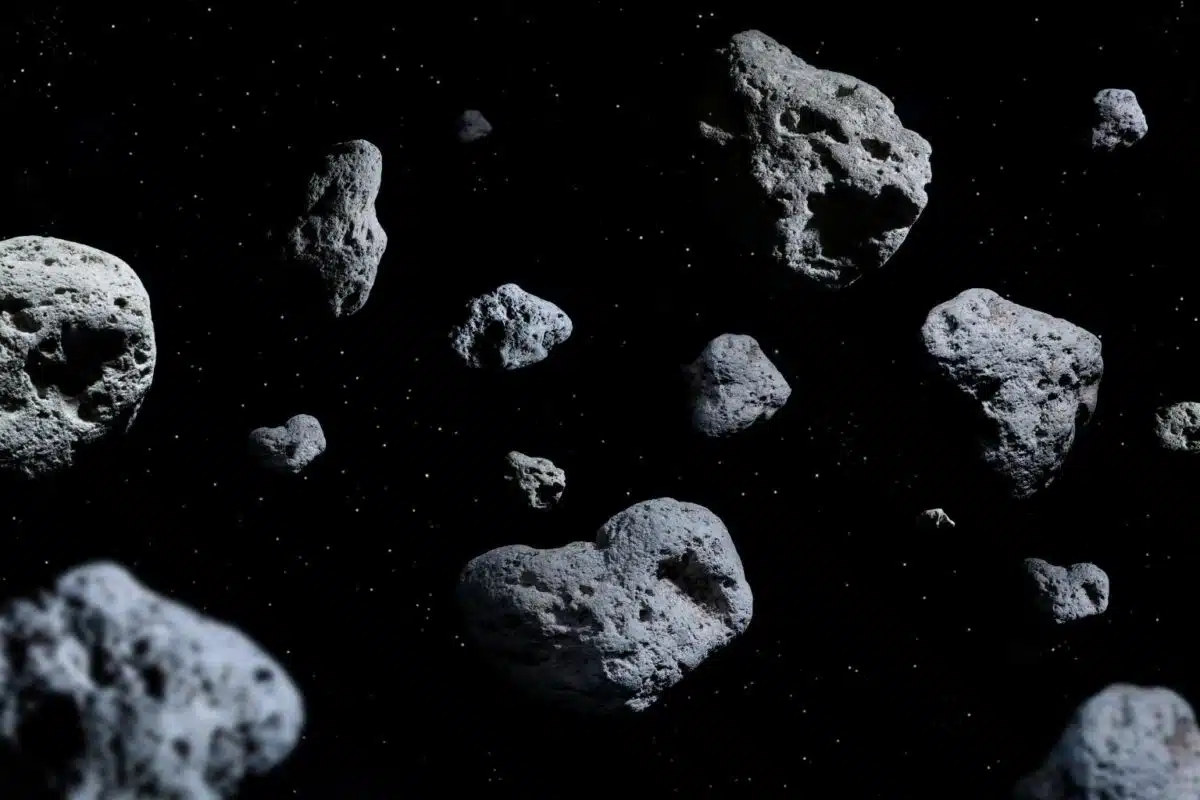 These mid-size asteroids are small enough to avoid detection, but large enough to cause serious damage. Credit: Siraphatphoto/Adobe Stock
The 15,000 object gap formed the center of Fast’s presentation. These are not speculative threats. They are statistical inferences derived from sampling methodologies. Researchers have detected a fraction of the population and extrapolated the remainder based on discovery rates, orbital distributions, and observational biases.
An asteroid of this scale striking Earth would release energy equivalent to hundreds of nuclear weapons. A 140 meter asteroid carries sufficient force to level an urban area or generate tsunamis upon oceanic impact. The destructive potential of these city killer asteroids drives the urgency for more complete detection.
The difficulty in locating these objects stems from orbital geometry and physical composition. Many near Earth asteroids approach from sunward directions, rendering them invisible to optical telescopes that rely on reflected sunlight. They emerge into darker skies only after passing Earth, at which point detection serves warning rather than prevention. This solar glare creates a permanent blind spot.
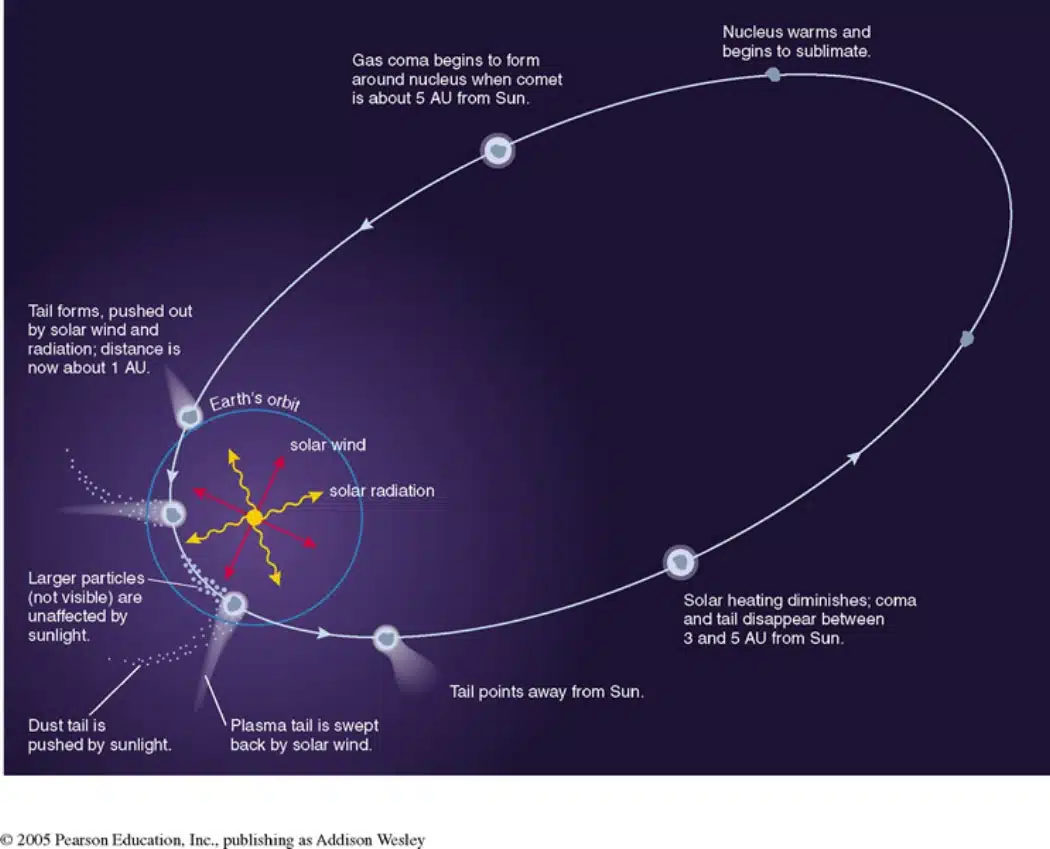 Evolution of a Comet in its Orbital Path. Credit:2005 Pearson Education, Inc.
Infrared surveys offer a solution. Telescopes detecting heat signatures rather than reflected light can observe dark asteroids that optical systems miss. Optimal infrared detection requires space based platforms, which have faced development timelines and budget considerations. The NEO Surveyor telescope, funded by NASA and designed specifically for this mission, is scheduled for launch in late 2027.
In September 2022, NASA’s DART mission spacecraft impacted Dimorphos, a 150 meter moonlet orbiting the asteroid Didymos. The kinetic impact altered Dimorphos’s orbital period, confirming that asteroid deflection is technically feasible given sufficient warning time. The mission’s findings established kinetic impact as a viable method for addressing confirmed threats.
Operational readiness presents a separate question. Nancy Chabot of Johns Hopkins University’s Applied Physics Laboratory, who led DART coordination, told reporters that no spacecraft equivalent to DART currently sits prepared for rapid deployment. “Dart was a great demonstration but we don’t have that sitting around ready to go if there was a threat we needed to use it for. We don’t know where 50% of the 140-metre asteroids are, which is a concern. We would not have any way to go and actively deflect one right now”, Chabot said, according to the Daily Star.
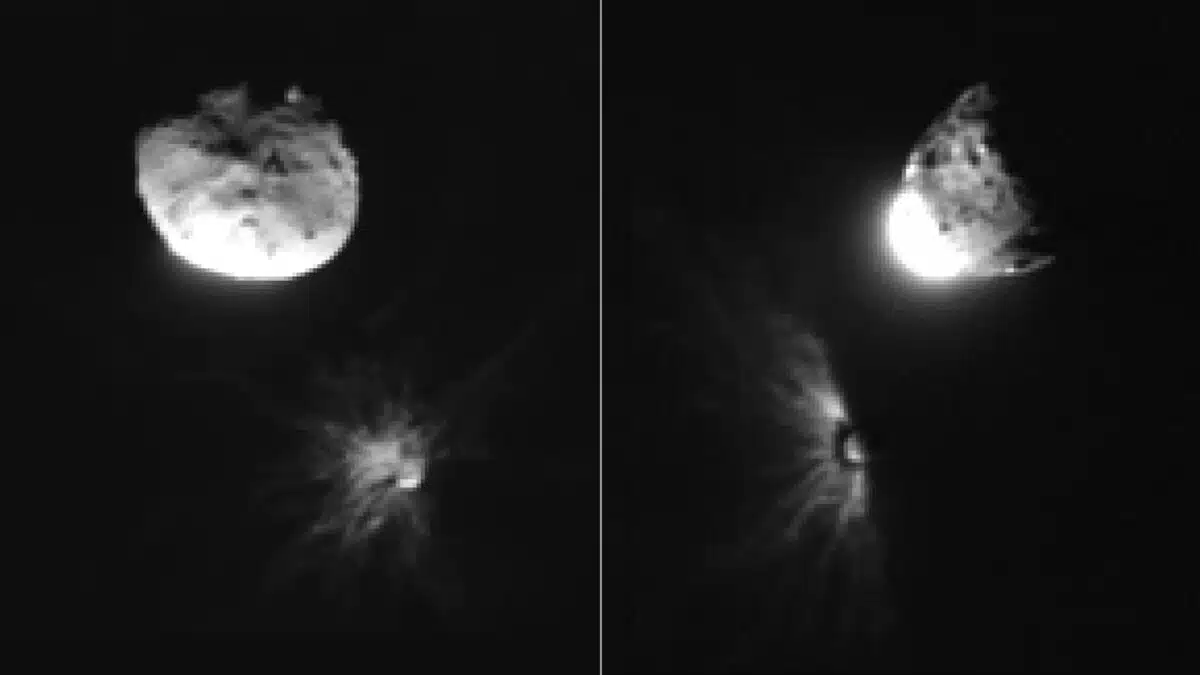 Photos taken by the Italian LICIACube, short for the LICIA CubeSat for Imaging of Asteroids. These offer the closest, most detailed observations of NASA’s DART (Double Asteroid Redirection Test) impact aftermath to date. Credit: NASA/ASI/University of Maryland
Chabot added that space agencies lack the funding to keep active defenses on standby. Deflection requires years of warning time to design, launch, and guide a mission to intercept. Without detection, warning cannot begin.
NEO Surveyor represents the most ambitious attempt to close the detection gap. The infrared telescope, positioned at the Sun Earth Lagrange point 1, will observe toward the sun, the region where ground observatories cannot effectively search. Mission specifications target 65 percent detection of the remaining hazardous asteroid population within five years of operation, increasing to 90 percent within a decade.
Ground based assets are improving in parallel. The Vera C. Rubin Observatory in Chile, operational since 2025, conducts nightly wide field surveys that complement space based detection. Together, these systems aim to transform an estimated population into a catalogued one.
Policy frameworks have evolved alongside technology. NASA’s 2023 National Preparedness Strategy for Near Earth Objects outlines roles for civil defense and evacuation planning. The United Nations Office for Outer Space Affairs coordinates international impact warning protocols involving agencies from the United States, Europe, and Asia. These structures depend on detection.
The statistical probability of a 140 meter Earth impact is estimated at once every 20,000 years. This places the risk outside immediate concern but within planning horizons for infrastructure development and international coordination.
The next International Asteroid Warning Network exercise is scheduled for 2027, testing global response to a simulated impact scenario. Participants will practice not only tracking but also the communication channels that would convey warnings to affected populations. The exercise assumes a detected threat.
Fast’s remarks in Phoenix contained no prediction of imminent impact. They quantified a straightforward observational gap. The majority of objects capable of regional devastation have not been located. Detection technology in development will determine whether that gap closes before the next object announces itself through atmospheric entry.