
The southern elephant seal’s conservation status in South Africa has improved from near threatened to least concern, with experts citing four decades without major threats to its breeding colonies on Marion and Prince Edward islands.About 5,500 seals are estimated across the two islands, with nearly 1,400 pups recorded in 2023; strong legal protections and marine protected area status have supported recovery.Scientists caution that the causes of a sharp population decline in the late 20th century remain poorly understood, with possible links to food availability, climate change and oceanographic shifts.While South Africa’s population is recovering, other southern elephant seal populations face threats, including a devastating bird flu outbreak in Argentina, prompting debate about the species’ global conservation status.
See All Key Ideas
The southern elephant seal population in South Africa has seen its conservation status improve from near threatened to least concern, with a recent assessment citing the absence of serious threats to the species’ breeding colonies.
Elephant seals (Mirounga leonina) are native to sub-Antarctic islands, including Prince Edward Island and Marion Island, which are part of South Africa. They breed on these two islands, and while the colonies are separate, some seals move between the two populations, which allows interbreeding and increases genetic diversity of the species.
According to the recently published 2025 Mammal Red List for Southern Africa, “no serious threats have been affecting the land breeding colonies” of the two islands in the last 40 years, resulting in an increase in elephant seal numbers.
The latest assessment was part of a collaboration between the nonprofit Endangered Wildlife Trust and the South African National Biodiversity Institute that brought together 163 researchers from 40 institutions to update the conservation statuses of 336 mammal species native to South Africa, Lesotho and Eswatini (formerly known as Swaziland).
The review was guided by the standards set down by the IUCN, the global wildlife conservation authority that puts out the global edition of the Red List.
The assessment found that 20% of the 336 species are threatened with extinction while 11% are categorized as near threatened. Of the 67 endemic species, those found nowhere else on Earth, 29 are threatened with extinction.
Apart from the southern elephant seal, the researchers noted that the status of two other native mammals, roan antelope (Hippotragus equinus) and Hartmann’s mountain zebra (Equus zebra hartmannae), has also improved since the last Mammal Red List for Southern Africa was published in 2016.
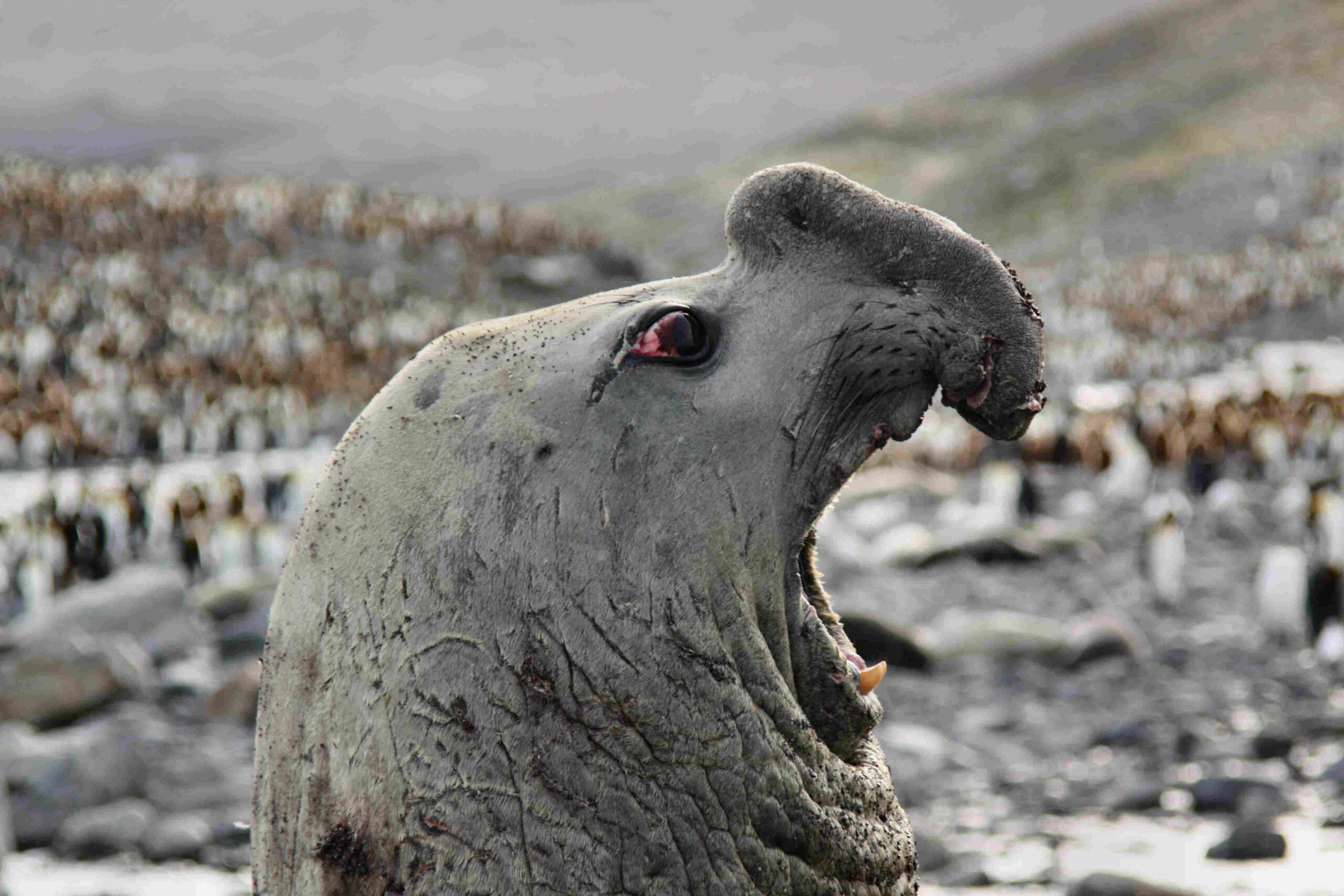 Populations of elephant seals in South Africa are growing as their breeding colonies face limited threats. Images courtesy of Charles Kinsey.
Causes of past decline still ‘poorly understood’
According to the latest assessment, between 1986 and 1994, the Marion Island population of southern elephant seals declined by 37% for reasons as yet unclear. Some experts suspect depletion of the elephant seal’s prey as the primary cause for their decline.
At the time the last edition of the Mammal Red List for Southern Africa was published in 2016, scientists estimated that the elephant seal population on Marion Island and Prince Edward Island was around 3000 individuals. The latest assessment says that it has grown to about 5,500 as of 2023.
The assessment authors noted that there are “no major threats that could cause rapid population decline.”
Tamanna Patel, the Mammal Red List coordinator at the Endangered Wildlife Trust, said this is population-specific recovery: The seals enjoy strong protections on the two islands, which form part of a marine protected area. Their breeding grounds in the region are also protected under South Africa’s Seabirds and Seals Protection Act of 1973.
“This tells us that conservation and increased protection of species habitats can result in species recovery,” Patel told Mongabay in an email.
She noted that sustaining the gains would require continuous monitoring and more research into the factors behind the previous population declines and recent recovery.
“We do not fully understand the causes of the past decline, most likely attributed to food limitation. The causes of changes in food availability remain poorly understood,” Patel said.
“In all likelihood, climate-related impacts and oceanographic changes have also influenced prey availability and distribution as well as spatial distribution of southern elephant seal foraging efforts,” she added.
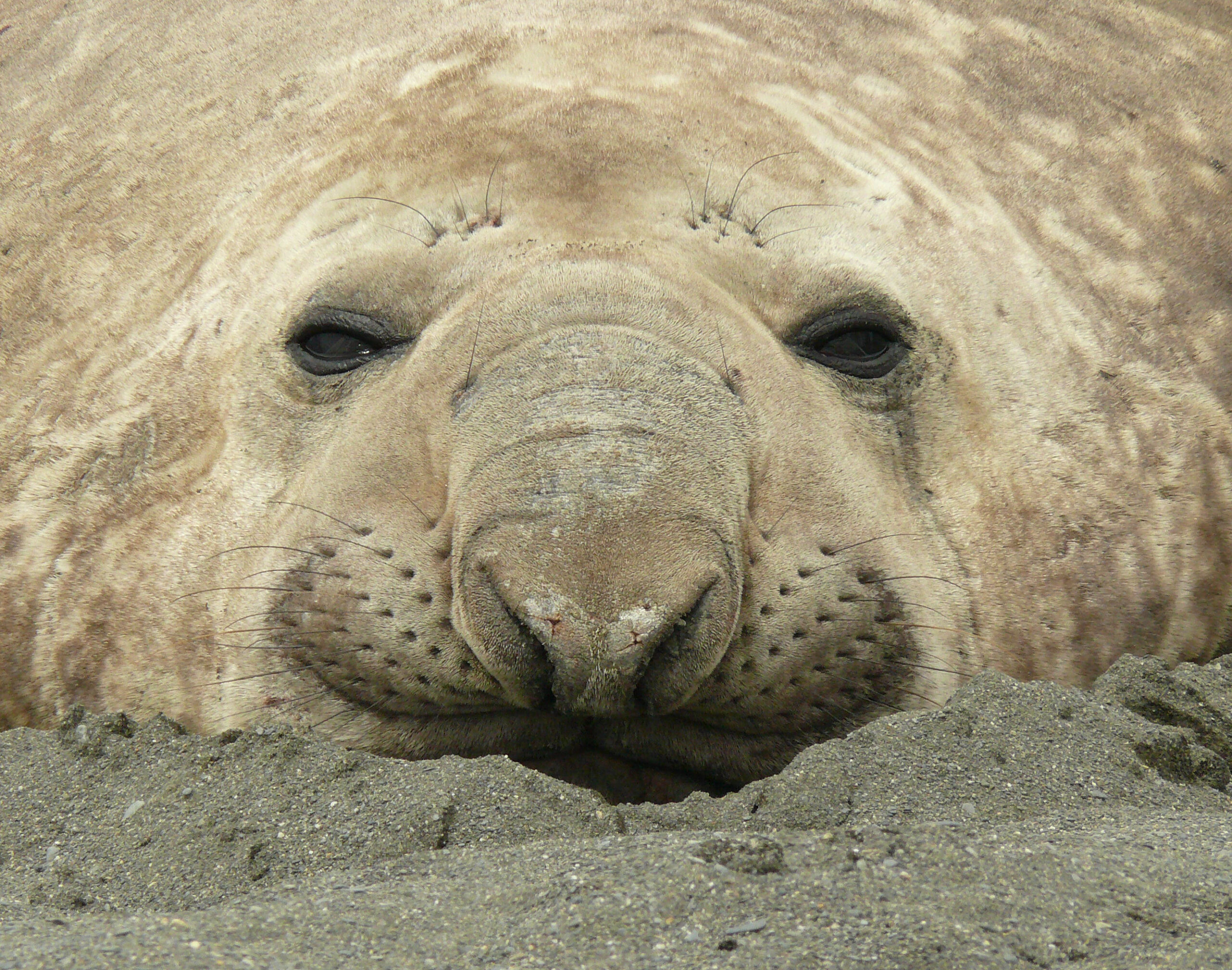 Populations of elephant seals in South Africa are growing as their breeding colonies face limited threats. Images courtesy of Charles Kinsey.
Nic Rawlence, an expert in paleo-genetics, the study of ancient DNA, at the University of Otago in Aotearoa New Zealand, who has studied the Australasian lineage of southern elephant seals, was cautiously optimistic about the improved conservation status.
“I’m quite surprised that southern elephant seals in South Africa have been downgraded to Least Concern given the causes of the stark population declines in the second half of the 20th century are not fully understood,” Rawlence said in an email.
He added, however, the fact that the populations are recovering shows the ecosystem can support an increased number of the species.
Rawlence was part of a major study published last year that analyzed the genetic makeup of the Australasian lineage of the seals to understand their resilience to climate change. They found that while the animals struggled with the impacts of shifting climate and human activities, they also adapted over time by expanding their range or withdrawing from certain habitats when conditions become difficult.
Rawlence said multidisciplinary, multicountry research into the causes of the past declines, including the potential impacts of climate change, oceanographic change and food availability, is needed. This will help scientists and conservationists implement evidence-based conservation management strategies now and in the future, he said.
Mixed picture for global population
In 2014, the IUCN’s global assessment also categorized the southern elephant seal’s conservation status as being of least concern. Earlier assessments by the global authority in 2008 and 1996 also reached similar conclusions. In its 2014 assessment, the IUCN said “this apex marine predator faces few threats and conflicts as they live far from human population centres and have limited interactions with commercial fisheries.”
Citation:
Berg, A. A., Askew, M., Seersholm, F. V., Verry, A. J., Hoelzel, A. R., Welch, A., … De Bruyn, M. (2025). Postglacial recolonization of the Southern Ocean by elephant seals occurred from multiple glacial refugia. Global Change Biology, 31(3). doi:10.1111/gcb.70101
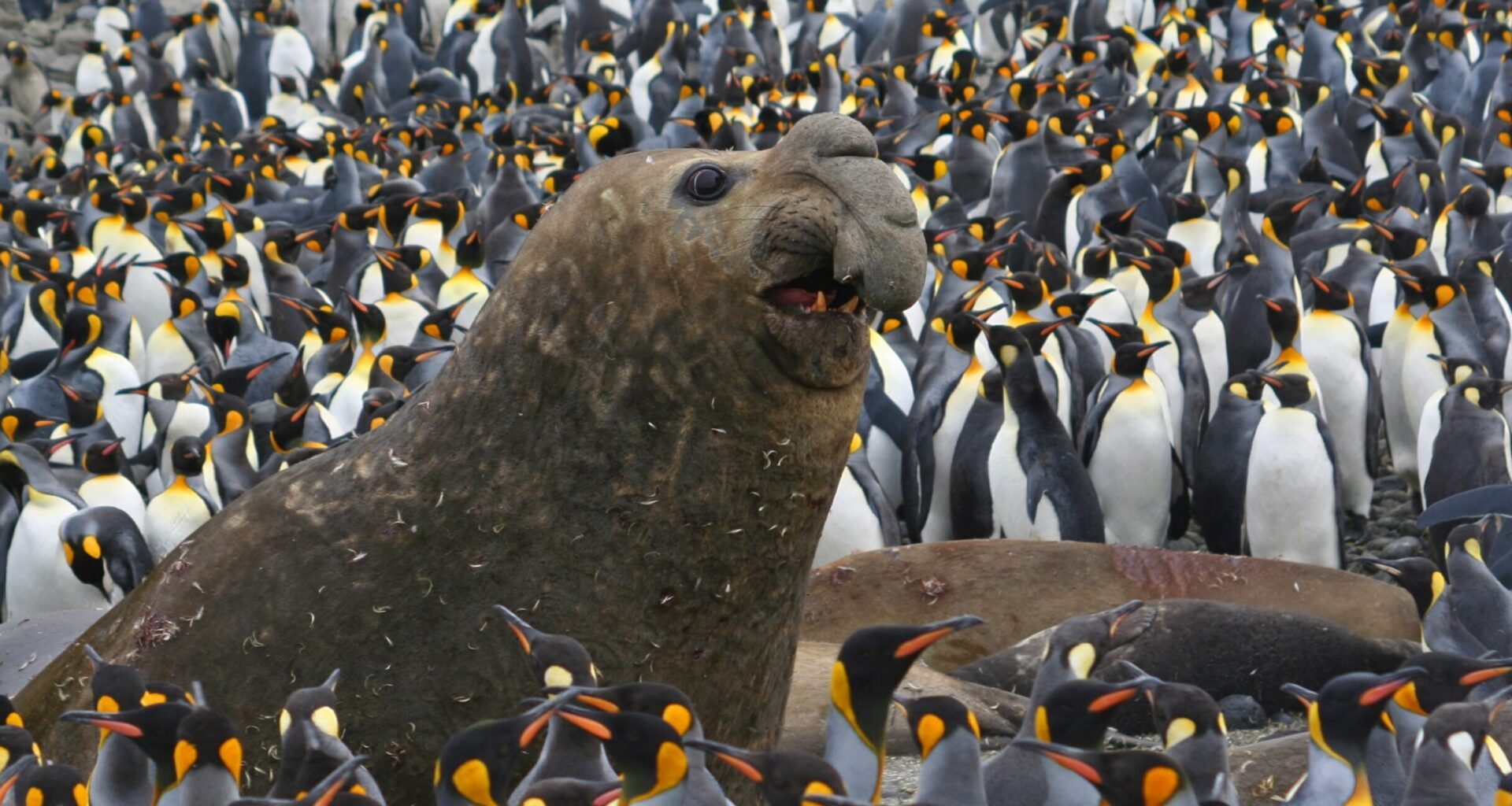
Banner image: According to scientists, the enhanced protection for southern elephant seals is likely benefiting other species in their habitat. Image courtesy of Nico de Bruyn.
