
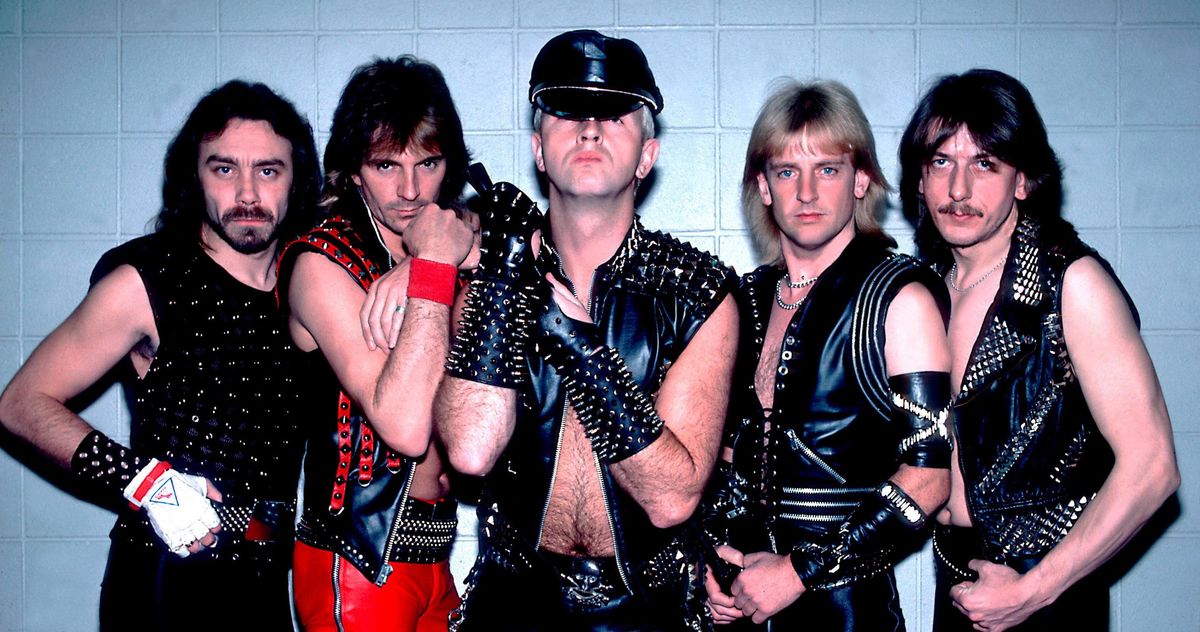
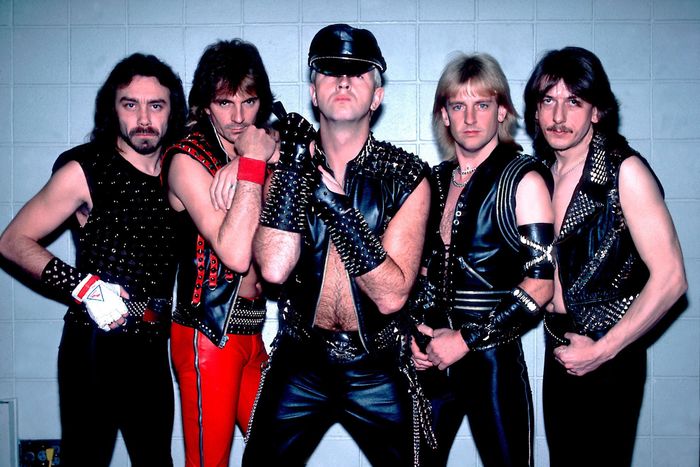
Photo: Paul Natkin via Cache Agency
Apologies, but I have to start this one with a personal anecdote. In elementary school, I was obsessed with heavy metal and with Judas Priest in particular. I even saw them in concert, my dad leaving work in his suit and tie one evening to take me and my bandanna-wearing pals to the Metal Defender tour in 1984. (We were 11, and we’d all given each other heavy-metal nicknames; mine was Ozzy Three.) I was also at the 1986 Capital Centre concert later immortalized in Jeff Krulik’s amazing short Heavy Metal Parking Lot. I grew up and out of that headbanger phase not long after, but I still maintained a soft spot for Priest because their hard-charging songs were the most melodic and operatic in all of metal, with Rob Halford’s thunderous voice joining Glenn Tipton and K.K. Downing’s double-guitar attack to create the band’s majestic, unreal sound.
All of which is to say that I did not enter the Berlin Film Festival screening of Tom Morello and Sam Dunn’s documentary The Ballad of Judas Priest a disinterested observer. I’ve been at plenty of premieres in my life, but even my jaded self shivered a little upon seeing Rob Halford in person, a bushy-bearded metal god still with regal presence at 74. And Morello and Dunn’s movie is very much for aficionados, more a love letter than a thorough, hard-hitting deep dive. It opens with Jack Black in close-up reciting the lyrics of “You’ve Got Another Thing Comin’” like it was something out of Shakespeare. (“One life, I’m gonna live it up …”), and that kind of fanboy energy dominates the proceedings.
The central attraction here are the band members themselves, of course, and Halford specifically, as they hit all the main points: childhoods spent in England’s soot-covered industrial region known as the Black Country, their early years as a so-called “progressive blues” band, their adoption of the metal-and-studs look. Halford, who officially came out in 1998, discusses how it was an early Doris Day performance that inspired him to become a singer. Tipton talks about his Parkinson’s diagnosis and how he felt it had been a long time coming. Downing talks about his decision to leave the band after years of feeling like it had taken over his life. The most moving parts of the film involve Halford talking about his sexuality and the relief he felt upon finally coming out. He expected controversy and backlash; instead, he got almost nothing but love and support.
Still, the film could have expanded its emotional scope a bit more. When Halford opens up about the challenges of not being able to live publicly as a gay man in the early years (even though his bandmates and their management knew and accepted him), one wonders how his partners during this time felt. The only other major drama the documentary spends any length of time with is the notorious 1990 trial in which the band was accused of putting subliminal messages in a song after the double suicide of two young men. Prosecutors claimed that the words “do it” were secretly embedded in the music; an analysis of the individual audio tracks eventually proved that no such thing existed.
But again, this is an appreciation more than anything else, and something exciting often happens when musicians make movies about other musicians: They can break down the way the art functions and why that matters. Morello himself serves as kind of a guide in the film, relating his own love of metal growing up as a Black kid in a conservative, ethnically homogeneous suburb of Chicago. Interspersed throughout are chats with other musicians — including Dave Grohl, Kirk Hammett, Billy Corgan, and, at a couple of particularly poignant moments, the late Ozzy Osbourne — not just talking about Priest’s influence but delving into the specifics of what made their music, and in fact their whole image, work. Black talks about the “guitarmony” of two guitars locked in sync. Grohl muses (hilariously) on the surreal wonders of the music video for “Breakin’ the Law.” Ozzy observes that the bleak, industrial blight of Birmingham created as many rock musicians as Liverpool (and later, after Tipton is diagnosed with Parkinson’s, speculates about whether the poisoned environment of this region contributed to their health challenges). Hammett recalls that growing up in San Francisco, he immediately recognized the gay S&M origins of Halford’s leather-and-studs getup. During one group discussion, Morello and Run-D.M.C.’s Darryl McDaniels reveal that they cast the deciding votes to send the band to the Rock Hall in Cleveland. (“Two Black dudes got Judas Priest into the Rock & Roll Hall of Fame!”)
The song clips included in the film are, thankfully, relentless. And they inspire further discussion and research. I have no idea what someone unfamiliar with Priest’s music will think (would such a person even bother seeing this movie?), but for me, the music was an opportunity to recall just how literate their lyrics were, how the words worked in tandem with the songs’ baroque stylizations to create new worlds of meaning. Is there a more prophetic verse in rock than “I’m made of metal / My circuits gleam / I am perpetual / I keep the country clean,” from “Electric Eye”? The lines were inspired by Orwell; the music reaches into the future to capture the horrific allure of a self-aware technological dystopia. While The Ballad of Judas Priest may not always feel complete, by centering the music, it excites our curiosity long after the credits roll.
Sign up for The Critics
A weekly dispatch on the cultural discourse, for subscribers only.
Vox Media, LLC Terms and Privacy Notice