
India’s startup ecosystem is bigger than it has ever been. More than 200,000 ventures are now recognised under DPIIT, and that number reflects how widely entrepreneurship has taken root across the country. Nearly half of these recognised startups include at least one woman director or partner, suggesting participation is widening alongside scale. Continued policy backing, including the ₹10,000 crore Startup India Fund of Funds 2.0, indicates that innovation-led businesses remain a focus area.
But scale is only part of the picture.
Growth today feels more concentrated. Diagnostics services are expanding as preventive health checks become less occasional and more routine. Food infrastructure has shifted as well — cloud kitchens, once seen as an alternative format, now form a growing segment of organised food delivery, with the Indian market estimated at roughly USD 1.2 billion in 2025. Meanwhile, IoT systems, SaaS platforms and automation tools are becoming operating layers for SMEs seeking to manage compliance, documentation and energy usage more efficiently. The result is not just more companies, but clearer sector alignment.
This concentration reflects deeper structural shifts in India’s SME and startup landscape. By 2026, businesses are operating in an environment shaped by formalisation, digitisation and greater access to institutional capital. GST-linked compliance systems, UPI-led payment infrastructure and improved credit underwriting models are accelerating the transition from informal to structured enterprise. Rising healthcare spending and expanding insurance penetration beyond metro markets are increasing demand for organised diagnostics and preventive services. Digital infrastructure is embedded directly into enterprise workflows, strengthening documentation, compliance reporting and operational optimisation. In food services and housing, consumer demand is shifting toward scalable operating models and design-led planning. Together, these structural drivers explain why capital and execution are concentrating in sectors where measurable demand intersects with operational efficiency.
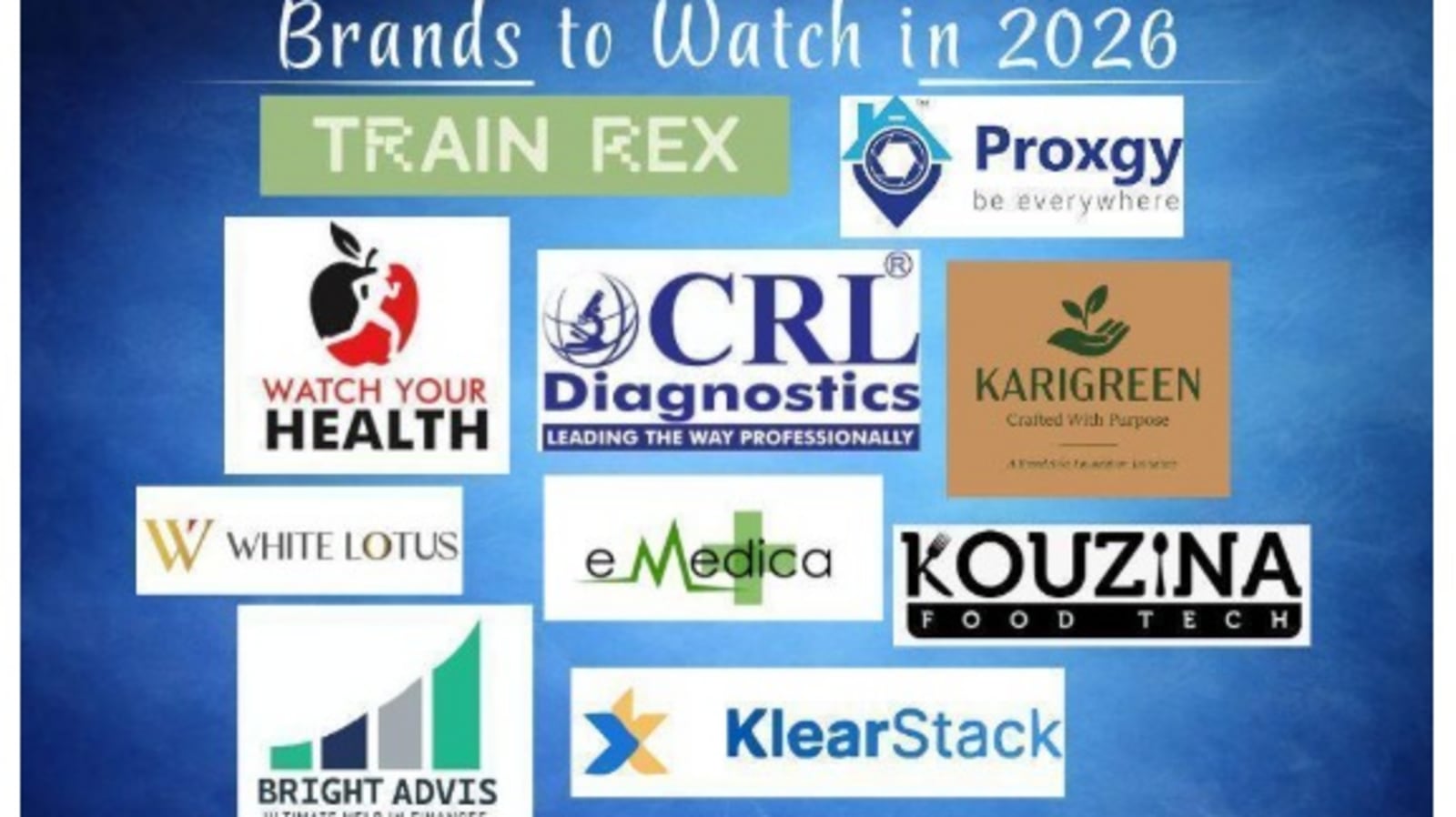
As markets evolve, a new generation of companies is expanding across healthcare, automation, sustainability, food services, smart infrastructure and real estate. This list spotlights organisations operating within sectors shaped by measurable industry trends and structural demand shifts.
Nandish Communication, a PR and communications agency, compiled this list to highlight organisations operating in sectors influenced by measurable industry trends. The firm works across media relations, content strategy, crisis communication and event execution. The organisations below reflect how these structural shifts are translating into specific operating models across sectors such as diagnostics, automation, food infrastructure, preventive healthcare and smart systems.
Bright Advis
Bright Advis, founded by Suraj Palled (Founder & CEO), operates within India’s entrepreneurial and SME ecosystem, supporting business registrations and compliance processes at scale. With the capability to register approximately 2,000 businesses every month, the organisation assists founders in formalising and structuring their ventures with regulatory precision.
India’s MSME sector contributes nearly 30% to the country’s GDP and employs over 110 million people, making formalisation and structured governance increasingly important as access to credit and institutional capital expands. Within this context, Bright Advis’s registration services address a core friction point for early-stage entrepreneurs navigating regulatory frameworks.
Beyond entity formation, Bright Advis delivers Virtual CFO services spanning financial planning, budgeting, cash-flow optimisation, performance reporting, and strategic decision support.
As investor scrutiny around governance and financial transparency intensifies, outsourced financial leadership models have become more common among startups that are not yet ready to build in-house finance teams. Its systems-driven approach integrates compliance and financial strategy into a single operational framework.
CRL Diagnostics
CRL Diagnostics Pvt. Ltd., founded and led by Ravi Tomar, has built a pan-India footprint over the past decade offering more than 3,000 tests across core and specialised domains including molecular diagnostics, oncology and infectious diseases. Its laboratories operate under NABL-accredited processes, aligning with recognised quality standards in India’s organised diagnostics industry.
India’s diagnostics market is estimated to be valued at over USD 11 billion and continues to expand as preventive healthcare awareness improves and insurance penetration rises. Organised laboratory networks are increasingly replacing fragmented local testing ecosystems, particularly in Tier II and Tier III cities.
CRL maintains 24/7 operations and ongoing investment in quality systems. As demand for organised diagnostics increases, providers such as CRL continue to scale operational capacity.
eMedica
In India’s evolving healthcare and wellness ecosystem, eMedica focuses on a technology-driven, non-invasive approach to health management. Founded by Hemant Rohera, the Pune-based healthtech brand works on improving chronic and lifestyle-related health conditions by addressing physiological responses at a cellular level, without reliance on invasive procedures.
eMedica’s patented therapeutic device uses controlled electrical micro-currents to stimulate biological processes. Micro-current therapy operates at very low levels of electrical stimulation, typically measured in microamps, which are closer to the body’s own bioelectric signals than conventional electrical therapies. Research referenced by the National Institutes of Health (NIH) has explored how such stimulation may support ATP (adenosine triphosphate) production, a key element in cellular energy cycles, in specific therapeutic contexts such as wound healing and pain management. The company states that the technology has been evaluated in clinical settings and is applied across a broad range of therapeutic use cases.
As the company expands its presence across India, it presents its technology as a complementary tool intended to support physiological processes alongside conventional care pathways.
KARIGREEN, an initiative of the BroadArks Foundation co-founded by Dr. Kaveri Dutta, responds to consumption and environmental challenges through sustainability, social inclusion, and traditional craftsmanship. Its mission centres on supporting artisans, women, and youth, connecting them with structured market access while focusing on textile waste repurposing.
India generates millions of tonnes of textile waste annually, much of which remains underutilised. Circular economy models that extend the lifecycle of materials are increasingly recognised as both environmental and economic opportunities. Using a circular approach, KARIGREEN transforms fabric scraps into handcrafted, functional products.
Alongside production, it offers tools, training and digital access that help participants integrate into contemporary supply chains. By linking craft preservation with structured market participation, the initiative operates at the intersection of sustainability and livelihood development.
KlearStack
KlearStack focuses on reducing manual document compliance across high-volume enterprise workflows. The company uses Vertical AI to classify documents, extract structured data, and verify information in lending, trade finance, and supply chain operations.
India’s financial services and trade ecosystems process large volumes of documentation, where manual verification increases turnaround times and operational risk. Automation solutions that integrate audit trails and compliance checks directly into workflows are increasingly being adopted to address these inefficiencies.
Under the leadership of Founder and CEO Ashutosh Saitwal, KlearStack has introduced Document Forensics: a layer that checks PDFs and document images for discrepancies, inconsistencies, and tampering signals before information flows into downstream systems. Together, these capabilities support fraud risk and compliance management while maintaining internal controls.
KlearStack can be deployed in the cloud or on-premise for high-security environments, and it’s built to fit end-to-end processes—from ingestion to review, audit trails, and integration-ready outputs. By embedding compliance directly into operations, KlearStack supports regulatory oversight within operational processes.
Kouzina Food Tech
Kouzina Food Tech, a cloud kitchen and QSR brand, in India doubled its revenue in 2025, driven by execution, partnerships, and expansion of its asset-light partner kitchen network.
Operating a portfolio of 25 brands, including WarmOven, Mealy, KaatiZone, Vasudev Adiga’s, and Mad Over Parathas & Pakodas (MOPP), across 106 cities, Kouzina has taken regionally strong food brands and scaled them nationally through a tech-enabled operating backbone. Its investment in MOPP Foods and licensing partnership with Swiggy helped acquire brands like The Bowl Company and Homely.
With a franchise-led growth strategy and a pipeline of franchise expansions, Kouzina enters 2026 to consolidate a fragmented F&B services market and build a multi-brand F&B business at scale. The company aims to become the preferred partner for entrepreneurs and food business operators.
Proxgy is a deep-tech company building IoT-powered wearables and safety products that make blue-collar and frontline work safer, connected, and measurably more efficient. Founded by Pulkit Ahuja, Proxgy aims at upgrading the everyday tools of the people who keep industries running. With expertise in IoT and wearables, the company focuses on solutions that are affordable, functional, and ready for real-world conditions.
Proxgy has a turnkey ecosystem that links humans and assets through field-ready hardware and a cloud platform. Its devices capture and stream the real-time signals on the ground, including hazard alerts (gas leakage detection, proximity sensing, and geofencing), environmental conditions (temperature, humidity, noise, and light), and worker vitals (heart rate, body temperature, and oxygen levels). When thresholds are crossed, SOP-driven incident workflows and notifications help teams respond quickly and consistently. Dashboards and periodic reports turn that data into performance and safety analytics you can act on.
Train Rex
Train Rex operates within India’s preventive healthcare segment through structured lifestyle transformation programmes lasting between 21 and 90 days. Founded by Arnav, Anjali, and Yash, the platform incorporates accountability pods, personalised coaching, and gamified engagement.
India’s wellness industry, often estimated at over ₹8,000 crore, faces engagement challenges where initial participation does not always translate into sustained behavioural change. Train Rex reports a 70–80% customer retention rate, compared to industry averages estimated near 15%, suggesting that structured, community-based formats may support higher continuity.
By designing programmes aligned with practical schedules for homemakers and working professionals, the platform positions accountability and habit formation at the centre of its model.
Watch Your Health
Watch Your Health offers Employee360, a contactless workplace health solution designed to provide organisations with anonymised, workforce-level insights. The platform uses contactless face-scanning technology to generate health metrics for employees while delivering aggregated analytics to employers.
Corporate wellness initiatives often struggle with adoption due to wearable dependency and onboarding complexity. By removing additional devices and simplifying participation, Employee360 addresses these barriers while enabling HR teams to track broader health trends without compromising privacy.
Founded by Ratheesh Nair, Watch Your Health operates within a corporate environment increasingly focused on measurable wellness outcomes and data-driven workforce strategies.
White Lotus Group
White Lotus Group, a luxury real estate brand, is reshaping Bengaluru’s residential landscape through its ‘personal sanctuaries’ philosophy. Founded in 2014 by IIT alumnus Pavan Kumar, the company prioritises planning, craftsmanship, and livability over scale.
As demand shifts toward spacious, low-density living, White Lotus’s next growth phase has over ₹700 crores committed to new developments in North Bengaluru, including large-format villa communities and evolving mixed-use and intergenerational living formats.
The list has been compiled by Nandish Communication. To know more about the company, please visit: https://nandishcommunication.com/
Note to the Reader: This article is part of HT Tech’s promotional consumer connect initiative and is independently created by the brand. HT Tech assumes no editorial responsibility for the content.