
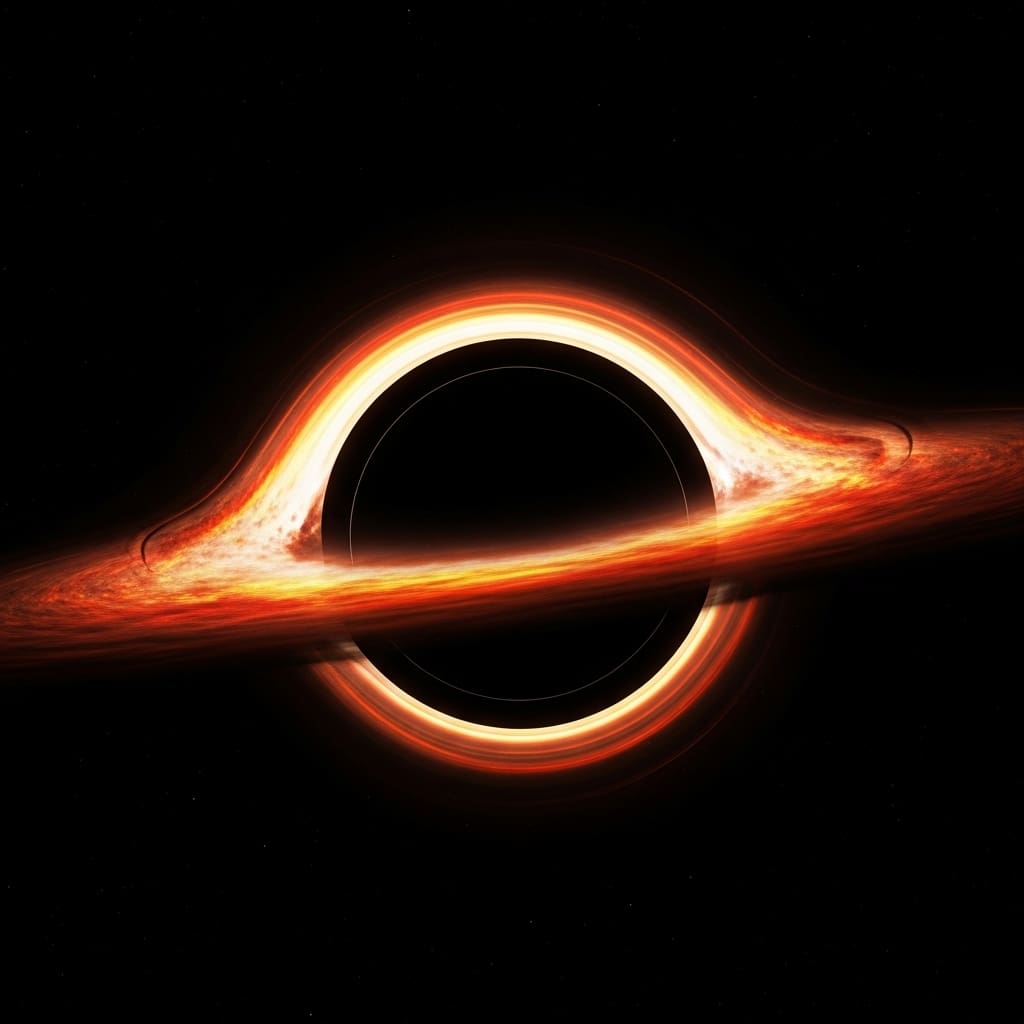
Scientists are increasingly focused on testing the predictions of general relativity in the strong-field regime, and recent observations of black hole shadows offer a unique opportunity to do so. Kourosh Nozari, Milad Hajebrahimi and Sara Saghafi, from the Department of Theoretical Physics at the University of Mazandaran, working with colleagues including G. Mustafa and Emmanuel N. Saridakis from the National Observatory of Athens, Departamento de Matem aticas at Universidad Cat olica del Norte, and the CAS Key Laboratory for Researches in Galaxies and Cosmology at the University of Science and Technology of China, present new rotating black hole solutions possessing primary scalar hair within beyond Horndeski gravity. This research is significant because it explores deviations from the standard ‘no-hair’ theorem, demonstrating how scalar hair alters predicted black hole shadow characteristics, specifically impacting size and shape. By modelling the M87 black hole and applying constraints from the Event Horizon Telescope, the team determine viable parameter ranges, finding that current observations do not exclude these scalar-haired black holes, though they do significantly restrict the possible parameter space.
Can we distinguish black holes from alternatives using only their shadows. New calculations demonstrate that black holes aren’t necessarily defined by mass and spin alone, potentially possessing an additional ‘hair’ that alters their appearance. These subtle changes in shadow shape could soon be detectable with improved imaging technology. Scientists are increasingly turning to observations of black holes to test the limits of Einstein’s theory of General Relativity
For over a century, the Kerr metric has provided an accurate description of rotating black holes, positing that mass and spin are the only defining characteristics. Yet, alternative theories of gravity propose that black holes might harbour additional properties, specifically a ‘scalar field’ which introduces ‘scalar hair’ beyond these conventional parameters.
Recent work focuses on ‘beyond Horndeski’ gravity, an extension of standard scalar-tensor theories, and explores how this scalar hair affects the appearance of black hole shadows. At the heart of this investigation lies the Event Horizon Telescope’s (EHT) image of M87, a supermassive black hole 55 million light-years away. The EHT measured M87’s shadow to have an angular diameter of 42 ±3 microarcseconds, alongside a circularity deviation of less than or equal to 0.1.
These precise measurements offer a unique opportunity to test predictions made by modified gravity theories. Researchers have now constructed rotating black hole solutions incorporating primary scalar hair within the framework of beyond Horndeski gravity, analysing how this additional parameter alters the expected shadow characteristics. In particular, the presence of scalar hair induces measurable changes to the black hole shadow.
Negative values for the scalar hair parameter enlarge the shadow and reduce its ellipticity, while positive values compress the shadow and increase its distortion. By modelling M87 and applying the EHT’s observational constraints, scientists have mapped the viable range of parameters for both black hole spin and scalar hair. Current data do not rule out the existence of scalar hair, although the permissible values are restricted, particularly for positive scalar hair parameters.
Still, the predicted deviations caused by scalar hair are on the order of a few microarcseconds, a scale that is within reach of current and, especially, next-generation telescopes designed to image black holes. Once these instruments come online, they may be able to detect these subtle differences, providing evidence for physics beyond General Relativity. The allowed region is markedly restricted for scalar hair parameters greater than zero, opening a pathway to testing fundamental aspects of gravity using the shadows cast by these enigmatic objects.
Deriving rotating black hole metrics with scalar hair via a non-complexified Newman-Janis algorithm
A revised Newman-Janis algorithm (NJA) underpinned the construction of rotating black hole solutions possessing primary scalar hair within beyond Horndeski gravity. The standard NJA, originally devised to generate the rotating Kerr metric from a non-rotating Schwarzschild seed, often fails when converting metrics due to complexities in handling the radial coordinate.
To address this, a non-complexification process was applied to the NJA, enabling the derivation of the rotating black hole metric with scalar hair. This modified algorithm allowed researchers to obtain a stationary, axially symmetric line element expressed in Boyer-Lindquist coordinates, dependent on mass, spin, and the scalar hair parameters q, η, and λ.
Then, the photon region and shadow formation were analysed using this rotating metric. Determining the horizons required solving a complex equation numerically. Investigations revealed that negative values of the scalar hair parameter enlarge the event horizon and diminish its oblateness, while positive values shrink the horizon and increase distortion.
Detailed calculations of the Cauchy horizon and event horizon were performed for cases where mass equals 3λ and 5λ. Beyond horizon determination, the study examined the frame-dragging effect around these rotating black holes, quantified by the angular velocity of the ergosphere, providing another avenue for testing the predictions of beyond Horndeski gravity. The choice of the NJA, even in its revised form, was motivated by its established success in generating rotating black hole solutions within general relativity and modified gravity theories.
Photon ring and shadow geometry constrain scalar hair parameters in rotating black holes
Rotating black hole solutions with primary scalar hair in beyond Horndeski gravity exhibit modifications to shadow observables, with alterations reaching an order of 10−6. Modelling the M87 galaxy within this framework constrains the viable parameter space for scalar hair, revealing that current observations do not exclude rotating black holes possessing this characteristic, although the permissible region is limited for positive scalar hair parameters.
Specifically, analysis of photon motion around these black holes demonstrates that a positive scalar hair parameter shrinks the shadow and enhances its distortion, while a negative parameter enlarges the shadow and reduces its oblateness. Investigations into photon motion revealed characteristic modifications to the photon region and shadow observables.
At a coupling constant of λ = 1, the scalar hair parameter induces deviations of order 10−6 in the shadow radius, a value approaching the sensitivity of present instruments. By employing a revised Newman-Janis algorithm, the study extended a spherically symmetric black hole solution to a rotating spacetime, allowing exploration of how the additional scalar degree of freedom modifies the strong-field geometry.
The spherically symmetric black hole solution with primary scalar hair was constructed within a subclass of beyond Horndeski theories, with the scalar field configuration reading Φ(t, r) = qt + Ψ(r), where Ψ’(r) is determined by the metric function f(r). The solution possesses two independent integration constants, the mass parameter M and the scalar charge q, with the latter representing primary scalar hair unrelated to M.
The metric function f(r) is given by f(r) = 1 −2M/r + Q/ [1 + (r/λ)2] + π − arctan(r/λ) (r/λ), where Q ≡ ηq4 and η and λ are coupling constants. Inside the beyond Horndeski framework, the action includes terms dependent on the scalar field kinetic expression W = −(1/2)∂μΦ ∂μΦ. By choosing specific parametrization functions G2, G4, and F4, the research derived a static and spherically symmetric black hole solution. The horizons of the black hole are determined by the real positive roots of f(r) = 0, with the radius dependent on the values of q, η, and λ.
Testing general relativity with black hole shadows and scalar hair properties
Once observations from the Event Horizon Telescope confirmed the existence of a dark shadow at the heart of M87, a new era of testing Einstein’s theory of general relativity began. Yet, verifying the theory isn’t about confirming what we see, but about rigorously probing the boundaries of its predictions. Recent work modelling black holes with ‘scalar hair’ , a property extending beyond mass and spin, offers a particularly interesting avenue for such tests.
Instead of seeking to disprove general relativity, these investigations explore how deviations might manifest, and whether current data can rule them out. The challenge lies in distinguishing subtle alterations to a black hole’s shadow caused by these theoretical extensions from the inherent limitations of our instruments and modelling techniques. By constructing rotating black hole solutions incorporating this scalar hair, researchers have demonstrated that it predictably alters the shadow’s shape, either enlarging or shrinking it depending on the hair’s characteristics.
For years, the small magnitude of these predicted effects has kept them just beyond the reach of observation. The significance isn’t merely the existence of allowed parameter space for these hairy black holes, but the narrowing of that space as observational precision improves. Unlike previous studies, this work directly constrains the possible values of the scalar hair parameter using EHT data.
Now, with next-generation instruments promising even greater resolution, these minute deviations are becoming increasingly accessible. Beyond simply confirming or denying specific theories, this pursuit drives development in data analysis and modelling, pushing the boundaries of what we can infer about these enigmatic objects. At present, the allowed range for scalar hair remains open, but the findings highlight a clear path forward.
Since current observations haven’t excluded these alternative black hole models, future work should focus on refining both the theoretical predictions and the observational techniques. Beyond scalar hair, this framework could be extended to explore other modifications to general relativity, offering a powerful tool for understanding gravity in its most extreme environments.
👉 More information
🗞 Rotating Black Holes with Primary Scalar Hair: Shadow Signatures in Beyond Horndeski Gravity
🧠 ArXiv: https://arxiv.org/abs/2602.16237