
There is no outside agency – short of the International Monetary Fund – which is going to swing into town and force a sensible reckoning on the politicians who control “New Zealand Incorporated” to address hard fiscal realities.
This is a future scenario. We haven’t bombed out yet.
But who else is going to enforce our “directors” to run New Zealand competently?
Just in the last fortnight, investors – aka citizens – cried out against mounting cost-of-living pressures when the Government endeavoured to address an energy security vulnerability by bringing in a liquefied natural gas (LNG) facility because it will impact on electricity pricing.
Former National Party Finance Minister Ruth Richardson attempted to bring those realities home late last year.
The problem is the New Zealand Taxpayers’ Union which she presides over was too cute by dishing out “Nicola’s fudge” to journalists and opinion leaders thus personalising their campaign against Finance Minister Nicola Willis.
Richardson – and former Labour Finance Minister Sir Roger Douglas who previously called for Willis to resign – overlook the reality that theirs were first pass the post governments who could make swingeing cuts and hike taxes (as Douglas did through the introduction of GST) without having to make accommodations with smaller coalition partners.
The Taxpayers’ Union campaign bombed and descended into high farce.
A more sensible approach might have been to swing their firepower and budget behind a campaign to promote an Independent Fiscal Institution (IFI).
These are publicly funded, non-partisan bodies operating outside direct government control and designed to improve fiscal policy transparency, sustainability and accountability.
Basically, they act as “fiscal watchdogs” on behalf of the public using independent economic forecasts. They cost political policies, and assess compliance with fiscal targets.
Former Labour Finance Minister Grant Robertson considered just such a proposal in 2018 when he endorsed a Treasury paper on the issue.
Ironically if it had been in place, Robertson would have been subjected to much harder critiques when it came to taking on board the massive Covid era debt we are still paying for.
But politics got in the way.
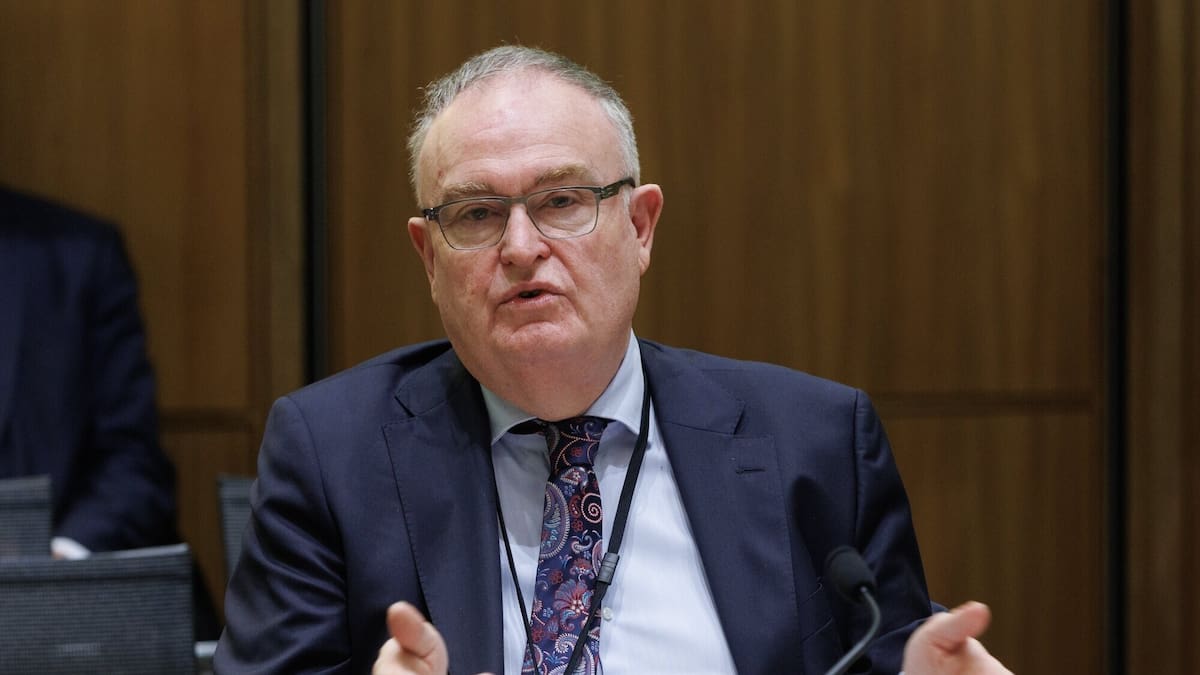
As Treasury Secretary Iain Rennie said at the recent New Zealand Economic Forum in Hamilton, the demographics are speaking for themselves.
An ageing population is already materially lifting government expenditure, and will continue to do so over the next decade, outpacing revenue growth.
“Without changes to policy settings, New Zealand’s debt trajectory will be unsustainable in the long run.”
Rennie and other Treasury officials have been dishing out this message repeatedly.
New Zealand has been running a structural deficit for a number of years which Rennie points out is among the largest among advanced economies.
And here’s the kicker, New Zealand now has one of the largest structural deficits in the advanced world comparable not to our usual peers, but to Eastern European states staring down Russia, and to democracies like the US and France whose politics have turned “dysfunctional” on fiscal policy.
“New Zealand continues to be well regarded for our institutional stability among developed economies,” he told the forum.
“But public debt is at its highest point for 30 years.
“As we have seen recently, the high peak levels of even very large advanced economies have been subject to increasing concern in markets. Our 10-year bond rate is among the highest of advanced economies currently,” he underlined.
His verdict: our small open economy is now sailing in a world of higher debt, higher interest rates and edgier markets, where fiscal mistakes are punished faster and more brutally than before.
In that environment, rebuilding fiscal buffers, reining in the structural deficit, and confronting ageing driven costs like superannuation are not optional extras. They are the price of retaining control over our own destiny.
Another dose of cold reality came this week with the release of the National Infrastructure Plan.
Basically, we can’t afford all those shiny new motorways and new Waitematā Harbour crossings.
The taxpayers’ purse won’t extend that far.
Instead, privatisation, Public Private Partnerships (PPPs), user pays and tax rises will be necessary.
The smart option is to cut our cloth and sweat existing assets hard.
But there’s no room for politicians to indulge in ribbon cutting under this scenario.
Catch up on the debates that dominated the week by signing up to our Opinion newsletter – a weekly round-up of our best commentary.