
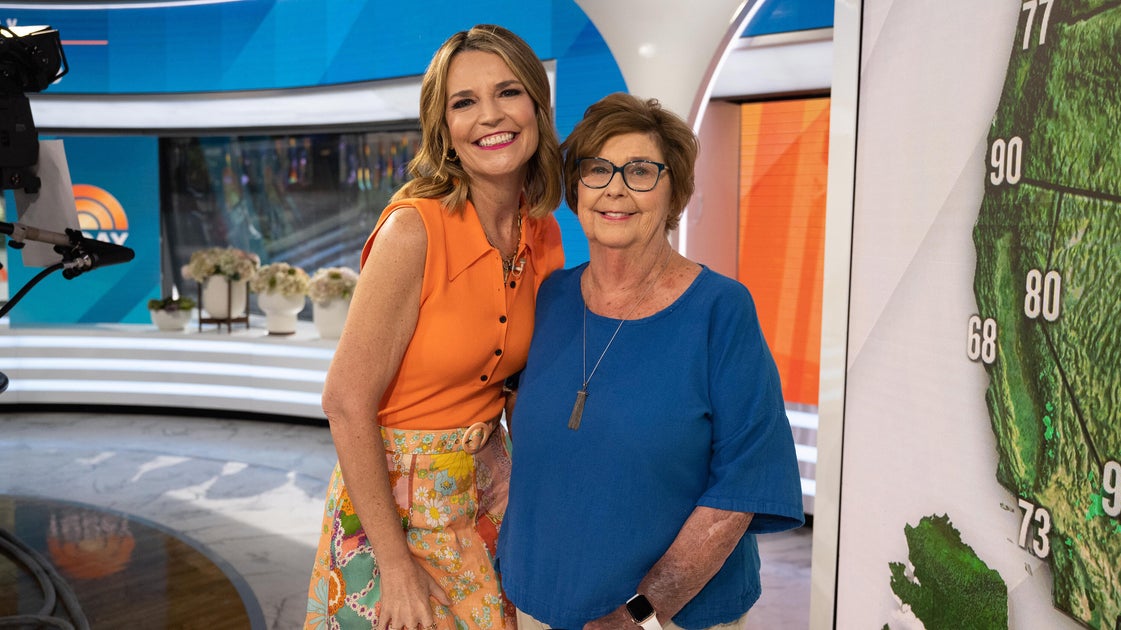
Nancy Guthrie’s disappearance is an ongoing mystery to investigators ― and a relatable nightmare for anyone who lives apart from their aging parents. Guthrie, 84, is the mother of “Today” show host Savannah Guthrie, and has gone missing since her son-in-law dropped her off at her home in Tucson, Arizona, after a family dinner on Jan. 31.
Authorities believe Guthrie was taken against her will. Guthrie’s adult children have made public pleas for her return, saying she is “frail” and needs medication “to survive.”
“We are at an hour of desperation, and we need your help,” daughter Savannah Guthrie said in one post asking people to share tips with law enforcement amid her “nightmare.” “She was taken, and we don’t know where.”
While it’s rare for elders to get kidnapped, it’s natural for a frightening incident like this to spark anxiety for those with aging parents of their own. In the U.S., older adults are far more likely to live by themselves than anywhere else in the world.
And families are likely to be the people who step up to care for these older adults.
According to the latest AARP report on caregiving in the U.S., one in four Americans are a family caregiver. Although most caregivers live within 20 minutes of the care recipients, the AARP report found that more than 10% of caregivers live an hour or more away — like Savannah Guthrie, who lives in New York City while her mother is in Arizona.
Known as “long-distance caregivers,” caregivers who live states apart from aging parents often worry they are “out of the loop,” said Kylie Meyer, a co-director at the University Center on Aging and Health at Case Western Reserve University.
“The biggest scare that I had as a long-distance caregiver, and I hear from others, is missing out on that moment when you are critically needed, and it becomes a life-changing event,” said Marvell Adams Jr., the CEO of nonprofit Caregiver Action Network, which has resources for long-distance caregivers.
Technology Can Help Address Long-Distance Caregiver Fears
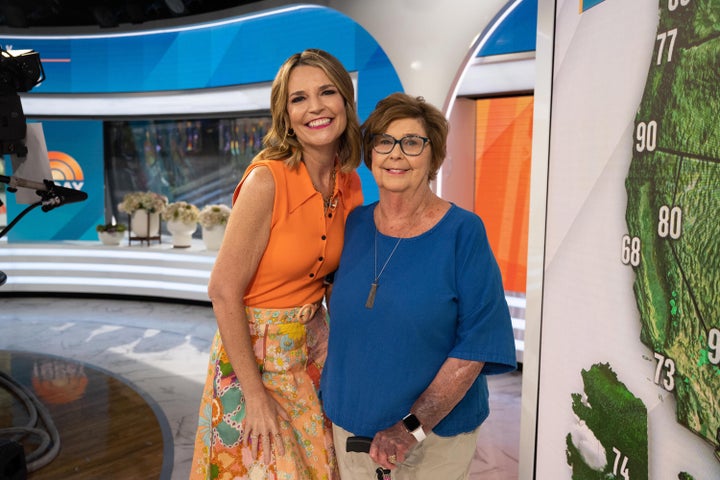 Savannah Guthrie (left) and mother Nancy Guthrie (right). Guthrie’s disappearance is the nightmare scenario for caregivers of aging parents.
Since Guthrie’s suspected abduction, authorities have released Guthrie’s doorbell camera footage of a masked, armed person, which has become key evidence of her suspected abduction. This kind of remote surveillance is an increasingly common part of caregiving, too.
A recent AARP report found that the use of remote tools like medication reminders and system alerts when a caregiver is not physically present has spiked from 13% use in 2020 to 25%in 2025.
Adams Jr. said long-distance caregivers can enlist technology for both “peace of mind” and to help care recipients live independently as long as they can. Falls are the leading cause of injury among people age 65 and older, according to the CDC, and there are wearable pendants and motion sensors to help monitor health and activity in a house. Beyond technology, Meyer said it’s helpful for caregivers to use a fall risk assessment checklist for homes that can help families put in grab bars in the shower or take rugs out that could be a fall hazard.
But despite all the warning alert systems in place, it might not be enough to prevent an accident, or in Guthrie’s case, a suspected kidnapping.
Adams Jr. knows this from personal experience. When his mother was alive, Adams Jr. was a long-distance caregiver for his mother in South Carolina while he was in Baltimore. One night, his mother fell and no one else knew for about two days.
“She didn’t have on her bracelet that would have alerted us that she fell,” Adams Jr. recalled. “It was on a Saturday evening, and the person that usually takes her to church didn’t go to church.”
“If I had to do it all over again with the technology that I’m aware of now, I would have set my mom’s house up with motion sensors, as opposed to her wearing something,” because then it’s more “foolproof,” he said, noting he also would have set up phone call alerts so that family members would get called if there was no movement from the person by a certain hour.
If you’re the distant caregiver, you can also still maintain a meaningful relationship with face-to-face calls. Seeing somebody’s face through a video call can “help to orient the person who’s living with dementia, even if you’re caring from them at a distance,” Meyer said.
But despite best efforts, no one family member can be with their parent 24/7, which is why caregiving can be an imperfect system, even when it’s working well.
“There is this guilt that can come along with the fact that I must care for this person and protect them because they raised me or they were my advocate when I needed them,” Adams Jr. said about the role of a family caregiver. But he said it’s helpful for any caregiver to know that “no person, even if [the care recipient was] in a nursing home, even if they were in a retirement community, can guarantee someone’s needs and safety are 100% met exactly as they need to be all the time.”
The guilt of feeling “if I did this, they would still be here” or worries about what you should have done can be common among caregivers, and is why support for caregivers is necessary, too, said Maral Karaccusian, the director of the Aging and Disabilities Department for Los Angeles County. “Hopefully you have someone in your life that can reflect back to you and be like, ‘Nah, you went above and beyond,’” Karaccusian said.
If you don’t have that person, there are robust support groups for caregivers that can put what you are doing in perspective.
Keeping Loved Ones Safe Means Talking About Caregiving Often And Early
Talking with an aging parent about what they want to happen in case of an emergency is key to supporting their autonomy. That way, families can know if their elder wants to go back home after being hospitalized or is open to living in a retirement community, for example.
“It’s much easier to have these conversations for planning when you know your loved one is healthy and with it,” Karaccusian said.
In Adams Jr.’s case, his mother moved into a nursing home after she fell, which is what she had agreed beforehand could happen. “That was a relief for us,” Adams Jr. said. “It didn’t make it an easy transition, but it made it easier than if she’d had this expectation that she’s absolutely going back home.”
Meyer said the calculus of when to bring up caregiving needs is different, depending on if the aging parent is fully cognitive or not. If you suspect your parent is experiencing cognitive decline, Meyer suggested focusing on getting a health care assessment with a professional.
In these cases, family caregivers could frame the discussion as, ‘“Hey, why don’t we go in and let’s just get a baseline. It might not be anything wrong, but let’s get a baseline so we know for the future,’” Meyer said the tone could be.
Dividing tasks is one other way to ease the burden on families who help aging parents nearby and from afar. The app Lotsa Helping Hands helps users coordinate meals, rides and medications, for example. However, Meyer noted that these apps’ success depends on how committed everyone is to using them.
When Aging Parents Live Alone, Neighbors Can Be Caregivers, Too
Being a long-distance caregiver can be stressful, which is why it’s helpful to create circles of support beyond nearby and distant family. Neighbors can be caregivers without even realizing it, Adams Jr. said. Giving a neighbor your number in case you see anything “weird” at your parent’s house is one way to create this circle, he said.
When you are being a “nice neighbor,” Adams Jr. said you’re also “allowing this person to thrive and live independently longer than they would have otherwise, because you are cutting their grass for them, and because you are bringing their mail in or delivering a meal every once in a while.”
It’s these larger circles of care that can immediately alert families of elders living on their own. Take what happened to Nancy Guthrie. The investigation into Guthrie’s whereabouts began shortly after she failed to show up to a friend’s house to watch a live-streamed church service on Feb. 1. Those friends knew Guthrie was always punctual. They called Guthrie’s daughter in Arizona, who rushed to her mother’s house.
In Adams Jr.’s view, Guthrie’s care circle worked because her family and friends knew she went missing shortly after it happened. But there are some emergencies no one can expect.
“The tragic and very unusual nature of an older adult being kidnapped ― I don’t know if anybody could plan for that,” Adams Jr. said.