
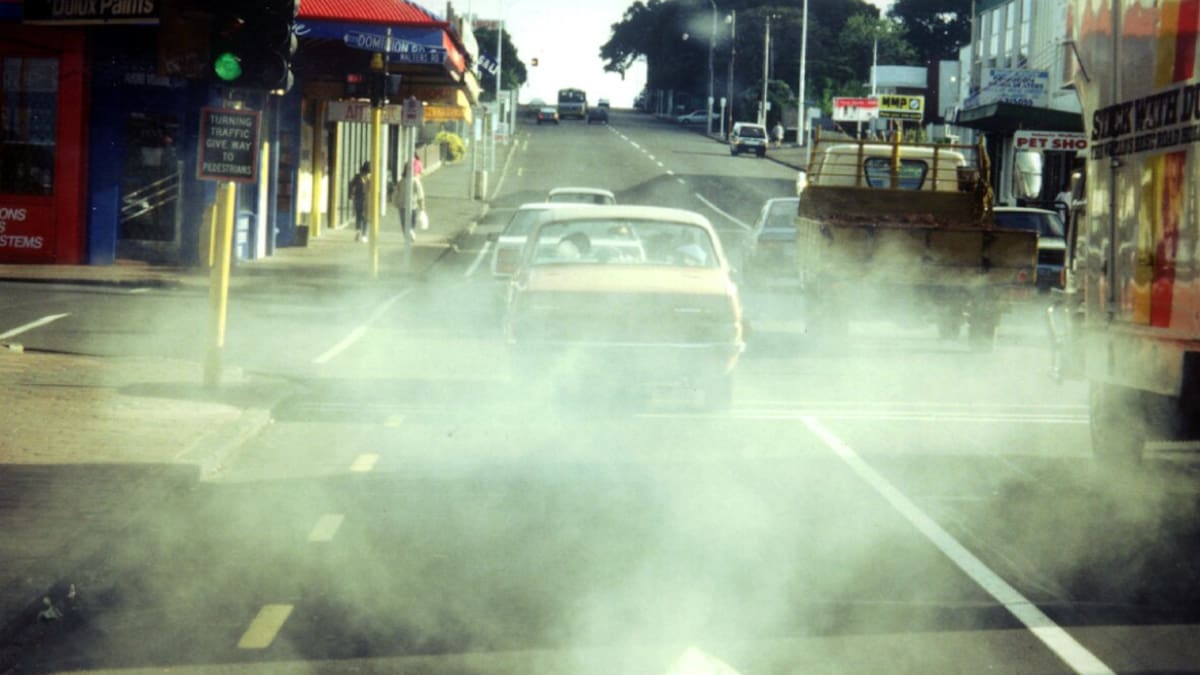
After motor vehicles, which contribute 75% of NO2 and fine particulates, domestic fires are the second major contributor to Hawke’s Bay’s air pollution problem.
Diesel vehicles in particular are heavy producers of NO2 and PM2.5.
Diesel produces far more of these harmful contaminants than other engine sources because diesel engines operate at higher pressure.
During combustion, this favours NO2 production which reacts with the air, producing a fine soot that we breathe in.
Diesel-engine-produced particulates can lead to cardiovascular and respiratory disease. The study found their impact on New Zealand’s health system is estimated at $10.5 billion annually.
And yet our heavy and light diesel vehicle fleet is increasing, with a trend away from petrol vehicles and stalled electric vehicle uptake.
We keep older vehicles in service much longer than many developed countries.
We are not well informed about the harm diesel vehicles can have on our health.
There is a lack of information for car buyers to assess their buying decisions and deter diesel vehicle purchases for health reasons.
New Zealand’s outdated emission standards for vehicles means that vehicle manufacturers and importers have a free run to supply poorly performing vehicles that do not comply with international emission standards.
Most developed countries have much stricter vehicle emission requirements. These include particulate filters on exhaust systems and catalytic reducers.
There is a need to pay much more attention to the health effects of vehicle emissions and other air-quality problems occurring in our region.
Former regional council chairman Rex Graham’s crusade on outdoor fires is fully vindicated by the data. The impact on people’s health from air pollution cannot be ignored.
The regional council is pursuing electric alternatives to diesel buses for the public transport network. We need to look at shifting to electric council vehicles.
It’s also time to seriously question the wisdom of celebrating Matariki with mass fires along our coast.
Locally, the respiratory medicine wards at Hawke’s Bay Hospital are full. Our physicians see hundreds of patients with severe respiratory illnesses that are preventable.
The region cannot claim a clean, green image in the face of this serious environmental air pollution, causing serious illnesses and premature deaths.
Neil Kirton is a Hawke’s Bay Regional Councillor and chair of the Regional Transport Committee.