
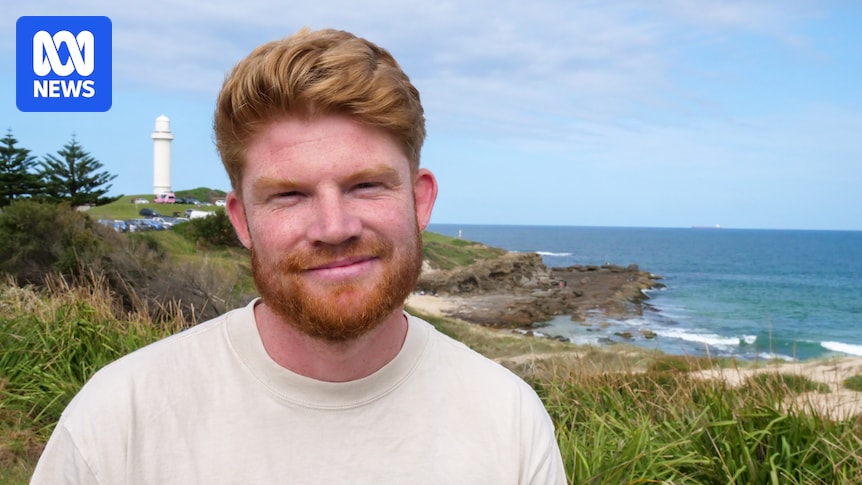
Do you remember the class clown in school? Maybe you were the jester creating havoc to entertain, distract and amuse.
Well, tradie Travis Marshall from Woonona in the Illawarra region of New South Wales is a self-proclaimed Aussie larrikin invoking jester’s privilege.
And now his use of artificial intelligence (AI) in satirical videos about his hometown is going viral, raising questions about trust, authenticity and reputation in the age of AI.
“I got the class clown award in year 12 at school, so I guess I was always a bit of a clown, and yeah, maybe that’s showing in my work as well,” Marshall said.
Loading…
Last October, the hobby videographer started using OpenAI’s video generator, Sora2.
“[That] made it easy to create videos, so I started mucking around with it,” Marshall said.
As well as death threats, he gets messages requesting that he keep going.
“I got some hate at the start, death threats, and stuff like that, but I think it’s that AI is so new and maybe scary to them.
“Before Photoshop came out, people believed photos, but now, if you see a photo, that could be Photoshopped, right?
“We’re in that process of where AI is taking over, and video editing is becoming so easy for the public to manipulate.
“It was never easy before.”
Loading…
Marshall describes his videos as AI Aussie humour and takes no offence at the derogatory term “AI slop”.
“I see that on a lot of AI videos, it’s common to call it AI slop, but I think the definition of it is a video produced easily without a lot of effort,” he said.
“It’s something I can make on my phone while I’m at lunch.
“To be fair, there are a lot of teething [issues], and I like to get it to look as real as possible, especially when you’re doing a location … but no, I’m not offended by the term.
Loading…
“I do label them as AI, I don’t have to,” Marshall said.
“I’m not trying to sell it as being real, but there are still people that fall for it and share it around.”
Marshall thinks his videos are shared because they are AI.
“They might watch it a third time and go, ‘Oh, that’s AI. Let’s send this to such and such and see if they fall for it.’
“It’s just a bit of a prank.”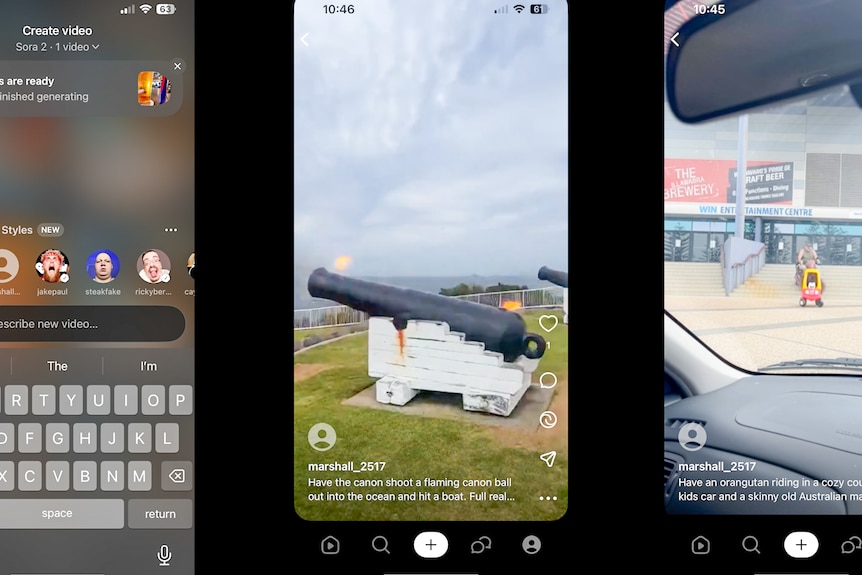
Travis Marshall creates content utilising video he shot with Sora2 input. (Supplied: Travis Marshall)
Marshall says his content is an extension of his larrikin character.
“You need iconic landmarks like Wollongong lighthouse because it stops people when they’re scrolling, they see Wollongong and then something crazy happens, and it gets shared around from there,” he said.
“It needs to be something they’ve never seen before, and it’s probably going to get wilder and wilder.”Attention grabbingLoading…
Marshall’s videos — which include a man wrestling a kangaroo outside a pub, a vehicle crashing into Wollongong Harbour and fishermen in a tinny coming up the Kiama Blowhole — have millions of views.
Cyber psychologist Oliver Guidetti from the University of Wollongong encourages audiences to check if content is labelled AI and ask not only how plausible the scenarios are, but also what the creator’s intent is.
“From what is publicly visible, this account frames the content as AI-generated and appears to operate in a satirical, exaggerated ‘local news’ style rather than with an explicit intent to deceive,” he said.
“Social media selects for clicks. It doesn’t understand good behaviour or bad behaviour; it just selects based on attention.”Loading…AI fear
Dr Guidetti says AI does not have a moral compass.
“It’s a machine we built to learn, but you can’t tell it ‘learn this, don’t learn that’, it doesn’t work that way,” he said.
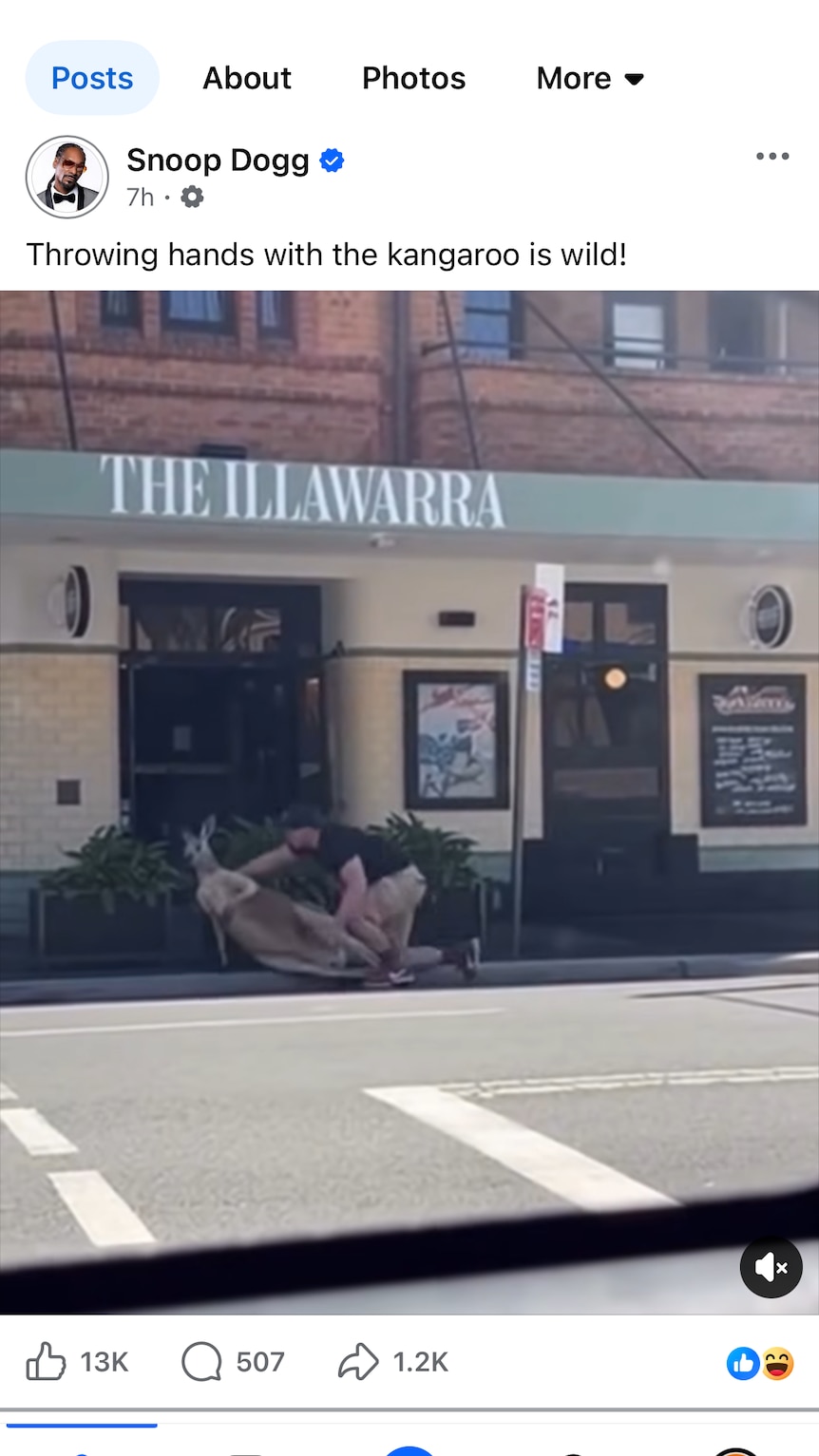
When Snoop Dogg “shared” Travis Marshall’s video, did he think it was shot in real life? (Supplied: Travis Marshall)
He argues AI widens the gap between what we see on social media and reality.
“I think that there has always been a major divorce between what we see on social media and what is actually happening in the world,” he said.
“Pre-AI, Photoshop created an augmentation of reality that caused young women to have body image problems, which caused genuine pathologies in a vast array of people.
“That’s just one example of people seeing something on social media and extrapolating it to their lives.”
He says while there are positive applications for the technology, consumers are right to question how it is being used.
“This gentleman is using the AI as an artistic medium, which is fantastic, but what effect is the AI going to have on us?
“It can’t really be captured in one particular avenue; it’s going to be quite individual.
“If you’re on a platform that is free, like Sora2, you are the commodity.
“So, should people be trusting AI? Absolutely, unequivocally not, no.”