
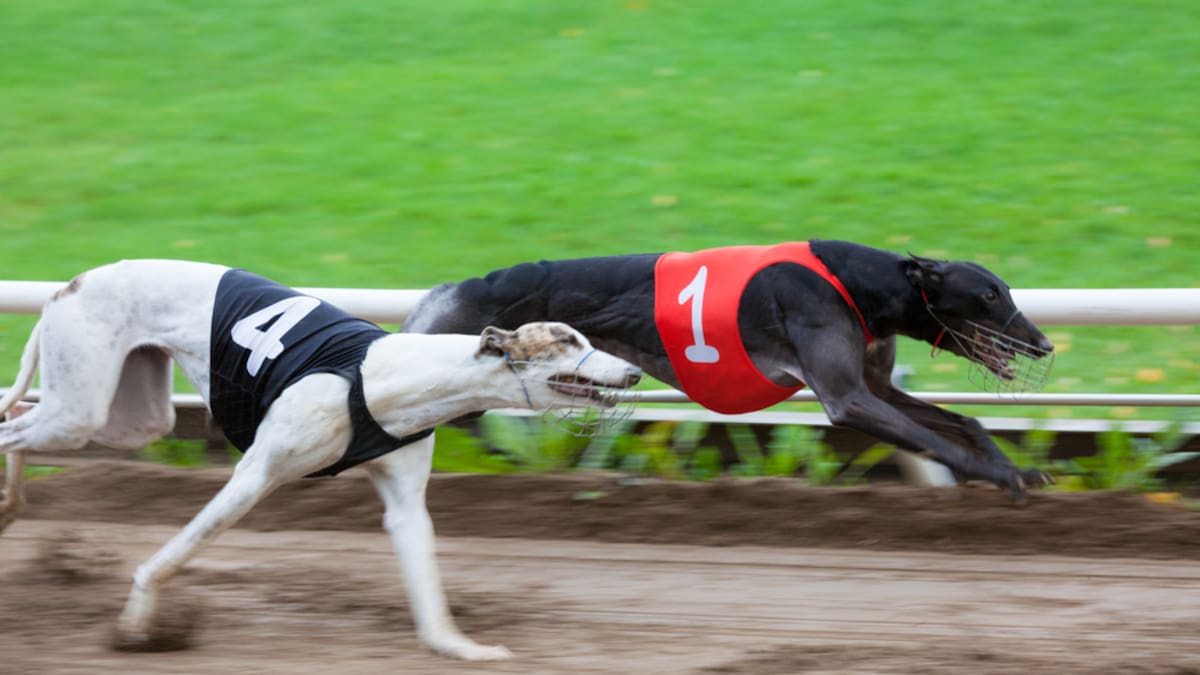
Greyhound racing has been under sustained scrutiny for well over a decade. It has been reviewed, monitored and warned repeatedly that its future depended on demonstrable, lasting improvements in animal welfare.
The fact that the industry still frames the current proposal as abrupt says less about the Government’s process and more about an unwillingness to accept where that long road has led and how it got there.
Process does matter when it comes to significant social decisions, and to be clear: the industry has not been denied a voice to date.
Industry-initiated reviews, government inquiries, ongoing monitoring, and now a select committee process have all provided opportunities for meaningful engagement, and the industry has had far more opportunity than most to shape the standards by which it would be judged.
But the purpose of those processes was never simply to decide whether people involved should be heard; it was to answer a more fundamental question about the nature of the activity itself.
That question goes to who bears the risk, who benefits from it, and who has the ability to refuse it. It is here that greyhound racing differs in a crucial way from most sports New Zealanders are familiar with.
A critical distinction often overlooked in the debate is the ethical difference between sports involving human participants and activities that rely on animals.
Human athletes consent to risk. They can weigh danger against reward, walk away, organise collectively, and advocate for their own safety. Greyhounds cannot.
They are bred, trained, raced and eventually removed from the industry entirely at human direction. That difference is not incidental; it is foundational.
New Zealand law reflects this distinction clearly. Under the Animal Welfare Act, owners and those in charge of animals owe positive duties of care.
These duties are not aspirational or discretionary; they are mandatory.
They include obligations to prevent unreasonable or unnecessary pain and distress, to meet animals’ physical and behavioural needs, and to avoid exposing them to unreasonable risk of injury.
When animals are used for the purpose of entertainment, those obligations are heightened, not diluted, according to the National Animal Welfare Advisory Committee.
Greyhound racing sits uneasily with those fiduciary-like duties. Serious injury is not an aberration in the “sport”; it is a known and recurring feature, inherent in the activity.
That reality has persisted despite years of reviews, targets and assurances. At some point, it becomes untenable to argue that such outcomes are consistent with a statutory obligation to protect animals from avoidable harm.
This is where the concept of social licence is key.
Social licence is not fixed, and it is not guaranteed by history, habit or tradition; it reflects what a society is prepared to accept at a particular moment in time. As public values shift, and people have access to an ever-expanding range of entertainment options that do not rely on animals being injured, public tolerance for animal-based entertainment inevitably narrows.
What may once have been seen as a reasonable trade-off begins to look less justifiable when the harm is clear and more ethical alternatives are plentiful.
When an industry or activity’s social licence has dwindled, the public expects their elected representatives to act decisively and align their laws with social attitudes.
Greyhound racing did not lose public acceptance overnight; it lost it gradually. Each new review, injury report, on-track death, welfare breach, missing greyhound, or greyhound testing positive to a prohibited substance made it harder to explain why dogs should continue to bear significant physical risk for the sake of entertainment. Over time, the balance tipped.
The question was no longer whether the “sport” could be made marginally safer, how the New Zealand industry compared to overseas jurisdictions, or how it compared to other industries, the question became whether having greyhound racing in New Zealand still made sense at all.
It is disingenuous, in that context, to argue that the industry must now be given yet another “full-scale inquiry” (as was suggested to the Primary Production Select Committee by submitters numerous times this week) simply because a past report suggested one should precede any ban.
That same report (and others before it) also made clear, practical recommendations to reduce harm, including changes to racing formats such as the adoption of straight tracks.
Nearly a decade on, several key recommendations made in those reports remain unimplemented, or have not been implemented to the degree one would expect if the welfare of greyhounds was the industry’s central concern. An industry cannot selectively invoke reports when it suits, while disregarding the recommendations it finds inconvenient.
NZ First leader and Minister for Racing, Winston Peters. Photo / Mark Mitchell
Claims that this decision puts other sports or community groups at risk also do not withstand scrutiny. Ending greyhound racing does not open the door to banning cricket, rugby or netball.
Those activities involve consenting humans and are regulated accordingly. Animal-based activities operate under a different legal and ethical framework, which has already seen significant change as society has evolved.
New Zealand has prohibited the use of wild animals in circuses, banned cosmetic testing on animals, and phased out or restricted farming practices once considered normal. None of those decisions triggered a cascade of bans to unrelated pastimes or activities.
Nor is it unusual for industries to bear the cost of regulatory change. Across agriculture, transport and processing, animal-based operators have been required to invest in new technology and practices to meet rising welfare standards, often without compensation and sometimes with limited consultation.
Compliance has been treated as the price of continuing to operate. It is difficult to argue that greyhound racing, after years of explicit warning that its social licence was at risk, should be uniquely entitled to compensation when that licence finally runs out.
This does not mean the human impact should be ignored. Trainers, owners and employees of the industry deserve support through transition. Acknowledging that reality, however, does not require that we pretend the outcome is somehow unjust or arbitrary.
Greyhound racing is not ending because of procedural unfairness or a lack of opportunity, it is ending because it could not reconcile its business model with modern expectations of animal welfare.
This was not a sprint to a ban. It was a long race, run with ample warning, that ended where the evidence and ethics had been pointing for some time.
Catch up on the debates that dominated the week by signing up to our Opinion newsletter – a weekly round-up of our best commentary.