
Today, the Invercargill Licensing Trust (ILT) operates two hotels, four motels, 14 taverns and bars, six major liquor outlets, eight convenience bottle stores and a conference and catering business.
It also operates a motel in Dunedin and one in Christchurch and provides wholesale alcohol to supermarkets across Otago and Southland.
Established in 1944 following a referendum, the Invercargill Licensing Trust (ILT) holds exclusive rights under the Sale and Supply of Alcohol Act to operate standalone off-licences in its district.
The ILT developed and owns The Langlands Hotel, which opened in 2022. Photo / Supplied
Unlike most former trust areas, Invercargill has not voted to move to open competition.
Compared with the other three remaining trust monopoly areas – Mataura with about 1,600 people and the much larger West Auckland ward trusts Waitākere and Portage (about 178,000 residents) which are structurally different from a stand-alone city – Invercargill stands out as a mid-sized city of about 55,600 people where a statutory licensing trust still controls core liquor outlets.
Eighty years on from its inception, ILT remains a significant commercial operator.
According to its 2025 annual report, the ILT Group operates 23 hospitality businesses, including hotels, motels, taverns, bottle stores and conference facilities.
For the year ended March 31, 2025, the group reported gross profit of $48.02 million and a surplus after tax of $10.91m.
After donations to the community, the net surplus stood at $2.038m. Total assets were reported at $89.61m, with equity of $66.124m and term debt of $8.01m.
During the same period, the Trust distributed $8.872m back into the community.
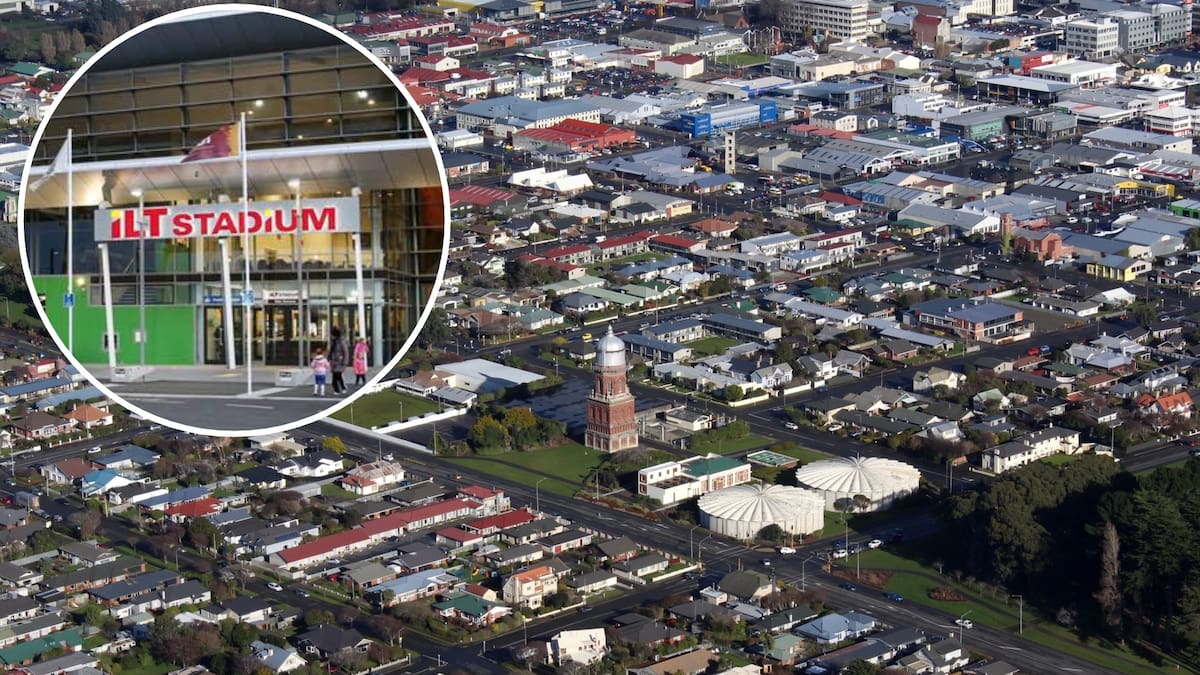
The ILT is a major sponsor of Stadium Southland, and holds naming rights to the venue. Photo / Supplied
Of that, $3.485m was allocated through ILT grants and $5.386m was distributed via the ILT Foundation’s gaming proceeds.
The foundation operates 153 gaming machines and states it has awarded nearly $105m over the past 19 years.
ILT also holds a 28.3% share in DB South Island Brewery Limited.
Chief executive Chris Ramsay said ILT was both a commercial operator and a community contributor.
“Whilst a major player in town, there are already 109 other non-ILT venues,” he said, noting ILT holds 22 of the 131 liquor licences issued by the Invercargill District Licensing Committee,” he said.
Licensing decisions in Invercargill are made by the District Licensing Committee (DLC), which applies the Sale and Supply of Alcohol Act.
Section 350 of that Act establishes the exclusive rights of the licensing trust to operate standalone off-licences within its district.
DLC annual reports over the past decade show that Section 350 still applies within Invercargill – and new standalone off-licence approvals have been limited.
In the 2019–20 reporting period, one off-licence application was declined after being found to breach Sections 32 and 350 of the Act, following a hearing.
The Invercargill Licensing Trust lodged a formal objection to the application by Gadoochi Brewing Ltd at 30-32 Dee St, with the Licensing Inspector raising concerns relating to Sections 32 and 350 of the Sale and Supply of Alcohol Act.
Police did not oppose the application, while the Medical Officer of Health initially opposed but later withdrew that opposition.
In its written decision, the Committee found the premises fell within the Trust’s monopoly boundary and that the monopoly provisions applied because the applicant intended to sell other brewers’ products.
The application was dismissed.
Licensing decisions in Invercargill are made by the District Licensing Committee (DLC), which applies the Sale and Supply of Alcohol Act. Photo / File
Over the same period, overall licence application numbers have declined.
Applications received by the DLC fell from 349 in 2020–21 to 244 in 2023–24.
In recent years, the majority of applications have related to renewals, transfers or variations rather than new entrants.
Independent operators interviewed for this story had differing views on how the trust model operates in practice.
Athena Tane, co-owner of The Auction House, said taking over the venue in 2022 was a straightforward process.
She said the hospitality market was competitive and believed there was room for more independent operators.
“I definitely think so, I think everyone likes to support locals,” she said.
Tane said securing premises and licensing had not presented difficulties in her case, as she and her sister took over an existing operation.
Nicola McGilvray, co-owner of Gadoochi Brewing and Tuatara Café, said the licensing framework had “very, very directly” affected her business.
Her brewery recently secured approval to operate an off-licence following a hearing before the Alcohol Regulatory and Licensing Authority (ARLA) in December.
“We fought that through ARLA and we won,” she said.
McGilvray said an earlier application three years ago had been declined and that the recent process had required significant time and expense.
She said the initial interpretation relied on the monopoly provisions in the Act.
“It’s been a battle,” she said.
McGilvray described ILT as “very ingrained in every aspect of the community” and said new entrants would find it “quite hard to establish a new licence”.
She recommended purchasing an existing licensed premises rather than applying for a new standalone licence.
Ramsay rejected suggestions that ILT interferes in licensing decisions.
“We do not issue liquor licences, nor do we stand in the way of competition,” he said.
Another independent hospitality operator, David Hicks, owner of Rad Dad, said ILT had no direct impact on his restaurant model.
“I’m classified as a restaurant… applying for a licence doesn’t come into anything that the ILT hold a monopoly over.”
He said the bigger hurdle was moving from a food truck model into a leased premises, citing rent levels and council food compliance requirements as more significant barriers.
“There isn’t a lot of premises in town at the right price for people starting out,” he said.
He said the trust structure may even have indirectly benefited his business.
“In the kind of dearth of other options in town… it’s given me a boost in the ‘this is new and different’ sense,” he said.
Long-time hospitality operator Mana Davis said tensions between independent operators and the licensing structure dated back decades.
Davis began operating in Invercargill in the 1980s and later secured a licence for his restaurant in the late 1980s and 1990s.
He said expanding his business required court action in order to open to trade, and there were disputes over the layout and visibility of bar areas within his premises.
Davis said he believed independent operators were treated more strictly than trust-run venues during that period, particularly around whether establishments were deemed food-led or alcohol-led.
“They really did focus on me,” he alleged.
Davis said he had sought to provide an alternative to what he described as a more traditional tavern model.
He acknowledged ILT’s community contributions but said the dominance of the model had historically constrained experimentation.
“It’s held our town,” he said.
Nationally, licensing trusts are not unique, but full monopoly districts are now uncommon.
The NZ Community Licensing Trust Association represents 16 licensing and community trusts governed by the Act.
Collectively, those trusts employ more than 1,600 staff and distribute more than $30 million annually in profits or gaming grant distributions to local communities.
Ben Tomsett is a multimedia journalist based in Dunedin. He joined the Herald in 2023.