
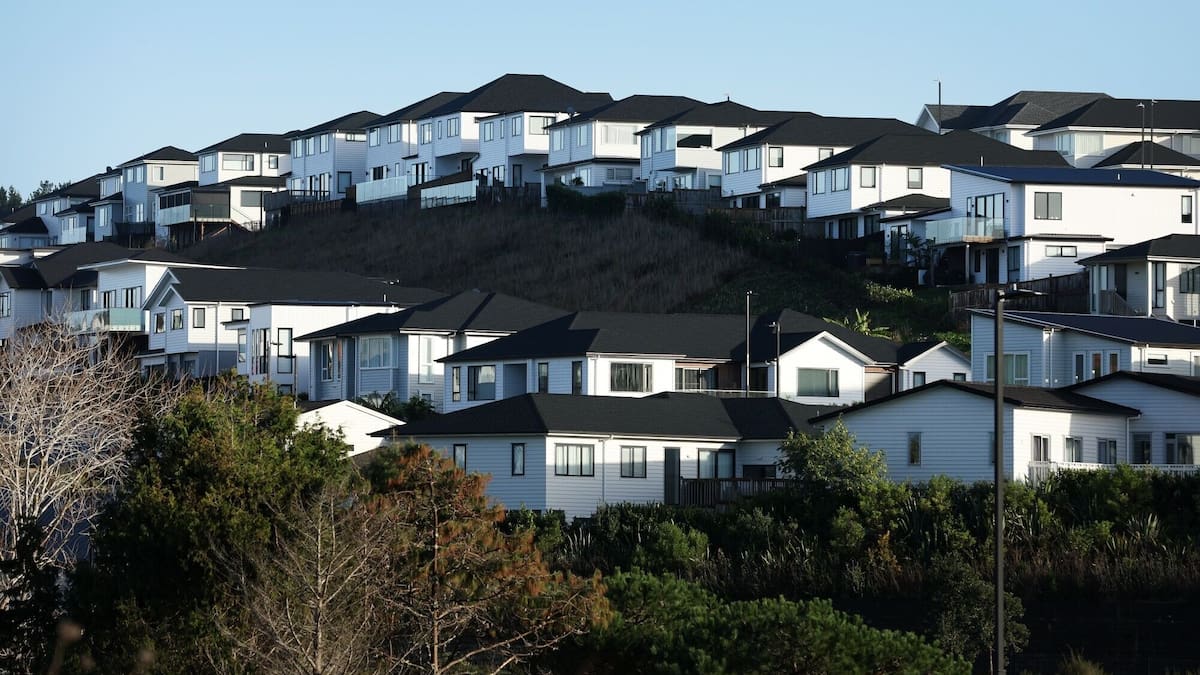
They’ve probably sunk close to a million dollars, if not multiples of that, in order to get on the property ladder in our biggest city. Not only is it possibly their biggest single investment, but – more importantly – it’s their home. It’s the place they spend most of their time. It’s the place they make many of their memories with their families.
They are entitled to object to rules that could allow a multi-storey apartment block popping up next door. They shouldn’t be mocked or vilified for defending it.
Nimbys are not the problem with this week’s backdown. The problem was that the Government let this plan go as far as it did.
Auckland never needed to allow up to 2 million new homes to be built. If you accept that there are three people to a home in Auckland, constructing that many units would’ve accommodated 6 million people. Hands up who really thinks more than New Zealand’s entire current population will move to just Auckland in the next 30 years?
Even at the reduced level of 1.6 million additional homes, we’re making space for up to 4.8 million people moving in, which isn’t going to happen.
To be fair, no one actually thinks the number will be struck in that time. After all, Auckland’s only built about 100,000 new homes in the past decade. The 2 million number was only supposed to provide an abundance of options for developers to choose where to build.
But that high number was important because the difference between 1.6 million and 2 million is the suburbs. At 1.6 million the density happens mainly around Auckland’s 23 town centres and transport corridors.
At 2 million the density bleeds into the leafy suburbs: Remuera, Ōrākei, Parnell.
Which is why the Nimbys got cross. Because, if there are actually more than enough options without including the leafy suburbs – and if you accept we’ll never actually max it out because we’ll never need that many houses – then why did the Government shoot for a number so high that it did include the leafy suburbs?
No one you speak to can really answer that question. Some blame Wellington-based Housing Minister Chris Bishop for failing to understand Aucklanders. Some blame the Prime Minister for not taking advice when he was warned it would turn Auckland septic. Some blame Auckland Council for asking for it then changing its mind.
Whatever it was, it was a mistake that probably could’ve been avoided given that it was National’s second crack at densifying leafy suburbs. The last one was that terrible agreement National’s Nicola Willis and Labour’s Megan Woods struck to build three houses of three storeys on urban residential sites without consent. It too went down like a cup of cold sick and had to be abandoned.
At least National has demonstrated it does listen. It had to. It’s election year, National is as low down the polls as a dam in a drought, Auckland is a key battleground and the city is full of frenemies such as the NZ First-friendly Mayor Wayne Brown and Act Party electorate MPs David Seymour and Brooke van Velden.
A backdown this early in the year means the problem’s been cauterised. The only fallout will be a lingering resentment from the many normally National-voting Auckland homeowners who got worked up enough to go to public meetings.
As LV Martin said, it’s the putting right that counts. Whether the Nimbys forgive the unnecessary stress in election year is an unknown.
Catch up on the debates that dominated the week by signing up to our Opinion newsletter – a weekly round-up of our best commentary.