

Communities along South Australia’s south-east coast are considering their options, including retreat, as homes and infrastructure come under threat.
A series of storms last year accelerated erosion along the Limestone Coast, with the town of Robe reaching levels of erosion the local council was not expecting until 2050.
In some parts of town, including along Hoopers and Fox beaches, beachfront houses could be in the firing line in the next few years, if not sooner.
Robe resident John Davidson lives a couple of streets behind Hoopers Beach.
While his house is safe, friends of his saw their front fence taken during the storms last year.
“You could watch the chunks of dune and shrubs falling,” he said.
“You get a combination of high tides, plus strong winds and swell and it’s pretty obvious what’s going to happen.”
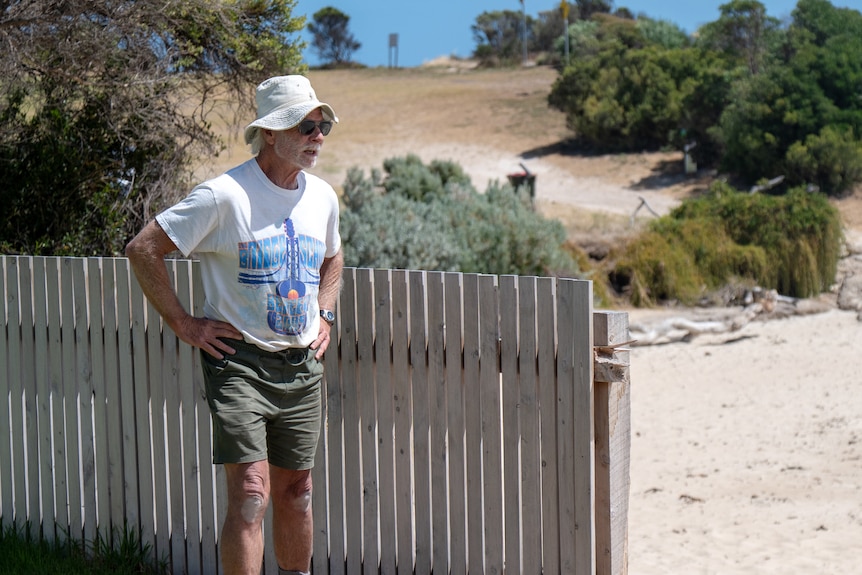
John Davidson observes the erosion at Robe’s Hoopers Beach caused by last year’s storms. (ABC South East SA: Josh Brine)
Further down the coast at Southend the local caravan park, located just off the beach, has also been impacted by significant dune erosion.
Park owner Claire Hubbard said she expected as many as 10 to 12 sites at the park to be unusable within the next year — just less than a quarter of the total sites.
“We’ve had to move the fence back about three times,” she said.
“We’re just continuously losing space now.”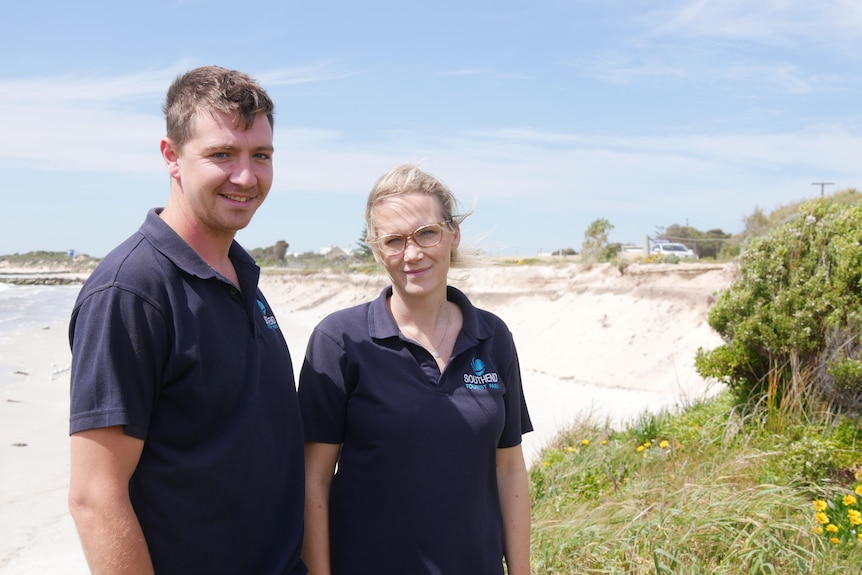
Southend Tourist Park owners Jack and Claire Hubbard next to the town’s beach. (ABC South East SA: Sam Bradbrook )
Erosion 25 years ahead of plans
About a year ago the District Council of Robe brought in a plan to adapt and mitigate the impacts of erosion.
“The Limestone Coast has a very fast-eroding coastline and it seems to be eroding faster and faster,” council chief executive Nat Traeger said.
“In 2025 we reached figures and triggers that we thought we wouldn’t get to until 2050.”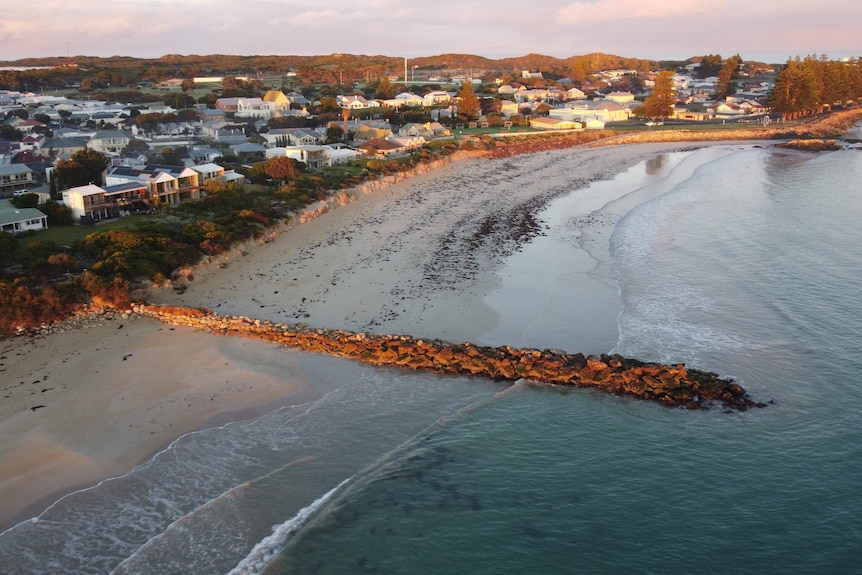
Robe’s Town Beach has also suffered damage from erosion. (Supplied: Patrick Hesp)
Retired professor of coastal science at Flinders University, Patrick Hesp, was part of teams studying erosion along much of the state’s south-eastern coastline.
He said while it was not clear in the data if erosion in the region was getting worse, a number of factors could be causing the damage to increase.
“As sea levels continue to rise, as wave energy’s increasing, and we see reefs in the near-shore being more eroded over time, we may be seeing that combination of factors increase wave energy at the shoreline and increase the rates of erosion,” he said.
“[Climate change] is very likely having some effect and will likely have more of an effect into the future.”
Patrick Hesp has studied erosion along SA’s south-eastern coasts. (Supplied: Flinders University)
Dr Hesp said the development and growth of towns had also contributed.
“Where houses have been placed too close to the coast in the past, or they are now situated right behind steep eroding cliffs, then you’re seeing all sorts of infrastructure in harms way,” he said.
“In areas where there is no infrastructure, sand dunes can naturally retreat.
“If you have structures in the way it’s much more difficult for that to happen.”
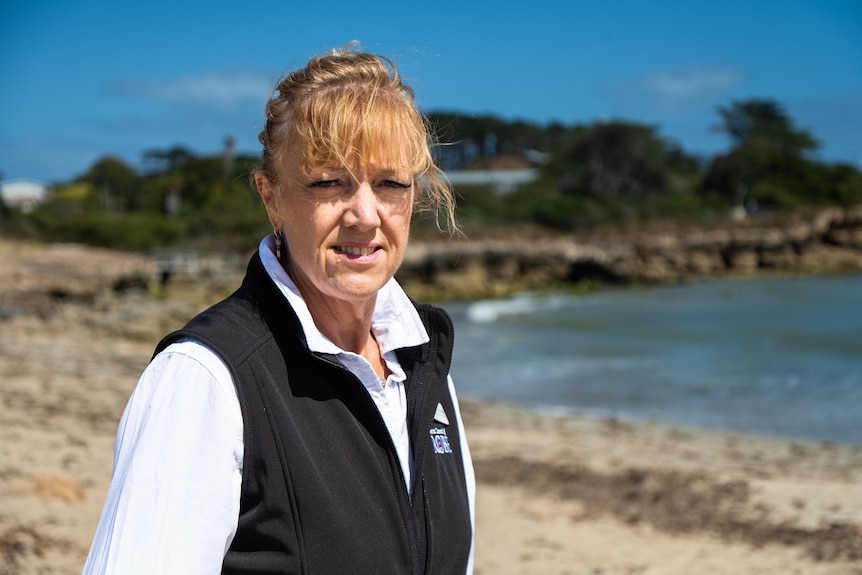
Robe District Council CEO Nat Traeger at the eroding Fox Beach. (ABC South East SA: Josh Brine)
A growing financial burden
As the beaches creep back the costs creep up for businesses, home owners and councils.
“The financial resource is one thing … but it is all-consuming,” Ms Traeger said.
“During the two months of winter [in 2025] we spent 33 per cent of our staff time responding to and cleaning up from those severe storms.”
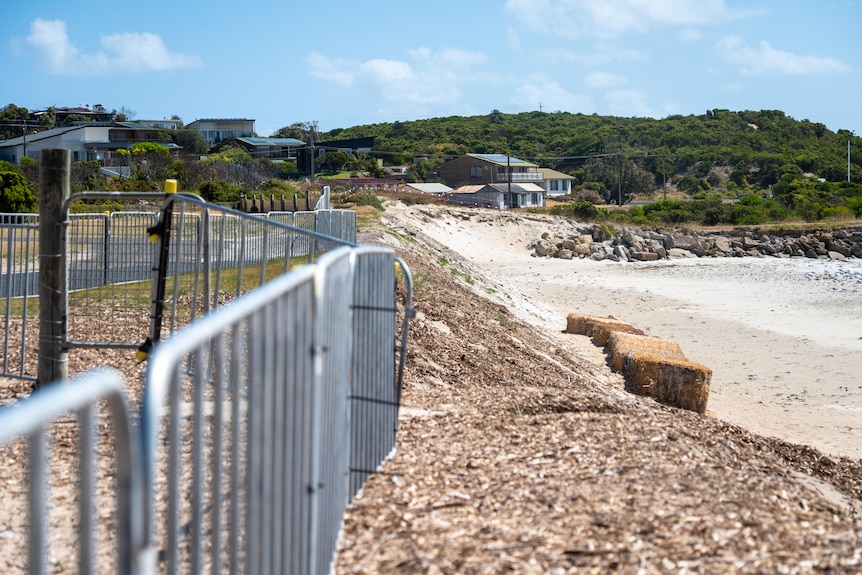
The Southend Tourist Park is using temporary fencing to enclose the park. (ABC South East SA: Josh Brine)
Back at Southend, Mrs Hubbard was concerned what the impact could be on the business’ future income.
“If we’re not at full capacity for that peak period it becomes quite unsustainable,” she said.
The Hubbards are currently negotiating a plan to use sites up at the town’s sailing club to get back the capacity they are losing.
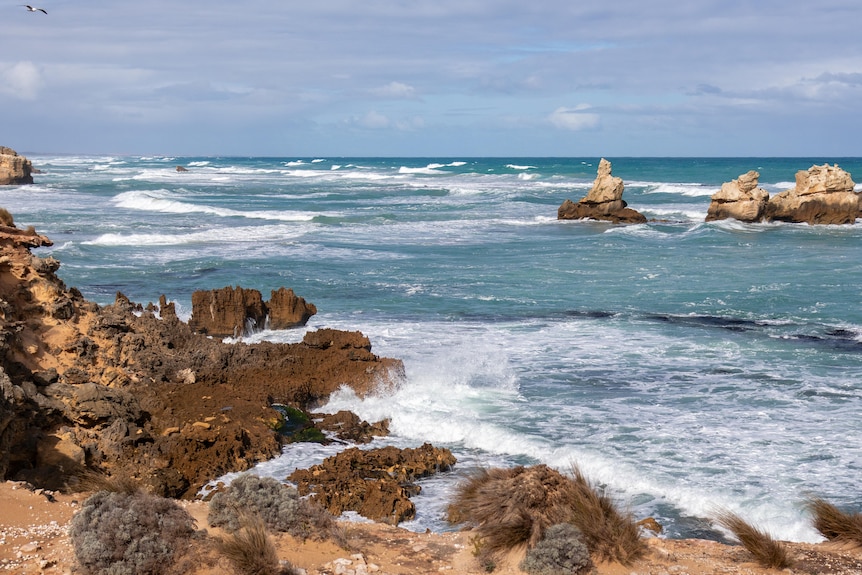
Many towns are also seeing limestone erosion. (ABC South East SA: Josh Brine)
In Robe the council was also looking at all options, including a retreat.
“That essentially would mean let Mother Nature take its course … but there are private and public assets in the way of that,” Ms Traeger said.
“That retreat strategy is not palatable, but in some cases it’s the least burden on ratepayers.”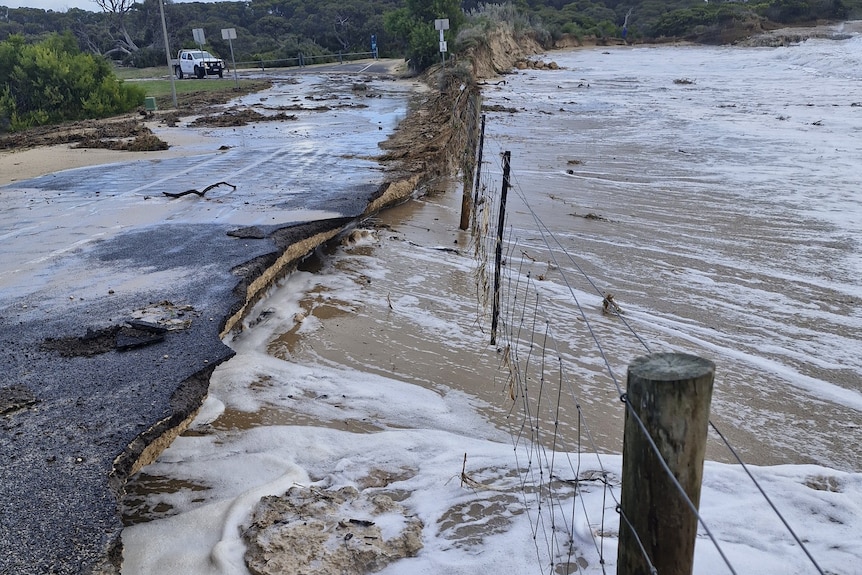
Erosion damaged the road behind Fox Beach. (Supplied: District Council of Robe)
While both state and federal governments have provided funding to local councils to help battle erosion, Dr Hesp said more support will be needed in the future.
“Both state and federal governments have to start thinking much more about what is their policy towards what we do with coastal change,” he said.
“There’s going to have to be more funding for helping councils that are generally cash-strapped to adapt and change to these conditions.”
A state government spokesperson said Coast Protection Board funding had helped councils, including Robe, Kingston and Wattle Range “unlock millions of dollars in works to protect vulnerable sections of coastline and maintain beaches”.
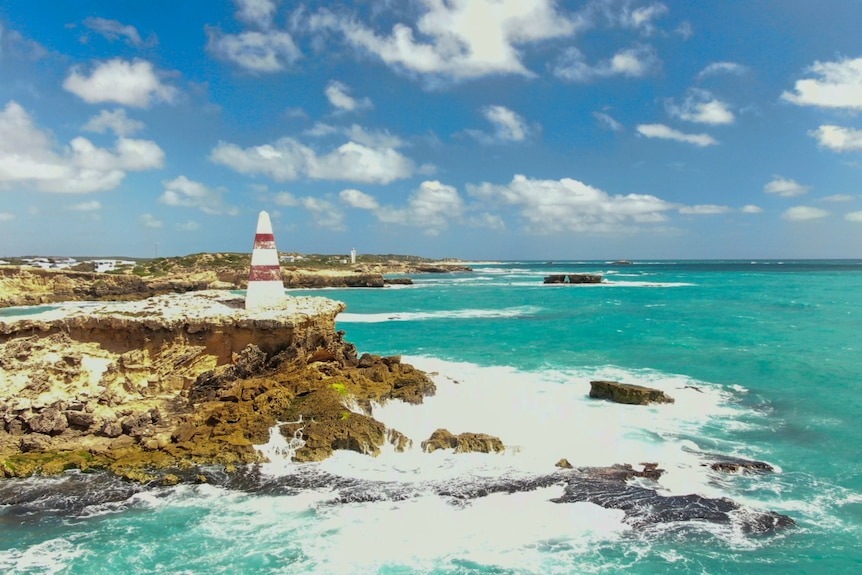
The Robe obelisk, a town landmark, is also under threat. (ABC South East SA: Sam Bradbrook)
“Projects supported include the installation of geotextile sandbags and sand replenishment at Fox Beach, multiple grants towards construction of the Wyomi seawall, groyne maintenance and repairs along the foreshore at Beachport and ongoing support in managing coastal erosion at Southend,” they said.
“A monitoring network has also been upgraded in the south-east to provide real-time data and guide future planning, which includes a tide gauge recently installed at Robe marina.
“Our government recognises the impact of a changing climate, and our commitment to net-zero and strong progress towards 100 per cent net-renewable generation by 2027 is helping to address this environmental risk.”