
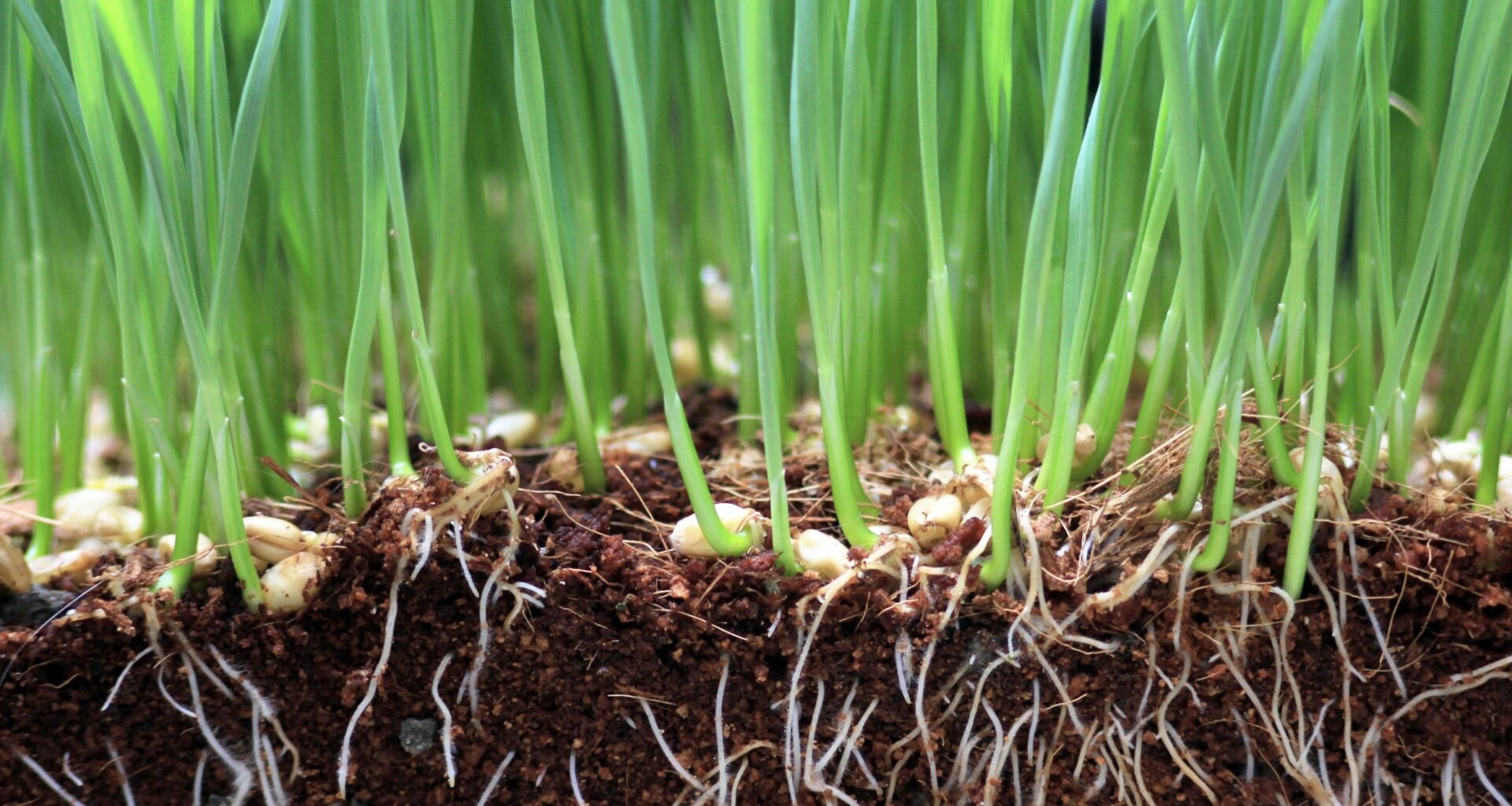
For over a century, farmers have been concerned about nitrogen. It is one of the main nutrients crops need to grow.
Without it, wheat plants remain short and pale. With a healthy amount of nitrogen, they flourish and grow strong, filling grain bins everywhere.

But nitrogen does not belong to plants alone. Soil, too, has a life of its own. Billions of microbes inhabit the ground near plant roots, and they need nitrogen as well.
Every time a farmer fertilizes a field, a silent competition begins. Who gets there first – the plant or the microbes? A new study shows that one factor can tip the balance: soil acidity.
Soil acidity changes everything
Soil pH indicates the acidity or alkalinity of the soil. It may seem like a trivial detail for a lab report, but pH has important effects on the way nutrients act. Here, it affects the competition for nitrogen between wheat and microbes.
The two forms that plants mainly absorb are ammonium and nitrate. These forms can also be absorbed by microbes.
Researchers conducted a controlled experiment in a laboratory environment. They grew wheat in two agricultural soils. The first was acidic. The second was calcareous, meaning it was more alkaline.
Researchers used nitrogen isotopes to track exactly where the fertilizer nitrogen went over time. This enabled them to measure nitrogen uptake by the wheat plants and soil microbes.
“Our results show that soil pH fundamentally changes how wheat acquires nitrogen and how strongly microbes compete with plants for this vital nutrient,” said corresponding author Ting Lan from Sichuan Agricultural University.
“Understanding these interactions is essential for developing more efficient and sustainable fertilization strategies.”
Different soils and fertilizer strategies
Wheat did not behave the same way in both soils. In calcareous soil, the plants showed a strong preference for nitrate within the first 24 hours after nitrogen was applied.
In acidic soil, wheat did not show a clear preference between ammonium and nitrate during that same period. Overall, wheat absorbed nitrogen more efficiently in calcareous soil than in acidic soil.
That difference links back to basic soil chemistry. Calcareous soil had higher nitrification rates. In simple terms, more ammonium was converted into nitrate – the form wheat tends to favor.
Acidic soils created conditions that helped microbes hold on to nitrogen more tightly. The result? Soil type shaped who gained the upper hand.
Microbes grab nitrogen first
Right after the fertilizer hit the soil, microbes jumped in. They dominated nitrogen uptake immediately after application. They showed a rapid response and a strong short-term advantage.
But that lead did not last. Within 48 hours, wheat surpassed microbial nitrogen uptake in both soil types. The crop recovered more nitrogen over time, even if microbes got the first bite.
Still, the level of competition depended on pH. In acidic soil, microbial nitrogen assimilation remained significantly higher than in calcareous soil.
Microbes in acidic conditions captured nearly as much nitrogen as wheat. That signals stronger competition under lower pH conditions.
In calcareous soil, microbial competition was weaker. Wheat took control of nitrogen uptake more effectively.
Soil pH reduces fertilizer loss
Nitrogen fertilizers help feed billions of people. Yet they are often used inefficiently. Large portions never make it into crops. Instead, they wash into waterways or escape into the air as greenhouse gases.
If soil pH affects how much nitrogen crops can claim, then managing pH becomes more than a side issue. It turns into a practical tool.
Adjusting soil acidity through liming or other practices could help farmers balance microbial activity and crop uptake.
Better balance could mean less wasted fertilizer. That means lower costs for farmers and less pollution for everyone else.
In the end, boosting wheat yields may depend as much on managing acidity as on adding more fertilizer. The contest underground is real. And now we know that pH helps decide the winner.
The hidden timing of soil biology
This research also highlights something easy to forget. Soil is not just dirt. It is a dynamic system. Plant roots and microbes respond quickly to changes in nutrients.
Their strategies shift with soil chemistry and timing. A 48-hour window can change the outcome of who gets what.
Understanding that timing and chemistry gives scientists and farmers new insight. With it, they can design fertilization practices that work with soil biology instead of against it.
The full study was published in the journal Nitrogen Cycling.
—–
Like what you read? Subscribe to our newsletter for engaging articles, exclusive content, and the latest updates.
Check us out on EarthSnap, a free app brought to you by Eric Ralls and Earth.com.
—–