
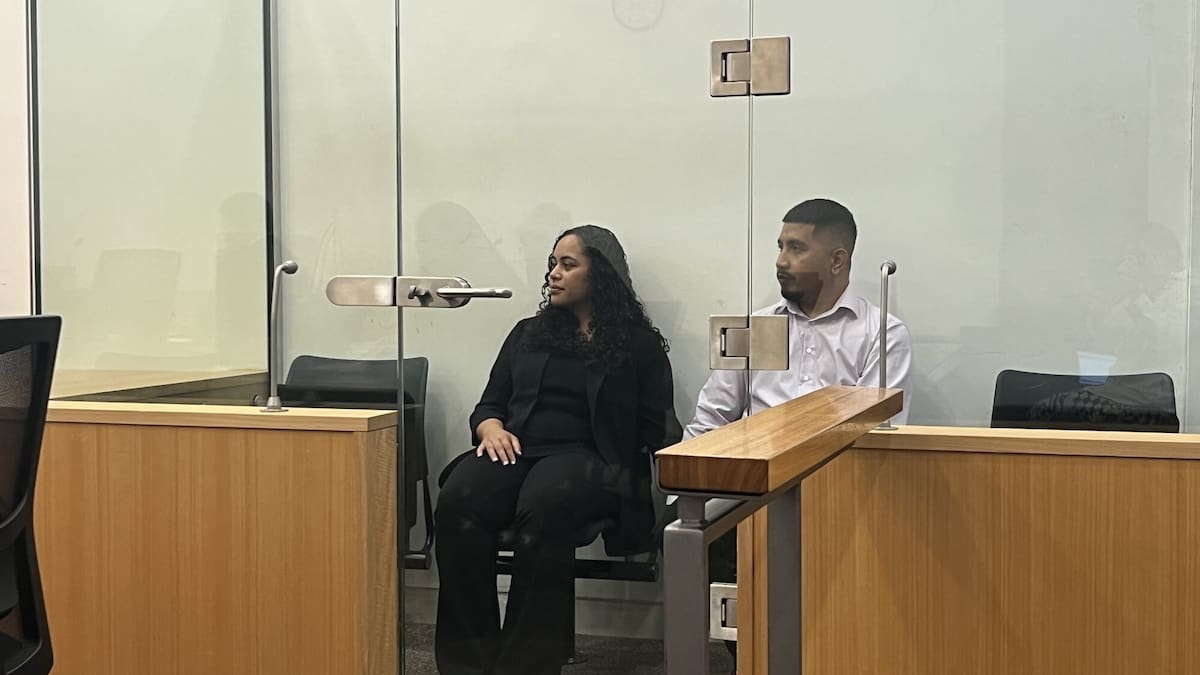
Mulgan said by then, his clients realised they were breaking the law, but had fallen on hard times and the money was too good to resist.
“They carried on with eyes wide shut,” he told the Manukau District Court this week.
The plot began in Sawyers Bay, Dunedin, where Nicola Nevard was working as an assistant factory manager for wild-caught New Zealand crayfish exporter, the Fiordland Lobster Company.
During that April and September period in 2024, Nevard stole 1597 crustaceans from the factory, worth more than $200,000, according to the Crown summary of facts.
She then delivered the stolen goods to others, including Paul Faavaoga, for a fee.
He received 1274, worth around $196,600, and arranged for the crayfish to be transported alive in boxes from Dunedin Airport to wholesale buyers, including the defendants.
Hundreds of crayfish were stolen and sold as part of the scheme. Photo / Jeremy Wilkinson.
His Auckland-based sister ordered the live goods via text, then she, her husband or others would collect them from the Air New Zealand cargo area at Auckland Airport.
They would pay $20 for each cray, then Dela Cruz would sell them on Facebook Marketplace for between $30 to $80.
The summary said Faavaoga later admitted having an “inkling” that her brother’s shipments were stolen, particularly given the amounts they were receiving.
“But I think in my mind I was like ‘Okay, out of sight out of mind’,” she said.
They did not question the arrangement because “money and greed” got the better of them, she said.
Dela Cruz said it “crossed his mind” the dealings were dodgy, but he thought, “Why worry about it?”.
The retail value of a live crayfish, which varies in size from 400g to 2.5kg, is about $145 per kg, the summary stated.
At the couple’s sentencing this week, there was a back and forth between the defence and Crown over the estimated total value of the goods received by the two defendants.
Crown prosecutor Jay Tausi said they did not have an exact estimate, but Air NZ cargo records showed 19 shipments from Paul Faavaoga to his sister and brother-in-law.
Faavaoga transferred more than $26,000 to her brother, and the couple had received 849 live crayfish.
The pair each made a bid for a discharge without conviction on admitted representative charges of receiving stolen goods worth more than $1000, arguing a conviction could foil their plans to enter, live and work in Australia.
The application was rejected by Judge Soana Moala, who said the proposed non-custodial sentence would not cause them to be automatically barred from Australia.
The defendants also said they assumed they may lose their jobs in New Zealand if convicted, but Judge Moala said she could see no evidence of that.
Aggravating features included the scale and commerciality of the operation, she said.
“You accepted that the money was good when the two of you were struggling.”
Also, the amount of planning and secrecy involved in the plot showed premeditation.
“Your brother was higher up the scheme than the two of you, but this was a scheme with a level of sophistication.”
She acknowledged the week of volunteer work each defendant undertook at Habitat for Humanity as reducing “the grave offending in this case”.
The pair was also willing to pay $5000 between them to the fishing company.
The judge said that would in no way cover the financial loss suffered by the company but showed a level of remorse.
Mulgan asked that his clients’ sentences allow them to continue to work to help pay off the reparation in weekly payments.
“It is a small amount for the victim, but it is a significant amount for the defendants,” he said.
Faavaoga and Dela Cruz were both sentenced to six months’ community detention and ordered to pay $2500 each to Fiordland Lobster Company.
Paul Faavaoga was earlier sentenced to two years and six months’ imprisonment for his involvement. His sentence was later reduced by three months on appeal.
Nevard has been sentenced to two years and 11 months in prison.
Ella Scott-Fleming has been a journalist for three years and previously worked at the Otago Daily Times, Gore Ensign and Metro Magazine. She has an interest in court and general reporting. She’s currently based in Auckland, covering justice-related stories.