
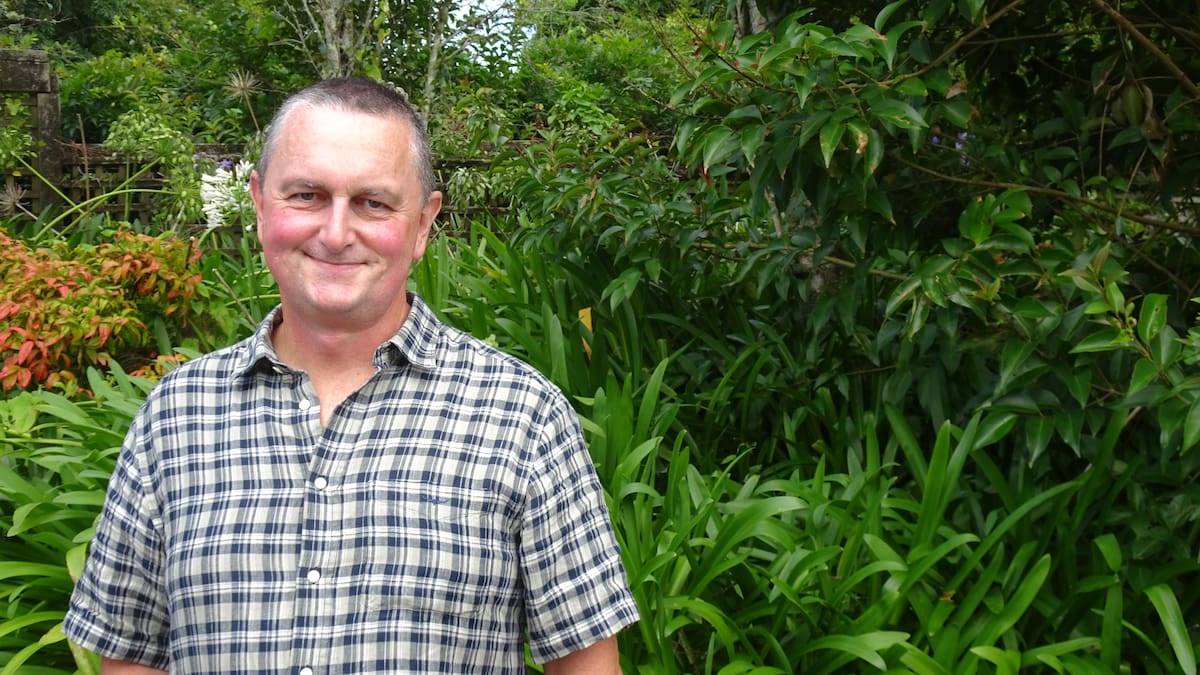
The last straw for Angus McLean came while sitting at home in Pukekohe, reading an Auckland-set police procedural by a lauded local author. The first couple of procedural errors made him wince – a quick check online could have prevented them. Still, the story and writing were good, so
he persevered. At the halfway mark, however, as the inaccuracies mounted, McLean, 51, lost his patience and chucked the book at the wall.
“I thought, this could be so much better – that was the frustration,” says McLean, who is, in real life, a mild-mannered, likeable chap. “It was just 70% of what it should’ve been. If you’re reading a police procedural, procedure is key to it. If you don’t have the procedure right, don’t write a procedural. Just write a crime novel.”
Angus McLean is a pseudonym. In 2022, and after 27 years’ service, he retired at the rank of detective sergeant and now works as a private investigator, mainly for defence lawyers. He isn’t bothered if people work out his real name – he has appeared at writers’ festivals – but likes to keep some separation between literature and life. The name, he says, is a nod to his Scottish heritage and to a favourite thriller writer, Alistair MacLean: “Different spelling, of course, but I thought it would be cool to be somewhere near him on a bookshelf.”
In 2013, when he started self-publishing his own tales about cops, spies, soldiers, private eyes and tough guys – McLean describes them as “crime novels with a procedural bent” – he was in the Counties Manukau force. And his books keep coming: he has self-published 32, selling more than 48,000 copies in total through Amazon. On subscription service Kindle Unlimited, his books have totted up four million page reads.
But back to that book on the floor. Once McLean retrieved it, he decided to help writers understand police processes. His first non-fiction book, Cop It Write: The Crime Writer’s Handbook, has now been published on Amazon. It’s 126 entertaining and informative pages on how our police force operates, covering everything from how constables become detectives to who does what at a homicide and how police question witnesses.
“This is aimed at helping crime writers,” says McLean, who canvassed local authors to find out what they wanted in a handbook. “If you know that you don’t know, you gotta find out somewhere.”
The biggest misunderstandings or errors he sees in local crime fiction include a single detective working alone on a big investigation, “seemingly not part of an actual unit and often not answerable to anyone”. Or “a cop is shoulder-tapped for the big time as a detective because they’re so amazing”. Officers are depicted doing tasks that don’t match their rank, and terminology is often incorrect.
McLean reckons Kiwi writers should feel that they can drop into the local cop shop with a question or ask that friend of a friend who’s a detective: “There’s no Official Secrets Act or anything like that binding us.”
In fact, various chapters of the police manual are on the police.govt.nz website, offering insights into all sorts of juicy stuff such as investigative interviewing, car chases, sudden death and the like. The policy-speak can be dense, but the information is gold for writers seeking accuracy.
McLean’s book isn’t exhaustive but it’s a good primer and often eye-opening. “There are no secrets given away, and I’m deliberate about that. There’s a chapter about covert squads and the undercover programme, and I’m very circumspect about it – I would never compromise anything like that.”
Angus McLean as a 20-year-old newly graduated police officer in 1998 and (right) the book he’s now written to make crime novelist more accurate writers. Photos / Supplied
McLean is a fluid and engaging writer and the book, like his fiction, does a good line in enjoyable snark. Evidence: detectives “don’t interfere with the body, check the pockets, pick up a fallen pistol with a pen through the trigger guard or any of that sort of bollocks”. New detectives in too much of a hurry to climb the promotion ladder are “blue-flamers”; the bulletproof vests currently in use cause “hip, back, neck and shoulder problems, because NZ Police bought the Morris Minor version, not the Porsche”.
McLean, married with a teenage son, also shares case studies from his police career and current work. In the chapter about postmortems, he recalls attending an autopsy on a child; the body had to be flayed to access bruising under the skin. “Our son was the same age as the victim,” writes McLean, “and he got extra cuddles that night.”
At the other end of the scale, he accompanied a female detective to interview a jailed rapist and wondered why, during the interview, the inmate was slumping further and further down his chair. A glance under the table showed that he had flopped his jandal off and was stroking his foot up the detective’s calf. She didn’t remark or flinch – just moved her leg away and carried on.
Ask McLean how much licence he thinks a writer can take with a procedural and he talks about reader expectations of the genre: the flawed protagonist, the tropes, the detail of the investigation, the good guys winning. “There’s always licence for writers to stretch the truth or stretch believability or whatever you want to call it,” he says. “But by its nature, you can’t push a procedural very far.” Overdo it, he adds, and readers switch off.
That said, McLean says no one would mistake a Lee Child thriller about soldier-turned-drifter Jack Reacher for a procedural. “No one walks into a bar and beats up 20 guys,” he says. “Reacher can, because that’s what he does. But you know that’s what you’re getting when you read a Reacher book.”
Who has done procedurals well? Remember the locally made 1989-91 TV series Shark in the Park? McLean says it remains the “best NZ cop show of all time”. It helped that former officer Duncan Holland was an adviser and scriptwriter on the programme (early episodes are on nzonscreen.com). The recent Irish-New Zealand co-pro The Gone, still available on demand, did a good job too, he says. It had two ex-policemen as advisers.
Growing up, McLean was a voracious reader ‒ Enid Blyton’s The Famous Five and Willard Price’s Adventure series among them. He’d rewrite TV thrillers and make his mates the heroes. Even then, McLean knew he’d join the police. His late dad served 30 years, retiring as an inspector, and his late mum spent 18 years in police records. McLean’s elder brother spent 23 years in the service and now works in cyber security; McLean was on the beat by 20.
Throughout his life, writing has been “my entertainment really. You could watch TV, go for a run, read a book, garden – and you could write.” McLean is working on book 33. This time, he says, it’s a pure police procedural.
Illustration / NZ Listener.SaveShare this article
Reminder, this is a Premium article and requires a subscription to read.
Copy LinkEmailFacebookTwitter/XLinkedInReddit
Tags:
- angus
- aucklandset
- author
- book
- came
- check
- chucked
- common
- copturnednovelist
- could
- couple
- crimewriter
- errors
- first
- frustration
- good
- halfway
- handbook
- have
- home
- However
- inaccuracies
- last
- lauded
- Local
- lost
- made
- mark
- mclean
- mistakes
- Mounted
- New Zealand
- News
- NewZealand
- NZ
- of
- on
- online
- over
- patience
- persevered
- police
- prevented
- procedural
- procedures out
- pukekohe
- quick
- Reading
- sitting
- still
- Story
- straw
- them
- wall
- were
- while
- wince
- writes
- writing