
The announcement in December of the death, at age 91, of French screen actor Brigitte Bardot sparked the familiar online response when a notable person dies: rapturous adoration. Across social media, feeds filled up with tributes lauding the style and influence of a woman whose soul-piercing gaze and shock of expertly tousled hair established a globally recognised archetype for French femininity that will likely live on for another century.
Yet many of these brief eulogies omitted some ugly truths. And so it was left to friends and followers to enter the comment sections of these various posts and add the necessary codas: Bardot was a darling of the French far right who held racist and xenophobic beliefs about immigrants and Islam in general. She had called gay people “fairground freaks”, criticised interracial relationships and dismissed the #MeToo movement as “hypocritical, ridiculous, uninteresting”, undermining the experiences of victims who come forward because, according to Bardot, some actresses “flirt with producers in order to get a role”.
Almost immediately, the roll backs rolled in. The model and influencer Apple Martin was among those to distance themselves from a previously fawning statement. “I was completely unaware of Bardot’s views and will never support any kind of hatred directed at anyone,” Martin wrote. “She is not the person I thought she was whatsoever.”
Similarly, pop star Chappelle Roan had penned a post flattering Bardot as the inspiration behind her song Red Wine Supernova, which name-drops the actress. (As it happens, the song centres on a gay romance.) Again, the praise was soon deleted, and the clarifications that Roan, of course, knew nothing of Bardot’s politics were strenuous.
Even in life, Bardot could appear more a cipher than flesh-and-blood human. The flattening of her legacy into a two-dimension pin-up poster invites the person, and personality, to be compressed into something of less consequence, of less meaning. The image of the Brigitte Bardot of the 1950s has become frozen in time, a separate and uncontaminated entity from the morally bankrupt elderly woman. (It seems plausible to me that Martin’s interest in Bardot stemmed from an Instagram post that prompted fans to compare the two women’s looks.)
Still, there was little coverage of Bardot across the last couple of decades of her life that omitted to mention that she was, to say the least, controversial. That people such as Roan, who trumpeted Bardot’s influence on her own work, could possibly have missed that she was convicted multiple times for racist statements seems bizarre.
Martin and Roan are not the first stars to walk back on posthumous praise. Gym influencer Joey Swoll got himself in similar trouble after releasing a video that lauded the impact that wrestling icon Hulk Hogan, who also died last year, had on his life and career. Never understated, Swoll wore full Hulkster attire in the clip. Hogan’s transgressions, which included racist comments, were soon pointed out.
“I didn’t know the extent of all the horrible things that he had done,” said Swoll in response. “Since last night, I’ve done a lot of research and learned all of the horrible, horrible things that man has done, which is way more than just making a mistake and being human. So because of that, I have taken the videos down, and I apologise to anybody that I have offended.”
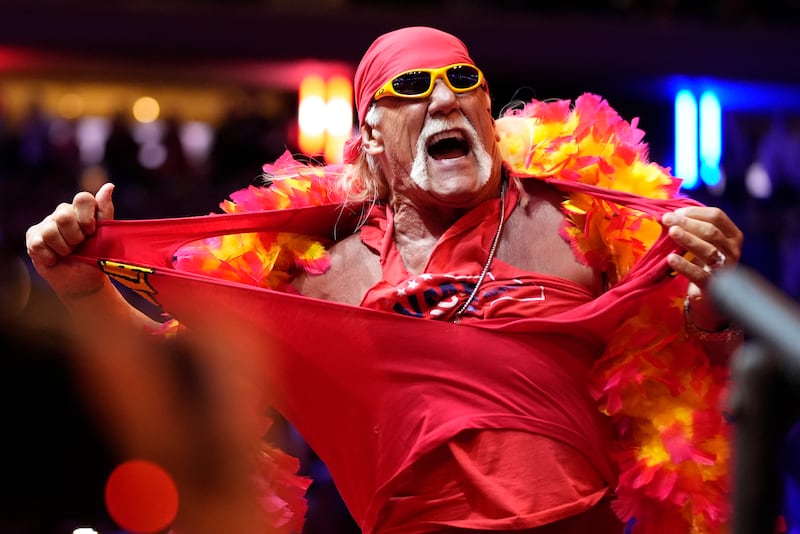 Hulk Hogan, who died in July 2025. Photograph: Alex Brandon/AP
These are particularly high-profile transgressors, but it’s a pattern mirrored among the masses who make up social media: pen a short memorial to the dead, receive pushback, quietly delete – except when the deletion isn’t quiet: “I didn’t know about his domestic abuse scandals & Markovic affair,” clarified one X user upon the death of the French actor Alain Delon.
To what extent a person can appreciate artists who live personal lives that run counter to their values is an ongoing debate (see Claire Dederer’s 2023 book Monsters for an in-depth exposition on this dilemma). What the flip-flopping on Bardot showed is a different phenomenon. Social-media users penning rapturous, seemingly authoritative tributes to a person they actually knew chillingly little about lays bare how much celebrity deaths have become part of the click economy. Pocket eulogies are often penned not from a place of love or knowledge, but as disposable content. (A side effect of all this is that whenever an elderly celebrity trends it sparks many more posts expressing relief that they have not, in fact, died.)
This is not to suggest that the feeling of loss for a celebrity can’t be legitimate. Many real tears have been shed for fallen stars. Social media has allowed fans to grieve together by sharing their experiences, memories and plaudits, validating this sense of loss. But social media has also given rise to something more facile: the impulsive need to acknowledge the death of someone famous, regardless of how minor an impact that person has made in our lives.
“Performative grief” is an ugly term, attributed to posters to suggest they cynically inflate their sorrow, but I’m not sure it’s always that. This is a habit more robotic, soulless, fit for a world where the words “I’m obsessed with” have come to mean, “This has briefly caught my attention.”
Of course, what is judged as perfunctory and what is observed as heartfelt can hinge on whether the poster is a half-decent prose stylist. But consider back in 2016, when social media lit up with tributes to Leslie Nielson, the comic genius from The Naked Gun movies. The performance was much the same as with most celebrity deaths – except that Nielson had already been dead for more than five years. Whether through deliberate chicanery or a genuine mistake, an old BBC news report on his death had been posted on Twitter and few had felt the need to check the date.
Similarly, British children’s entertainer Tony Hart, perhaps best known for his association with the animated TV character Morph, received a surge of online eulogies more than half a decade after he died. The official Twitter account for Morph was even moved to clarify he hadn’t recently passed: “Over the past 24 hrs, many people on Twitter have reported that Tony Hart has recently died. Tony sadly died in 2009.” When Joan Rivers passed away in 2014, the official Twitter account for Joan Collins found its feed lighting up with tributes – likely an unofficial alliance between jokers and the genuinely confused.
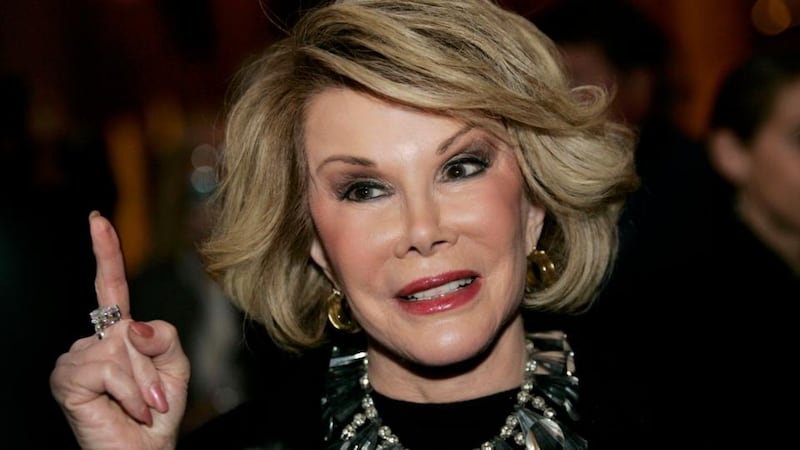 Joan Rivers, as distinct from Joan Collins. Photograph: Molly Riley/Reuters
Scrolling through paeans of praise that are so insincere, their authors didn’t know the person they were eulogising was already dead, it’s impossible not to feel that the idea of sombre remembrance has been corrupted. It’s no wonder that obituary writing, once a distinct and noble form, has been dubbed a “dying art”. The task of finding nuance and impartiality in a life is increasingly seeing itself sidelined for instant reactions and hot takes.
At this point, I should admit that I too on occasion have been guilty of this charade. I have in the past peered at a social media feed where every second post is an acknowledgment of a notable death and begun to feel that not paying my respects was itself disrespectful. It’s not that I wasn’t saddened by these deaths – the loss of a talented artist whose work you’ve enjoyed is often a sorrowful moment. But these were people I had no true emotional connection to; I could summon very few original thoughts worth adding to the stew of text piling up online. Fed up with this digital dance, I resolved some time ago to only post tributes if I felt genuinely moved to do so.
[ From the archive: There is genuine, grim theatre when it comes to celebrity deathOpens in new window ]
To the most cynical of posters, death is a sure-fire way to do numbers. If likes and reposts are a commodity in the click economy, then death is easily exploited. And with many people getting their news from their X feed, it leads to a space race to be among the first to reveal the valuable information and, therefore, most likely to go viral. For publications desperate to generate as much content as possible, articles rounding up the most notable tributes are easy to crank out. A recent piece I came across on a click-friendly website compiled a list of deaths that occurred in 2025 that “no one noticed”.
As with most things, it’s particularly unedifying when brands get involved. In 2016, a cereal brand tweeted “Rest in Peace” to purple pop deity Prince with the dot on the “i” replaced with a lone Cheerio. It’s reasonable to say that the stunt fell short of the dignity the moment required.
Performing rituals to mark a person’s death are a core pillar of humanity. Scientists scour the animal world for examples of other species doing similar, seeing such behaviours as evidence of enlightenment. As humans have transmogrified to live a significant portion of their lives through digital spheres, the internet and related technology have changed our reaction to death. Certain etiquettes have developed outside of cultural norms, religious teachings or moral philosophy. Many seem crass: Back in 2013, when there was a panic about the supposed slide of societal standards, the trend of taking selfies at funerals became a target – “a symptom of our collective cultural death wish,” raged CNBC.
One of these etiquettes is the standard practice of acknowledging the passing of a loved one online – a custom some have begun to deem a requirement. The cast of Friends were criticised for not immediately posting about their fallen costar Matthew Perry. Perhaps to quell the noise, they eventually released a joint statement, and when a couple of weeks had passed, after they’d had time to process the loss, more personal, in-depth remembrances were published. Similarly, actor Elizabeth Olsen deleted Instagram when castigated for not using the platform to acknowledge the death of her Marvel movies costar Chadwick Boseman.
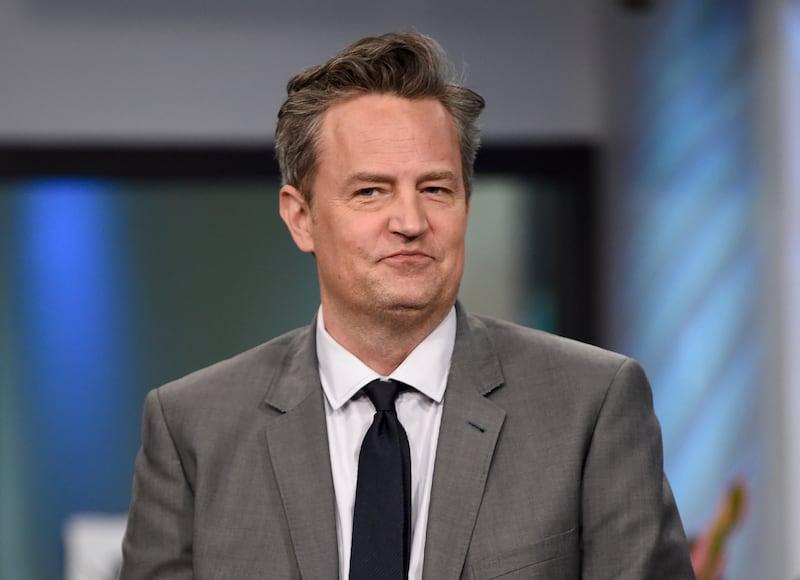 Matthew Perry: The former Friends star died in 2023. Photograph: Evan Agostini/Invision/AP
These are high-profile cases, but people who live their lives outside of the public eye can also feel an expectation that they post on Facebook etc about a recently deceased loved one. In an article for Time on the etiquette of mourning on social media, one woman encapsulated this stress: “After you lose someone, you have to immediately decide whether you’re going to be one of those people who posts or not,” she said. “And I know people say, ‘There’s no right way to grieve,’ but on social media – it almost feels like there is.” In a world where sharing every facet of our lives is normal, grieving in private is increasingly seen as abnormal; many funeral homes now offer advice on how to navigate this online world.
Establishing the cultural norms of a ubiquitous internet was always going to be an imperfect process. Still, the subject of death, in its infinite sadness, feels a particularly inappropriate topic for social pressure, whether it’s posting about the loss of a loved one, or disingenuous tributes to the glitterati. Inevitably, social media isn’t always the best place to work out the nuances of a life and legacy. People will continue to share their tributes, but to avoid Bardot-level gaffes, it’s probably best to imagine a smaller hand within, stopping the big hand at the keyboard, with a voice that asks, “Are you sure you want to post that?”