
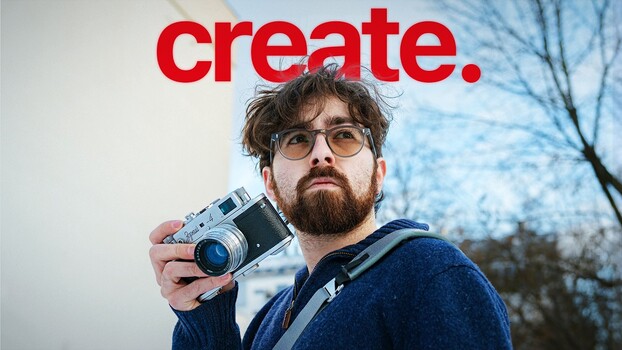
Photography changes more than your images. It shifts how you move through the day, how you solve problems, and how you handle setbacks.
Coming to you from Hunter Creates Things, this thoughtful video argues that picking up a camera does more for your body and mind than most people admit. Hunter connects photography to physical health in a blunt way: when you want better photos, you leave the house. You walk. You explore. He points out that the stretches of life without regular photo walks often line up with feeling sluggish and low. There is no romantic spin here, just the simple pattern that getting outside with intent changes your baseline. You stop scrolling and start moving, and that alone shifts your mood in ways that are hard to ignore.
He then moves to something less obvious but more useful: photography teaches you how to be bad at something. You try. The photos disappoint. You go again. Over time, you improve, and the improvement is obvious. That experience builds proof that growth is possible. Hunter admits he used to quit the moment something felt difficult, and photography broke that habit. When you stick with a craft long enough to see progress, other challenges stop feeling so final. The discipline carries over in quiet ways, especially when nobody is clapping and most people do not care how good your work has become.
The video also explores how photography sharpens awareness. Hunter references philosophy and the idea that your brain runs on autocomplete. You see a hammer and label it “hammer” without really seeing it. Through a viewfinder, that shortcut weakens. You notice the curve of a handle, chipped paint on a door, the way someone’s shoelaces clash with the sidewalk. Hunter brings in the idea of “learning to see” as if taking a mental screenshot of your field of vision. Try that for a few seconds and the world feels denser. Details you normally filter out begin to press forward. Your environment stops being background noise and starts offering raw material.
There is also a direct challenge to the way you consume the internet. Scroll long enough and everything looks bleak. Pick up a camera and walk outside, and the balance shifts. You talk to people. You look for light. You search for color and gesture instead of outrage. Hunter frames photography as a practical way to step out of constant reaction mode. It makes you less passive. It nudges you to form your own taste instead of copying whatever is trending. Over time, you get clearer on what you actually like, and that clarity bleeds into decisions far beyond pictures.
One of the more grounded examples in the video involves helping a friend photograph clothes for resale. Instead of snapping a quick phone shot, Hunter set up paper and flash. It was extra. It took more effort. The result elevated something ordinary. He ties that to a broader principle: the way you handle small tasks reflects how you handle bigger ones. The same logic appears in his clogged sink story. You can call a plumber, or you can learn, struggle, adjust, and fix it yourself. The payoff is not just a working sink. It is the shift in identity that comes from solving a problem with your own hands. He suggests applying that mindset widely. Check out the video above for the full rundown from Hunter.