
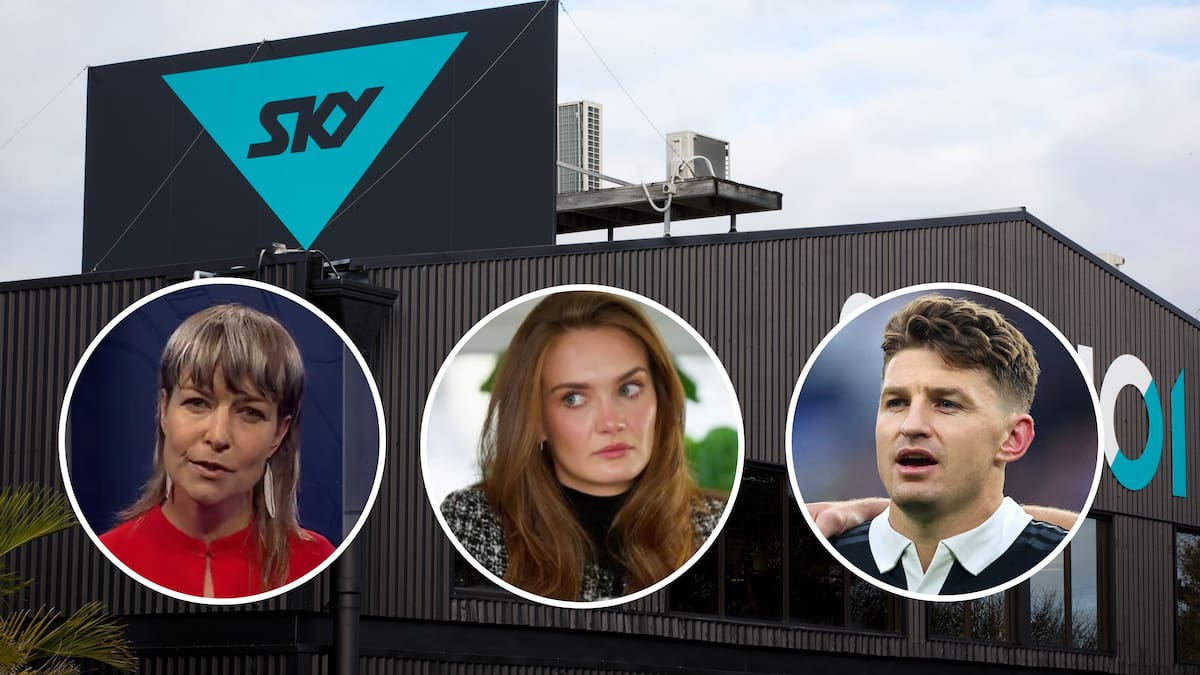
Media Insider understands that at least a dozen roles within sales teams have been scrapped already. This number is likely to rise, but Sky has declined to confirm specific details.
The changes come as sources said the publicly listed broadcaster was tracking below its combined Sky-Three advertising revenue budget in the early weeks of 2026.
Sky TV now owns Three (TV3), and with it, the rights to shows such as Married at First Sight Australia. Photo / Channel 9
Sky was sent questions about this assertion last week, but declined to comment specifically. In response to another question, it described the advertising market as “softer”.
Notably, Sky TV hasn’t made any market announcement about 2026 calendar-year revenue to date, meaning it does not believe that any shortfall is of material significance. That also seems to indicate that it is confident it can recover from any slow start to the calendar year.
“Sky reports actual financial performance and provides forecast guidance to the market through formal disclosure processes,” said a Sky TV spokeswoman, adding that the company took its continuous disclosure obligations seriously.
“We will share verified information with investors at our [half-year] results [this] week, and will not be commenting on numbers or speculation outside of that process.”
Investors will hear how Sky has fared in the first six months of its financial year (July-December 2025) at the results announcement on Thursday, but much interest will lie in the company’s current performance and outlook.
Advertising roles cut
Media Insider understands there’s sadness, anger and resignation among some of those impacted by the sales team cuts and a nagging sense for some that former Three staff have been given preferential selection for new roles.
Much of the anger stems from the viewpoint that former Three staff had come from a loss-making company, whereas Sky had been building its advertising revenue strongly before the Three acquisition, albeit off a lower base.
Do you know more? Email Shayne Currie in confidence – shayne.currie@name.co.nz
Media Insider also reported recently that there were suggestions from inside the company that most former Three staff believe they will be “protected”.
Sky TV chief executive Sophie Moloney and chairman Philip Bowman. Photo montage / Oliver Rusden
Sky TV lost its respected sales leader Ben Gibb last year, in the wake of the $1 Three deal.
Gibb walked into a leadership role at outdoor advertising company QMS.
Sources told Media Insider that Sky chief executive Sophie Moloney had met Gibb since he left Sky, partly, they said, to pick his brains about the state of the advertising industry.
The Sky spokeswoman said: “It’s entirely appropriate for a CEO to maintain relationships with highly regarded people across the sector, and it’s in keeping with Sophie’s leadership style that she connected with him after he left Sky.”
‘A complex integration’
The Sky spokeswoman said that the company was “progressing a complex integration designed to position Sky for long‑term growth”.
“At our ASM in November, we were clear that our priority is capturing the revenue growth opportunities ahead of us, particularly from FY27 onwards.
“Against the backdrop of a softer advertising market, it’s important that we create a sales structure that positions the team to maximise revenue growth and generation.”
The Sky spokeswoman said Sky was focused on managing the sales team changes “carefully and respectfully”.
“As you will appreciate, with people changes from time to time at your company, it is a challenging time for those impacted, and our priority is to ensure we are focused on their clarity and wellbeing.”
The Sky sales team is now led by James Hole, a former Warner Bros Discovery sales leader. He reports to Juliet Peterson, the former boss of Three, who now sits on Sky’s executive as chief business officer.
Meanwhile, it is understood some advertising agencies have been less than impressed with the way Sky has gone about communicating rate-card increases this year.
One source suggested the company was too busy focusing on free-to-air revenue, at the expense of what they called more lucrative pay-TV pillars such as sport. Sky has a range of exclusive sports rights.
The source said a show like Three’s incredibly popular Married at First Sight Australia might be worth hundreds of thousands of dollars, but claimed that potential sports revenue was in the millions.
Sky did not address specific questions about these matters, but another source challenged the assertion.
HBO loss, Sky Sport cost increases
The White Lotus and stars from the first season, such as Sydney Sweeney (Olivia) and Brittany O’Grady (Paula), will disappear from Sky TV’s Neon service this year. Photo / Supplied
Sky TV’s half-year results this week come amid other operational challenges.
The broadcaster finally announced last week one of the worst-kept secrets in New Zealand media, despite Sky’s constant refusal to confirm it – the loss of its exclusive deal for HBO Max entertainment content on its Neon channel.
Losing HBO content is a major blow, although Sky has tried to put a brave face on it, citing other, extended contracts with the likes of Paramount and Sony.
But to understand the importance of HBO Max content, observers only need to refer to the list of top 10 shows on Neon last Wednesday morning.
HBO Max shows occupied the full top-five most popular shows on Sky’s Neon platform on Wednesday last week.
The top five slots were all occupied by HBO Max shows (seven of the top 10 were HBO Max titles).
Sky also told customers last week that it was increasing the prices of its sport packages – Sky Sport Now is rising from $54.99 a month to $59.99, and the Sky Sport package rises from $47 a month to $52.
That may well be a sign of Sky needing to ensure its subscription revenue is doing as much heavy lifting as possible, especially in light of a softer advertising market.
Sky staff cuts
In recent weeks, Sky has declined to address specific questions about its restructuring across the entire business or how many job losses are proposed in the coming months. Nor has it provided up-to-date total staff numbers.
According to its most recent annual report, Sky had 638 staff at June 30 last year. A further 130 or so joined from Three later in the year.
The company needs to extract as much value from the loss-making former Three business as quickly as possible.
Sky expects the Three deal to be positive for free cash flow from this financial year and has reiterated its commitment to a 30 cents per share annual dividend.
Nevertheless, Moloney indicated last year that tough work was ahead.
“You don’t get something for a dollar if it’s profitable, but we’ve structured this so we’ve got time – the runway, as we say – to get to that ebitda growth of at least $10m by FY28.”
Analysts’ positions
Forsyth Barr analyst Ben Crozier highlighted in a research note on Friday what he would be looking for this Thursday.
“With [Sky TV] now six months into its ownership of Discovery NZ (now called Sky Free), we expect a more detailed update on the acquisition, cost savings to date, and recent revenue trends.
“In [Sky’s] November ASM update, it reiterated FY26 guidance but indicated softness in both Sky Free advertising revenue and Neon subscribers.”
He said he was “broadly in line” with the midpoint of Sky TV’s guidance.
With Sky Free (Three) revenue now included, total revenue for the six months was expected to be around $417.5 million – up 8.5% on the same six-month period in 2025 (before Sky acquired Three).
Adjusted Ebitda was expected to be $69.3m (up 27.5%) on the same basis and net profit after tax $16.6m.
“We expect satellite revenue to be down -5% year on year,” Crozier said.
On the streaming side, Sky had “indicated softness in Neon subscribers” at its annual shareholders meeting in November.
“We are looking for the magnitude of this and whether there has been any improvement; we estimate Neon revenue down -10% year on year. Further detail on plans and expectations for Neon without HBO content would also be notable.”
He would also be looking for an update “on the advertising market and whether demand has stabilised; and … the magnitude of cost savings to date”.
“Both are important for investors to have confidence in its FY28 >NZ$10m Ebitda target.”
Jarden head of research Arie Dekker.
In his own analysis, Jarden head of research Arie Dekker said Sky had had time to prepare for “life without HBO”, which was “a positive”.
“We expect it to talk to its refreshed Neon strategy at the upcoming 1H26 result. We have mixed thoughts on this and note that HBO titles – The White Lotus, The Last of Us, The Pitt, And Just Like That, The Gilded Age, Task – dominated the top Neon shows of 2025.
“That being said, Neon’s performance has been an issue for [Sky] in recent years, with FY25 revenue of $51m down on FY23’s $57m as [Sky] deals with competition and the impact of ‘peaky’ viewing as customers switched on and off.
“If [Sky] is right, a refreshed Neon offering without HBO’s large content cost impost may be earnings accretive (noting trading down risk could impact its main Box revenues also).”
Sky TV shares closed at $3.13 on Friday, down 12 cents.
Editor-at-Large Shayne Currie is one of New Zealand’s most experienced senior journalists and media leaders. He has held executive and senior editorial roles at NZME including Managing Editor, NZ Herald Editor and Herald on Sunday Editor and has a small shareholding in NZME.