
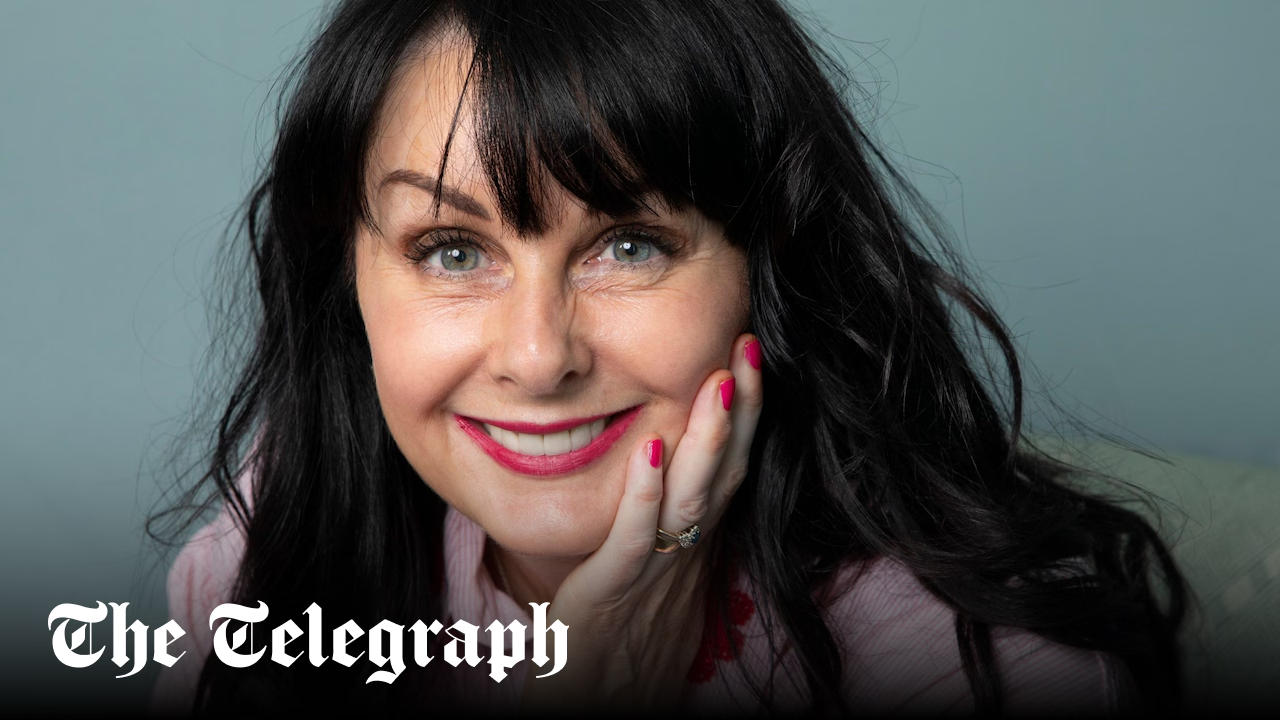
“I didn’t know what I was doing, but I knew I wanted to write about the disappointments of post-feminism,” she says. “Back then, we were told, ‘Well, you’re grand now, there’s no need for feminism. You’re equal now, you can have anything you want, you can have sex like a man, you’re paid the same, you’ll probably soon get promoted.’ And yet none of those things were happening. I was living in a flat with two other women, and we were thinking, ‘Why is our life not like the way it’s meant to be?’ So I started writing about that because nobody else was, and I wanted to write about it in an accessible way, because I didn’t know any other way to tell a story.”
Inevitably, she soon became packaged as a comic-lite female writer, her novels given pink covers featuring giggly girls and bottles of Prosecco. It was the early years of chick lit and she found herself lumped alongside talented novelists such as Sophie Kinsella, who, thanks to their amusing honesty about the foibles of the female psyche and their heroines’ many comic misadventures in the bedroom, were never taken remotely seriously by the literary establishment.
“Actually, Sophie’s Shopaholic books were tapping into something really important, that relationship between self-medication and spending,” says Keyes. “But, you know, when a man writes a love story, it’s treated as remarkable. When a woman does, it’s dismissed as, ‘Oh, women and their feelings again’. Men have so much more power and money than women do, and they don’t want to give it away. So one way to undercut women is to make fun of their silly little books about relationships.”