

Dave Rome, Josh Weinberg, Piper Albrecht, James Huang, and Berd Spokes.
How often do you look at your bike and wonder whether the spokes holding your wheel together could be better? For many, I’m guessing the answer is ‘never’.
The vast majority of bicycle wheels on this planet are strung together with some variant of steel spoke. Over the years, other materials have been tried and tested, from titanium, to aluminium, to carbon fibre, each claiming to reinvent the wheel. Among that, one concept that’s come, gone, and come back again is a flexible string-like woven polymer spoke. In 2018, American-based Berd revived the idea of rope spokes, with the goal of making lighter wheels without the usual spoke fatigue. Almost by accident, those wheels rode smoother, too.
Reviews of Berd’s Polylight string-like spokes (or other polymer spokes) within gravel, mountain, road, and bikepacking applications are all over the internet. Most, including one previously written by James Huang for Escape Collective, cite how light the wheels are while offering a ride quality that’s more muted. However, what I hadn’t seen, and what I wanted to know for myself, is how they actually felt in back-to-back testing where the only variable being tested was the spokes.
To answer this, I reached out to Tristan Thomas of Wheelworks, an independent wheel-building business in New Zealand. Since the early days of Berd spokes, Thomas has been one of the more public independent wheel-building shops to build wheels with them. For the test, I was lent two of Wheelworks’ own O.G wheelsets, one with Berd spokes, and another with bladed steel spokes. As you’ll read, there are use cases where I now consider these spokes to be the absolute benchmark. Equally, there are use cases where Berd spokes don’t make sense. Either way, it’s certainly an interesting product.
To coincide with this review, I also interviewed Thomas about the topic of spokes, how to build Berd wheels, differences in ownership, and plenty more. That podcast overlaps with this review, but isn’t a replacement for it.
Highs: A truly superior ride quality over rough terrain, a good bit lighter, and stronger against common failure modes.
Lows: More expensive, increased labour time, may require hub modifications, not aero, need to be aware of abrasion, creates a more flexible wheel (not always a bad thing), spokes will creep in length over time, spokes may get cosmetic fraying.
Price: US$9 / €10.49 (including VAT), per spoke. It adds up …
What is a Berd?
For those that haven’t felt a regular steel spoke before, it’s really just a piece of flexible wire that, when not under tension, you can easily bend with your fingers. Spokes can be a simple straight gauge (single thickness), while more expensive options add butting (variable thickness) or even shaping to relieve weight, increase strength, improve aerodynamics, or all of the above.
Introduced around 2017, Berd sought to bring a lighter-weight spoke to the market. Made from Dyneema (aka, Ultra High Molecular Weight Polyethylene or UHMWP) – the same stuff popular in high-end sails, climbing ropes, and even protective motorcycle gear – the spokes are effectively fancy shoestrings. As the wheel is laced and threaded into tension, those strings take form, not wholly unlike how wicker furniture or a tennis racket functions.
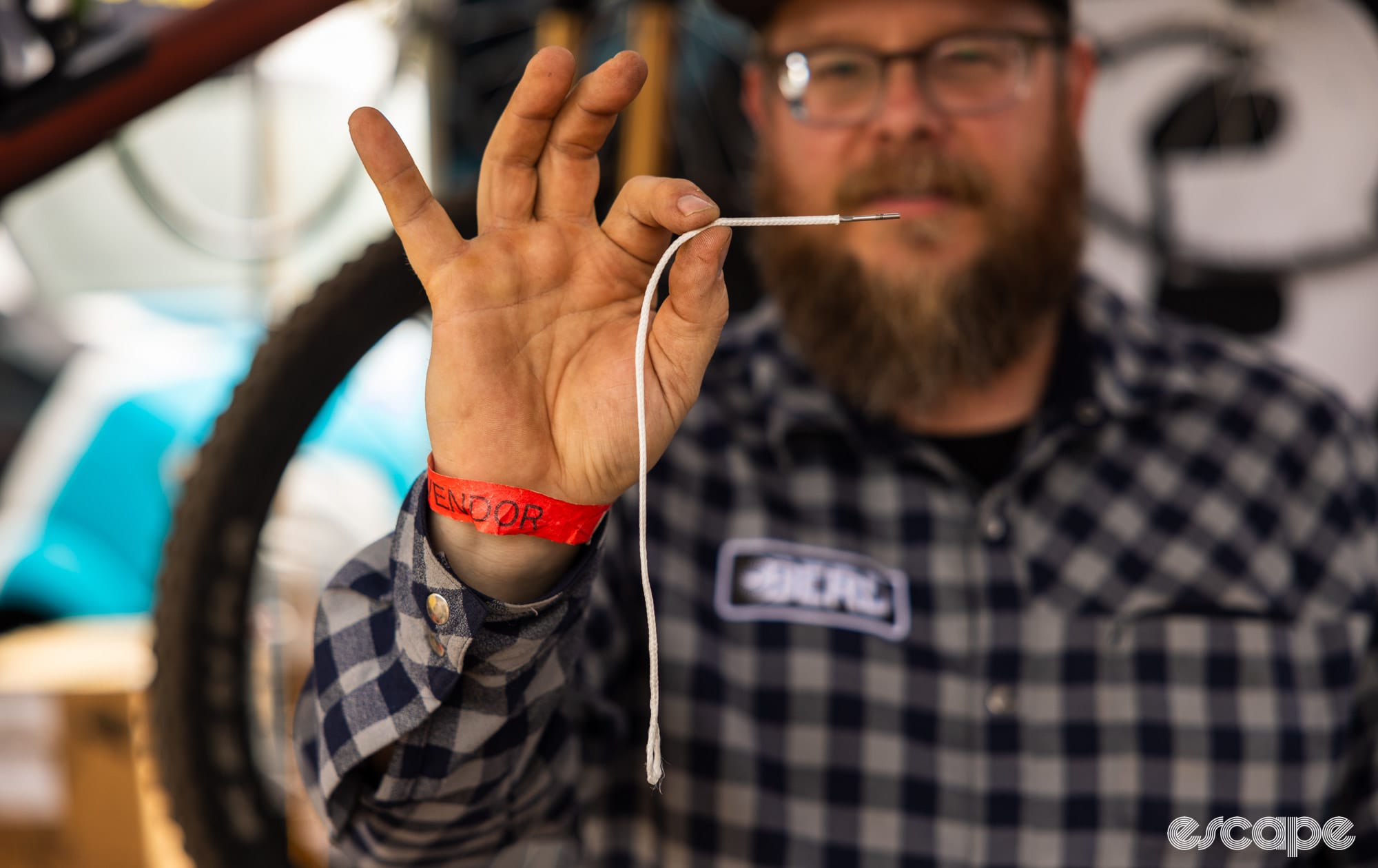 A Berd spoke. (Photo: Josh Weinberg)
The idea of a woven polymer spoke is nothing new – the likes of the Tioga Tension Disc or Spinergy having been here and done that – but the execution, of course, is not the same. Berd’s spokes weave the Dyneema fabric into a tubular form. While the hub end is effectively a loop, the section at the rim features a threaded stainless steel end that connects to a standard 2 mm threaded nipple (16 mm length recommended). While an adhesive is involved in the bond, much of the strength comes from the patented design that effectively mimics a Chinese finger trap, where the more the spoke is pulled into tension, the tighter it grasps onto that steel insert.
The outcome is a spoke that in a straight pull test is claimed to be 10% stronger than a top-tier bladed steel spoke (which alone can hold about 350 kg, according to Wheelworks). Meanwhile, every single spoke off Berd’s production line in Hopkins, Minnesota, gets load tested. There is no rider weight limit on these strings.
Perhaps the most obvious characteristic of Berd spokes is the unmistakable white colour. While Dyneema is highly chemically resistant, it can be coloured with an alcohol-based dye. In this sense, Berd offers its spokes in a variety of colours, including my favourite, black. Both Berd and WheelWorks claim that the dyes are permanent, but that the colour can be reapplied if it ever fades.
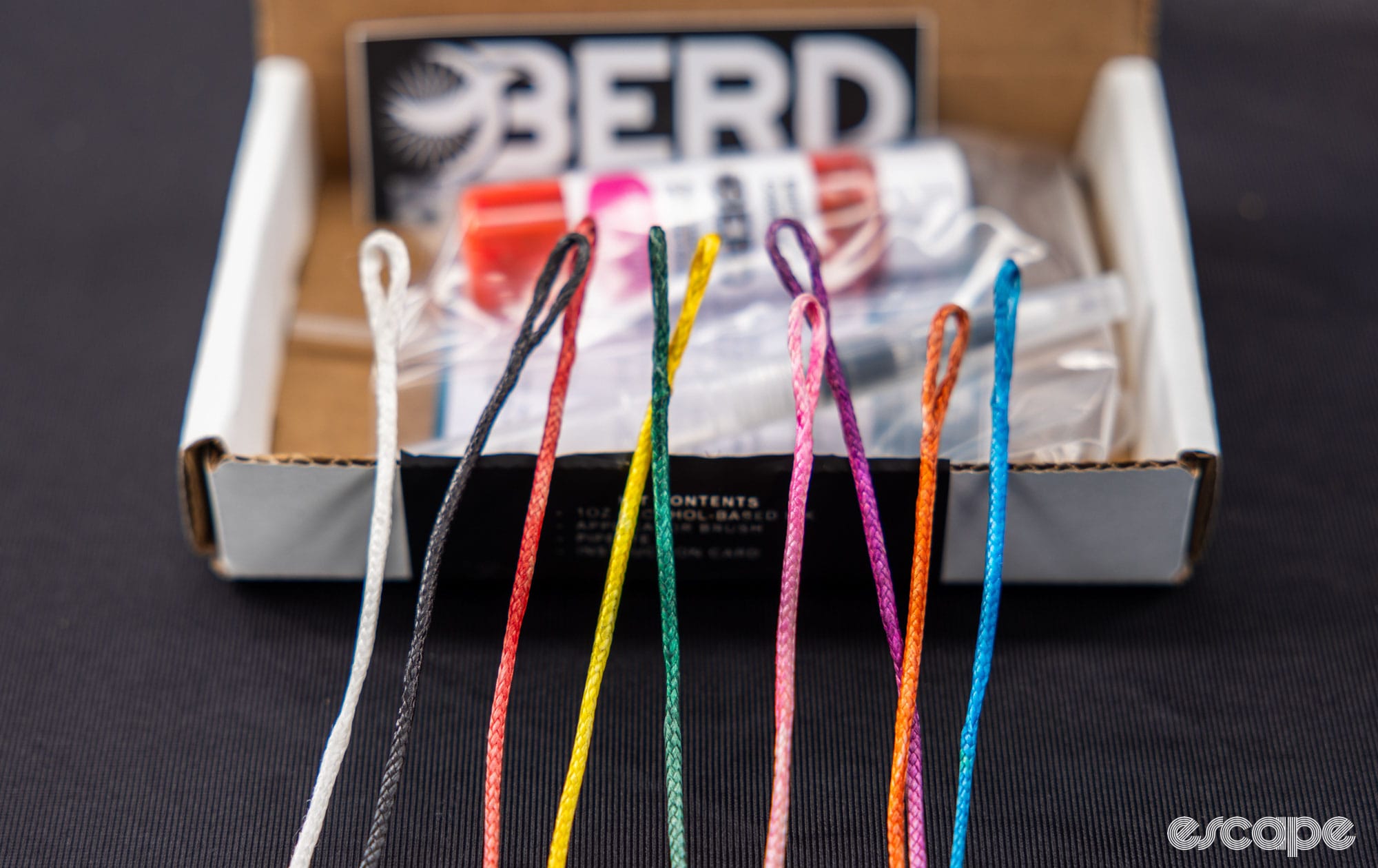 Acohol-based dyes are available for those that don’t want white spokes. (Photo: Josh Weinberg)
This review focuses on Berd’s original PolyLight spoke which remains the company’s best pick for most applications. However, the company recently released the PolyLightX which has an increased material diameter that’s said to provide additional stiffness and abrasion resistance for use in e-bike and gravity MTB purposes. These weigh about 1 gram more per spoke and may prove a better option for 32er wheels.
It’s worth noting that Berd does have some competition in the space of textile spokes, with the most obvious example being the Vectran spokes of Pi-Rope. While Pi-Rope has some benefits in being marginally lighter and more heat-resistant; the biggest drawback is being limited to a proprietary hub design. By contrast, and as I’ll cover, Berd spokes can be fitted to regular J-bend, straight pull, or its own hook flange hubs.
The wheels, weights, and costs
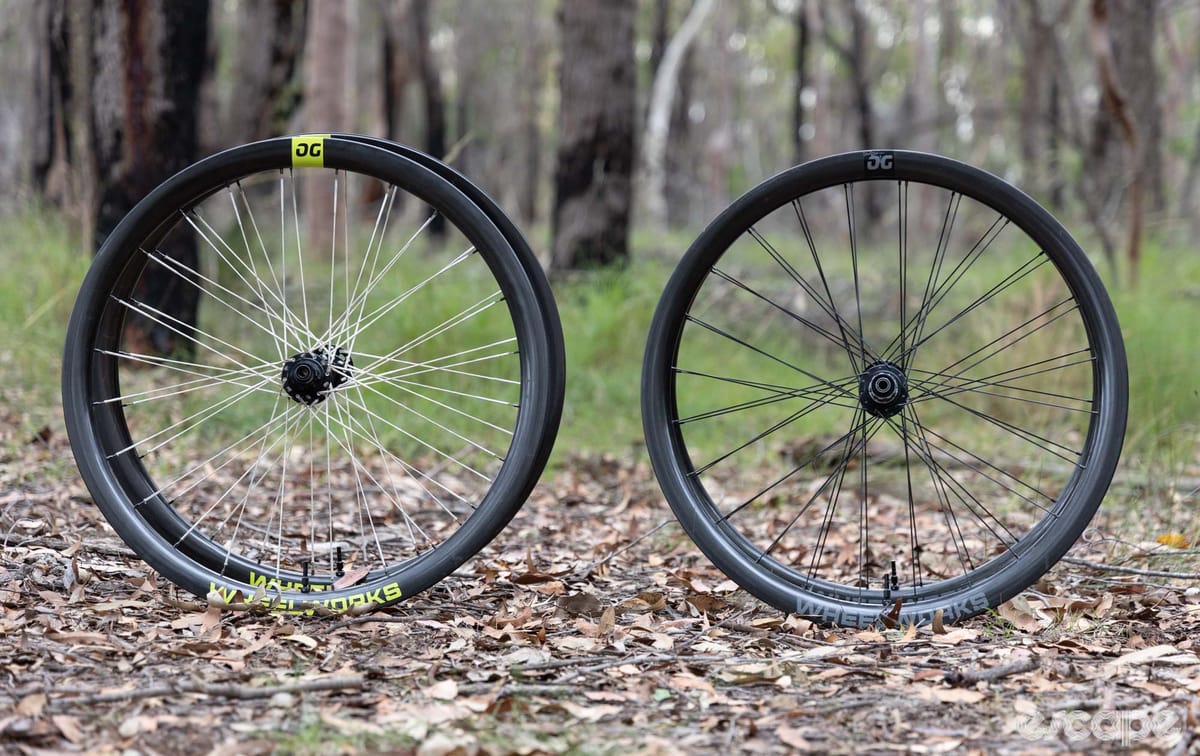
The wheels tested were Wheelworks’ OG gravel (with the heavier ‘Overnight’ rim version). Both use the same 25 mm internal-width hooked carbon rim and Wheelworks’ Dial hubs – both of which are sourced from specialist manufacturers in Asia. It’s worth noting Wheelsworks builds to order and has a variety of different rim (weights and widths) along with hub options.
The steel spoked set was built with 24 of DT Swiss’ premium Aerolite spokes. A pair of these tip the scales at 1,560 g (including rim tape and valves). Wheelworks sells this pair of wheels for NZ$3,600 (approx US$1,800 / AU$3,100).
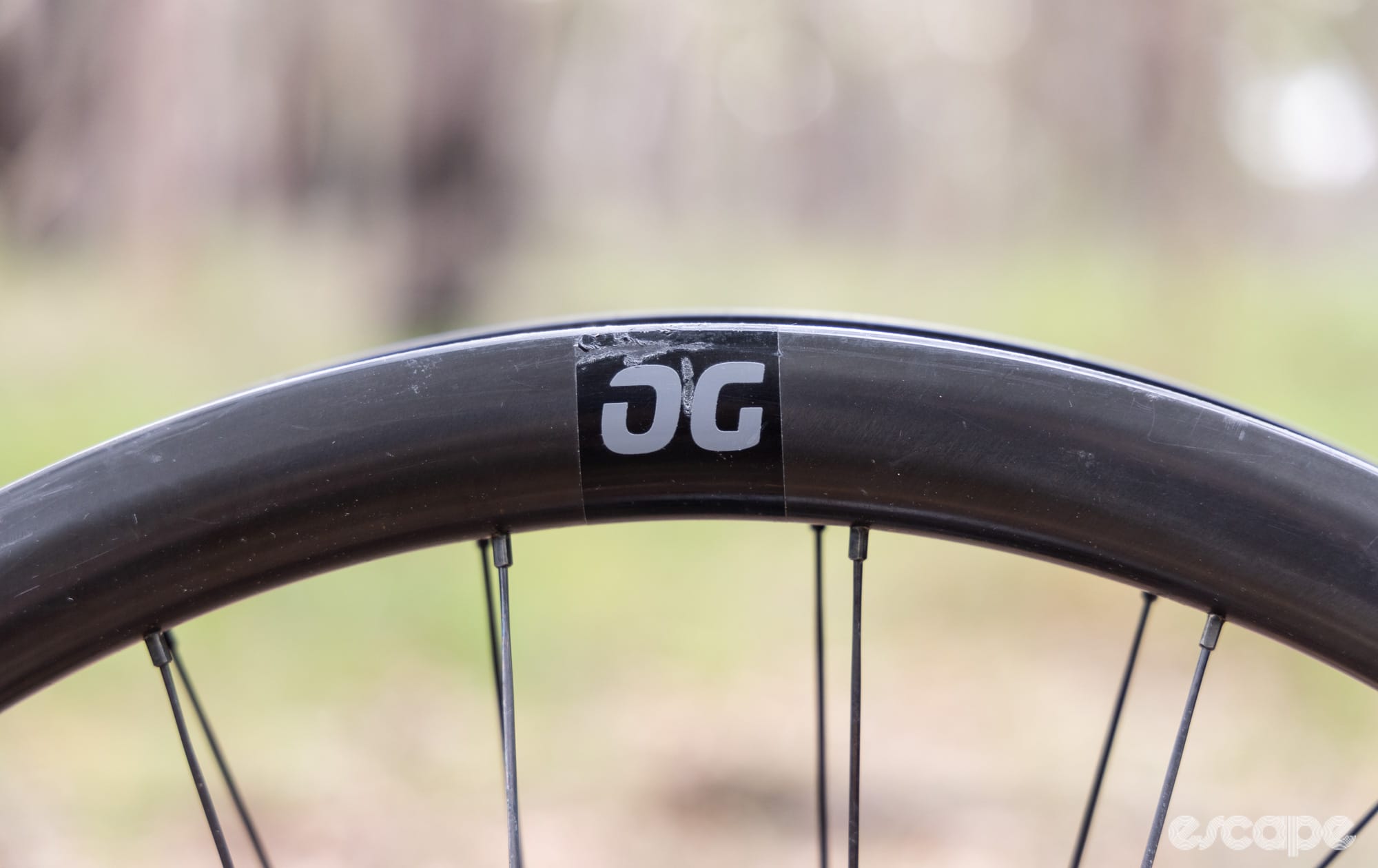
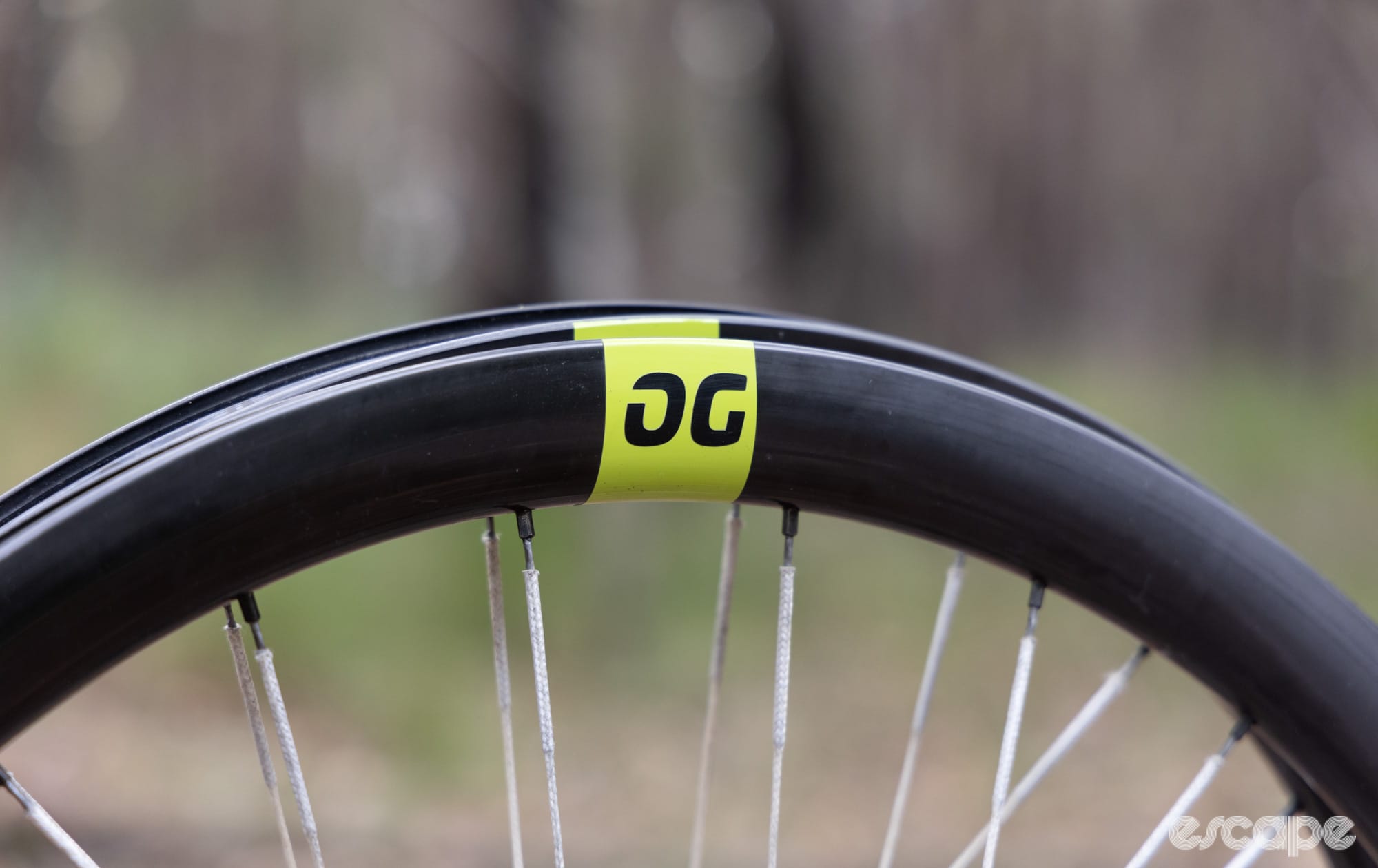
The OG Carbon rims are 35 mm deep.
By comparison, the Berd-built version dropped the weight to 1,481 g – 79 g lighter. At NZ$4,000 (approx US$2,000 / AU$3,450), they are of course more expensive, mostly in the physical cost of the spokes, but also due to requiring further labour in the build process – more on that soon.
Berd themselves have complete wheelsets starting from US$2,095. They also offer a rebuild program (from US$592) where you send in your existing steel-spoked wheels (or just rims and hubs), and they’ll swap out those spokes for Berds.
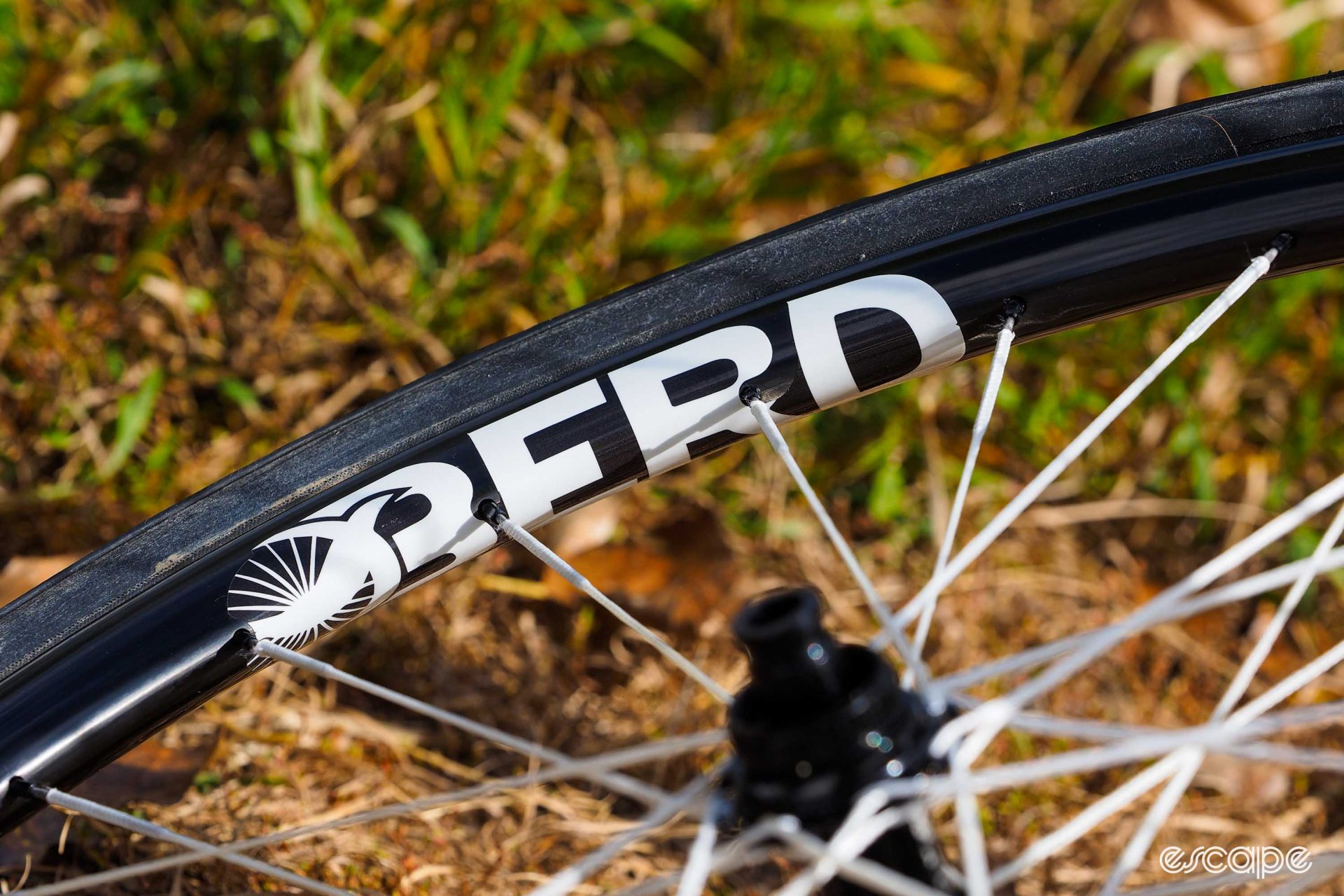 In addition to offering just spokes, Berd offers complete wheels, too. (Photo: James Huang)
Alternatively, you can buy individual Berd spokes for US$9 / €10.49 (including VAT). If that seems high, it’s because it is. A DT Swiss Aerolite bladed spoke typically sells for around US$4; simpler round spokes are typically less than half that.
Yes, the Berd spokes save a decent chunk of mass, approximately two grams per spoke when compared to a premium and slender bladed steel spoke. The more spokes you have, the longer they are, and/or the less fancy those steel spokes are, the bigger the expected weight savings. For example, Berd spokes would save approximately 200 g in a 32H wheelset running DT Swiss’ popular double-butted Competition spoke (2/1.8 mm version).
Compatibility and trickier wheel builds
Beyond the obvious price difference, one area that has arguably slowed the uptake and interest in Berd’s spokes is hub compatibility and difficulty in building with them. Today, Berd offers compatibility with different hub types, from traditional J-bend, to straight pull, to its own and preferred “hook flange” fitment.
I tested the spokes with regular J-bend hubs (aka classic flange). To fit Berd spokes into such a hub requires some light modification – material removal with Berd’s own tooling. “On J-bend hubs, the hub will often come from factory with around a 2.6 mm hole for the spoke, for Berd spokes we need to ream that out to 3 mm,” explained Thomas. “From there you need to manually press in steel inserts into the hub flanges.”
That material removal will void the warranty on most hub shells, and introduce the risk of corrosion (through exposed aluminium), although both have proven to be a non-issue in the market over the past few years.
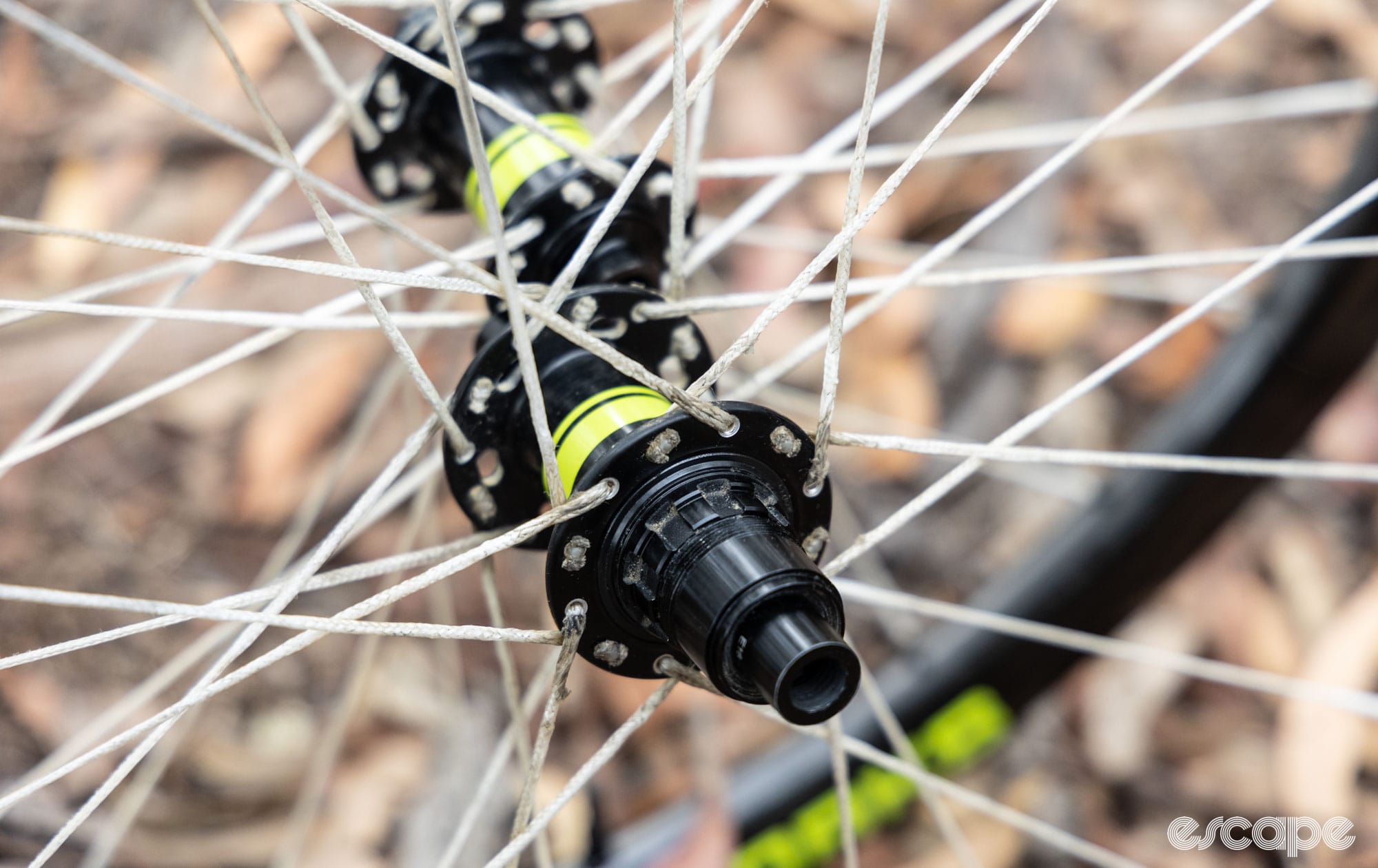 A close look reveals some light modifications to the J-bend flanges of these well-used demo wheels. Now Berd has implemented protective inserts for such hubs.
Things are easier with straight pull hubs, and even easier again with Berd’s own hook flange design. “You just loop the spoke into the hub,” said Thomas. “It looks better. It’s much easier to build. And it’s just a much better way of attaching the spoke to the hub. We now really push people toward hubs with the hook flange if they want a Berd spoke.”
At the time of writing, the patented hook flange design is offered in hubs by Onyx Racing Products, Erase Components, Hope, Nobl, H-Works, and Tairin. “There are others in the works”, confirmed Berd’s CEO, Charlie Spanjers. “Hook flange hubs will be migrating to a new Equal Spoke Length (ESL) standard that you will see within the next year. The ESL standard means that (for a given effective rim diameter and spoke count) every single Berd spoke will be the same length.” The math in that gives me a headache.
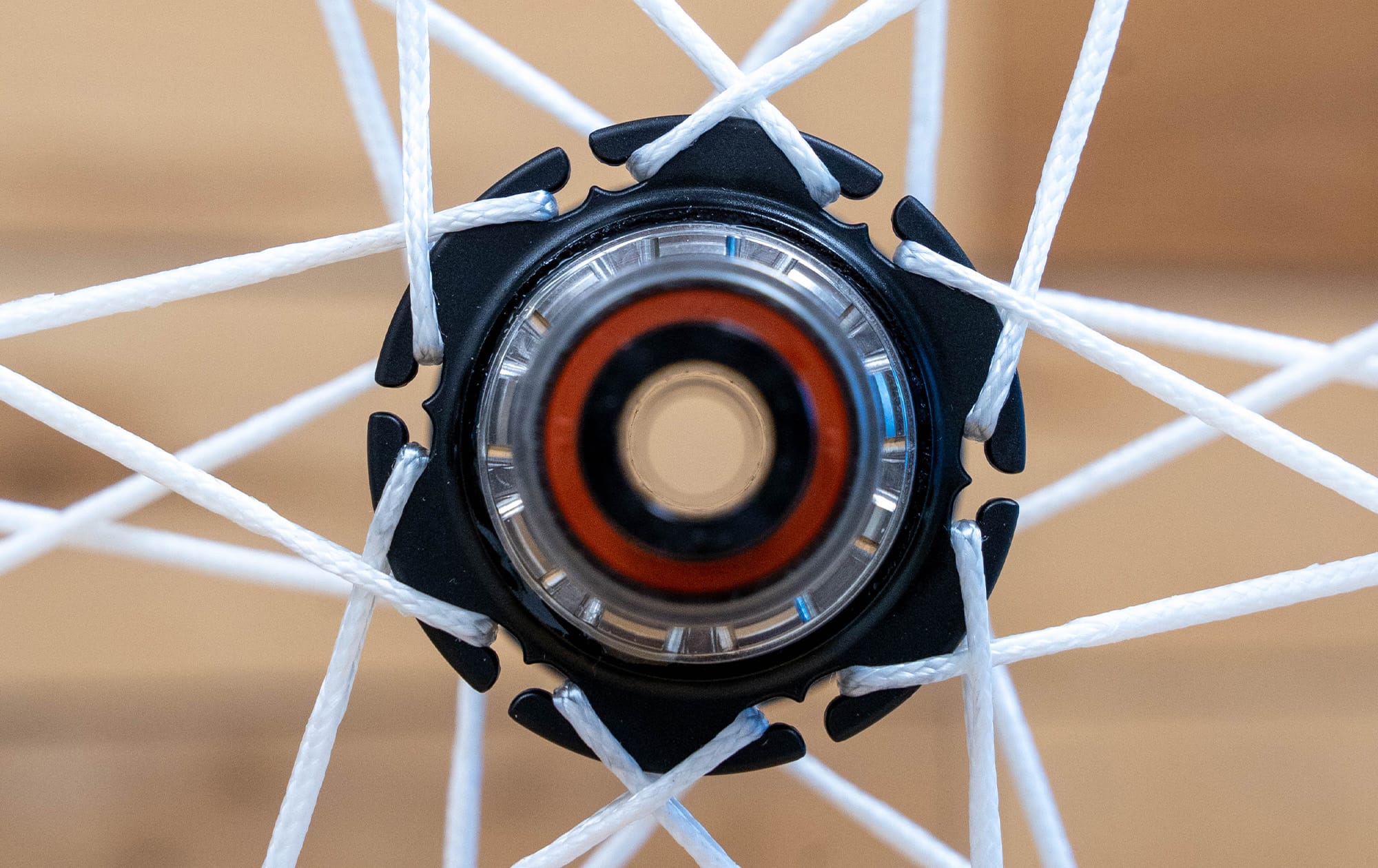 Hook flange hubs greatly reduce assembly barriers with Berd’s spokes.
The spokes connect to the rim with standard spoke nipples, so there are very few limitations on which rims you can choose. Berd is also now producing its spokes in lengths ranging from 178 – 340 mm in 1 mm increments, enough to cover the full spectrum of 20” to 32” wheels.
Once the wheel is laced, the next time-consuming part of the build process begins. While there are holding flats near the thread to stop the spoke from winding under tension, the Dyneema material will stretch in its length. Those with early experiences in building Berd wheels will often cite having to build wheels over multiple days, continually letting the wheels sit, allow the spokes to creep in length, and then to bring them up to tension once again.
“The first wheelset we ever built with Berd spokes took us 20 hours to build,” shared Thomas. “We realised that if we wanted to sell these spokes to customers, and remain in business, we needed to figure out faster ways to do this.”
A big part of that process improvement came through automating the stress relief to get the spokes stretched properly and efficiently. “For anyone that wants to build with Berd spokes, and make money from it, then you need a machine that stretches the spokes,” said Thomas, who had built a pneumatic press to do the task.
Berd themselves also implemented similar tooling in the process, and have since partnered with a specialist wheel tool company, GRS Engineering, with plans to sell the products. “In 2023, we began using a more extensive wheel stress relief process, where all new wheels built at Berd are stress relieved for three cycles with 635 lbs (288 kg) of force on the wheels for 2 minutes on each side,” shared Spanjers. “This process prevents any substantial stretching or loosening in the future.”
“Building a wheel with Berd spokes is nothing like building with steel spokes,” Thomas said. “The spoke feels really different to tension and responds really differently – it’s not linear from low tension to high tension. Berd now has its own digital guided wheel truing and tensioning tool, Trudi, that has come out of the fact that their wheels are just different to build.”
Durability and maintenance
Assuming the wheels are built correctly and stress-relieved, you can still expect the Dyneema to creep a marginal amount over time. Thomas suggests that wheel owners should consider tightening the spokes annually, which can be done with simple tools and basic knowledge. Assuming the wheel is still true, then this really is just a matter of turning each spoke nipple by an equal amount (usually half a turn).
This post is for paying subscribers only
Subscribe now
Already have an account? Sign in
Did we do a good job with this story?
👍Yep
👎Nope