
Astronomers have long believed that planetary systems follow a familiar blueprint. Small rocky planets stay close to their star, while large gas planets orbit much farther away. Our own solar system fits this pattern perfectly.
However, a newly studied system around the red dwarf star LHS 1903 has turned that neat picture upside down. The study authors report the discovery of a rocky planet orbiting in the outer reaches of this system, exactly where scientists would expect to find a gas-rich world.
The surprise is forcing astronomers to rethink when and how rocky planets can form, and whether the textbook model of planet formation is missing an important piece of the story.
“We’ve seen this pattern: rocky inside, gaseous outside, across hundreds of planetary systems. But now, the discovery of a rocky planet in the outer part of a system forces us to rethink the timing and conditions under which rocky planets can form,” Ryan Cloutier, one of the study authors and a professor of physics and astronomy at McMaster University, said.
Mapping a seemingly ordinary system
The researchers focused on LHS 1903, a small and faint red dwarf star much cooler than our Sun. Red dwarfs are common in our galaxy, and because they are smaller, planets orbiting them are easier to detect.
Using a mix of ground-based telescopes and space observatories, the team initially identified three planets orbiting LHS 1903. Their arrangement seemed ordinary. One rocky planet close to the star, followed by two gas-rich planets similar to mini-Neptunes farther out. This matched the widely accepted theory of planet formation.
That theory says planets are born inside a spinning disk of gas and dust surrounding a young star, called a protoplanetary disk. Close to the star, intense heat and radiation strip away light gases such as hydrogen and helium.
Any planet forming there tends to lose its thick atmosphere, leaving behind a dense, rocky body. Farther away, where it is cooler, planets can hold on to gas and grow into large, puffy worlds.
After carefully studying the three known planets for years, the team received new observations from the European Space Agency’s CHEOPS satellite. CHEOPS is designed to measure the sizes of exoplanets with high precision.
The new data revealed a fourth planet, called LHS 1903 e, orbiting farthest from the star (LHS 1903). When the researchers calculated its size and mass, they found something unexpected.
The outer world that broke the pattern
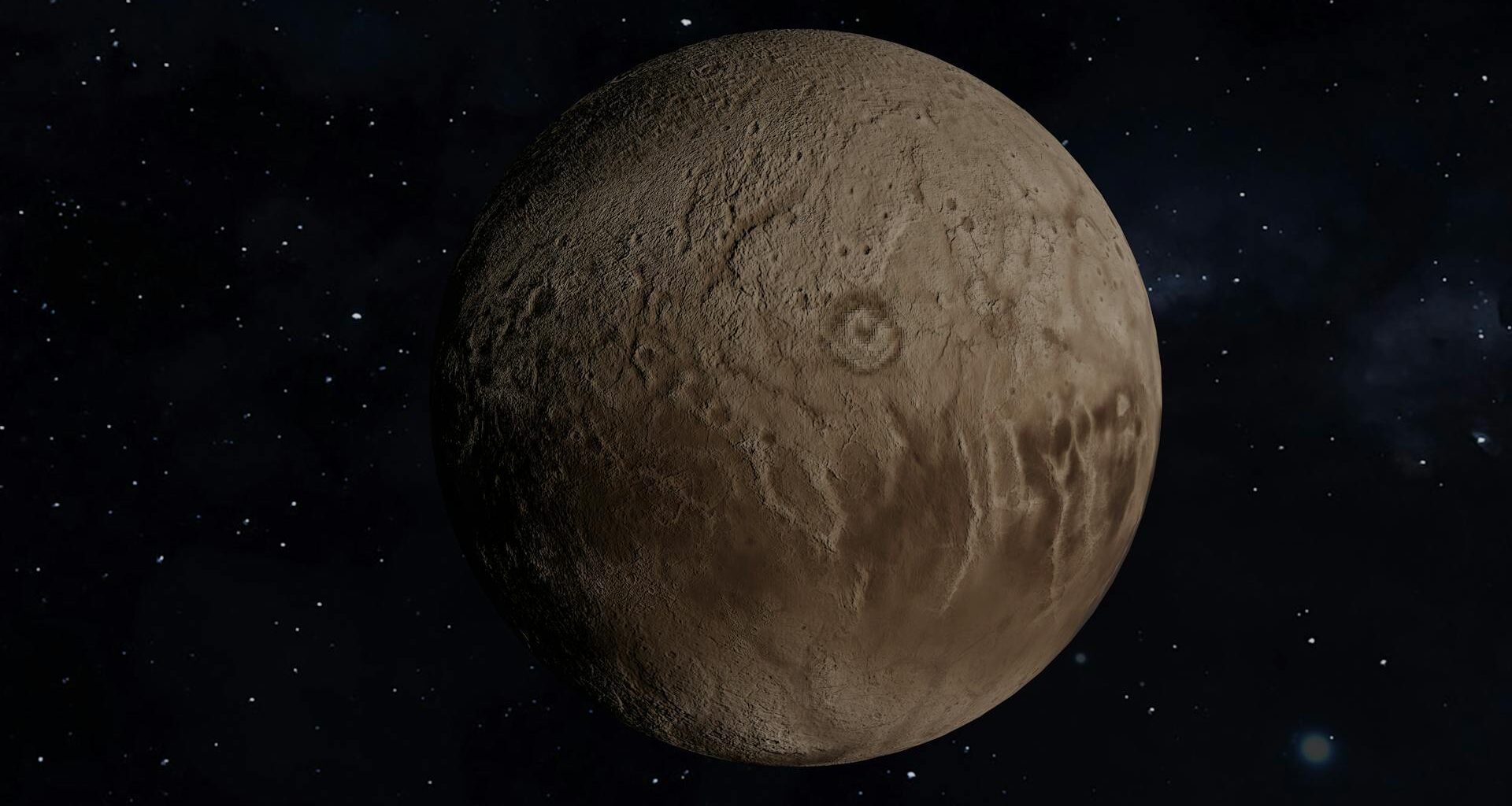
The outermost planet appears to be rocky rather than gaseous. In other words, it does not have the thick atmosphere scientists would expect at that distance.
“It’s remarkable to see a rocky world forming in an environment that shouldn’t favor that outcome. It challenges the assumptions built into our current models,” Cloutier said.
The team explored several possible explanations. Could a giant collision have blasted away its atmosphere? Computer simulations showed this was unlikely. Could the planets have swapped places over time due to gravitational interactions? Detailed orbital analyses ruled that out as well.
The most convincing evidence points to a different formation process known as inside-out planet formation. Instead of all planets forming at roughly the same time, this model suggests that planets form one after another.
As each planet forms, it changes the environment in the disk. Over time, the disk can lose much of its gas. If LHS 1903 e formed late—after most of the gas had already been used up or blown away—it would have been left with mainly solid material. This could explain why it became rocky even though it sits far from the star.
The discovery raises important questions. If one system can break the usual pattern, how many others might do the same? It also highlights the limits of current planet-formation models. While they explain many systems well, they may not fully capture how evolving disks and timing differences shape final planet types.
The researchers plan to continue studying LHS 1903 in greater detail and to look for comparable systems that test the inside-out formation idea.
The study is published in the journal Science.