
Measles is a highly contagious disease that spreads through the air when an infected person coughs or sneezes.
BRYAN COUNTY, Ga. — The Georgia Department of Public Health has confirmed a case of measles in an unvaccinated resident of Bryan County, Georgia.
Health officials said the individual has no history of international travel but recently traveled out of state. The department is notifying people who may have been exposed and who could be at increased risk of developing the virus.
Measles is a highly contagious disease that spreads through the air when an infected person coughs or sneezes. According to health officials, the virus can remain in the air or on surfaces for up to two hours after an infected person leaves an area.
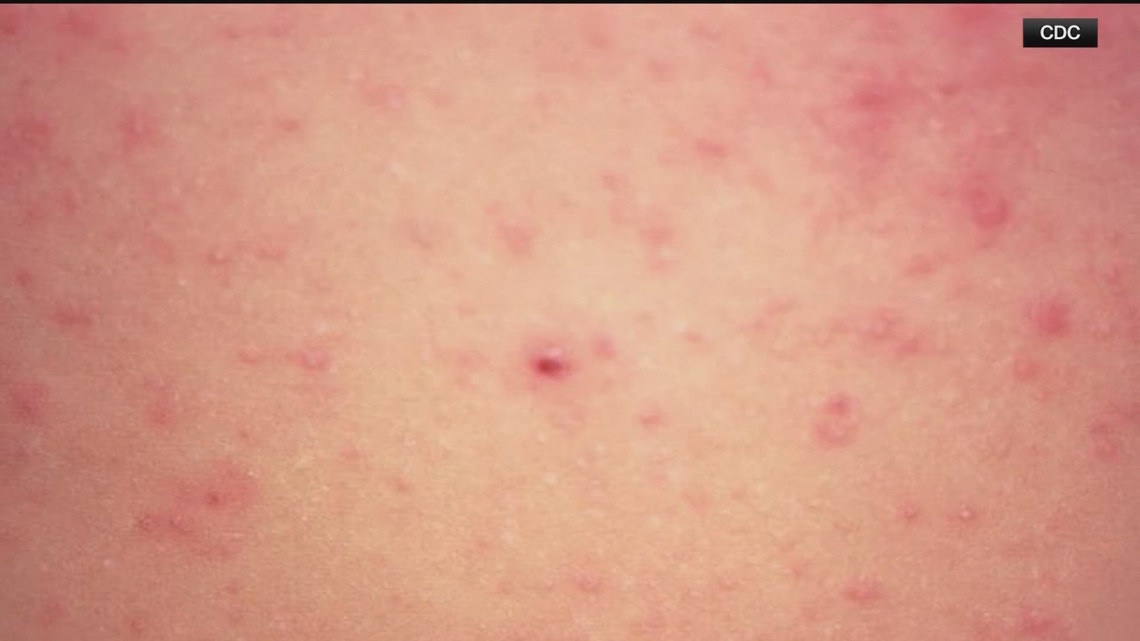
Symptoms typically appear seven to 14 days after exposure and can include a high fever, cough, runny nose and watery eyes. A rash of small red spots usually follows, beginning on the head and spreading to the rest of the body.
Health officials say the measles, mumps and rubella vaccine is the best protection against the disease. The Centers for Disease Control and Prevention recommends children receive their first dose between 12 and 15 months of age and a second dose between 4 and 6 years old. Infants ages 6 to 11 months who are traveling internationally are advised to receive an early dose before travel, followed by two additional doses after their first birthday.
More than 95% of people who receive a single dose of the vaccine develop immunity to measles, mumps and rubella, according to health officials. A second dose increases protection to about 98%. Vaccination also helps protect people who cannot receive the vaccine for medical reasons.
Anyone who develops symptoms consistent with measles should contact their health care provider before going to a doctor’s office, hospital or public health clinic to avoid potentially exposing others. Health care providers who suspect measles are asked to notify public health officials immediately.
This is the second measles case reported in Georgia in 2026. The state confirmed 10 cases in 2025.