
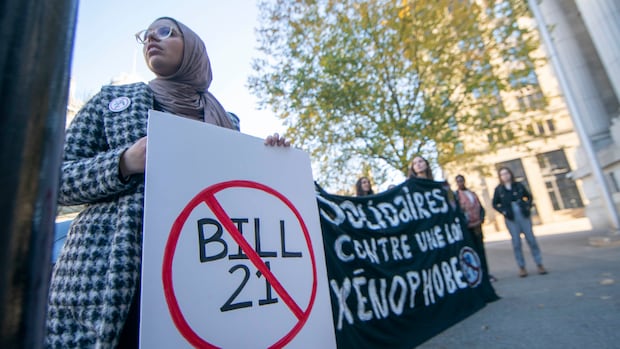
The upcoming legal challenge of Quebec’s secularism law, Bill 21, before the Supreme Court of Canada has evolved from a fight over whether teachers can wear hijabs in the classroom into a debate over who should get the final say when deciding basic questions of rights and freedoms in Canada: courts or elected legislatures?
It’s a question that resonates more than ever, as some other Canadian provinces are joining Quebec in suspending people’s constitutional rights.
“There’s huge implications for the country as a whole from coast to coast to coast on this,” University of Ottawa law professor Errol Mendes told CBC News.
The arguments before the Supreme Court begin March 23.
The top court will hear from Quebec’s attorney general, teachers and religious and civil rights groups challenging the law, from five other provinces and the federal government, and dozens of groups and individuals intervening in the case.
At the heart of the debate is the notwithstanding clause — Section 33 of the Canadian Charter of Rights and Freedoms — a crucial mechanism for how we try to determine what’s right and wrong in this country.
“Section 33 constitutes, in a way, one of the cornerstones of the Canadian Charter,” the lawyer for Quebec’s attorney general argued in the province’s legal brief submitted to the Supreme Court.
“Without the addition of the notwithstanding clause, the Charter would likely never have come into being,” the brief said.
WATCH | What are the implications for the rest of Canada?:
How the Supreme Court challenge of Quebec’s Bill 21 could affect the rights of all Canadians
Quebec’s Bill 21 bans religious symbols for some civil servants. Now, the legal battle has shifted from the ban itself to whether the province overstepped by invoking the notwithstanding clause in the text of the law, to bypass Charter rights.
Former Quebec Liberal MNA and MP Clifford Lincoln sees it differently.
Lincoln has a history with the notwithstanding clause — he resigned from a provincial cabinet post over it in 1988.
In an interview with CBC, Lincoln said including the clause in the Charter was a terrible decision, a ticking legislative time bomb that is now exploding.
“I think we are paying a huge price for that compromise,” Lincoln said.
It’s these two visions of the notwithstanding clause that will be debated before the Supreme Court justices over five days next month in Ottawa.
What is the notwithstanding clause?
The notwithstanding clause was born during constitutional negotiations in 1981 as a compromise to appease some skittish provinces.
They were worried the new Charter would give too much power to courts and not enough to their elected legislatures.
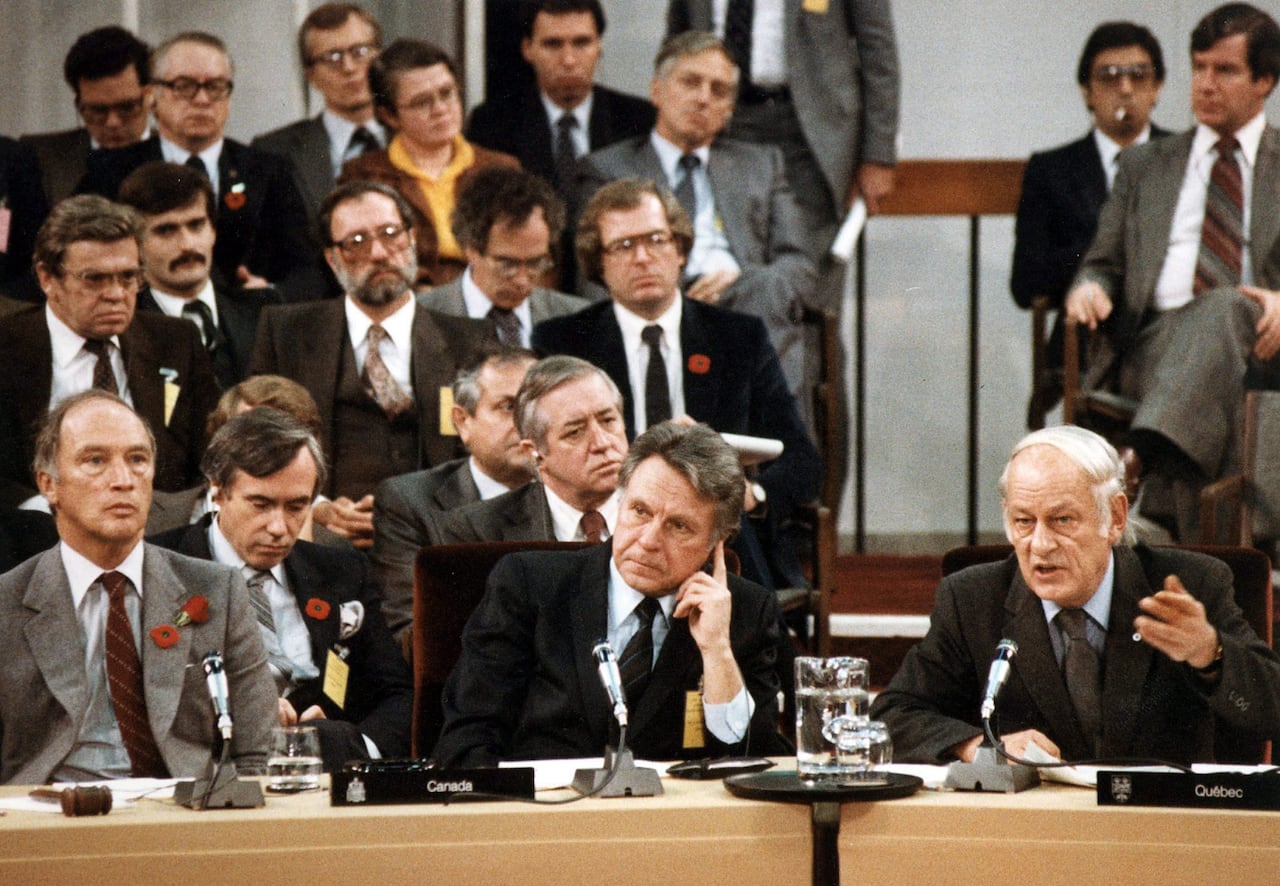 From left to right: Prime Minister Pierre Trudeau, Finance Minister Allan MacEachen, and Quebec Premier René Lévesque attend the constitutional conference in Ottawa, Nov.5, 1981. (The Canadian Press)
The clause provides provinces with a sort of legal escape hatch: if courts determine a particular piece of legislation violates the Charter, provinces can invoke the clause and adopt the legislation anyway.
“The original intention was to only use it in the most extreme situations, where judges have gone perhaps too far, and the fundamental ability of the legislature to fill its most critical function has been stymied,” Mendes said.
But Karine Millaire, a constitutional law professor from Université de Montreal who, along with Mendes, is representing the International Commission of Jurists as an intervenor in the Bill 21 case, said it hasn’t quite worked out that way.
“It was not meant to become the rule rather than the exception,” Millaire said.
Use of the notwithstanding clause has historically been pretty rare, but Bill 21 seems to have opened the floodgates.
A constitutional first
Bill 21 was the culmination of a longstanding debate about secularism in Quebec.
Among other things, the bill prohibits some civil servants, including teachers, Crown prosecutors, police officers and judges from wearing religious symbols on the job.
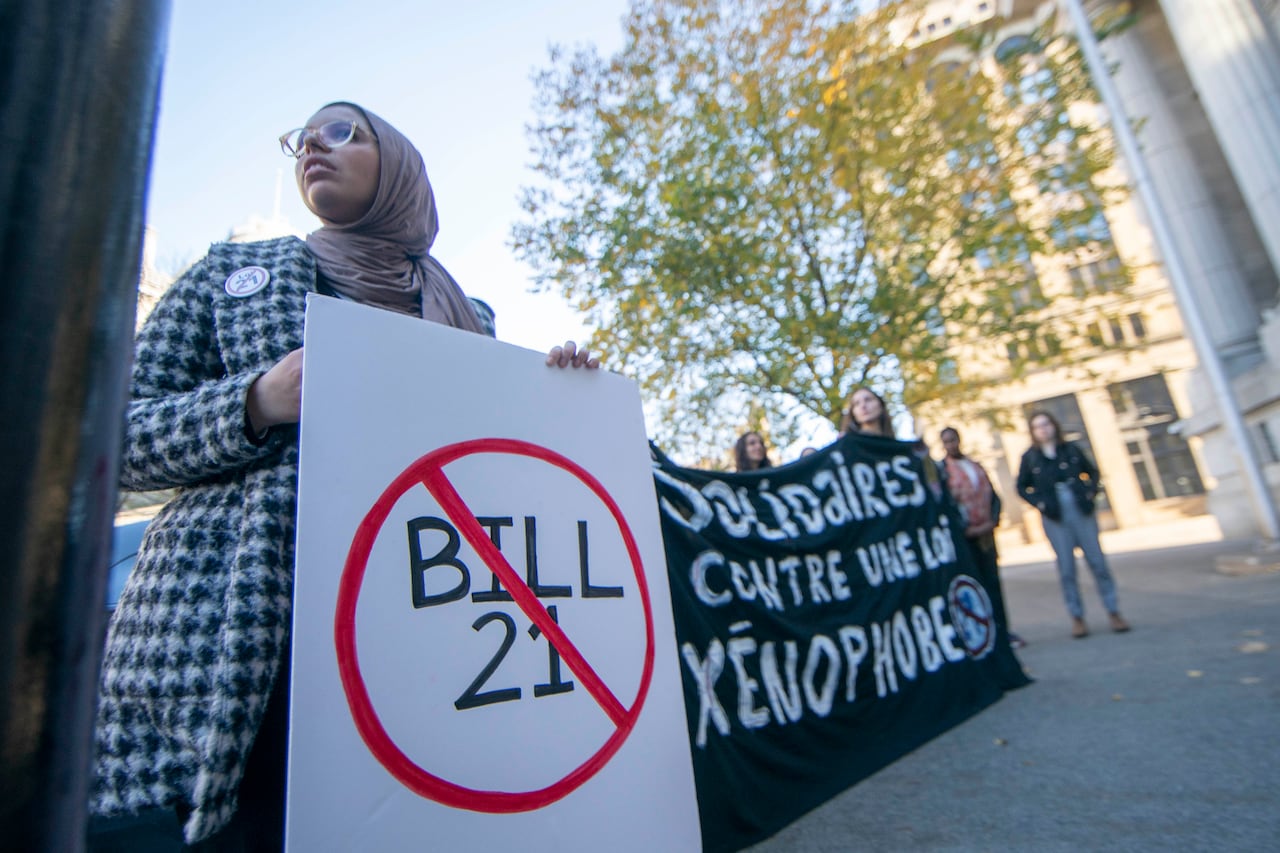 Bill 21 generated outrage from teachers’ unions as well as civil rights and religious groups after it was adopted. (Ivanoh Demers/Radio-Canada)
The Coalition Avenir Québec (CAQ) government presented the bill as a reasonable compromise, but it generated outrage from civil rights and religious groups.
The CAQ also used the notwithstanding clause for Bill 21 in a way the clause had never been used before.
In the past, provincial governments would pass a law, it would be challenged in court, and if the law was deemed to be invalid because it violated Charter rights, only at that point would provinces invoke the clause.
With Bill 21, the CAQ decided to invoke the clause from the beginning, baking it right into the written text of the legislation.
This, in theory, would protect the law from potential court challenges and allow the province to implement it right away.
And while the pre-emptive invocation of the clause hasn’t prevented legal challenges, it has so far allowed Bill 21 to survive them in lower courts.
Using the clause pre-emptively has also become more common in the rest of Canada, most notably with Alberta and Saskatchewan doing it to protect laws that restrict rights for trans people, and Ontario giving it a spin to try to stop a strike at schools.
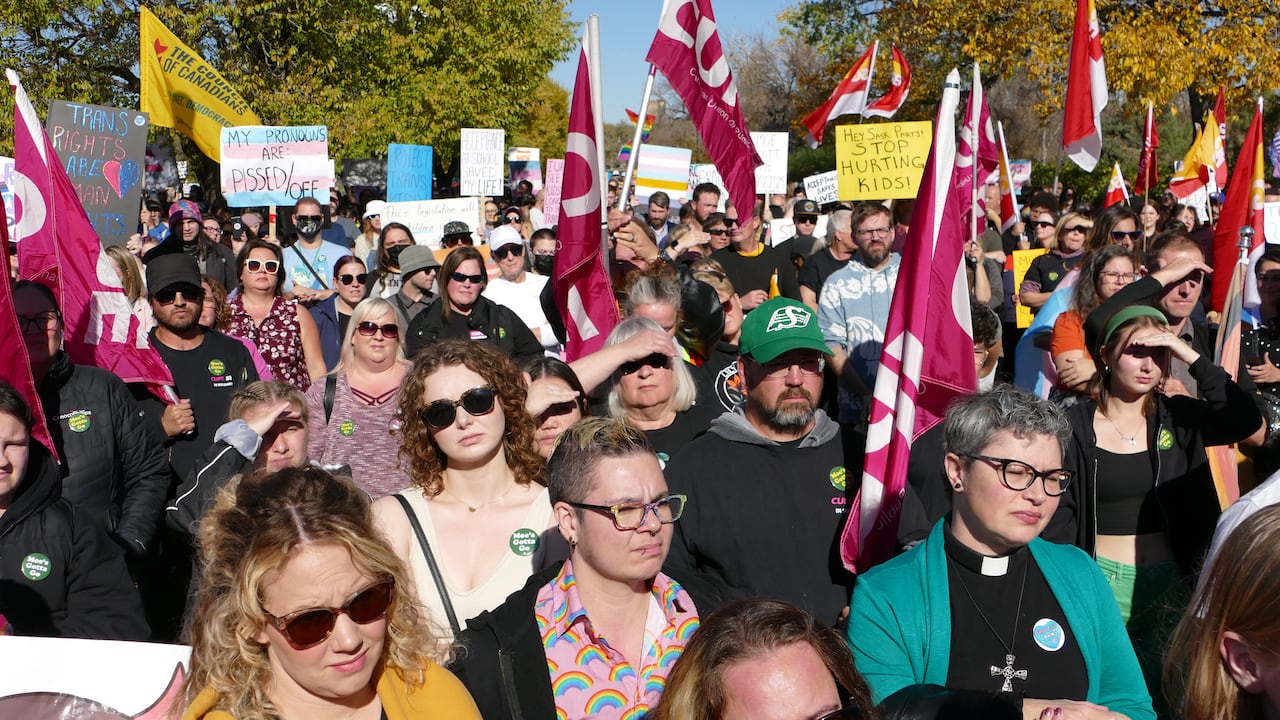 Union members, residents and parents rally at the Saskatchewan legislature in 2023 as the Saskatchewan government is expected to introduce legislation that invokes the notwithstanding clause for its controversial school pronoun policy. (CBC / Radio-Canada)
But Quebec leads the way, invoking the clause pre-emptively for a series of bolstered secularism laws and language legislation.
“Today it’s become commonplace for the Quebec government to do it on every piece of major legislation,” Lincoln said.
The outcome of the Bill 21 case in the Supreme Court will have consequences for all those pieces of legislation, in Quebec and beyond.
Bill 21 violates Charter — but that’s not the point
One thing the case won’t be is a debate about whether or not Bill 21 violates certain Charter rights.
It clearly does, as spelled out in the initial 2021 Quebec Superior Court decision.
But the Superior Court and later the Quebec Court of Appeal both upheld Bill 21.
The Court of Appeal in its decision explained the case wasn’t about whether or not Bill 21 was a good idea, but about whether or not Quebec had the legal authority to use the notwithstanding clause pre-emptively to implement the law.
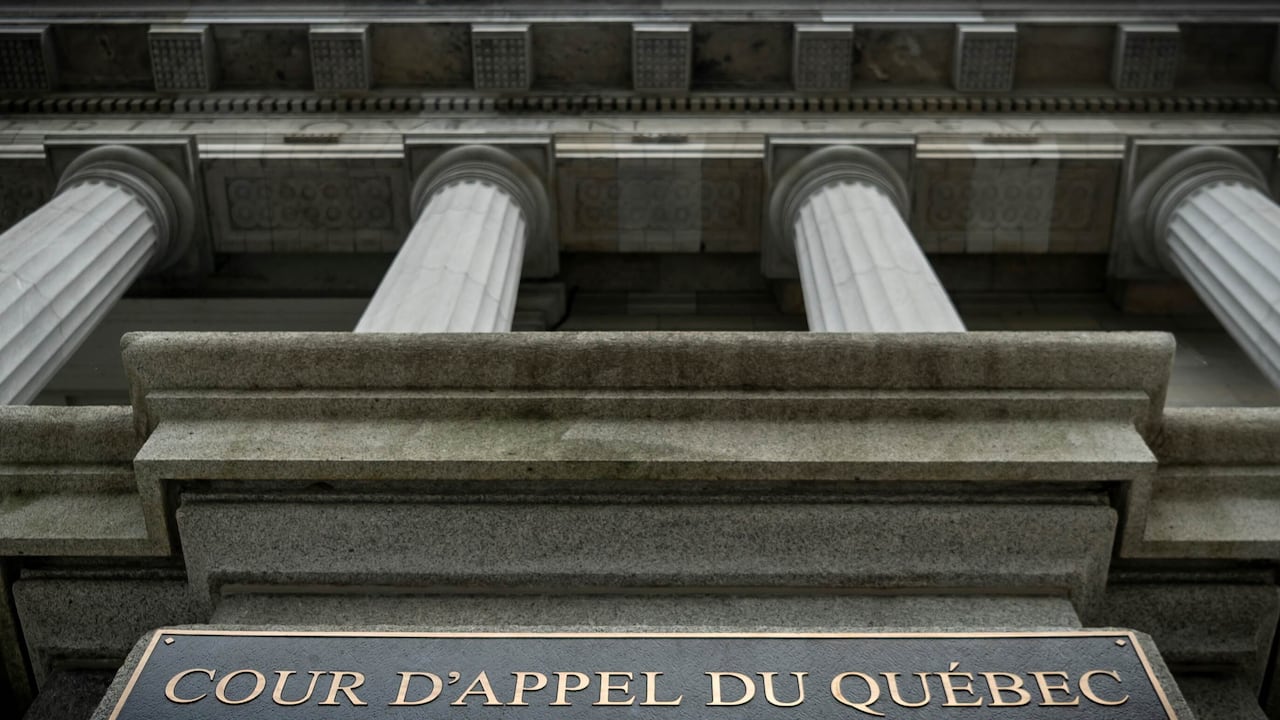 The Quebec Court of Appeal in its 2024 decision said the justification for Bill 21 was debatable, but that it was only looking at the legal aspects when it upheld the law. (Simon-Marc Charron/CBC)
“One can certainly have many different views on the [laicity] act and its appropriateness, whether from a political, sociological or moral perspective,” the Appeal Court decision said.
“This judgment, however, will evidently consider only the legal aspect of the debate,” the decision said.
The Supreme Court will likely look at the case through that same narrow legal lens.
The arguments from Quebec and other provinces
Quebec’s main argument in defence of its pre-emptive use of the notwithstanding clause is that there’s nothing written in the Charter that says the clause can’t be used that way.
“Section 33 does not impose any legal obligation on the legislature to ‘justify’ the use of the derogation provision, either at the time of its adoption or subsequently before the courts,” Quebec said in its legal brief.
The attorney general of Ontario argues along the same lines.
“If the drafters of the Charter had desired additional procedural or substantive requirements for invocations of Section 33, they would have set them out. They did not,” Ontario’s legal brief said.
Karine Millaire thinks that’s a pretty weak argument.
“A very important part of our constitutional law is unwritten,” Millaire said.
Millaire said she and others will try to stress to the court that those unwritten principles, particularly involving protection of minorities, have to be considered when talking about invoking the clause pre-emptively.
So far, that argument hasn’t worked in lower courts.
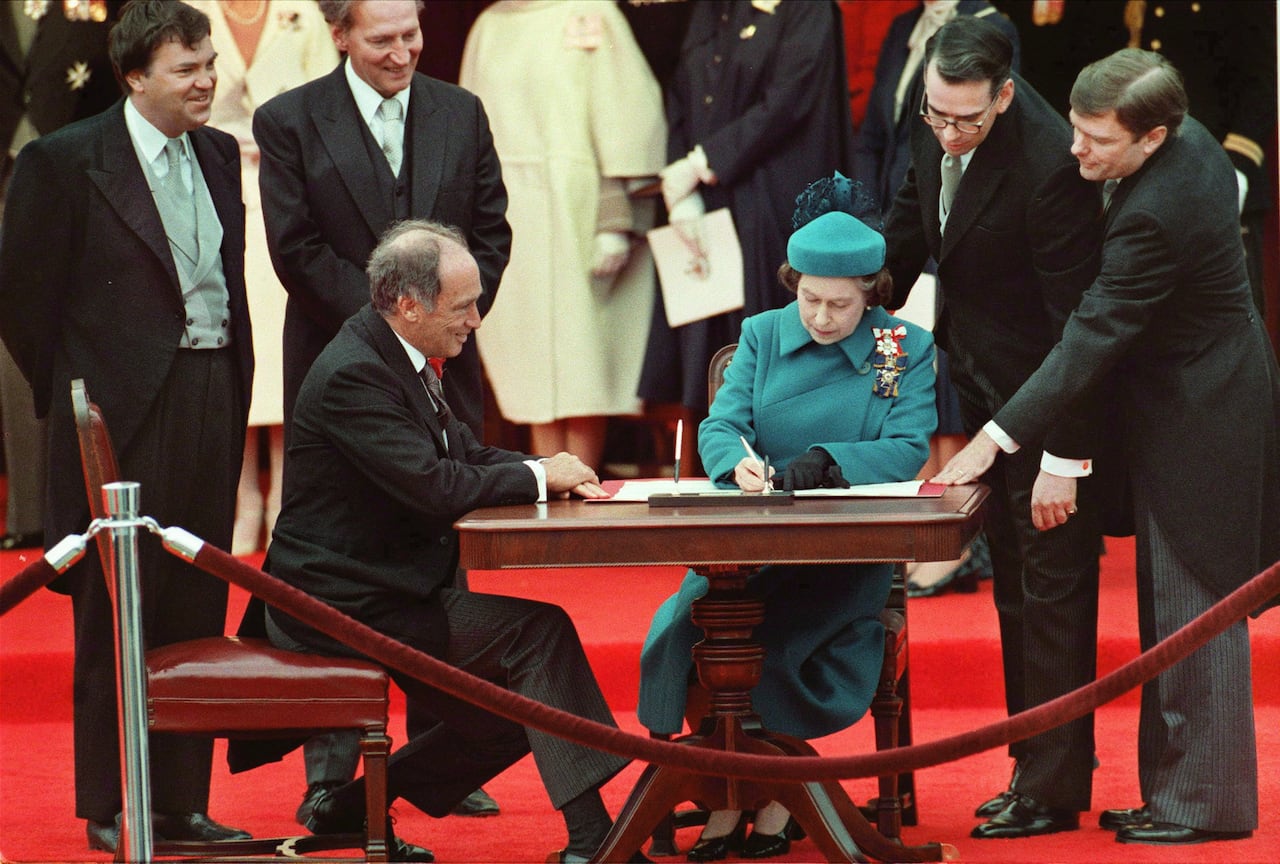 The Queen signs Canada’s constitutional proclamation in Ottawa on April 17, 1982, as Prime Minister Pierre Trudeau looks on. Some say Trudeau and the others who wrote the Charter of Rights and Freedoms weren’t precise enough in defining the limits of the notwithstanding clause. (Ron Poling/The Canadian Press)
Lincoln believes that’s because the drafters of the Charter weren’t precise enough about how the notwithstanding clause should be used.
“I don’t think good intentions or wishes are enough when it comes to legislation,” Lincoln said.
Another argument provinces defending pre-emptive use of the clause make is that it can only be invoked temporarily — up to five years — so any potential damage it can do is limited.
Detractors of the clause argue that’s a nice idea in theory, but in practice five years can be long and difficult for people whose rights are suspended.
Bill 21, for example, was passed at the beginning of the CAQ government’s first mandate in 2019. When the CAQ was re-elected in 2022 it renewed the clause, so the law is still in effect.
Quebec and other provinces argue that elected legislatures represent the will of the population, and if the will of the population is to suspend certain fundamental rights, so be it.
Lincoln said that line of thinking is dangerous.
“The whole idea of a Charter of Rights is to put a brake on legislative powers so that fundamental rights are preserved for minorities,” Lincoln said.
“If you don’t have that and you say parliament is the final arbiter, I mean, that’s what happens in Russia. That’s what happens in all dictatorships.”
Consolation prize
The groups challenging the pre-emptive use of the notwithstanding clause are using many creative legal arguments, but they’re realistic about the fact that those arguments might not work.
So they have a kind of backup plan to try to claim a consolation prize.
They want courts to be able to rule on the constitutionality of legislation where the clause has been invoked pre-emptively, even if those rulings would have no power to strike down legislation.
Bennett Jensen, legal director for LGBTQ2S+ rights group Egale Canada, which is intervening in the case, said such court decisions would be useful.
“The court would still consider evidence and make rulings about whether or not Charter rights had in fact been violated,” Jensen said.
“The public would then have the benefit of that judicial pronouncement when making decisions, for example, at the ballot box.”
There’s a split on this idea between provinces intervening in the case. Quebec, Ontario, Alberta and Saskatchewan are against it, but Manitoba and B.C. think it’s a good idea.
Will Bill 21 be struck down?
Many legal experts think Bill 21 will likely survive this Supreme Court challenge largely unscathed.
Mendes said he and other lawyers arguing against the bill will still try their best to convince the court to strike down the law.
“I would love them to do that, but my pessimistic answer is I’m not sure they will,” he said.
But he thinks the court might at least weaken or clarify the pre-emptive use of the notwithstanding clause, so that governments might be more inclined to think twice before doing it.
Lincoln also thinks it’s unlikely Bill 21 will be struck down.
“I hope and pray every day that the Supreme Court might say this has gone too far. We’ve got to put restrictions on it. I really hope so,” he said.