
It is safe to say that foldable phones have been around long enough to stop feeling magical. The concept, though old, is easy to sell even in the current scenario—a regular phone that unfolds into a mini tablet.
However, looking at past records from manufacturers like Samsung and other Chinese manufacturers, the reality can get messier.
Hinges wear out. Screens crease. Dust gets in. Battery life takes a hit. And the price usually lands way above what most people want to pay.
That’s why Apple’s foldable iPhone rumours matter. If Apple joins this category, it’s not because foldables are new. It’s because the company thinks the form factor is finally stable enough to ship at scale without turning early buyers into testers (ahem, aheam “Samsung”)
A recent MacRumors article combines insights from various analysts about Apple’s upcoming foldable iPhone, known as the iPhone Fold.
As a result, it’s starting to seem more like a real product rather than just speculation.
It’s a fold, not a flip
The consistent theme is that Apple is going with the foldable form factor (similar to the Galaxy Z Fold and Pixel Fold), not a clamshell flip design.
That means you’d use a standard phone-like outer screen when closed, and open it up into a larger inner display when you want more space.
On thickness, analyst Ming-Chi Kuo puts it around 9–9.5mm folded and 4.5–4.8mm unfolded. A separate leaker suggests the unfolded device could be at least 4.8mm thick.
There are also a few hardware layout details floating around — one report claims the volume buttons move to the top edge (aligned to the right, similar to iPad mini), while the power button and Camera Control stay on the right side like recent iPhones.
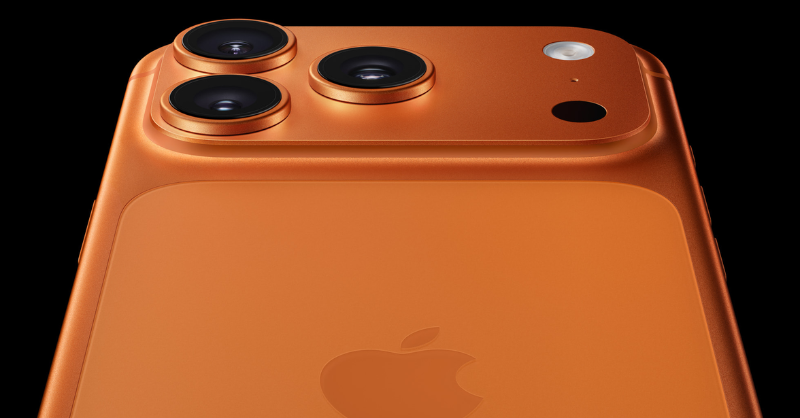
Another small design detail: the back may use an iPhone Air-style camera plate.
Two screens, with slightly different-sized reports
Most of the reporting clusters are around an outer display in the mid-5-inch range and an inner display just under 8 inches.
According to the report, the frequently repeated sizes are 5.5 inches outside and 7.8 inches inside, but The Information has a more recent set of numbers: 5.3 inches outside and 7.7 inches inside.
MacRumors also mentions a rumour that gets unusually specific: an inner display about the size of A6 paper, with a 2713 x 1920 resolution, and an outer display at 2088 x 1422.
When it comes to foldables, inner displays are the most delicate part. To protect the folding screen, Apple is reportedly evaluating tougher film tech, including a transparent polyimide layer over ultra-thin glass.
Solving the crease problem
If you’ve ever used a foldable, you know the crease is the part you notice every day. MacRumors says the inner screen is expected to be “virtually crease-free.”
The rumour behind that claim involves a metal plate that helps manage stress from repeated bending, plus the use of liquid metal in the hinge for durability and to reduce creasing.
Another supply-chain report claims Apple has solved the crease issue and could ship the first “crease-free” foldable, though that’s the kind of line that needs to be treated carefully until hardware exists in the real world.
If it does, Apple has officially cracked the code, and other manufacturers might also follow suit.
Titanium is the common thread
On the body, the reports point to a titanium chassis. On the hinge, one view says it’s a mix of titanium and stainless steel, while another analyst thinks Apple is using aluminium and titanium instead.
Either way, the direction is clear: Apple is prioritising stiffness and durability, likely to avoid bending issues in a thin design.
Cameras: dual rear lenses, but the front camera story is messy
The most reliable information is that the device will have a dual-lens rear camera.
For the front, there are expectations for a camera that functions whether the device is folded or unfolded. Reports suggest a “four camera” setup — one front camera, one inner camera, and two rear cameras, potentially both 48MP.
However, there is uncertainty about the front cameras. Some sources indicate that the inner display will have an under-screen camera, while the outer screen may feature a punch-hole camera, possibly located in the top-left corner.
Besides camera, multiple reports (including Kuo and Gurman) say Apple may skip Face ID to save internal space and use a Touch ID side button instead, similar to some iPads.
Connectivity, battery, and colours
MacRumors says Apple plans to use its C2 modem, and the foldable is expected to be eSIM-only with no physical SIM slot. There’s also an expectation that C2 could bring mmWave support in the U.S.
Battery is a major focus, too. The roundup says the device is expected to have the largest battery ever used in an iPhone, thanks to slimming key components (including display-related parts) to make more room for cells and high-density battery cells.
Price and timing: premium, late 2026
Pricing is the part that will be easiest to argue about because it’s still early, but the rumoured range is consistent: MacRumors says multiple reports point to “between $2,000 and $2,500” in the US, with UBS suggesting $1,800–$2,000 and Fubon Research around $2,399.
On schedule, the roundup says the foldable entered Foxconn’s NPI phase in March 2025, later reached an engineering validation stage, and could see Foxconn begin production in early Q4 (October) ahead of a broader second-half 2026 mass production plan. Gurman reportedly expects a fall 2026 launch window.
Manufacturing foldable products is not easy! Like any other OEM, Apple appears to be treating foldables as a serious product line, but it’s still wrestling with the same hard constraints everyone else faces—hinge durability, crease visibility, camera placement, and a battery in a very thin chassis.
The 2026 target seems possible, but many details remain unclear, suggesting Apple is still making design changes.