
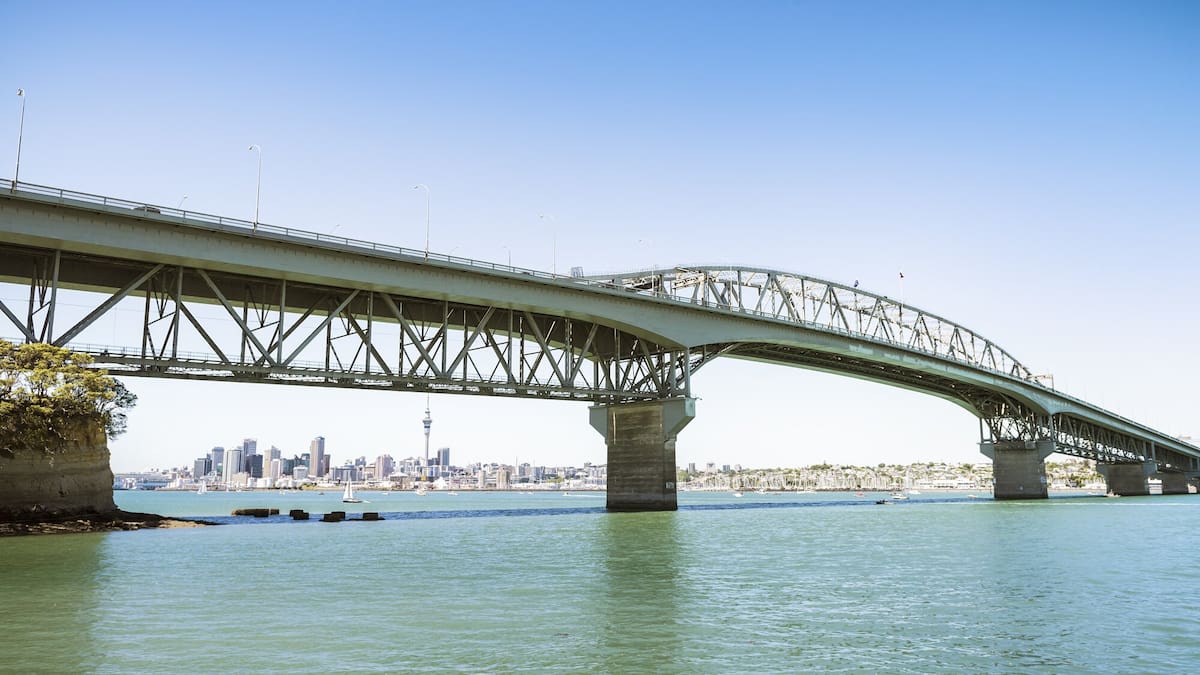
The really concerning thing is that, as the project goes in circles, the condition of the existing bridge continues to deteriorate (alongside ongoing maintenance and extensive upgrades, further restrictions on trucks could be needed within 15 years) and construction costs in general continue to march upwards.
As a consequence, the range of options available – based on what we can afford, what can be constructed and the structural integrity of the existing bridge – gets narrower and narrower. Soon, if this continues, the only remaining options will be really poor ones.
In the coming months, NZ Transport Agency Waka Kotahi (NZTA) is expected to make an announcement about the Government’s preferred approach for the Waitematā crossing – this must be the moment when the cycle of planning failure gets broken.
As we understand it, NZTA is exploring two separate solutions: one a bridge; the other a tunnel. We don’t have a preconceived view on which is better. What we want to see is a proposal that not only extends the operational life of the existing bridge, but also results in meaningful transport and urban-growth benefits. Even if less than stellar, these benefits must be enough to make Aucklanders feel enthusiastic (and willing to pay tolls for).
This needs to be supported by a really strong business case; one that, among other things, resolves key questions that continue to hang over the project. In addition to the issue of tolls, these questions include:
1. What will it cost to build?
Likely costs for a new bridge or tunnel are extremely hard to calculate, but what we can say with certainty is that the price tag (particularly in the case of a tunnel) will dwarf anything that’s been considered previously in New Zealand’s infrastructure history.
NZTA must not only provide reliable costings but also paint a clear picture of the impact that such a large funding commitment will have on the wider infrastructure budget.
2. What decongestion and resilience benefits will it deliver?
If the new crossing were constructed alongside the existing bridge, the decongestion benefits would be minimal. That’s because the constraint on traffic flows is not capacity on the current bridge so much as capacity on the motorway network on either side of it (unfortunately, there’s very little scope for motorway widening because of cost and complexity).
Likewise, building the new crossing in the existing corridor would result in limited resilience benefit for Auckland’s transport network as a whole. A new crossing would provide some back-up if the current crossing was compromised (and vice-versa), but any major blockage would still see heavy diversion of traffic west around the harbour, as is the case today. Resilience benefits would therefore be primarily about keeping the existing bridge alive.
Expectations about decongestion and resilience benefits will be high, and will have a major bearing on stakeholder and public perceptions of the value of the project. NZTA needs to be clear from the outset on what can and cannot be achieved, and must demonstrate that no stone has been left unturned when it comes to getting the best possible outcome.
3. Is it being built in the right place?
The only way to achieve transformational benefits when it comes to decongestion and resilience would be to construct the crossing in a completely separate corridor, ie somewhere to the west. That’s part of the reason Auckland Mayor Wayne Brown and others have promoted solutions along these lines. There are valid questions around the practicality of a western alignment (cost, in particular), but we’re yet to see any robust analysis. If a crossing on the current alignment is indeed the right call, NZTA must demonstrate why.
This is a critical moment for New Zealand’s infrastructure system. Time is fast running out to achieve a high-quality solution. Now, more than ever, we need our planners and decision-makers to get it right.
Catch up on the debates that dominated the week by signing up to our Opinion newsletter – a weekly round-up of our best commentary.