
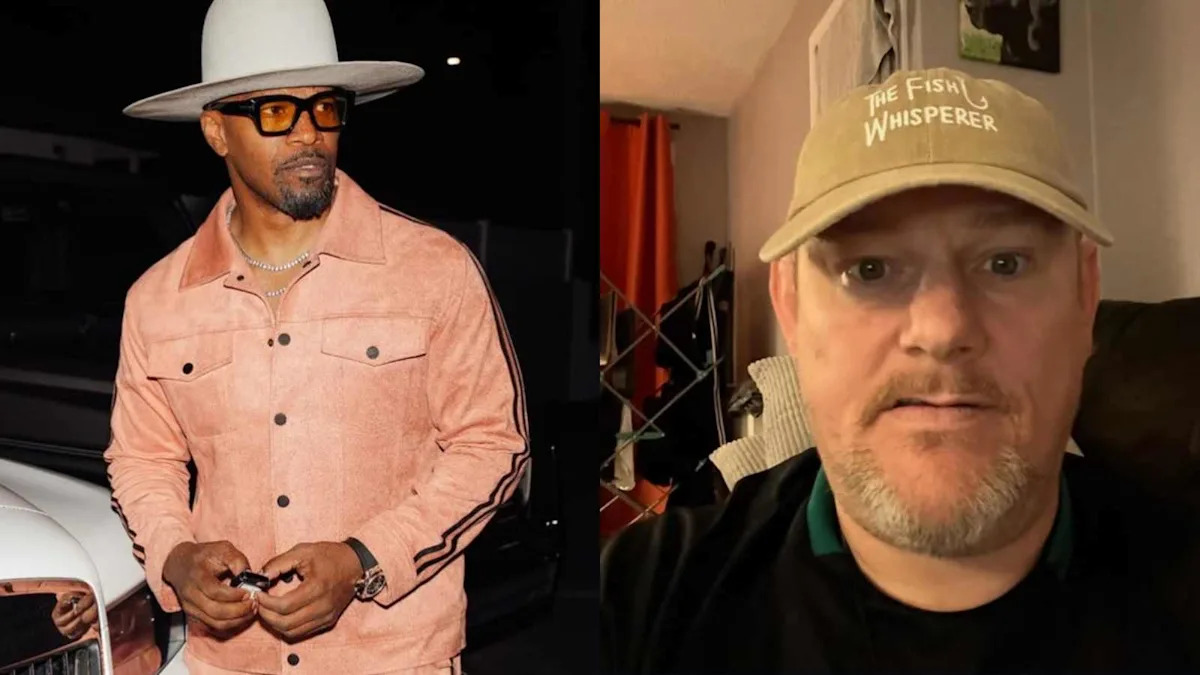
The 2026 BAFTA Film Awards will be remembered not for the gold statuettes or the red-carpet glamour, but for a moment of televised friction that has reignited a fierce global debate on disability, race, and the limits of “involuntary” behavior. At the center of the storm is John Davidson, a 54-year-old Scottish campaigner and MBE who has lived with Tourette’s syndrome since childhood.
While attending the ceremony as the real-life inspiration for the BAFTA-nominated biopic I Swear, Davidson’s condition, which includes coprolalia (involuntary swearing), led to a series of audible outbursts. However, it was one specific word, shouted while Black actors Michael B. Jordan and Delroy Lindo were on stage, that transformed a medical symptom into a cultural lightning rod.
Jamie Foxx, never one to mince words, has now entered the fray with a perspective that challenges the official narrative of the BBC and BAFTA, claiming the incident was far more intentional than the public has been led to believe.
A Script Interrupted
The atmosphere at London’s Royal Festival Hall on Sunday, February 22, 2026, was initially one of cautious inclusion. Before the cameras rolled, floor managers and host Alan Cumming reportedly warned the audience, which included the Prince and Princess of Wales, that Davidson was in attendance and might experience involuntary vocal tics.
For the first twenty minutes, the “noises” were manageable. Davidson shouted “Boring!” and “Shut the f*** up!” during opening remarks by BAFTA chair Sara Putt. The room, briefed on his condition, remained professional. But the tension snapped when Michael B. Jordan and Delroy Lindo, stars of the film Sinners, walked out to present the award for Best Visual Effects.
As Jordan began his introduction, a loud, clear racial slur, the N-word, echoed through the hall and was picked up by the live microphones. Delroy Lindo visibly recoiled, pausing for a beat that felt like an eternity before the two actors, ever the professionals, finished their segment.
The Official Defense: “Involuntary” and “Not Intentional”
Within hours, the BBC and BAFTA issued formal apologies. A BBC spokesperson stated:
“This arose from involuntary verbal tics associated with Tourette syndrome and was not intentional. We apologise for any offence caused by the language heard.”
Host Alan Cumming doubled down on this during the broadcast, explaining to viewers that Tourette’s is a neurological disorder and that the individual “has no control over their language.”
The medical community largely supports this. Experts point out that coprolalia often targets the “most forbidden” words in a person’s environment, not because the person is racist, but because the brain’s “brakes” fail on the very words it is trying most desperately to suppress.
For Davidson, a man who has spent decades advocating for Tourette’s awareness through documentaries like John’s Not Mad, the incident was framed by supporters as a tragic manifestation of his disability.
The Foxx Deep Dive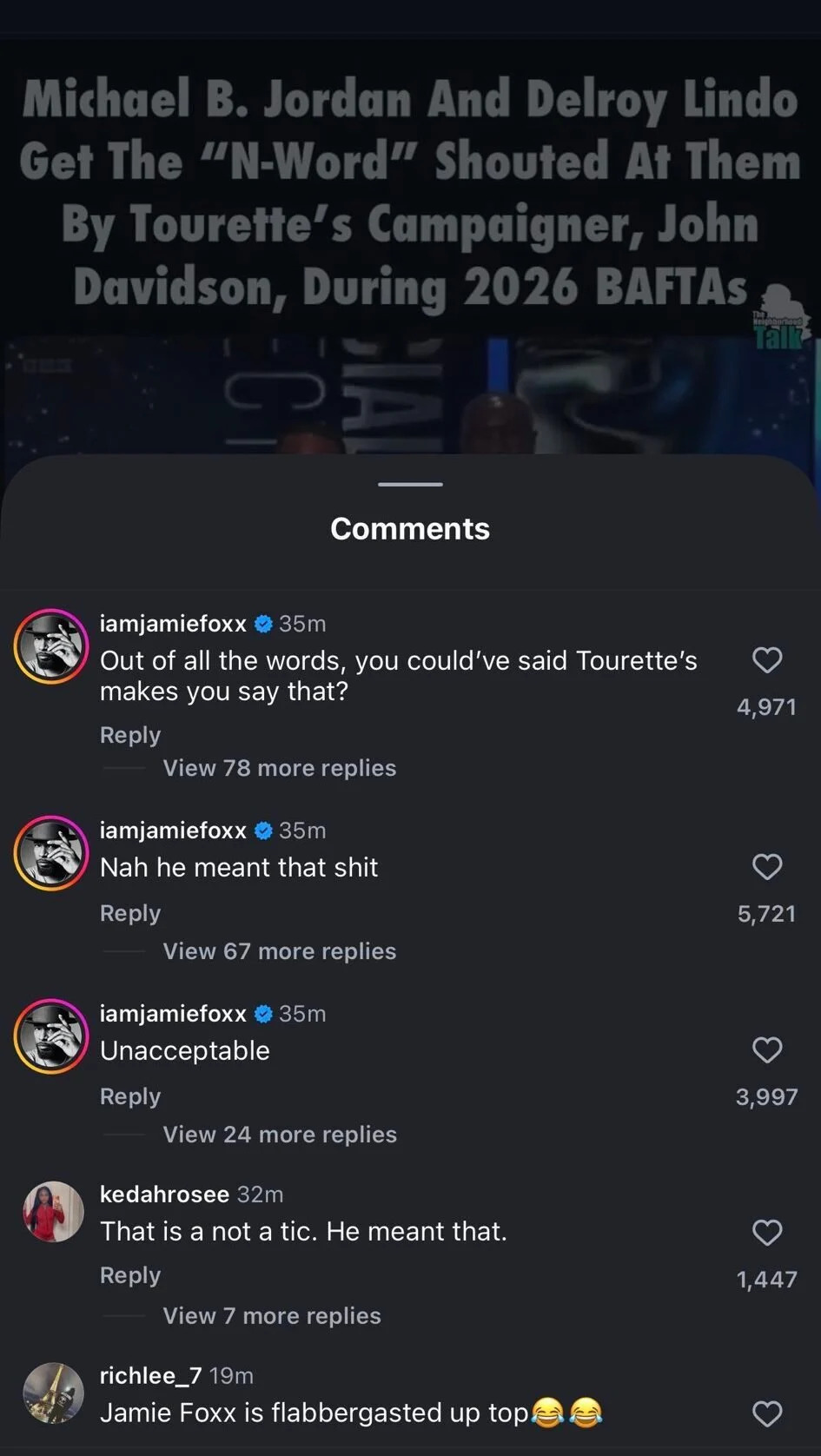
Screenshot from itsovermey via X. Used under fair use for commentary.
However, Jamie Foxx isn’t buying the medical “get out of jail free” card. In a series of social media comments that have since gone viral, Foxx expressed what many in the Black community were feeling but were hesitant to say in the face of a disability diagnosis.
“Unacceptable,” Foxx wrote under a clip of the incident. He followed up with a more pointed accusation: “Nah he meant that shit.”
Foxx’s argument leans into a burgeoning theory among critics: that while the act of shouting may be a tic, the choice of the word, specifically targeted at two Black men during a high-profile presentation, suggests a subconscious or conscious bias that “involuntary” labels cannot fully excuse. Foxx’s “deep dive” into the situation suggests that the timing was too “perfect” to be a mere random firing of neurons.
He wasn’t alone. Hannah Beachler did not let the dismissive apology stand. Taking to X (formerly Twitter), she delivered a masterclass in grounded, righteous frustration. Her post cut through the noise of medical excuses to address the human cost of the evening.
She wrote:
I understand and deeply know why this is an impossible situation. I know we must handle this with grace and continue to push through. But what made the situation worse was the throw away apology of “if you were offended”
The Broadcast Blunder. Why Wasn’t It Cut?
Beyond the debate over Davidson’s intent, a secondary controversy has erupted over the BBC’s handling of the broadcast. The BAFTA ceremony is traditionally aired on a two-hour delay. This “tape delay” exists specifically to edit out swearing, technical gaffes, or, as was the case in 2026, audible slurs.
Yet, the BBC allowed the N-word to air unbleeped on BBC1 and initially kept it in the version uploaded to iPlayer. Critics, like Tourettes Action vice chair Ed Palmer, argue that even if Davidson cannot control his tics, the BBC can control what reaches millions of homes. The failure to edit the slur has been seen by some as a “spectacle” of disability that came at the direct expense of the dignity of the Black men on stage.
The Man at the Center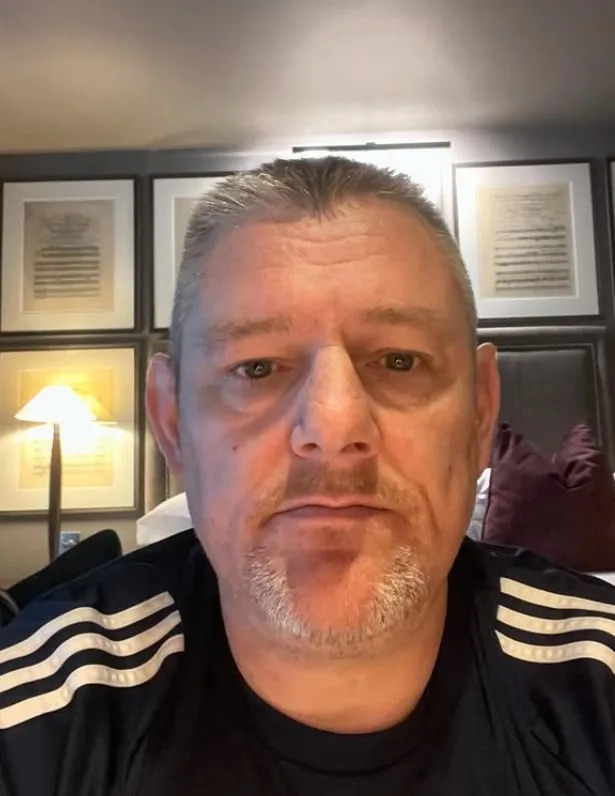
John Davidson. Screenshot from johndavidsonmbe via Instagram. Used under fair use for commentary.
To understand the weight of this, one must look at Davidson himself. He has been the face of Tourette’s in the UK since the late 1980s. He is not a random attendee; he is an MBE (Member of the Order of the British Empire) honored for his service to disability awareness.
The film I Swear, which stars Robert Aramayo (who won Best Actor that same night for his portrayal of Davidson), is about the very “hostility” Davidson faces because of his tics. There is a cruel irony in the fact that the film’s big night was overshadowed by the exact type of incident it sought to humanize.
Davidson voluntarily left the ceremony before the second half of the ceremony, as reported by Variety. He has not made a direct statement regarding Foxx’s accusations.
A Collision of Rights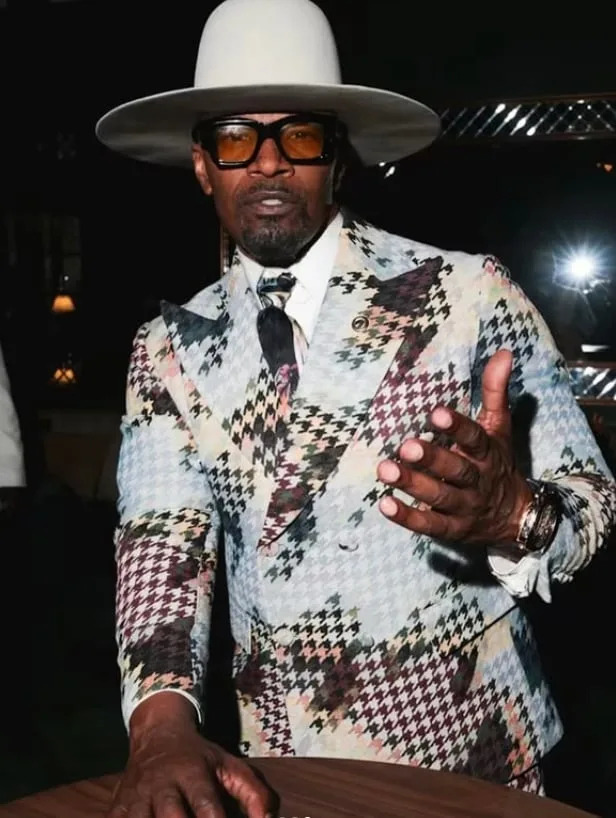
Jamie Foxx. Screenshot from iamjamiefoxx via Instagram. Used under fair use for commentary.
This story is a “collision of rights”: the right of a person with a disability to exist in public spaces without being sidelined for their symptoms, versus the right of Black individuals to exist in professional spaces without being subjected to racial trauma.
Jamie Foxx’s intervention has changed the “facts” of the story from a medical curiosity to a debate on accountability. Was it a neurological glitch, or was it, as Foxx suggests, a moment where a person used a diagnosis as a shield for a targeted insult?
As the 2026 BAFTAs fade into the history books, the industry is left with uncomfortable questions. If a “delayed” broadcast can’t protect its presenters from a racial slur, is the delay even working? And if a disability causes harm to others, where does the “apology” end and the “accountability” begin?
For Jamie Foxx, the answer is clear: the intent was in the timing, and no amount of medical documentation can erase the sting of the word.