
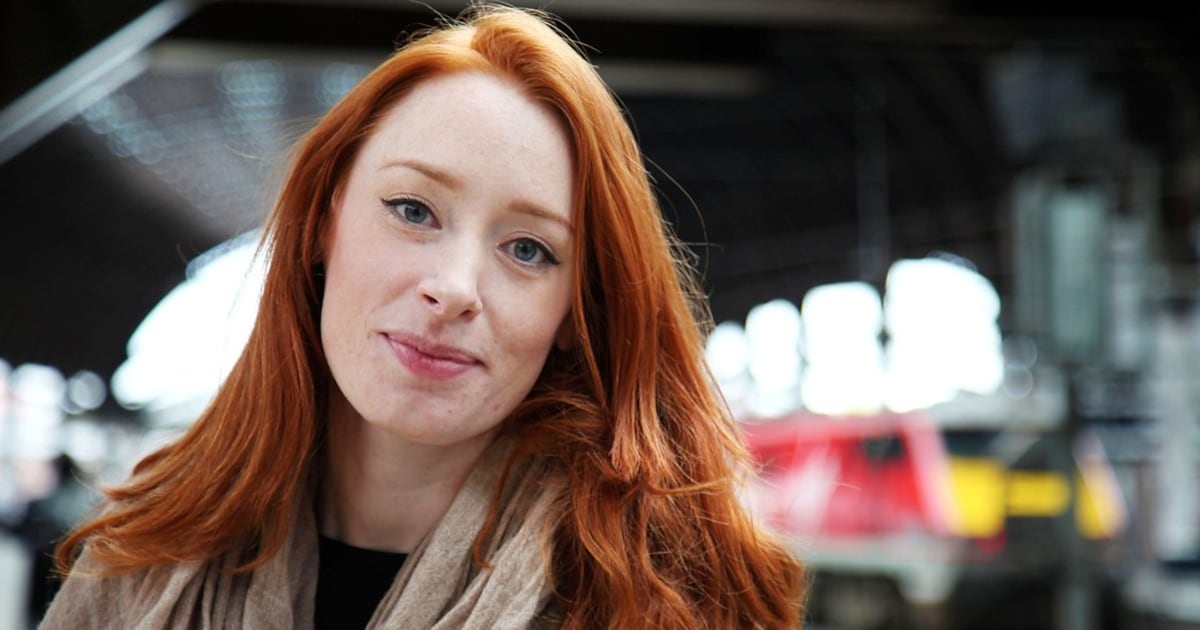
The big fear with AI is that it’s going to take our jobs. But the concern voiced by Prof Hannah Fry in AI Confidential with Hannah Fry (BBC Two, 9pm) is that machine intelligence is in the process of stealing our souls.
Just how pernicious this new technology can be is ominously illustrated towards the end of the absorbing first episode of a three-part series, when Cambridge professor Fry talks to “grief tech” entrepreneur Justin Harrison, who created an AI version of his late mother.
Fry lost her father several months ago and is initially horrified at the idea of him being digitally brought back in order to numb her grief. “The process of grief is an essential part of being human. I feel like a more complete person because of grief. Isn’t grief necessary?”
Harrison disagrees and then whips up an artificial avatar of Fry by sampling her voice. When she talks back to this digital pastiche of herself – it is an uncanny simulacrum – she imagines what it would be like to have one last conversation with her father. This reduces her to tears – even though she understands that talking to a fake version of a loved one is to commit to a lie. “You can pretend for a moment, but it doesn’t undo it.”
The conversation between Fry and Harrison – his take on bereavement is that “the hopelessness of forever is too much to bear” – is like stumbling upon a previously unaired episode of dystopian drama Black Mirror. But by this point Fry’s horror at AI has already been established after she meets a Dutch man, Jacob van Lier, and he enthuses about the erotic relationship he has with his AI companion.
The dark comedy is strong as Fry attempts to keep a straight face while he gushes about his perfect partner who never criticises or is less than 100 per cent supportive. The fact that “Aiva” isn’t real is not the point, he says – it’s that she makes him happy (he will later “marry” his digital soul mate).
Britain has a seemingly endless supply of top telly boffins, and Fry rivals Brian Cox and Lucy Worsley in her ubiquity. But you can see why she is so successful as a presenter. She’s not afraid to share her own feelings (such as about the grief for her father) and is good at breaking down complex subjects into clear, accessible ideas.
She tries not to be judgmental or sensationalist when recounting the story of Jaswant Singh Chail, a lonely young man who attempted to break into Windsor Castle on Christmas Day 2021 in order to kill queen Elizabeth with a crossbow.
In court, it was revealed that Chail had an “emotional and sexual relationship” with an online companion, whom he named Sarai, which had encouraged him to carry out the attack.
In California, she talks to Eugenia Kuyda, the creator of Replika, the chatbot that Chail used to create Sarai. Kuyda argues that the technology cannot be held responsible, no more than the maker of a knife can be blamed for a stabbing.
However, later, she says she is stepping back from Replika after receiving negative feedback from users as to the potential downside of deep friendship with machine intelligence.
“It was starting to weigh on me,” she says. The worrying message of this stark documentary is that the shadowy side of AI is going to hang over the rest of us for some time to come.