
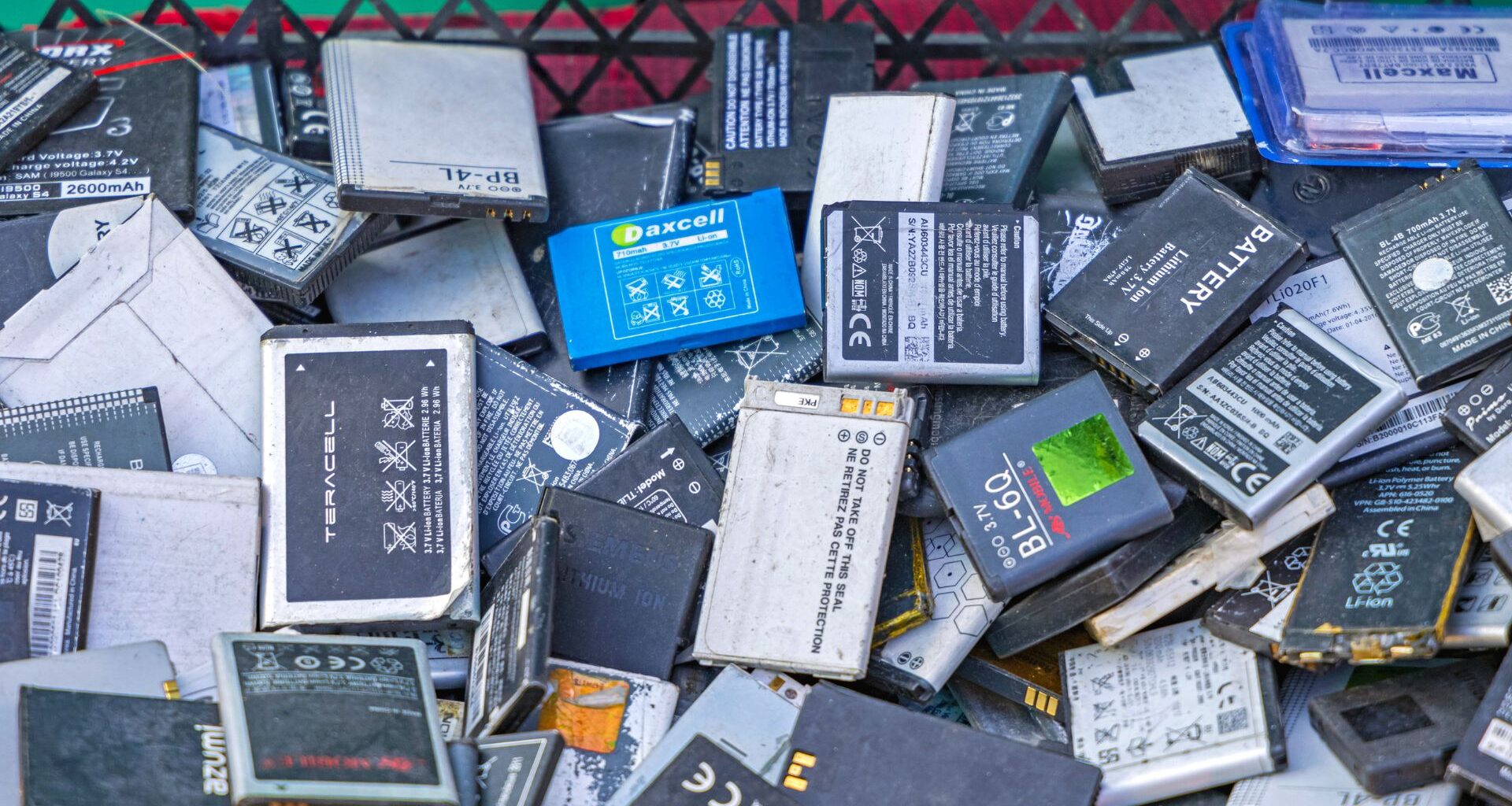
A new sustainable method turns discarded mobile phone batteries and industrial lignin into a powerhouse material for sodium-ion batteries.
It is a stunning example of circular economy innovation. Rather than letting these materials sit in landfills or go up in smoke, the team from China is giving the waste a high-tech second life.
When tested as a sodium-ion battery anode, this composite of nickel-cobalt sulfides and lignin-derived carbon delivered electrochemical results.
The use of abundant waste materials may open the door to lower manufacturing costs and improved energy storage options for both electric vehicles and power grids.
“Sodium-ion batteries are attractive because sodium is abundant, low-cost, and environmentally friendly,” the researchers from the Shenyang Agricultural University in China explained.
“However, the development of efficient electrode materials remains a major challenge. Our work shows that waste resources can provide a solution,” they added in the press release.
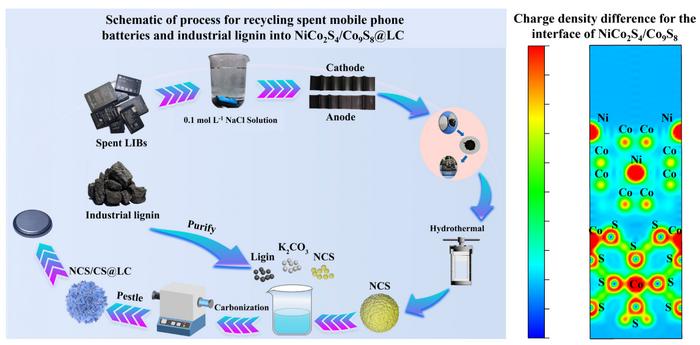 Synergistic conversion of spent mobile phone batteries and industrial lignin into the composite with enhanced sodium storage performance.
Greener battery material
For this waste conversion process, the team used the hydrothermal synthesis technique.
The process enables the extraction of key metals, such as nickel and cobalt, from old batteries. After this, the compounds are fused with carbon derived from lignin. Lignin is a significant byproduct of paper and biofuel production.
The resulting composite is more than just a recycled mix; it is also a highly functional electrode.
Lignin acts as a robust carbon coating, boosting electrical conductivity and stabilizing the electrode, while the recovered metal sulfides provide the necessary reaction sites for sodium-ion storage.
The electrode material’s unique structure facilitates efficient ion transport while ensuring long-term structural integrity.
During testing, the material achieved an initial discharge capacity exceeding 1,000 milliampere hours per gram. Even at high power demands, it maintained a strong, reliable performance.
“Even at high current densities, the material retained notable capacity, demonstrating its ability to support rapid charge and discharge processes,” the researchers stated.
Circular economy
Meeting the rising demand for sustainable energy will require materials that successfully balance affordability with high performance.
Sodium-ion batteries are often considered a sustainable energy storage solution due to the lower costs and greater abundance of sodium compared to lithium.
These could be used for applications such as grid storage, electric vehicles, and portable electronics.
However, these batteries have typically struggled with efficient electrode materials. This new method tackles two environmental headaches at once: e-waste and the valorization of industrial byproducts.
It establishes a sustainable recycling pathway for the millions of discarded batteries replaced annually while simultaneously repurposing industrial lignin into a key component for clean energy technology.
“We wanted to move beyond traditional recycling and demonstrate true high-value reuse of waste,” the authors noted. “By converting discarded batteries and industrial lignin into advanced energy materials, we can reduce costs, conserve resources, and support cleaner technologies.”
While the laboratory performance is a major milestone, it remains to be seen if the technique could be scaled for wider use.
If successful, this method could drive down manufacturing costs and accelerate the commercial adoption of sodium-ion batteries.
The findings were reported in the journal BiocharX.