
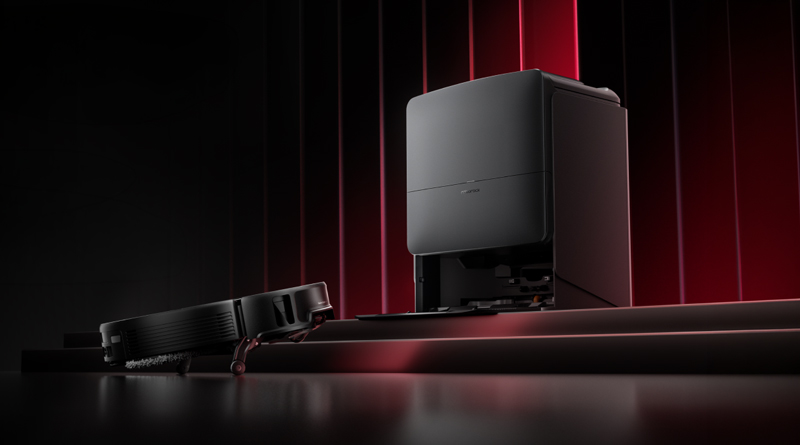
After initially being unveiled at CES 2026, Roborock has now partially released the Saros 20, a new flagship robot vacuum and mop that introduces a redesigned mobility system, higher suction performance, and expanded smart home compatibility. Positioned as a premium model within the company’s range, the Saros 20 focuses on automated maintenance and improved navigation rather than purely incremental hardware updates.
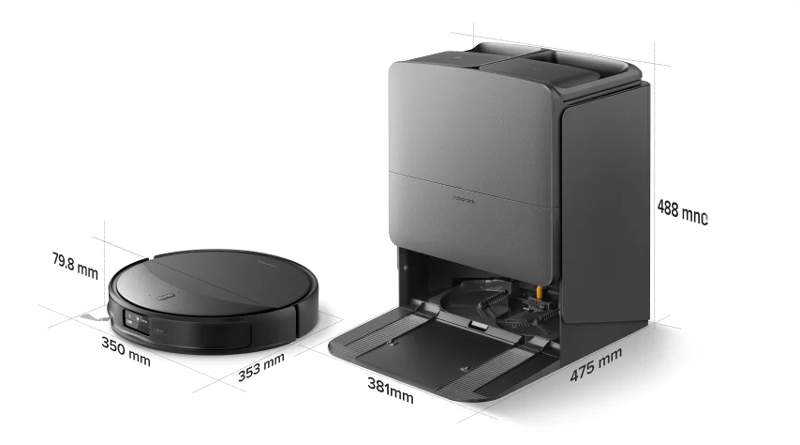
At the centre of the Saros 20 is Roborock’s HyperForce cleaning system, rated at 36,000Pa suction power. This places the model among the highest specified robot vacuums currently available. The vacuum uses a dual anti-tangle brush arrangement designed to reduce hair wrapping, alongside an arc shaped side brush that extends outward to improve cleaning along skirting boards and corners.
The unit combines vacuuming and mopping within a single cleaning pass. During operation, the robot can automatically adjust suction depending on floor surfaces, while its mop assembly can lift clear of carpets to avoid transferring moisture onto soft flooring. This allows mixed floor environments to be cleaned without manual intervention or separate cleaning runs.
Navigation is handled by Roborock’s StarSight Autonomous System 2.0, an AI assisted mapping system that uses visual sensors to recognise obstacles and maintain navigation accuracy in both well lit and darker environments. The system builds detailed room maps, enabling selective room cleaning, zone management, and obstacle avoidance directly from the Roborock app.
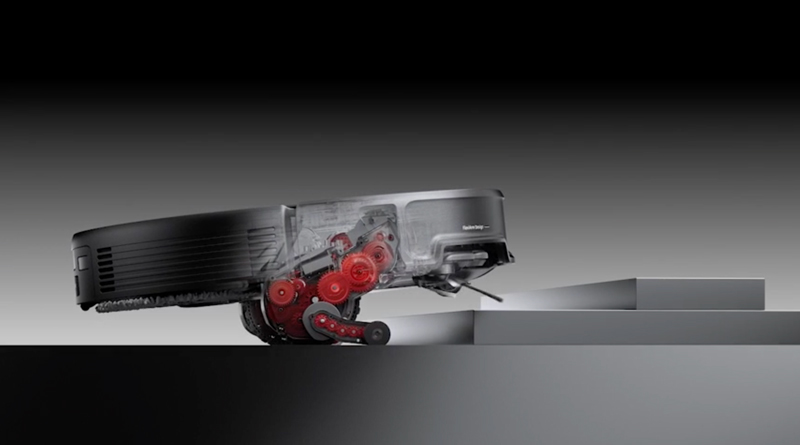
A defining feature of the Saros 20 is the AdaptiLift Chassis 3.0, which dynamically alters the robot’s height and wheel positioning. Rather than treating thresholds as barriers, the chassis allows the robot to raise itself to cross higher transitions and double door thresholds.
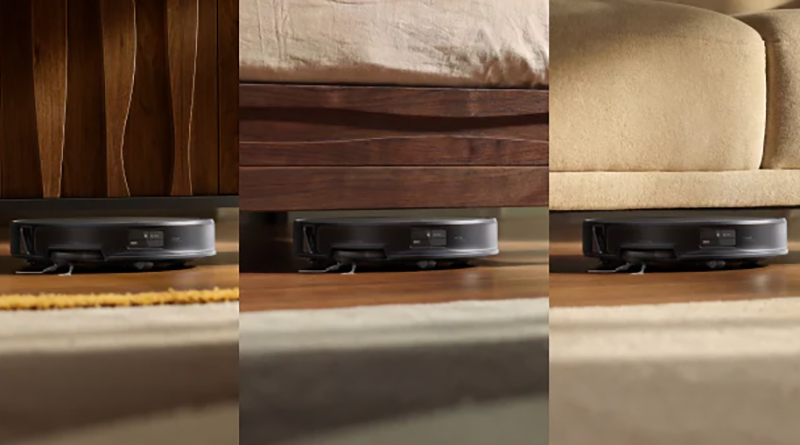
The low profile body, measuring just under 80mm in height, also improves access beneath furniture where many robot vacuums struggle to reach.
The Saros 20 is supplied with an automated multifunction dock designed to minimise routine maintenance. After cleaning, the robot returns to the station where dust is automatically emptied into a sealed bag and mop pads are washed using hot water before being dried with heated air. The dock also handles water refilling and detergent dispensing, reducing the need for regular manual cleaning of the robot itself. Roborock specifies hot water mop washing temperatures of up to 100°C, intended to remove residue from pads between cleaning sessions and prepare the robot for subsequent runs without user input.
Like many of the more recent Roborock models, the Saros 20 adds Matter compatibility. This allows the vacuum to integrate with supported smart home ecosystems through the Matter standard rather than brand specific cloud integrations.
For Apple users, this means the Saros 20 can be exposed to Apple Home using Matter over WiFi, enabling basic control alongside other Matter enabled devices. As with most Matter robot vacuum implementations, functionality is expected to focus on core actions such as start, stop, dock, and cleaning status rather than full mapping control, which remains within the Roborock app. The robot continues to operate through the Roborock mobile application for advanced features such as mapping, scheduling, restricted zones, and cleaning customisation.
The Saros 20 uses a battery rated at approximately 6400mAh, delivering up to around 200 minutes of runtime depending on cleaning mode and floor conditions. When battery levels run low, the robot automatically returns to the dock, recharges, and resumes cleaning from the previous location. Edge cleaning is improved through the FlexiArm mechanism, which extends the side brush toward walls and furniture edges to reduce the gaps commonly left by circular robot designs.
The Saros 20 represents a shift in focus toward autonomy rather than incremental specification increases alone. While the headline suction figure is notable, the more significant development is the combination of advanced mobility, automated dock maintenance, and Matter compatibility. Matter support in particular signals Roborock’s continued movement toward broader smart home interoperability, aligning the vacuum more closely with ecosystems such as Apple Home, Google Home, and Amazon Alexa without relying solely on proprietary integrations.
Regional availability and pricing vary by market and were only listed at €1499.00 on the company’s German site at the time of writing.