
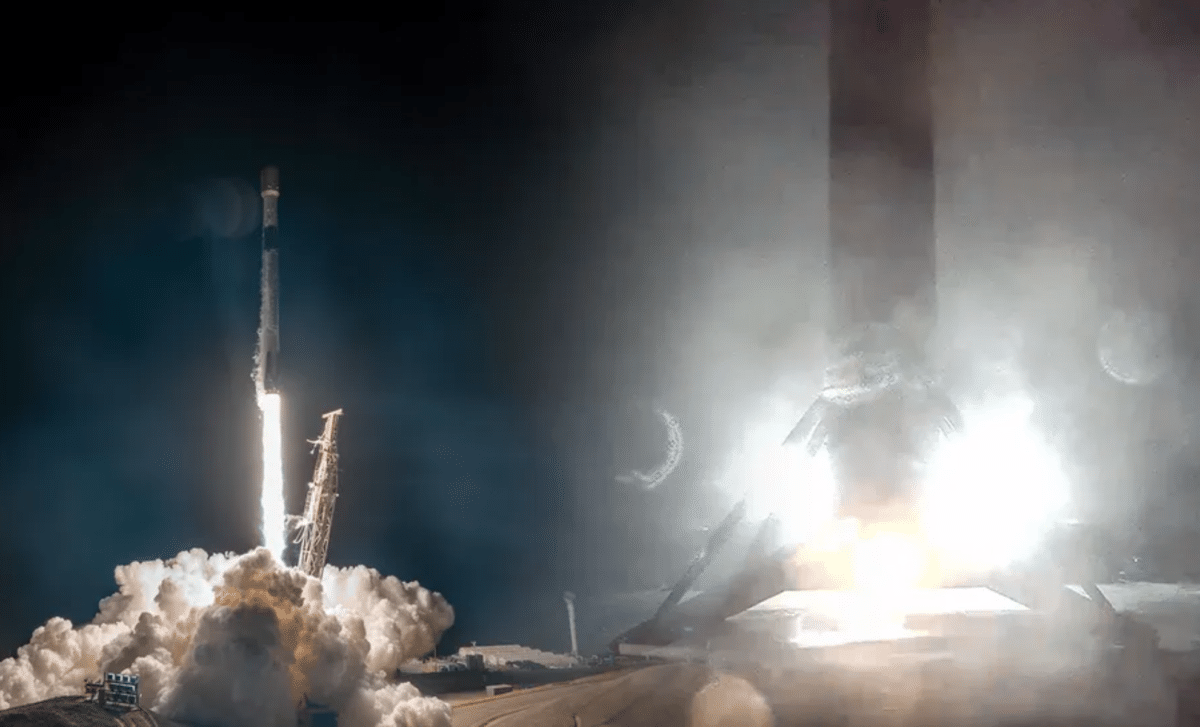
On February 21, 2026, SpaceX made history with the launch of two Falcon 9 rockets, setting a new record for rocket reusability. One of the rockets achieved its 33rd successful re-flight, a testament to SpaceX’s commitment to lowering the costs of space exploration through reusable technology. The dual launches, which carried 53 new Starlink satellites into orbit, took place from both California and Florida. This achievement marks an important milestone in the ongoing development of SpaceX’s Starlink project, which aims to provide high-speed internet globally.
A New Era for Reusable Rockets
SpaceX has long been a pioneer in reusable rocket technology, and the launch on February 21, 2026, underscores the company’s ability to continuously improve and push the boundaries of spaceflight. The Falcon 9 rocket, in particular, has become synonymous with reusability. This launch was the 33rd successful re-flight of one of SpaceX’s Falcon 9 first-stage boosters, a feat that no other company has achieved.
The reusable booster technology significantly reduces the cost of space missions. Traditionally, rockets were discarded after a single use, but with Falcon 9’s reusability, SpaceX is able to save millions of dollars per launch. This not only makes space travel more accessible but also contributes to the long-term sustainability of space exploration. The ability to reuse a rocket multiple times is a game-changer, providing an economic advantage that could lead to more frequent launches and deeper space missions.
As the technology advances, SpaceX continues to refine the reusability of its rockets, improving their lifespan and performance with every flight. This launch also further solidifies the company’s reputation as a leader in space innovation, setting new standards for the industry.
The Starlink Constellation Expands
The February 21 launches added 53 more satellites to SpaceX’s growing Starlink constellation. These satellites are part of an ambitious plan to provide worldwide broadband coverage, especially in underserved or remote areas. Accordingto Space.com, the Starlink constellation currently has more than 9,700 active satellites, and with each new batch of launches, the coverage and reliability of the network increase.
Starlink’s mission to provide global internet coverage is part of SpaceX’s broader vision of connecting the entire world to high-speed, low-latency internet. While the project started with a small number of satellites, it has now evolved into one of the most extensive satellite constellations in history. The satellites are designed to provide internet access to even the most remote regions, which have historically been difficult or expensive to reach using traditional ground-based infrastructure.
Falcon 9’s Journey to 33 Flights: A Technological Triumph
The Falcon 9 rocket has evolved over the years, with each iteration seeing improvements in design, efficiency, and reusability. The milestone of its 33rd re-flight is a testament to the engineering excellence behind SpaceX’s reusable rockets. The success of these flights is due in part to the company’s relentless pursuit of innovation and the integration of advanced materials, sophisticated navigation systems, and efficient propulsion mechanisms.
What makes Falcon 9 particularly remarkable is its ability to land vertically after completing its mission, either on a drone ship at sea or on a landing pad on land. This vertical landing capability is what sets SpaceX apart from other aerospace companies. The company’s success with Falcon 9 rockets has revolutionized the space industry, making it possible to reuse rockets multiple times without compromising on safety or performance.
By achieving this 33rd flight, SpaceX has demonstrated the true potential of reusable rocketry, signaling a future where space missions are not only frequent but also sustainable.
The Environmental Impact of Reusable Rockets
While much of the attention surrounding SpaceX’s recent achievement focuses on the technological and economic benefits, the environmental impact of reusable rockets cannot be overlooked. One of the main advantages of reusable rockets is their ability to reduce space debris. Traditional rockets were discarded after each launch, contributing to the growing problem of space junk.
SpaceX’s reuse model offers a solution to this issue, as the company is able to recover, refurbish, and reuse the same rocket components multiple times. This significantly reduces the amount of space debris generated by each launch, contributing to the long-term sustainability of space operations. As the number of satellite launches continues to rise, minimizing space debris will become even more critical to maintaining a safe and sustainable space environment.
SpaceX’s ongoing efforts to refine reusable rocket technology represent a step forward in addressing environmental concerns related to space exploration.