
Sounds like that idea came from someone with money who thought how much they’d hate having to hand over $2000 of it.
Or we could look at the other “disincentive” to living homeless. Prison. About the most plausible idea of all. However, I’m sure after three months, the homeless would be desperate to leave.
New Zealand can end the homeless problem overnight. The question is, are tax-paying New Zealanders prepared to pay for it and are we prepared to place our mentally ill in institutions?
Kent Millar, Blockhouse Bay.
A system that’s working
The past month has been testing for my family. Our teenage daughter suffered a serious accident and spent time in Waikato Hospital with a broken pelvis and tibia. At the same time, my wife and I were moving house – dealing with movers, cleaners, power, internet and all the usual disruptions.
What stood out was how well New Zealand worked.
Our daughter received excellent, compassionate care at no cost. ACC stepped in quickly to organise support and financial assistance while she’s unable to work. The system functioned efficiently and professionally.
The same applied to the moving company, cleaners and utility providers. Yes, phone queues can be frustrating, but overall the experience was seamless.
What struck me most, however, was that the majority of the people who helped us were immigrants – nurses, movers, cleaners, support staff. Every one of them was courteous, hardworking and competent. They simply got on with the job.
At a time when around 165,000 New Zealanders are unemployed, it raises an uncomfortable question. Why are so many essential roles being filled by people who have chosen to come here, while so many already here remain out of work?
This is not an argument against immigration. We clearly benefit from the contribution of those who arrive ready to work and serve. But perhaps we need to focus as much on expectations and work readiness at home as we do on immigration settings.
Mark Crouch, Hamilton.
Māori content welcome
I feel compelled to respond to the letter in the Herald from correspondent John Campbell (Feb 23) on the Edinburgh Military Tattoo.
I attended the Saturday performance and travelled from Turangi to attend.
The entire performance was brilliant in my opinion and, for me, as a Kiwi who (with a good dose of Norwegian and Irish heritage) has some Māori whakapapa, I was thrilled to see the mix of te ao Māori and kapahaka not only with the initial welcome and challenge but also the second-half performance, which was both beautiful and moving not to mention stirring.
It was not only right to include this but also acknowledged and honoured to some small degree those men of the Māori Battalion and other battalions who believed that heading out to fight for the British Crown was honourable!
To finally suggest that tikanga Māori is something that should only exist in Rotorua demonstrates exactly the colonial attitude that prevails and pervades everyday life in New Zealand.
In short, I felt proud and honoured to witness both the first and second Māori performances. My wife, who is a Fraser and has no whakapapa Māori, shared the wonderful feeling of connection this provided to those who attended this spectacle.
Clint Green, Turangi.
The cost of parking
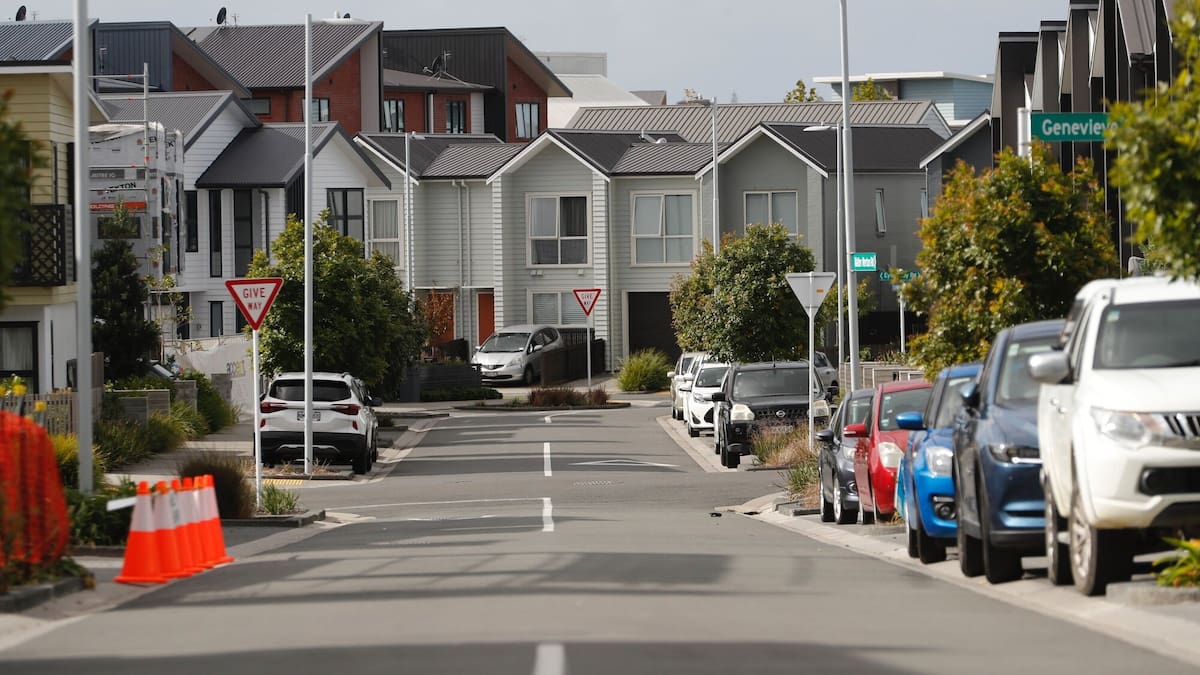
We get upset because large inner-city housing developments aren’t required to offer free car parking.
But who really pays for parking spaces? The space required to park a car and open its doors is roughly equivalent to a bedroom. If a home-buyer is stretched to buy a three-bedroom home, do they want to pay for a 4th – to park a single car?
Above-ground space is for dwellings, so if a developer must create an underground parking garage for dozens of vehicles, that enormous cost would be passed to buyers anyway.
Barb Callaghan, Kohimarama.
Impending doom?
United States warships are heading towards the Middle East, about to violate Article 2 of the United Nations Charter yet again.
Here in New Zealand, mallard ducks are predating pūteketeke, crested grebe chicks, violating the natural order of things. In ancient times this would have been read as a portent of impending doom.
Narena Olliver, Greytown.
Growing dog problem
How many more deaths and severe injuries from uncontrolled dogs will be needed before something, other than “a review”, is actually done about this growing problem?
Elena Inta, Henderson.