
NEED TO KNOW
A new plastic surgery procedure called alloClae allows patients to receive fat transfers from cadavers
The donor-derived tissue “allows surgeons to add volume in a controlled and targeted way without first needing to perform liposuction,” Dr. Bob Basu tells PEOPLE
AlloClae was launched by Tiger Aesthetics in 2025
A new plastic surgery technique allows patients to receive fat transfers from an unlikely source.
Launched by Tiger Aesthetics in 2025, alloClae is “the first structural adipose tissue designed for aesthetic body procedures, providing cushioning, volume and support,” per its website.
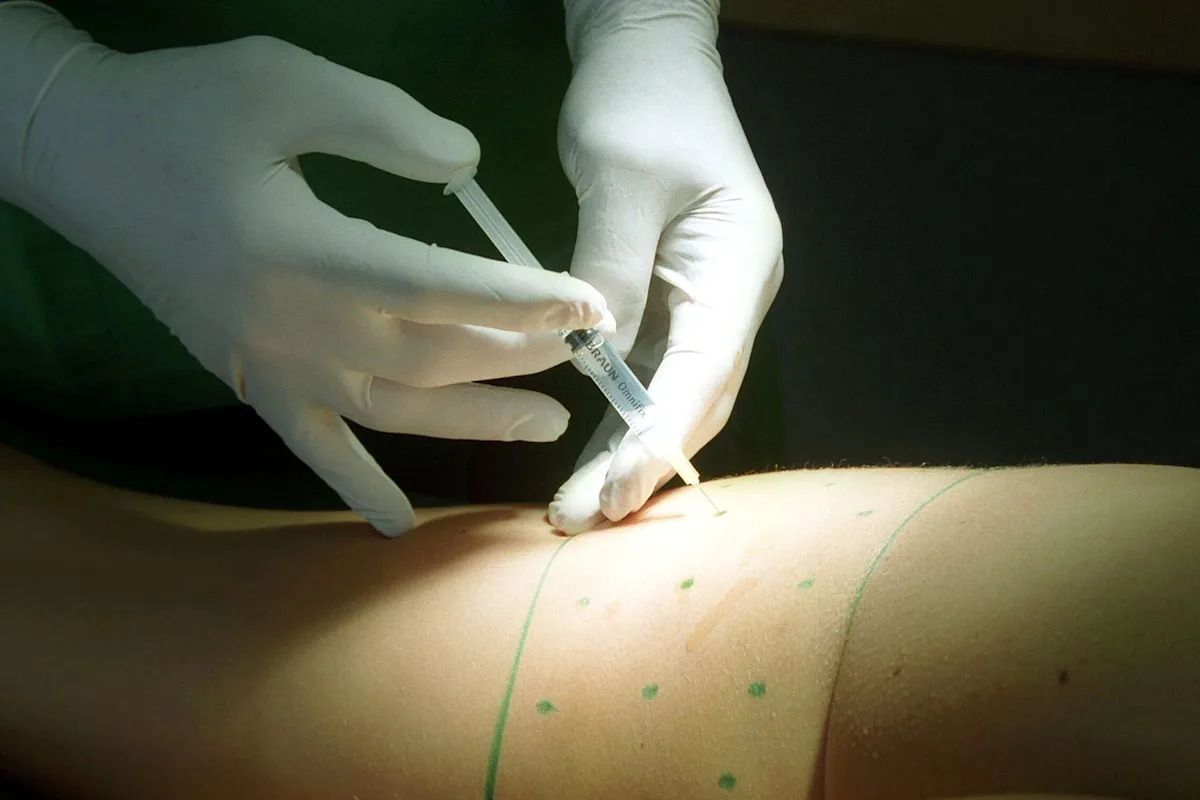
The procedure involves harvesting donor tissue from cadavers and injecting it into a patient to add volume to certain areas. The technology presents an alternative to traditional fat transfers, in which a patient’s own fat is taken via liposuction and then re-injected elsewhere, or implants.
Houston-based plastic surgeon Dr. Bob Basu of Basu Plastic Surgery tells PEOPLE that since the rise of GLP-1s as a weight loss solution, many patients don’t have enough of their own fat to use in such procedures. It can also provide more subtle results.
 Stock photo of a needle
Getty
“Because it is donor-derived and ready to use, it allows surgeons to add volume in a controlled and targeted way without first needing to perform liposuction,” he explains. “This can potentially support more subtle, incremental contouring, particularly in lean patients or in areas where only a modest amount of volume enhancement is desired.”
AlloClae is also done under local anesthesia, so it may be a more desirable option for those wanting to avoid general anesthesia or the downtime it requires.
“Treatment is typically performed as an in-office procedure under local anesthesia,” Dr. Basu says. “The product is placed beneath the skin through small access points using a needle or a small cannula, depending on the area being treated. Procedure time varies based on the treatment area and the amount of product used.”
He adds that “the material is carefully layered to allow the surgeon to enhance contour and shape in a controlled and precise way.”
The donated tissue, Dr. Basu explains, is derived from donated cadaveric human adipose (or fat) tissue that is recovered through an authorized tissue donation process. Per FDA regulations, donors are required to undergo strict medical screening and laboratory testing to determine eligibility.
Never miss a story — sign up for PEOPLE’s free daily newsletter to stay up-to-date on the best of what PEOPLE has to offer, from celebrity news to compelling human interest stories.
“Donation must be properly authorized, and donors must meet specific health and safety criteria for this type of tissue,” he says. “These requirements are designed to ensure safety and compliance before any tissue is processed and distributed.”
The treatment itself also has limitations, especially since it is a new procedure and its long-term effects are not known.
“It is designed for subtle volume enhancement and contour refinement, not large-scale body reshaping,” Dr. Basu says. “Patients seeking dramatic volume changes may still be better candidates for traditional fat transfer or surgical procedures.”
The surgeon also notes that not every patient is a candidate for alloClae.
“Factors such as overall health, treatment area, goals, and individual anatomy must be carefully evaluated,” he says. “As with any procedure, there are potential risks, and patients should have a thorough discussion with a board-certified plastic surgeon before proceeding.”
Read the original article on People