
Statutory net profit was $52.4m – a number that included the gain on the $1 bargain purchase of Three and compensation from Australian telecommunications firm Optus following Sky’s satellite woes last year.
Sky also revealed today a further drop in the number of Sky Box and Neon customers.
There are now 435,000 Sky Box customers, down from 448,000 in the previous six months and 464,000 in the six months before that. Sky said it had slowed its customer and revenue decline. Revenue was now $226m from these customers, down from $230m in the previous six months and $240m a year earlier.
The number of Neon customers has fallen more dramatically to 215,000 – a 17% drop compared to the previous six months.
Sky blamed the drop on the lack of acquisition- and retention-driving content.
Nevertheless, revenue from Neon subscriptions was stable over that period, around $26m, and up $1.3m year-on-year as a result of Sky increasing its prices.
The number of Sky Sport Now customers grew to 170,000, up from 150,000 in the previous six months, and revenue for the six months was $40m.
Sky told investors that it had recovered $8.2m in costs from Optus, after its satellite woes last year in which thousands of customers were left with scrambled pictures and a less-than-optimal service.
There were some warning signs in the half-year result: linear advertising was “softer than expected” since the acquisition of the loss-making Three and digital assets such as Three Now for $1 in a debt-free deal last year.
Sky said that, excluding the benefits of that deal, operating revenue was down 1.3%.
Today’s half-year result comes after a busy and turbulent period for Sky. It is in the middle of a major restructuring across various teams, as it fully merges Three into its operation.
“The first half of FY26 marks an important step forward for Sky,” said chief executive Sophie Moloney.
“The combined business is already demonstrating the increased reach and revenue diversification we sought, while also maintaining strong cost control.
“Although the economic environment remains challenging, Sky is well positioned for earnings growth from FY27.”
She said the Three acquisition was a “well-structured deal for Sky”.
“It’s not often you get to acquire an asset for $1 and significantly strengthen the balance sheet at the same time, as is also evidenced by the gain on bargain purchase of $34.4m we report today, reflecting the fair value of the assets acquired.”
She said integration was advancing as planned, with $3.2m of cost savings in the first half. This is expected to be between $3m and $5m for the full year.
Sky TV chief executive Sophie Moloney and chairman Philip Bowman. Photo montage / Oliver Rusden
As Media Insider reported this week, there has been sadness, anger and resignation among some of those impacted by the sales team cuts and a nagging sense for some that former Three staff have been given preferential selection for new roles.
Much of the anger stems from the viewpoint that former Three staff had come from a loss-making company, whereas Sky had been building its advertising revenue strongly before the Three acquisition, albeit off a lower base.
Moloney said: “While an integration of this scale is complex, our technology team is ‘match fit’ from the significant satellite migration last year and making good progress towards our August 2026 timeline.
“From a crew perspective, bringing teams together across Sky and Sky Free is an important milestone for our combined business, but also one that we’re approaching with care and respect for our people.”
Moloney said that, while linear advertising was “softer than expected”, the acquisition of Three meant Sky’s overall revenue market share had grown to 35% of the linear TV segment.
Sky announced an interim dividend of 15 cents per share.
Sky said that free cash flow was “significantly higher” than the prior period, with an increased cash balance of $100m at December 31.
“Sky will review broader capital management options following the successful integration of Sky Free and will update shareholders at the annual results announcement in August.”
Outlook
Sky said it expected trading conditions “to remain challenging in the near term”.
For the full year, it was narrowing its guidance to revenue of $820m–$835m and ebitda of $145m–$160m, and a dividend of at least 30 cents per share.
“Although the economic environment remains uncertain, earnings growth is expected to continue from FY27, and we remain confident in our ability to deliver at least $10m of incremental ebitda by FY28 through delivery of synergies across the group,” Moloney said.
Sky shares opened at $3.25 today.
Programming
The broadcaster finally announced last week one of the worst-kept secrets in New Zealand media, despite Sky’s constant refusal to confirm it: the loss of its exclusive deal for HBO Max entertainment content on its Neon channel.
Sky said today that it had made a “disciplined decision” not to renew the deal on a co-exclusive basis, and talked up an expanded deal with Paramount.
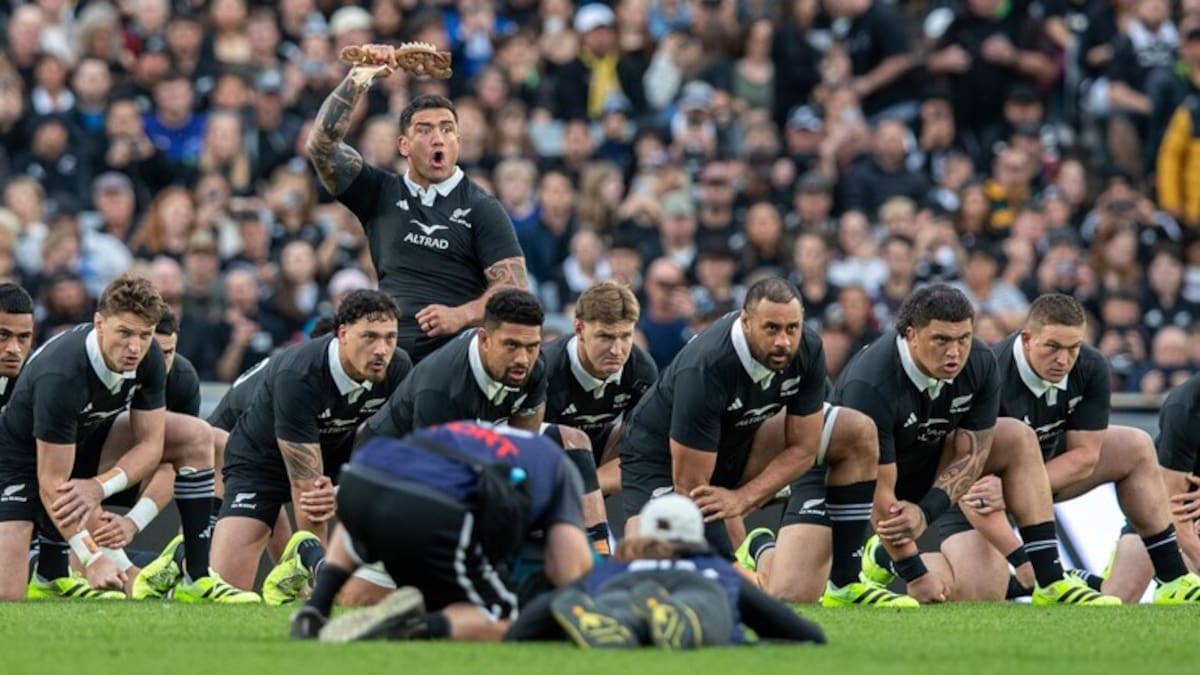
Other key milestones were the renewal of rugby rights for another five years and the renewal of Formula 1 rights.
Financial result
The pay TV operator’s result today compares with its 2024-25 half-year result reported last February – a net-loss-after tax of $1.7m (adjusted to a $10.9m profit) on the back of revenue of $385m.
Forsyth Barr analyst Ben Crozier had expected total revenue for the six months to be around $417.5m.
Editor-at-Large Shayne Currie is one of New Zealand’s most experienced senior journalists and media leaders. He has held executive and senior editorial roles at NZME, including Managing Editor, NZ Herald Editor and Herald on Sunday Editor, and has a small shareholding in NZME.