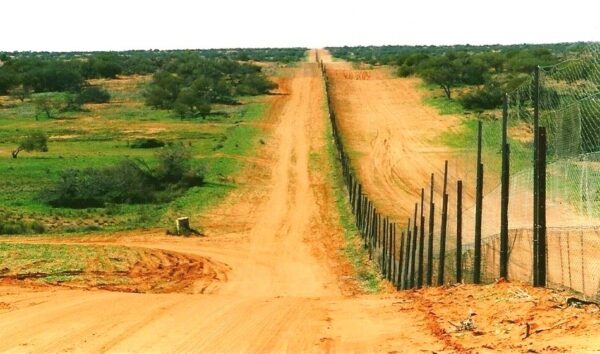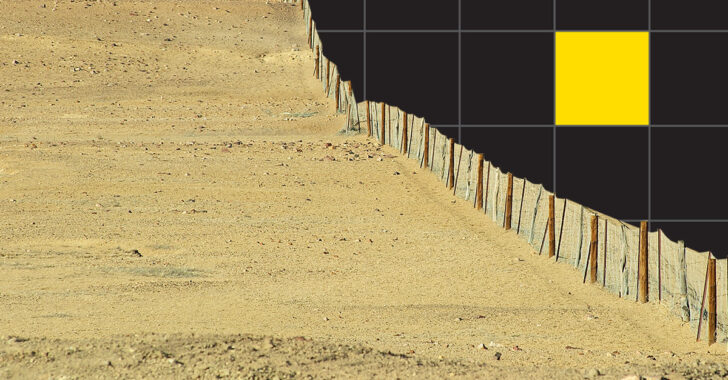
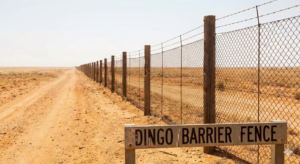
The longest continuous fence in the world runs over 5,000 kilometers across the southeastern corner of Australia. The Dingo Barrier Fence is a simple wire structure, but this unassuming boundary has fundamentally transformed the ecology of an entire country.
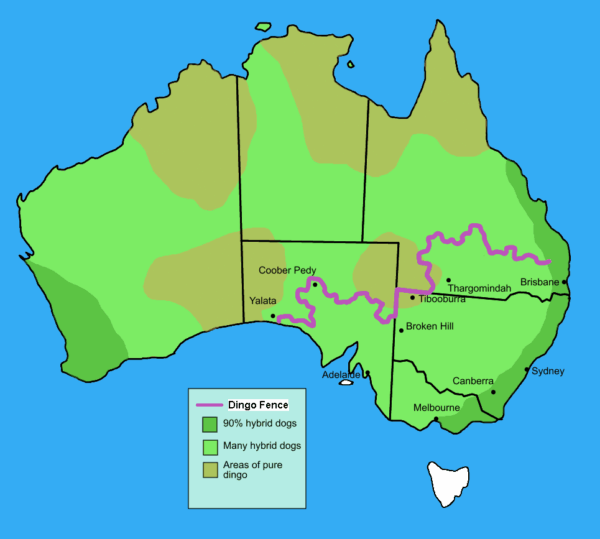
This massive barrier was originally built as part of an ill-fated effort to contain an invasive rabbit population that had been introduced by British colonizers. The fence didn’t control the rabbits at all, but soon it was given a new purpose. As the wool industry boomed and expanded into the harsh interior of the continent, farmers faced heavy livestock losses from Australia’s apex predator: the dingo. To protect the lucrative sheep flocks, the government linked and raised the old rabbit fences and other barriers to create an enormous dingo-free zone where sheep could flourish.
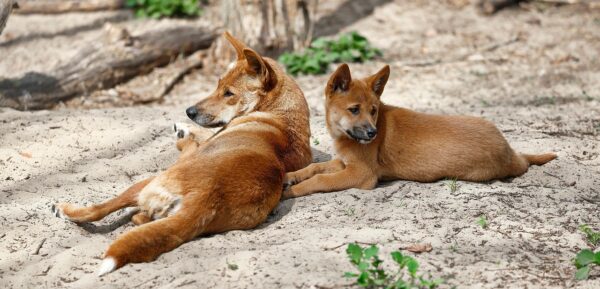
The dingo fence split the Australian ecosystem in two. On the dingo-free side, populations of kangaroos, feral cats, and foxes have exploded. This unchecked population growth has led to severe overgrazing, threatening native marsupials and drastically altering the vegetation. The fence also interrupts natural migration patterns and frequently traps native wildlife. This is the environmental toll paid to sustain an agricultural sector that no longer dominates the national economy as it once did.
 Despite the environmental cost, removing the dingo fence remains a political third rail. The fence is seen as an important symbol of Australia’s agricultural heritage. However, in recent decades public perception of the dingo has improved. They are no longer seen as feral pests but as a distinct, native species that historically coexisted intimately with Aboriginal people. On k’Gari, a UNESCO World Heritage island off the coast, dingoes are legally protected and roam freely. Local Aboriginal rangers work to educate hundreds of thousands of annual visitors on how to safely share the landscape with these wild animals by utilizing traditional, nonlethal management methods.
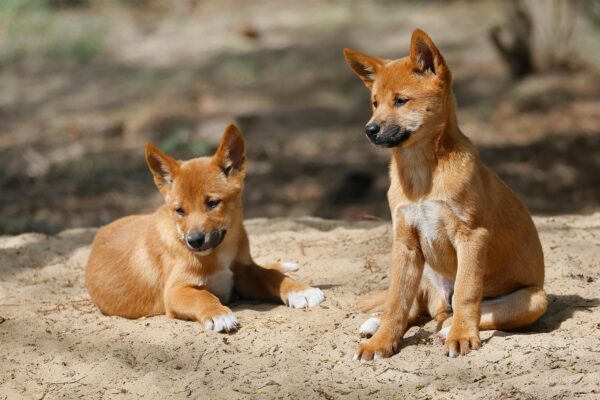
Still, heavy tourism on k’Gari has habituated many of the island’s dingoes to humans, leading to dangerous encounters and tragic fatalities. When attacks occur, the government often responds with lethal culls, sparking fierce pushback. Conservationists and Indigenous groups argue that killing the dingoes reduces critical genetic diversity and punishes the animals for their natural behavior. The ongoing struggle on the island highlights the broader, complicated challenge facing Australia: finding a way to safely coexist with a beautiful, dangerous predator in its only native home.