
Floreana Island, Galapagos, Ecuador —(Map)
For the first time in roughly 150 years, giant tortoises have begun roaming Floreana Island in the Galapagos Islands again. The tortoises were released last Friday. It’s a big step in restoring the island’s natural environment, and is part of a larger project to return several other animals to the island.
The Galapagos Islands
The Galapagos islands are a special group of islands 600 miles (1,000 kilometers) off the coast of Ecuador. Because the islands are so far from land, they are home to many plants and animals that can’t be found anywhere else in the world. Many of the islands, like Floreana, have species that are found only there.
Floreana Island used to be home to its own species of giant tortoise. But because the Galapagos is in the middle of the sea, it has long been a stopping place for sailors. In the 1800s, these tortoises were hunted for food by sailors, pirates, and settlers. In time, the species died out.
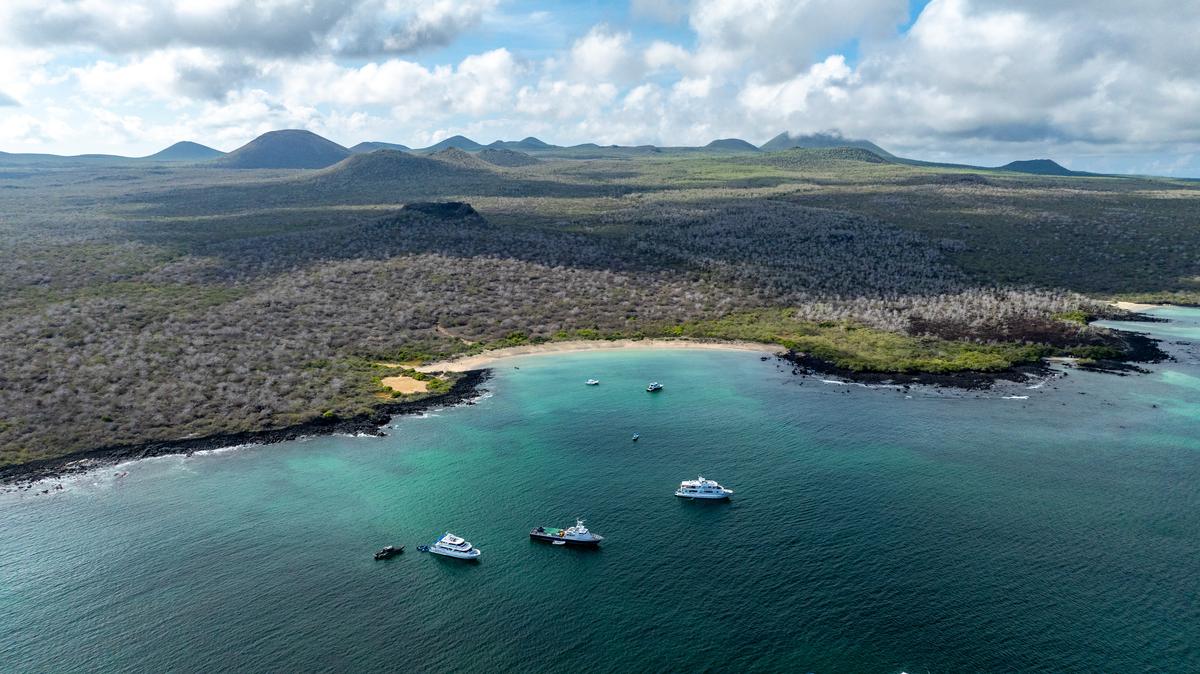 Floreana Island (above) used to have its own species of giant tortoise. But in the 1800s, the tortoises were hunted for food by sailors, pirates, and settlers, and the species died out. Now, for the first time in 150 years, giant tortoises are back on Floreana.
(Source: David Liberio/Galápagos Conservancy, via Island Conservation.)
Sailors and pirates also brought animals that weren’t from Galapagos, like rats, cats, and goats. Over time, these “introduced” animals have wiped out or threatened many of the animals that make Galapagos special.
But the Galapagos National Park and other groups have been working to protect the islands and the special plants and animals that live there. Between 1997 and 2006, experts worked to get rid of the larger introduced animals on many of the Galapagos islands.
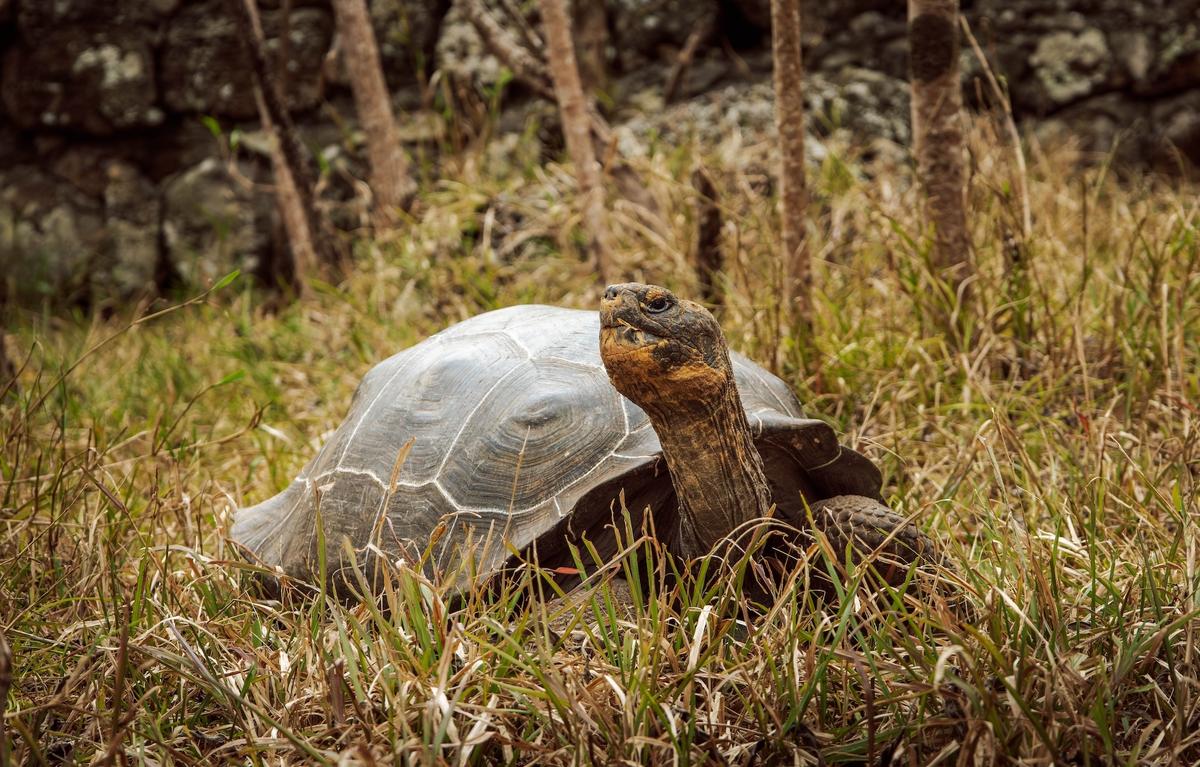 The original Floreana tortoises died out. But in 2008, some tortoises were discovered on Isabela island that had DNA which was very similar to that of Floreana tortoises (above). Since then, scientists in Galapagos have raised over 600 of these young tortoises.
(Source: Galapagos Conservancy, via Island Conservation.)
In 2023, a special effort on Floreana also helped get rid of the rats and wild cats. This has made a big difference. The numbers of several native bird species are already increasing. And the Galapagos rail, a bird which hadn’t been seen on the island for nearly 200 years, has been spotted again.
Removing the introduced animals also made it safe for tortoises to be returned to Floreana. You might be wondering how Floreana tortoises could be returned if they had already died out. As they say, it’s complicated.
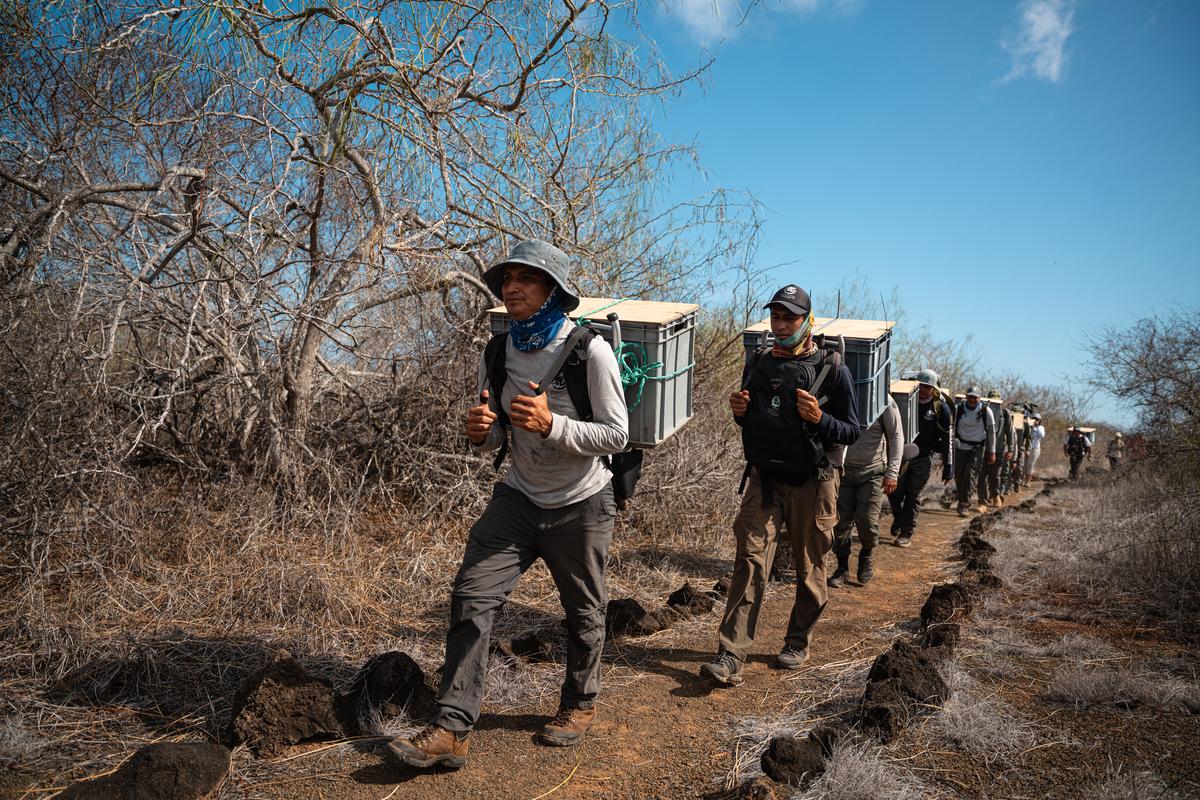 The young tortoises, aged 8 to 13, weighed between 10 and 40 pounds (4.5-18 kilograms). Workers from the park carried the young tortoises (above) to release them in areas where they’re likely to do well.
(Source: Carlos Espinosa/CDF, via Island Conservation.)
In 2008, some tortoises were discovered on Isabela Island that looked very much like Floreana tortoises. Testing showed that their DNA was very similar to that of Floreana tortoises. Since then, scientists in Galapagos have raised over 600 young tortoises, working to make sure the tortoises have as much Floreana tortoise DNA as possible.
Last Friday, 158 of these hybrid (mixed) Floreana giant tortoises were released onto the island. The young tortoises, aged 8 to 13, weighed between 10 and 40 pounds (4.5-18 kilograms).
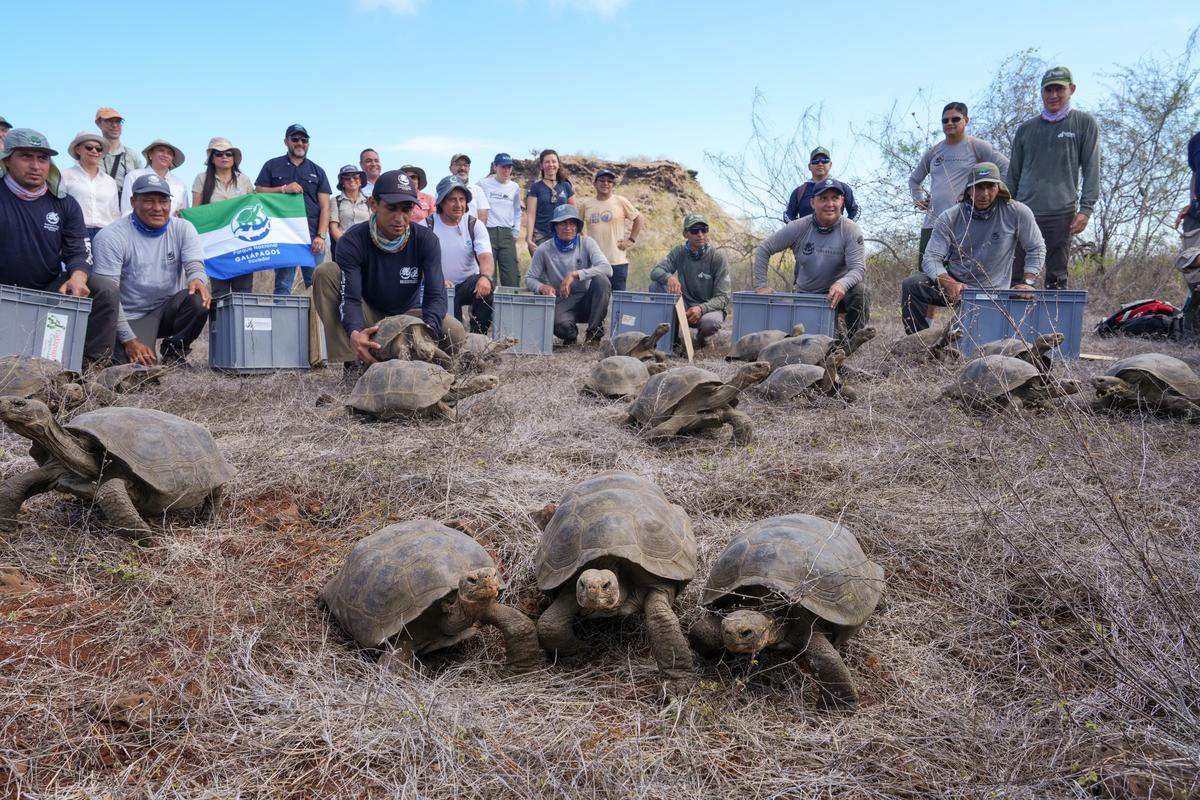 Last Friday, 158 of these hybrid (mixed) Floreana giant tortoises were released onto the island. Many of the tortoises had tracking devices placed on their shells. This will allow scientists to keep an eye on how the tortoises react to their new home.
(Source: David Liberio/Galápagos Conservancy, via Island Conservation.)
Workers from the park carried the young tortoises to release them in areas where they’re likely to do well. Many of the tortoises had tracking devices placed on their shells. This will allow scientists to keep an eye on how the tortoises react to their new home.
Scientists expect that the tortoises will play a big part in restoring the island’s environment. As they grow, the tortoises will help clear out areas that are thick with plants, help develop muddy areas into ponds, and spread seeds from plants.
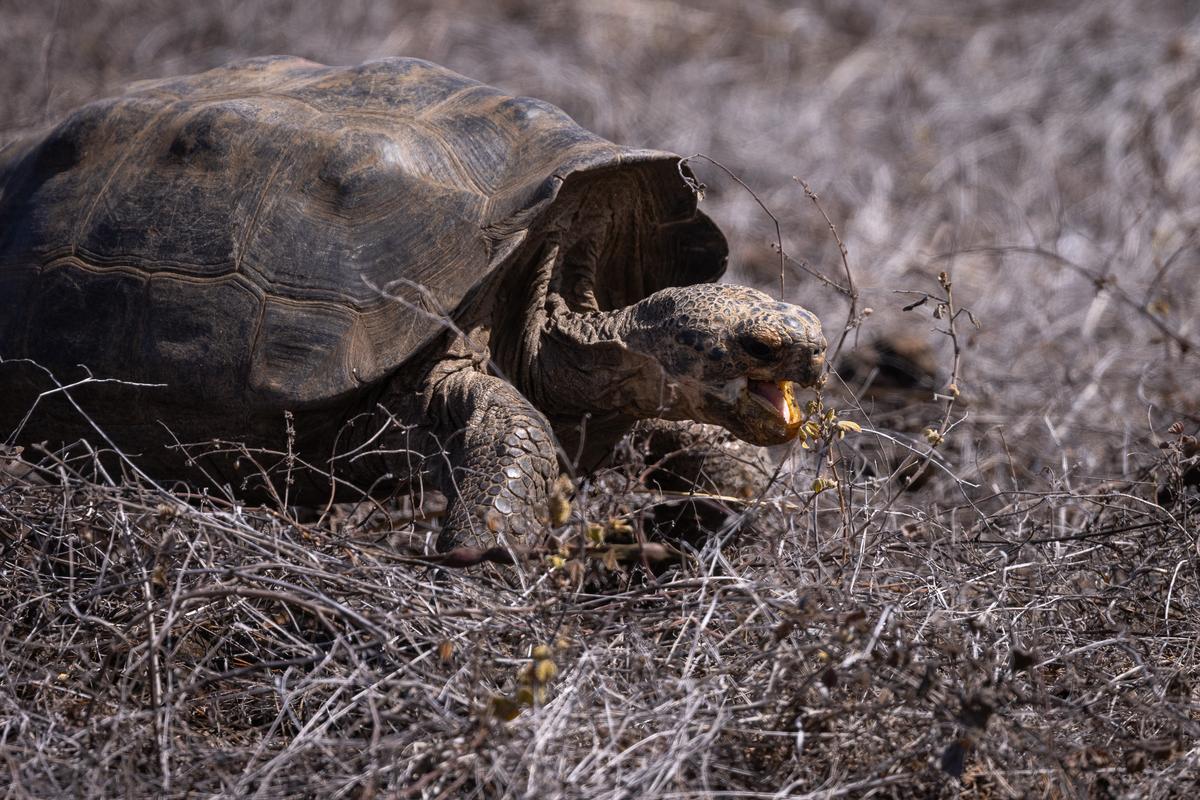 Scientists expect that the tortoises will play a big part in restoring the island’s environment. The tortoises will help clear out areas that are thick with plants, help develop muddy areas into ponds, and spread seeds from plants. Above, a Floreana tortoise eating in its new home.
(Source: Marlondag/iLCP_Jocotoco, via Island Conservation.)
The project is a joint effort involving many different groups, including the Galapagos National Park Directorate, the Charles Darwin Foundation, and others. In all, the plan aims to bring 12 different animal species back to Floreana.
Last week marked an important step toward that goal. “Seeing giant tortoises back on Floreana is a truly spine-tingling moment,” said Dr. Jen Jones, who works for the Galapagos Conservation Trust.
😕
This map has not been loaded because of your cookie choices. To view the content, you can accept ‘Non-necessary’ cookies.