

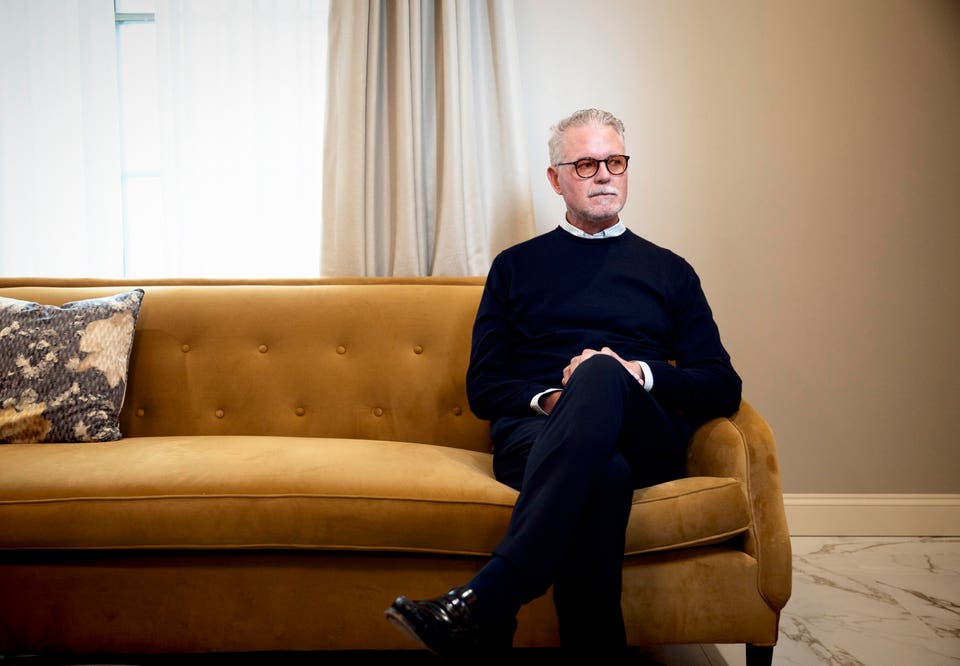
Actor Eric Dane, who recently died from ALS
The Washington Post via Getty Images
Actor Eric Dane’s recent death from amyotrophic lateral sclerosis (ALS) has drawn national attention. Public tributes celebrated his career, while conversations surrounding his family’s GoFundMe campaign have underscored the financial realities many families confront after this diagnosis.
Beyond the headlines lies a deeper and more urgent discussion: what life—and death—look like for patients living with ALS.
To better understand both the clinical and scientific landscape, I spoke with Dr. Marissa “Maria” Mapa, an internal medicine and palliative care physician who treats patients with ALS, and Dr. Melanie Leitner, chief scientific officer of the ALS Investment Fund, about current and future research directions.
What Happens to The Body During ALS?
ALS is a progressive disease that affects the body’s ability to move. It attacks the nerve cells that send messages from the brain to the muscles. As those nerve cells fail, the muscles grow weaker and smaller from lack of use, resulting in gradual loss of independence. Simple actions—buttoning a shirt, walking across a room, holding a fork—become difficult. Eventually, patients with ALS lose the ability to speak, swallow, and breathe on their own. Though the body weakens, the mind often remains intact, making the progression especially devastating for patients and their families.
The CDC estimates roughly 30,000 people in the U.S live with ALS. It affects more men than women and is usually diagnosed between ages 55-75. Most patients survive 2-5 years after symptoms develop.
What ALS Looks Like at Home for Patients?
Mapa described the course of ALS in stages. Early ALS are often subtle and intermittent: dropping objects, shaking while holding a coffee cup, tripping more often, difficulty rising from a chair. Mid-stage disease brings more consistent motor weakness. In advanced stages, patients may be unable to eat independently, breathe without assistance or move independently.
“I had a patient at the end who could not do anything but blink,” Mapa recalls. “That’s how she communicated.”
Unlike many other terminal illnesses, ALS often leaves cognition intact. “The saddest thing is their mind is fully intact,” Mapa says. “They can’t do anything. They can’t talk. They can’t breathe. They’re totally in there.”
That awareness can amplify both the emotional and logistical burden for families. She tells by mid-stage disease most patients would already qualify for 24 hours of support.
One practical rule of thumb Mapa offers families considering full-time care: “If you were to fall and there was a fire, could you get yourself out of the house? If you cannot get yourself out of the house, you need someone there with you 24 hours a day.”
Dr. Marissa “Maria” Mapa
Dr. Marissa “Maria” MapaSupporting ALS Patients through Death
Dr. Maria Mapa says the hardest part of her job is seeing patients seek palliative care and hospice too late. Many people misunderstand palliative care as “giving up,” when in reality it is about optimizing comfort, supporting quality of life, and guiding difficult decisions throughout the course of the disease.
“You can have palliative at the beginning of the diagnosis,” she explains. “You could start talking to ALS patients about what to do when you can’t breathe anymore, or when you can’t eat anymore.”
Early palliative care allows patients to express their wishes directly, helping families make decisions in line with their loved one’s values. Without these conversations, loved ones often end up “planning for them,” rather than planning with them.
Hospice is a specific form of palliative care for patients nearing the end of life, typically when life expectancy is six months or less. It provides intensive in-home support, covers medications and equipment, and helps reduce the financial burden for families. Yet many ALS patients enroll later than ideal. “I see ALS patients get onto hospice much later than they could benefit,” Mapa says. Common triggers for hospice include difficulty eating or breathing, unintentional weight loss, frequent hospitalizations, and growing dependence in daily activities.
Early discussions, often through palliative care, also help families navigate some of the most challenging decisions. “Few decisions are as emotionally charged as whether to place a feeding tube or pursue ventilator support,” she says. “Food is life, right? Food is comfort,” Mapa says. For some, losing the ability to taste or enjoy food can profoundly affect quality of life. Feeding tubes do not change the underlying disease and can introduce complications—aspiration pneumonia, infections, or repeated hospitalizations—making the final months less peaceful.
“The better way,” Mapa emphasizes, “is as soon as the person is diagnosed, get a palliative goals-of-care conversation on the books.” Advance directives, health care proxies, and clear discussions about what quality of life a patient would—or would not—accept help patients set the tone for their journey and guide families in decision-making.
The Financial Toll of ALS
Depending on insurance coverage, the financial strain for ALS patients is real.
Many are younger, privately insured, and not yet eligible for Medicare. “They’re kind of in the donut hole,” Mapa says. “They make too much to be eligible for some services, but they don’t make enough to cover them all.”
Continuous, in-home caregiving can cost $15,000 to $30,000 per month, while facility-based care may run $8,000 to $10,000 monthly. Geography and service type affect pricing. Mapa shares some families purchase their own equipment, medications, feeding supplies and home modifications. “Costs escalate quickly,” she shares.
According to ALS.org, 1 in 10 ALS patients or caregivers lose health insurance after diagnosis, often due to job loss. Forty-two percent work to maintain coverage, and 25% report borrowing money or going into debt.
Hospice, when patients qualify, can ease that burden by covering medications, equipment and in-home support. Yet many ALS patients enroll later than they could benefit. “I see ALS patients get onto hospice much later than they should or could reap the benefits from.” Eligibility for hospice typically comes when life-prolonging treatments are no longer effective and life expectancy is six months or less.
Common hospice triggers include difficulty eating or breathing, unintentional weight loss, frequent hospitalizations, and growing dependence in daily activities.
Why Is A Cure for ALS Challenging?
Dr. Melanie Leitner
Dr. Melanie Leitner
Dr. Leitner notes that ALS shares challenges with other complex neurodegenerative diseases like Alzheimer’s and Parkinson’s.
“There is currently no agreement on a single cause,” she adds. “Similar to cancer, there are likely multiple contributors.” She describes three key reasons we have yet to pinpoint a cure.
“ALS is biologically complicated and manifests differently in different people—even within the same family,” she says. More than 40 genes have been linked to ALS, and progression can be rapid for some or extremely slow for others.
Even when promising drugs are identified, delivering them to the brain is difficult due to the blood-brain barrier. “It is not easy to develop drugs that are able to enter motor neurons in sufficient quantities to create effect.” The barrier that serves as a shield to keep away infection and toxins, also can keep out therapeutics.
And unlike other diseases, “scientists don’t have good ALS models to screen for or test drugs in development,” she adds. So what works in cells or animals may not translate to humans.
Still, there is cautious optimism. While 85–90% of cases are sporadic, roughly 97% share a common feature: abnormal clumping of the protein TDP-43 in the brain and spinal cord.
“If we can design drugs that restore normal TDP-43 function and prevent further dysfunction, we may be able to stop ALS from progressing,” Leitner says. Though lost motor neurons cannot yet be replaced, targeting this shared pathway could slow or halt the disease for most patients.
Beyond The Headlines
As research advances toward therapies that may slow or one day halt progression, patients and families face deeply personal decisions about quality of life, dignity, and cost. For physicians, like Mapa, the message is clear: start goals-of-care conversations early. For researchers, like Leitner, there is continued promise in science.