
The national average was about eight per 10,000.
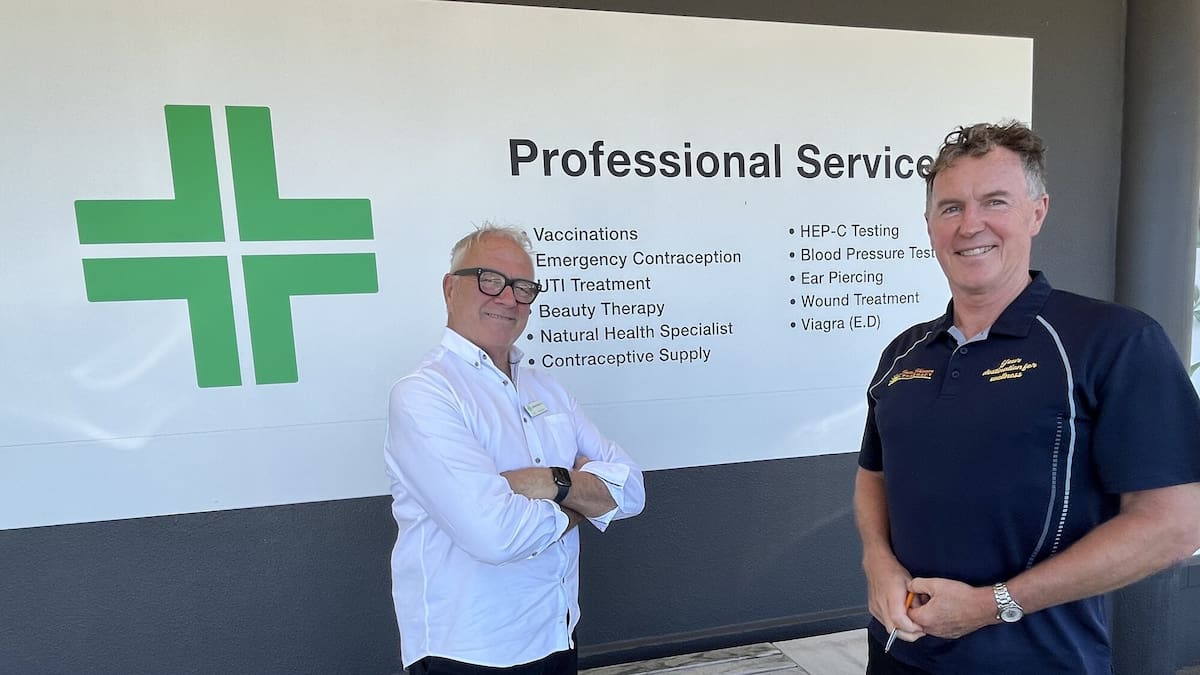
Shivnan, of Sean Shivnan Pharmacy, and Campbell, of Pharmacy 53, said this was not new.
“Some are worse-affected than others, but places like Southland, the West Coast, the East Coast, Northland and Whanganui are all problematic in terms of pharmacist numbers because most graduates want to go to the main centres,” said Campbell.
He suggested incentives to attract graduates to the regions.
Both pharmacists said it would be costly to bring in short-notice locums from other areas to meet staffing gaps.
“Travel, accommodation and a high hourly rate are what we would have to pay. So that’s a stretch for most pharmacies because the funding model is not perfect by a long shot,” said Campbell.
In response to concerns, Health Minister Simeon Brown said: “I greatly value the work pharmacists do as trusted health professionals.
“They are a vital part of our communities and help relieve pressure on other parts of the health system by being a first port of call for many people seeking care.
“The Government is committed to strengthening the health workforce, including pharmacy, and improving access to care for New Zealanders.”
Pharmacy technician shortage
Campbell and Shivnan said the pharmacy technician workforce was also under pressure.
“Every pharmacist would say a good technician is worth their weight in gold,” said Campbell.
They encouraged high school students to train as pharmacists or technicians.
A technician who had attended Gisborne Boys’ High School was already working in Pharmacy 53, along with a technician from the Philippines.
They also had pharmacists trained over time from countries such as India, but there were processes to follow.
One pharmacist in training was working in both pharmacies on different days.
“So that’s an example of pharmacies working together,” said Campbell.
Increasing workload and talk of deregulation concerns
The Government asking more of pharmacists and the potential deregulation of ownership were other issues raised by the two pharmacists.
“The Government wants pharmacists to do more, to provide more services, and that’s to take the pressure off GP practices.
“We’ve done that with vaccinations. We’re doing that now with minor ailments. And we have been successful with that new service, after-hours service, where the doctors are manning that on a roster to take some pressure off the ED department at the hospital,” said Campbell.
“The problem we’ve got with the lack of pharmacists [is] the workforce is stressed out. They tell us that burnout is a problem.”
Astuti Balram, Health New Zealand’s acting director of living well, acknowledged that community pharmacy was experiencing workforce pressures.
“In response, Health New Zealand has allocated workforce development funding to support pharmacists in gaining additional qualifications, and funding pathways to become prescribing pharmacists,
“In addition, we are focused on the growth of other priority pharmacy workforces, particularly pharmacy accuracy-checking technicians.
“We are also working with the sector on implementing a $5 million innovation fund on enhanced community services,” she said.
Health New Zealand had also agreed to undertake a sustainable funding review of the community pharmacy sector this year.
The proposed Medical Products Bill, planned to be introduced to Parliament this year, would remove restrictions on the ownership of community pharmacies if passed into law.
Campbell said talk of deregulating pharmacy ownership was concerning.
“The problem with deregulation is that when it comes down to profit being more [important] than patient care, we’re not in agreement with that.”
12-month prescriptions
Shivnan had concerns around the 12-month prescriptions introduced on February 1 for some patients with stable, long-term conditions, rather than three-month prescription times.
“The GPs need to see their patients at their discretion. They may want to see them more than once a year. And that’s understandable. The education around the 12-month prescription has been poor because people think, ‘I’ve seen the doctor’ or ‘I’ve done an online consult, it’s going to be for 12 months’.
“The doctor needs to measure blood pressure, needs to check their heart rate, all sorts of things that have to come in on a face-to-face consult. So, there’s a mixed message that’s been sent, [that] you’re going to get a script for 12 months.”
Time was being taken up in explaining this to patients.
“Once again, it’s a situation where this initiative hasn’t been consulted [on] with the key stakeholders,” said Campbell.
In response to the 12-month prescription concerns, Brown’s ministerial office told the Gisborne Herald in a statement: “This decision follows clinical advice – including from pharmacists – that it will improve convenience and continuity of care for patients with stable, long-term conditions such as asthma, diabetes, epilepsy, and high blood pressure.
“The minister has always been clear that 12-month prescriptions are not for everyone. Whether one is appropriate remains a clinical decision between a GP and their patient, based on what is safe and suitable for that individual.
“Funding has also been set aside to ensure pharmacy income is maintained as the new 12-month prescriptions become available, with Health New Zealand working with the sector on the development of a permanent, system-wide reimbursement model to deliver this.”
Balram said Health New Zealand had been working with community pharmacies and primary-care providers to prepare and support them through the 12-month prescription initiative.
“While there were initial concerns of the financial impact on community pharmacy with this initiative, Health New Zealand has committed that there is to be no adverse impact for community pharmacy from the dispensing fees.”