

Your support helps us to tell the story
From reproductive rights to climate change to Big Tech, The Independent is on the ground when the story is developing. Whether it’s investigating the financials of Elon Musk’s pro-Trump PAC or producing our latest documentary, ‘The A Word’, which shines a light on the American women fighting for reproductive rights, we know how important it is to parse out the facts from the messaging.
At such a critical moment in US history, we need reporters on the ground. Your donation allows us to keep sending journalists to speak to both sides of the story.
The Independent is trusted by Americans across the entire political spectrum. And unlike many other quality news outlets, we choose not to lock Americans out of our reporting and analysis with paywalls. We believe quality journalism should be available to everyone, paid for by those who can afford it.
Your support makes all the difference.Read more
Social Security payments, as we know them, are on life support.
The Old-Age and Survivors Insurance trust fund, which is used to help the U.S. government cover Social Security payments to retirees, will run out of money in six years, according to the Congressional Budget Office, which analyzes and estimates the spending needed for legislation and policies.
That’s one year sooner than what was projected in a 2025 analysis by the Social Security Board of Trustees.
“Social Security is not crashing to the ground, but it is heading for a pothole,” said Nick St. George, owner of North Carolina-based St. George Wealth Management.
With the trust fund running out in just a few years, it’s important for retirees to know why the money is disappearing and what they need to do about it.

open image in gallery
Retirees may have to recalculate their retirement plan, as Social Security payments could be lowered when a key trust fund runs out in 2032 (Getty Images)
Why the money is running out?
Social Security’s original design when it launched in 1940 was to take a cut of the workforce’s pay – 7.2 percent between employers and employees – to pay out benefits to those who were of retirement age.
The concept worked well when enough workers were paying into the system to cover the cost of the benefits received by the nation’s retirees. In 1960, for example, there were five working-age people for every one retiree, St. George said. But now? It’s a much different picture.
“Today that number is more like 2 or 3,” he said. “Fewer workers means fewer contributors to the system to support each beneficiary.”
Additionally, people are living longer, which means they’re receiving Social Security benefits for longer periods of time.
“One of the most significant changes is that there are more retirees and people are living longer,” St. George said. “The huge wave of Baby Boomers has become a reality, and a lot of people are earning a paycheck for more years in retirement.”
As a result, the money coming into Social Security isn’t covering what’s going out, and the government he Old-Age and Survivors Insurance trust fund has to cover the gap.
“When the [funding] balance is not sufficient to pay full monthly benefits, Social Security then draws money from the trust fund, much like a household savings account would be drawn upon when the monthly income is not sufficient to cover all of the needed expenses,” St. George said.
What it means for retirees
While the federal projection isn’t doom for retirees’ Social Security, St. George pointed out, it could very well have an impact on how much their monthly benefits are.
Without the fund, the government would cover the cost of payments with its Social Security tax revenue. However, because that revenue isn’t sufficient to pay retirees, adjustments will need to be made.
“If the [trust] fund runs out, benefits would have to decrease to match incoming revenue from payroll taxes,” Beca Life Settlements CEO Yehuda Tropper told The Independent in an email.
open image in gallery
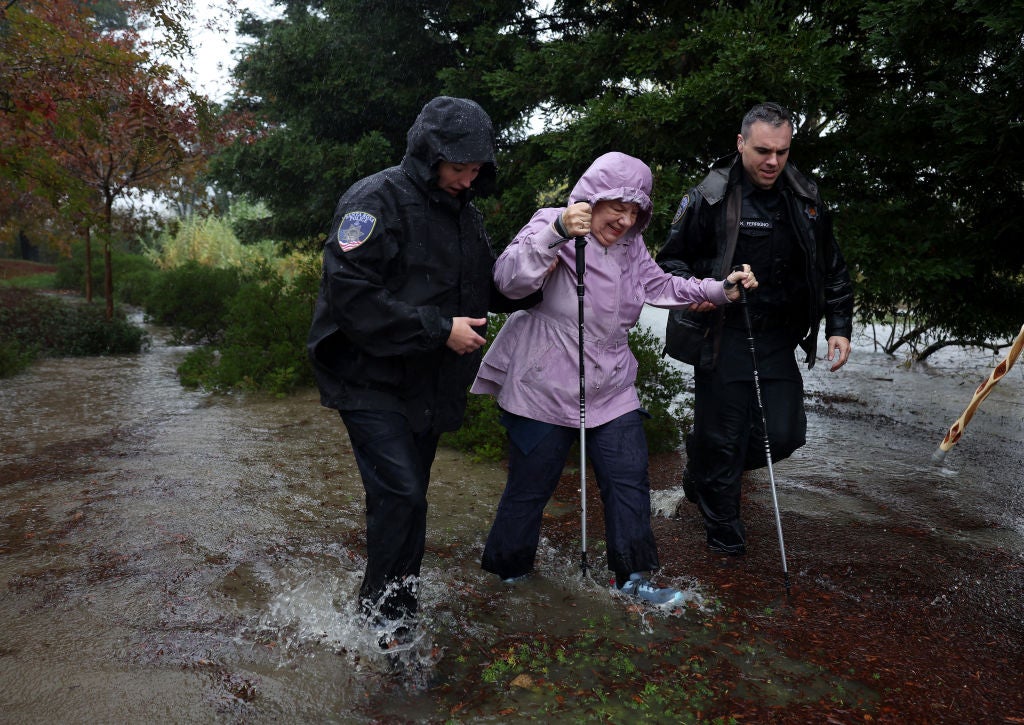
Those retiring in the next few years will have to wade through a murky situation, as their payments could be reduced after key federal funds run out (Getty Images)
How much would the pay cut be? Around 20 percent to 25 percent, St. George said.
So, if a retiree is earning $3,000 a month, their payment could drop to as low as $2,250, he said.
Start planning now
The government can make changes to the trust fund so it lasts longer, but that would include controversial decisions like raising the retirement age, raising the payroll taxes that fund Social Security or modifying the formula the government uses to calculate a retiree’s monthly payment, Tropper said.
Raising the retirement age, raising tax or both would likely be unpopular moves, St. George said. “The numbers aren’t hard to calculate,” he said. “The politics are.”
Therefore, future retirees should plan for reduced Social Security payments once they hit 67 years old, the retirement age, generally speaking, that qualifies for their full benefits, according to the Social Security Administration.
One step they can implement today is paying down debt with high interest rates, St. George said.
“Many of us carry some debt, and it may seem like a monumental task to start paying it all down, but tackling the high-interest debt first will save you the most money in the long run,” he said.
Future retirees can then stash that saved money away for retirement.
Another option is for workers to contribute as much as they can to their 401(k) and IRA accounts, Tropper said.
“If someone is age 50 or older, they’re allowed to contribute more annually to those accounts than younger people, and I recommend they take advantage of that,” he said.