
By Lucia Stein, ABC News
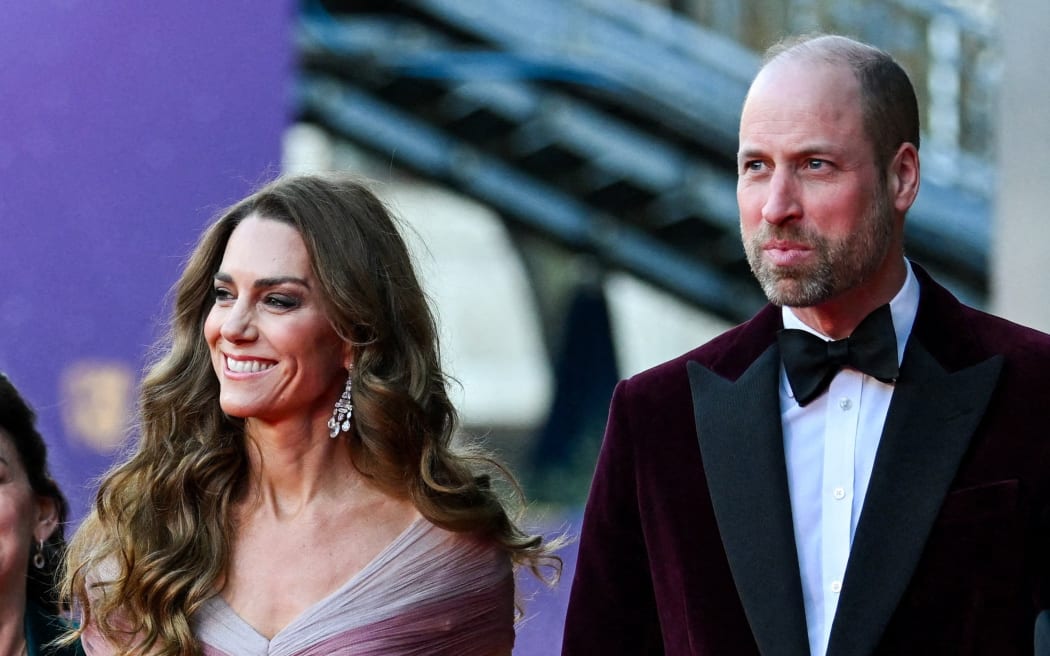
Catherine, Princess of Wales and Prince William, Prince of Wales, arrive at the BAFTA British Academy Film Awards in London, on 22 February, 2026.
Photo: Jaimi Joy / POOL / AFP
When Prince William and Princess Catherine stepped out for their first public appearance since Andrew Mountbatten-Windsor’s arrest, an innocuous question was levelled at them.
The candid response was perhaps more revealing than anticipated. The Prince of Wales was asked if he had seen the newly released movie, Hamnet, and replied that he had not because of his state of mind:
“You need to be in a quiet state. You need to be in a calm state. I’m not at the moment. I’ll save it for when I’m feeling ready,” he said.
The couple, who were attending the 2026 BAFTAs last week, did not openly talk about the prince’s uncle on the red carpet.
But the comments were interpreted by royal watchers as a thinly veiled statement on the prince’s emotional upheaval over his uncle’s connections to the late convicted sex offender Jeffrey Epstein, and his ultimate arrest last week.
Mountbatten-Windsor is facing an investigation into allegations of misconduct in public office over his time as trade envoy. Police officers continued to search his former residence, Royal Lodge, this week.
He lives in a form of exile on the King’s private Sandringham estate, stripped of his titles and his sprawling 30-room mansion, Royal Lodge, by his brother.
But his 11-hour stint in police custody may still define the reign of King Charles III.
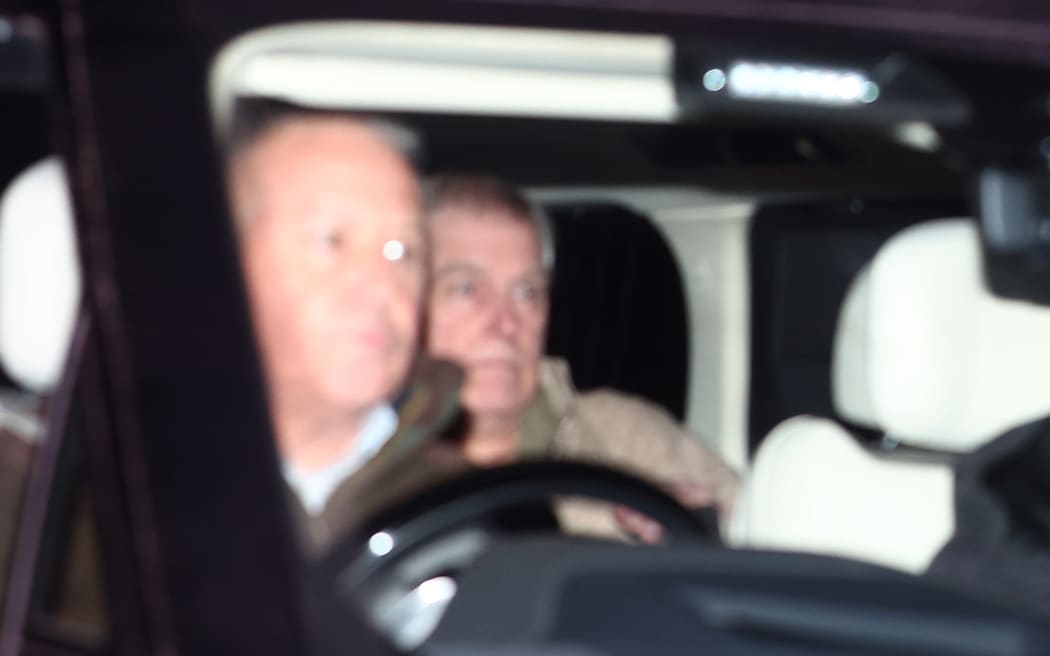
Andrew Mountbatten-Windsor is seen after leaving police custody, following his arrest on 19 February, 2026 in Sandringham, Norfolk.
Photo: Getty Images / Peter Nicholls
“This is the first real proper crisis of his reign in terms of the monarchy more generally,” Dr Craig Prescott, an expert on constitutional law and the monarchy at Royal Holloway, University of London, told the ABC.
“I think it’s both major and minor. It’s potentially minimised because they’ve effectively tried to quarantine [former] prince Andrew by removing his titles [and] really distancing themselves from him as far as they can in practice.
“…But I think it’s more likely to have a slow-burn effect on the monarchy in that there’s going to be more calls for accountability and transparency about the monarchy in general,” Prescott said.
“Because there’s a suspicion that … it was known [former] prince Andrew was at times up to no good on these trade missions.”
Two generations of monarchs have now grappled with how to best handle “the Andrew problem”.
But a scandal such as this one is likely to linger, and potentially hang like a dark cloud over the next king’s reign.
“William is frustrated because it’s still likely to be a problem on his plate when he eventually becomes King,” a royal insider told the Daily Mail.
“I’m sure the Prince and Princess of Wales have been itching to say something publicly to distance themselves but they have to be cautious because of the police investigation.”
Last year, Prince William hinted that he wanted to be a different monarch, one that would have “change” on the agenda.
It sets the stage for an almighty challenge for the future king.
He wants to modernise the monarchy, but he will have to do so after a period of crisis that does not just threaten its integrity and usefulness, but whether or not it is also good for the people of Britain and the realms over which it reigns.
How different family members confronted Andrew
As senior members of the royal family confronted the fallout of Andrew Mountbatten-Windsor’s ties to a sex offender, each generation has handled it differently.
The first was Queen Elizabeth, who tried to shield her son from the intense public scrutiny even as outrage over his association with Epstein reached a crisis point after his 2019 interview.
Queen Elizabeth’s position may now be considered, with hindsight, a black mark on her reign, according to Prescott.
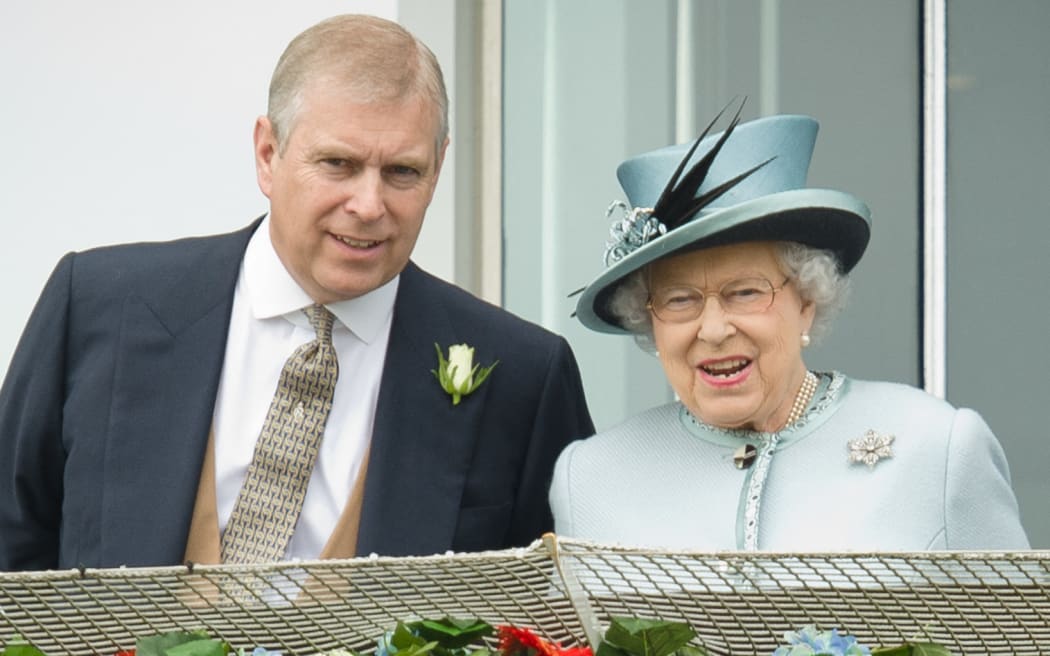
Andrew Mountbatten-Windsor speaks to Queen Elizabeth II on the Queens stand during Derby day at the Epsom Derby Festival on June 1, 2013.
Photo: LEON NEAL / AFP
“I think that’s a really curious question for historians to investigate in the years ahead: why did she just have such a fondness for Andrew over her other children?” he asked.
“… When you think about Elizabeth II and her reign as queen, this becomes … anomalous in a way, but it doesn’t make it any less difficult for Charles to deal with.”
Next was King Charles, who dithered on how to effectively punish his brother after emails confirmed Mountbatten-Windsor had lied about cutting off contact with Epstein in 2010.
What followed was a series of successive moves to strip him of his titles and patronages.
“There has been … in a sense, a threshold. Evidence has come out and he’s acted,” Prescott said.
“It’s difficult to see how he could be more proactive in that sense because … he inherited the position of Andrew [as eighth-in-line] in the royal family and it would have looked, in a sense, vindictive had he sort of taken action against him for no apparent reason.”
After Mountbatten-Windsor was arrested, the King put out an extraordinary statement that publicly pledged his support for a proper investigation, while distancing the monarchy from his brother.
Royal biographer Andrew Lownie told the ABC earlier this week that if the monarch had any idea of the former prince’s alleged misconduct while in public office, it could be the cause for an early end to his reign.
“This is a real crisis, and they don’t seem to have woken up to the seriousness of it,” he said.
Prescott said the arrest of Andrew, the first of a royal family member in 377 years, over misconduct allegations “goes against the idea of the modern monarchy that is there to do public good”.
“[It’s] not for members of the royal family to further their own private interests in effect,” he said. “And that’s in a sense, something that Andrew never really understood or got in a way that Prince William and Catherine do.”
It is his view that the monarchy will “weather this storm” and work out how to move on in the future, just as they did after Diana’s death in 1997, when the grief of a nation met the stiff upper lip of the Queen and the royal family, resulting in a torrid week that threatened to topple the monarchy.
But there is a question of whether Prince William, who has signalled he wants to be someone who brings about change, will do things differently when he is in charge.
William and Andrew’s fraught relationship
Rumours the younger prince and his uncle are far from close have swirled for years.
In September 2025, a tense exchange between Mountbatten-Windsor and Prince William at the funeral of Katharine, the Duchess of Kent, caused a minor stir.
At the time, Mountbatten-Windsor was still a prince, hoping to be welcomed back in the royal fold.
But as the funeral procession unfolded, waiting cameras turned to the royal as he attempted to engage his nephew in conversation and caught Prince William giving him the cold shoulder.
The Prince of Wales stood stony-faced as his uncle awkwardly laughed at his own joke, refusing to make eye contact.
“William has no desire to respond. In fact, he doesn’t say a single word,” ITV royal editor Chris Ship wrote of the exchange on X.
At the time, UK media had reported Prince William was working behind the scenes to boot the royal out of his sprawling grace and favour mansion, much like his father.
Lownie described the relationship between Mountbatten-Windsor and Charles’s two sons, Prince William and Prince Harry, as “a problem” in his 2025 book entitled The Rise and Fall of the House of York.
Over the years, there had been heated arguments between Prince Harry and Mountbatten-Windsor over comments the senior royal made, once prompting a punch-up between the pair before the fight was broken up.
The ties with William were not much better, according to Lownie.
There had been tensions between the two men, “partly occasioned by Andrew being rude about Kate,” he wrote.
Personality clashes and occasional squabbles are common in all families, but for royals, proximity to the throne raises the stakes of these private battles.
When Mountbatten-Windsor was the Queen’s favourite, he had a layer of protection, but that changed with her death.
‘Change on the agenda’ for Prince William
Last year, Prince William took part in a conversation with Eugene Levy on the actor’s Apple TV show and clarified his vision for his own reign once he becomes king.
The rare chat was informal, relaxed and surprisingly candid, a shift that observers interpreted to be another signal of the Prince of Wales’ desire to be a different king.
He mentioned “change is on my agenda” and that “if you’re too intrinsically attached to the history, you can’t possibly have any flexibility”.
“Clearly, the direction will be a smaller monarchy. It’ll have a different style to it. William is a bit more informal, a bit more open,” Prescott said.
“So I think all that’s … good. But beyond that, ‘what does he mean?’ is the big question.”
In the 19th century, when the royal family in the Netherlands faced a crisis, its king agreed to shift. In 1848, King Willem II gave in to the wishes of the liberal opposition and agreed to a constitution that drastically restricted royal power in favour of a representative assembly.
The change paved the way for what has been dubbed a ‘bicycle monarchy’, a more informal style of royalty that opts out of traditional ceremonies like coronations in favour of more privacy and the chance to rub shoulders with the public.
The term reportedly dates back to former Dutch monarch Queen Juliana, who famously got about town on a bike, as the majority of her subjects did.
The Dutch monarchy’s more relaxed and adaptive approach seems to more closely resemble the vision William presented for the next generation of royals.
“I think you can get a sense that on a day-to-day basis it’ll be more like a bicycling monarchy or we might even say, if you think about [William’s] interview with Eugene Levy, an e-scooter monarchy as he was going around on one,” Prescott said.
But it is not yet clear if Prince William will have room to perform this work, or if he will be forced to find a solution in light of ongoing scandals.
Even before the issues around his uncle, the royal family faced scrutiny over its two duchies, the Duchy of Cornwall and the Duchy of Lancaster, which provide Prince William with a significant income.
Overcoming bad publicity
Prescott said there has already been a shift in the approaches of Prince William and King Charles to the handling of the release of the so-called “Epstein files” and the arrest of Andrew.
As well as the King’s personal statement, William and Catherine stated earlier this month that they were “deeply concerned” by the issue and that their thoughts remained with the victims.
“I think the fact that the King issued these statements is unprecedented in that way,” Prescott said.
“They didn’t need decoding, like the Queen’s statements. She often released statements in code.”
Even with the King’s moves, Andrew Mountbatten-Windsor will likely continue to be a thorn in Prince William’s side.
And given the age difference with Charles – there is a 12-year age gap between them – the former prince may even be around for Prince William’s coronation.
“William might be the changemaker the country needs, but he will not want it forced on him in this way,” one source told the BBC.
The next-in-line has already signalled he will take a stronger stand against Mountbatten-Windsor than his father when he ascends to the throne.
That includes reportedly banning the former prince from public and private royal events, including his coronation, and most state occasions.
“I know they say there’s no such thing as bad publicity, but I think [former] prince Andrew has managed to prove that there is,” Prescott said.
And the longer the issue drags on, the harder it will be for Prince William when the time comes.
– ABC News